
Reviewed · MUSEUMS
London: National Gallery Guided Tour with Priority Entrance
London has a way of making art feel closer. This guided walk through the National Gallery uses priority entrance to get you inside fast, and it focuses on famous works with the kind of stories that make you look twice. I especially like the small group size (up to 10) because you can actually ask questions, not just stare politely. The one drawback to know: the tour is time-tight, and it starts on schedule—if you’re late, you won’t join.
What you get is a smart, chronological run through big moments in painting, from Renaissance realism to Impressionist color. You’ll spend two hours with an expert guide explaining techniques and symbolism, using the collection’s most talked-about pieces as your roadmap. If you prefer to wander slowly and linger in one room for an hour, this format may feel a bit brisk.
In This Review
- Key points that make this tour worth your time
- Entering the National Gallery fast: Sainsbury Wing meet-up and priority flow
- What you’ll actually do in 2 hours (and why it feels focused)
- Renaissance section: da Vinci’s symbols and Michelangelo’s rare easel painting
- Turner’s Industrial Revolution: Rain, Steam and Speed as a motion study
- Impressionism and beyond: Monet’s Water-Lily Pond and Seurat’s precision
- Van Gogh’s ending: swirling brushwork and emotional everyday scenes
- How to get more out of it: stand, look, ask, repeat
- Price and value: is $21 a good deal for a National Gallery highlight run?
- Who this tour suits best (and one key limitation to plan around)
- Should you book? My honest take for a first-time National Gallery visit
- FAQ
- How long is the guided tour?
- Where is the meeting point inside the National Gallery?
- What’s included in the price?
- Is flash photography allowed?
- What should I bring?
- Is the tour suitable for mobility impairments?
Key points that make this tour worth your time
- Priority entrance + express security helps you spend more time with paintings and less time in queues.
- A 2-hour, small-group pace works well for first-timers who want the key highlights without missing the plot.
- The guide’s explanations focus on technique, symbolism, and why these artists changed art.
- You’ll see major anchors across movements: Renaissance, Turner, Impressionism, and Van Gogh.
- Guides like Tara, Antonio, Giovanni, and Tony are repeatedly praised for storytelling and answering questions.
- It’s interactive enough that kids can participate too (one guide even encouraged a 10-year-old to share her perspective).
Still deciding? A handful more London outings we rated
- Magical London: Harry Potter Guided Walking Tour
★ 4.7 · 22,044 reviews - London: Emirates Stadium Entry Ticket and Audio Guide
★ 4.7 · 5,513 reviews - London: Christmas Lights Bus Tour With Live Guide
★ 4.0 · 5,410 reviews - Stonehenge, Windsor Castle and Bath Full Day Guided Tour
★ 4.5 · 5,346 reviews
Entering the National Gallery fast: Sainsbury Wing meet-up and priority flow
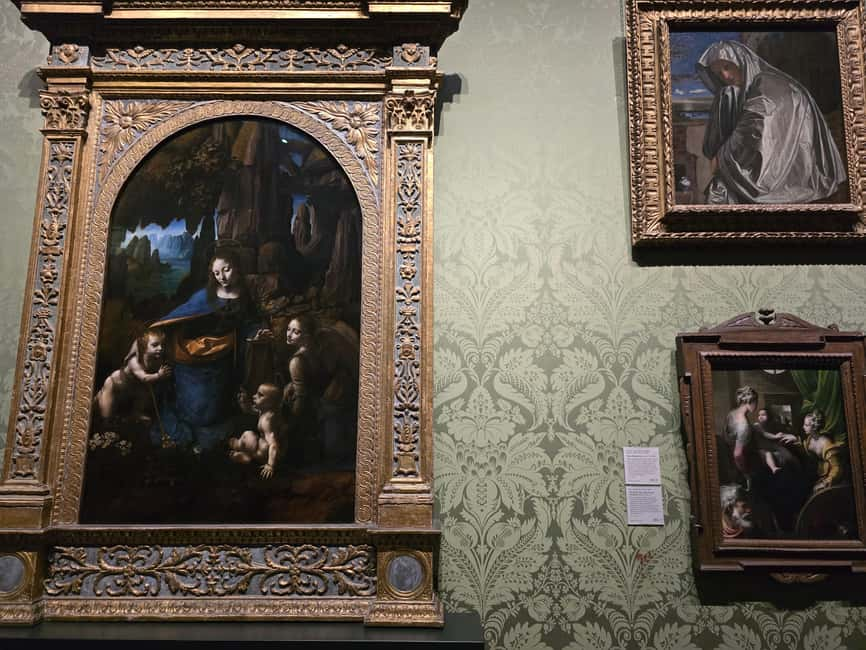
You meet at the National Gallery by entering via the Sainsbury Wing. The key detail: the meeting point is after security, on the right-hand side next to the glass wall. Your guide shows up 5–10 minutes early holding a yellow flag, so if you’re the kind of person who likes to know where you’re going, this is a relief.
This tour includes priority entrance and an express security check, which matters because the National Gallery can get busy. You’ll also get your tickets the day before, so you’re not scrambling at the last minute with a phone screen and a bad internet connection.
Plan to arrive about 15 minutes early. The tour starts on time, and you can’t join later—so treat this like a museum appointment, not a casual stroll.
Practical tip: wear comfortable shoes. The time you save at security gets spent on walking and standing, because you’ll want a clear view of each highlighted painting.
What you’ll actually do in 2 hours (and why it feels focused)
This is a 2-hour guided experience with a limited group size (up to 10 participants) and live English commentary. That small cap is the whole point: you can ask questions, and the guide can adjust to what the group is curious about.
The tour is structured like a visual timeline, moving from earlier European painting through later styles. You won’t cover every room in the building. Instead, you get a guided selection built around paintings that most people recognize—or at least recognize once they’re standing in front of them.
That timeline approach is why the tour works. When you see how one movement changes what came before, the art starts making sense beyond the label. You’ll also get prompted to look for things that aren’t always obvious at a distance: how figures are modeled, how light behaves, and how brushwork can carry emotion.
One more thing: because the group is small and the stops are curated for pacing, you’ll get more explanation per minute than if you try to DIY the same highlights. If you’re short on time in London, that alone can feel like good value.
Renaissance section: da Vinci’s symbols and Michelangelo’s rare easel painting
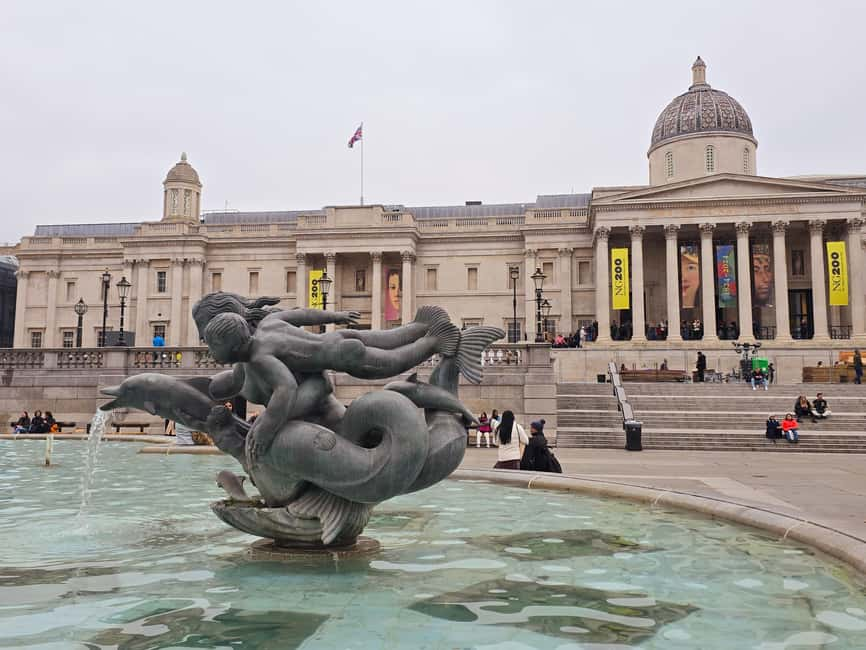
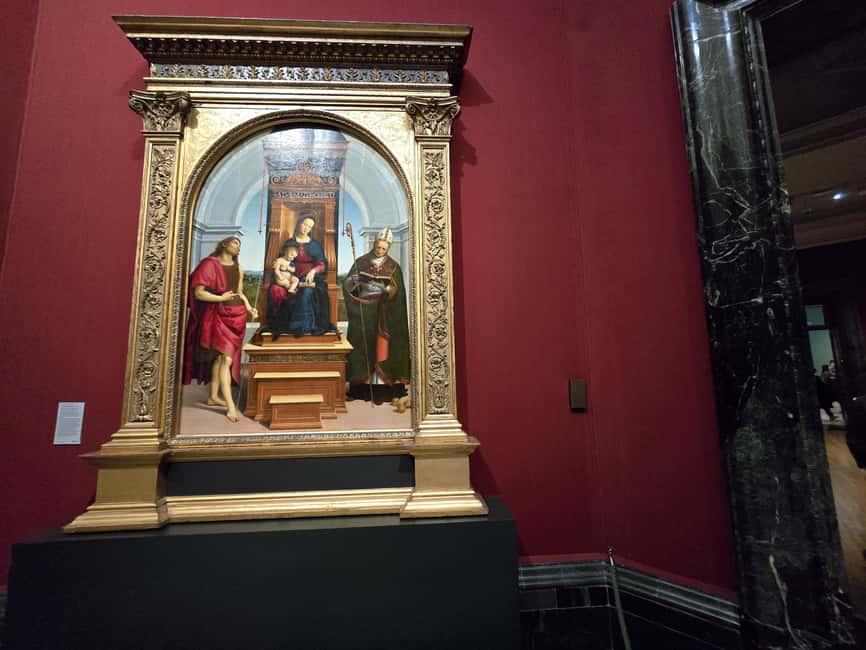
The tour begins with the Renaissance side of the collection, where realism and religious storytelling are tightly linked. You’ll stand before Leonardo da Vinci’s The Virgin of the Rocks, and the guide helps you notice how symbolic choices support the scene’s meaning. With works like this, the trick is learning what to look for: not just faces and composition, but how details create a mood and a message.
Next is Michelangelo’s The Entombment, described as his only surviving easel painting. That’s a big deal for art history, and it’s also a personal moment for many people. Even if you only know Michelangelo for sculpture or architecture, seeing this painting on an easel helps you connect the dots across his career.
Why this section matters: the guide doesn’t treat the paintings like static museum objects. You’ll hear how these masters transformed realism—especially in how they portray human figures and sacred subjects. Once you understand the “why,” you start seeing the painting’s craft more clearly.
If you’re the type who likes context, this is where the tour gives you the most payoff. If you’re not, don’t worry—you can still enjoy it by simply following the guide’s prompts as you look.
Still deciding? A handful more London outings we rated
Turner’s Industrial Revolution: Rain, Steam and Speed as a motion study
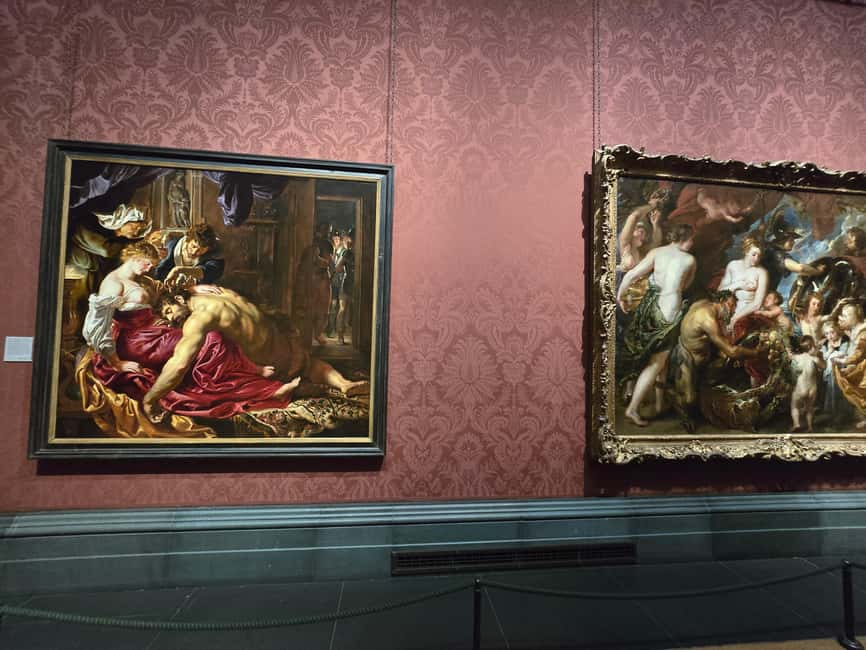
Then the tour moves into the 18th and 19th centuries, where you’ll encounter J.M.W. Turner’s Rain, Steam and Speed. This painting is a masterclass in movement. Even without being an art expert, you can feel the speed and weather pressure in the scene.
What makes Turner a great stop on a guided tour is the way symbolism and technique overlap. The guide talks about how Turner captures awe and power tied to the Industrial Revolution, but you also learn to read the “how”—the visual tricks that make the world look like it’s straining forward.
This is the part where art starts to feel more modern, even if the subject is centuries old. Turner’s work doesn’t just depict an era; it turns the era into sensation—light, haze, and speed all braided together.
Small practical note: if you’re already tired from walking, this is a good place to pause and recalibrate. Turner’s style is visually intense, but the guide’s explanation helps you slow down enough to actually see what you’re looking at.
Impressionism and beyond: Monet’s Water-Lily Pond and Seurat’s precision
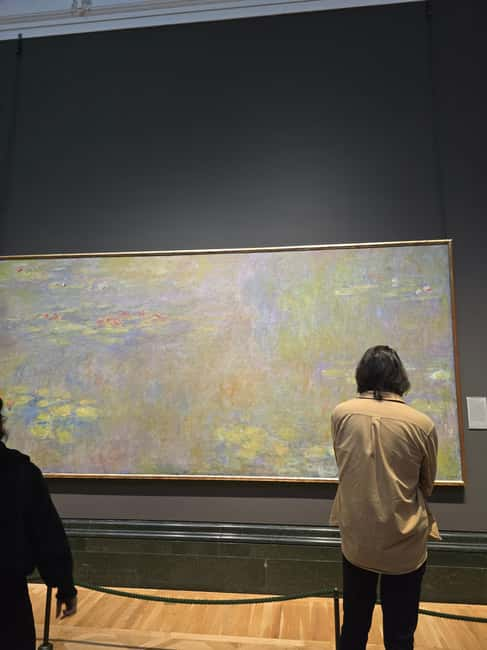
After Turner, you’ll head into the Impressionist period. First up is Claude Monet’s The Water-Lily Pond, known for its light-filled atmosphere. In a guided setting, Monet becomes more than pretty scenery—you’ll learn how color choices and visual effects communicate a specific kind of perception.
Then you’ll see Georges Seurat’s Bathers at Asnières. Seurat is one of those artists people either instantly love or need a little help understanding. That’s exactly why this tour format helps: the guide can connect Seurat’s approach to the way he breaks with conventional rules—especially through color and technique.
Why this pair works in one tour stop: Monet often feels like a captured moment, while Seurat can feel like a constructed system. When you see both, you start noticing how artists in the same broader era still argued in different visual languages.
Also, if you like questions, this is often where they pop up. Guides praised on this tour are described as willing to answer what you’re thinking in real time—so bring your curiosity and ask why something feels a certain way.
Van Gogh’s ending: swirling brushwork and emotional everyday scenes
The tour concludes with Vincent van Gogh. You’ll spend time with his expressive paintings and explore how his vivid colors and swirling brushstrokes bring new depth to everyday scenes.
This ending section is smart because it teaches you what to carry forward. After walking through Renaissance symbolism, industrial-era motion, and Impressionist experimentation, you end with an artist who uses paint to transmit emotion. If you remember one thing after the tour, let it be this: brushwork is not just style. It’s communication.
You’ll also hear stories that connect technique to feeling—helping you interpret why van Gogh’s scenes can look ordinary while still feeling urgent or personal. Guides often focus on how his impassioned style shapes the viewer’s experience, not just the subject matter.
If you’ve ever looked at van Gogh in a book and thought, I don’t get it, this ending is the place to get unstuck. Seeing the painting in person with an explanation tends to flip the switch.
How to get more out of it: stand, look, ask, repeat
A good guided tour isn’t about watching someone talk. It’s about learning a pattern for viewing. This one is designed to feel engaging and interactive, and guides are praised for encouraging people to see art in different ways.
Here’s how you can do that without overthinking it:
- Stand back for a quick read of the overall scene.
- Move your eyes to a detail the guide points out (faces, hands, light effects, or brushwork).
- Then step back again and see how that detail changes the whole painting.
If you want a fun challenge, try sharing your first impression out loud. One guide was noted for engaging a young participant and encouraging her to share her school-developed view of a painting. That kind of group energy can make the tour feel more like a conversation than a lecture.
Also, the guide is there to answer questions. When you ask something specific—Why is this element placed here? or How does the light work?—you’ll often get a clearer explanation than what you’d get reading a label alone.
Just remember: flash photography isn’t allowed, so use your eyes, not your phone camera.
Price and value: is $21 a good deal for a National Gallery highlight run?
At about $21 per person for a 2-hour experience, this tour can be excellent value—especially because it includes priority entrance and expert guided commentary. The math isn’t just ticket cost. It’s time.
In London, time has a price. Priority entrance helps you get through security more quickly, and the guide helps you focus on the paintings most worth your limited museum hours. If you’re visiting the National Gallery on a day with limited spare time, the “hit the best works with context” approach is often a smarter use of your day than spending extra hours trying to plan the perfect self-guided route.
It’s also a good value because the group is capped at 10. You’re not paying for a crowded experience where questions go unanswered.
That said, it may not be the best fit if you want maximum freedom to roam and linger. If you love art enough to build your own plan and read labels slowly, you can absolutely do the gallery independently. But if your goal is to understand what you’re seeing quickly and get the key stories without fuss, this guided format usually feels worth the money.
Who this tour suits best (and one key limitation to plan around)
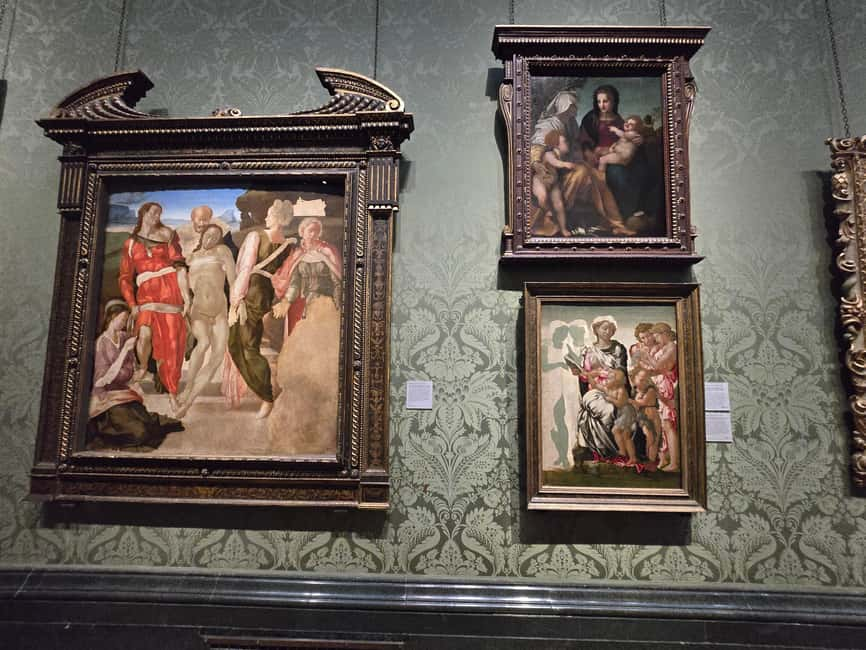
This tour is best for you if you want a structured art experience that still leaves room for questions. It’s great for art newcomers because the guide helps translate technique and symbolism into plain language. It also works for serious art fans who want a tight, high-impact tour through major highlights.
Language is English, so if you’re comfortable following explanations in English, you’ll get the most out of it. Comfortable shoes matter because you’ll be on your feet for the full 2 hours.
The one limitation you should take seriously: it isn’t suitable for people with mobility impairments. If that applies to you, it’s worth choosing another format that’s easier on movement and time spent standing.
Finally, since the tour starts on time and you can’t join if you’re late, this is the kind of activity where you should buffer your schedule—London has a way of making “quick trips” turn into detours.
Should you book? My honest take for a first-time National Gallery visit
Book this tour if you want a focused route through the National Gallery’s most famous works with clear explanations of technique and symbolism. The priority entrance helps a lot, and the small group size makes the experience feel like you’re getting answers, not just hearing facts.
Skip it (or consider something else) if you want to spend long stretches just lingering with one painting. This tour is built for movement and a timeline, so you’ll get the big picture faster than you’ll get total wandering freedom.
If you’re coming for Leonardo, Turner, Monet, Seurat, and van Gogh—and you’d like the stories behind them—you’ll likely feel glad you booked. Two hours is long enough to connect the dots, but short enough to keep your London day from turning into a marathon.
FAQ
How long is the guided tour?
The tour lasts 2 hours.
Where is the meeting point inside the National Gallery?
Enter via the Sainsbury Wing. The meeting point is after security on the right-hand side by the glass wall, where the guide will be holding a yellow flag 5–10 minutes before start time.
What’s included in the price?
You get the 2-hour guided tour, priority entrance tickets, access to the National Gallery, and expert commentary on art history and techniques.
Is flash photography allowed?
No, flash photography is not allowed.
What should I bring?
Wear comfortable shoes.
Is the tour suitable for mobility impairments?
No, the tour is not suitable for people with mobility impairments.
More Guided in London
- Magical London: Harry Potter Guided Walking Tour
★ 4.7 · 22,044 reviews - London: Emirates Stadium Entry Ticket and Audio Guide
★ 4.7 · 5,513 reviews - London: Christmas Lights Bus Tour With Live Guide
★ 4.0 · 5,410 reviews - Stonehenge, Windsor Castle and Bath Full Day Guided Tour
★ 4.5 · 5,346 reviews - London Jack the Ripper Guided Tour with Ripper-Vision
★ 4.5 · 4,840 reviews
More Tours in London
- From London: Harry Potter Warner Bros Studio Tour
★ 4.7 · 26,588 reviews - Magical London: Harry Potter Guided Walking Tour
★ 4.7 · 22,044 reviews - London: Warner Bros. Studio Harry Potter Tour & Branded Bus
★ 4.7 · 19,194 reviews - London Big Bus Hop-On Hop-Off Tour with Optional River Cruise
★ 3.5 · 10,803 reviews - London Small Group Tour of Historical Pubs
★ 5.0 · 10,422 reviews
More Tour Reviews in London
- From London: Harry Potter Warner Bros Studio Tour
★ 4.7 · 26,588 reviews - London: Westminster to Greenwich River Thames Cruise
★ 4.5 · 22,836 reviews - Magical London: Harry Potter Guided Walking Tour
★ 4.7 · 22,044 reviews - London: Madame Tussauds London
★ 4.6 · 20,915 reviews - London: Warner Bros. Studio Harry Potter Tour & Branded Bus
★ 4.7 · 19,194 reviews
Just reviewed around London





Museums, compared.
 ★ 4.5Tower of London and Crown Jewels Exhibition TicketFrom $496,677 reviews
 ★ 4.8Chelsea Football Club Stadium and Museum TourFrom $434,576 reviews
 ★ 5.0Chelsea FC Stadium Tours and MuseumFrom $441,908 reviews
 ★ 4.3British Museum Guided TourFrom $231,182 reviews
 ★ 4.5Official tickets: Moco Modern & Contemporary Art MuseumFrom $361,157 reviews
 ★ 5.0British Museum London Guided Tour Semi-Private 8ppl MaxFrom $108984 reviews
 ★ 4.2Jack the Ripper Museum TicketsFrom $18894 reviews
 ★ 4.9British Museum Guided Tour with Entrance TicketsFrom $39748 reviews
Browse the lists this tour appears in