

Reviewed · LONDON WALKING TOURS
London: Maritime Greenwich Guided Walking Tour
Maritime Greenwich turns a short walk into a history lesson you can see. You’ll start at the Cutty Sark, then move through places tied to navigation, timekeeping, and life at sea. It’s a smart way to connect UNESCO landmarks without feeling like you’re sprinting.
I like how the tour hits two big ideas fast: maritime trade (via the ship) and how people measured time and direction (via the Observatory and the meridian). I also like that you get real outdoor time in Greenwich Park, with wide Thames views that make the whole area feel more than just buildings and museum rooms.
One thing to consider: this is walking across a sizable area, so comfortable shoes matter. If you’re sensitive to uphill stretches or long spells on your feet, you’ll want to pace yourself with the guide’s stops.
In This Review
- Key highlights worth planning for
- Why Maritime Greenwich works in just two hours
- Meeting at Greenwich Pier: easy start, quick momentum
- Cutty Sark: a tea clipper that anchors the whole story
- Greenwich Park: guided walking plus Thames and wildlife breaks
- Royal Observatory and the Prime Meridian Line: timekeeping meets direction
- National Maritime Museum: artifacts that turn lessons into context
- Greenwich Market: a short finish for food, crafts, and souvenirs
- Guides can make or break a themed walk
- Price and what $47 buys you for real
- Who this walk suits best
- Practical tips so the day feels easy
- Should you book this Maritime Greenwich guided walking tour?
- FAQ
- Where is the meeting point?
- How long is the tour?
- How much does it cost?
- Is the tour guided?
- What are the main places you visit?
- What is included in the tour?
- What is not included?
- Is there free cancellation?
- Are there options to pay later?
- What should I wear?
Key highlights worth planning for
- Cutty Sark start: see the historic tea clipper up close and hear its sea-trade story
- Prime Meridian moments: stand on the line tied to timekeeping and navigation
- Royal Observatory focus: you’ll connect astronomy, clockwork, and getting ships where they needed to go
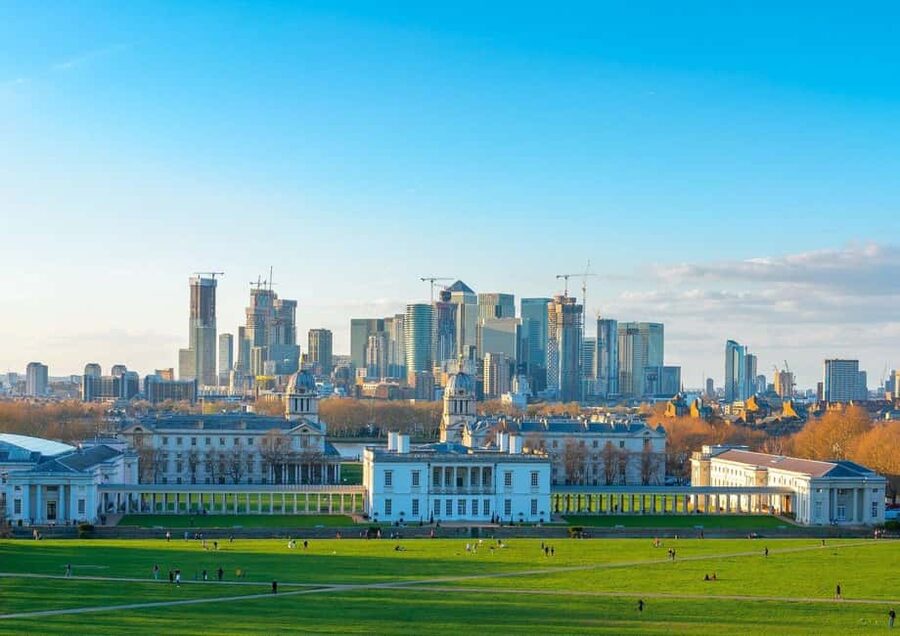
- Greenwich Park views: Thames and Docklands/city perspectives plus chances to spot wildlife like deers and squirrels
- National Maritime Museum time: maritime artifacts and exhibits that add depth to what you’ve just seen outdoors
- Greenwich Market finish: a short shopping stop for food, crafts, and souvenirs
Downriver to Greenwich, other ways
- London: Westminster to Greenwich River Thames Cruise
★ 4.5 · 22,836 reviews - Westminster to Greenwich Sightseeing Thames Cruise in London
★ 4.5 · 2,969 reviews - Leeds Castle, Canterbury, Dover & Greenwich Boat ride
★ 4.5 · 604 reviews - ‘Cutty Sark’ Entrance Ticket
★ 4.5 · 373 reviews
Why Maritime Greenwich works in just two hours
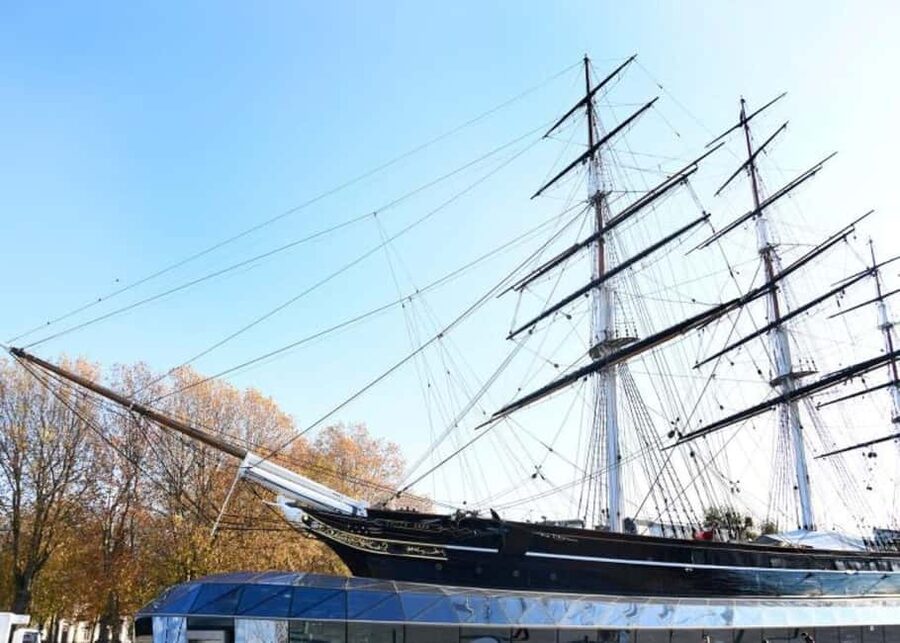
Maritime Greenwich is UNESCO-listed for a reason: it links geography, science, and everyday maritime life. In a short window, this tour lets you bounce between the physical symbols (like the Cutty Sark) and the thinking tools (like the meridian and timekeeping work at the Observatory).
This kind of route is practical because it gives you a clean storyline. You start with a ship and sea commerce, then shift to the systems that helped sailors navigate and synchronize time. By the time you’re in the park and museum, you understand why Greenwich mattered beyond being a pretty part of London.
Meeting at Greenwich Pier: easy start, quick momentum
You meet at Greenwich Pier (SE10 9HT), outside the front of Nando’s, right in front of the Cutty Sark. That’s a handy setup because it anchors the whole walk in one recognizable spot, and it avoids the usual early confusion of finding a “meeting point” that’s not exactly obvious.
From there, the tour keeps moving through landmark stops. It’s designed for a smooth flow: ship first, then park and Observatory area, then museum, then the market finish.
Cutty Sark: a tea clipper that anchors the whole story
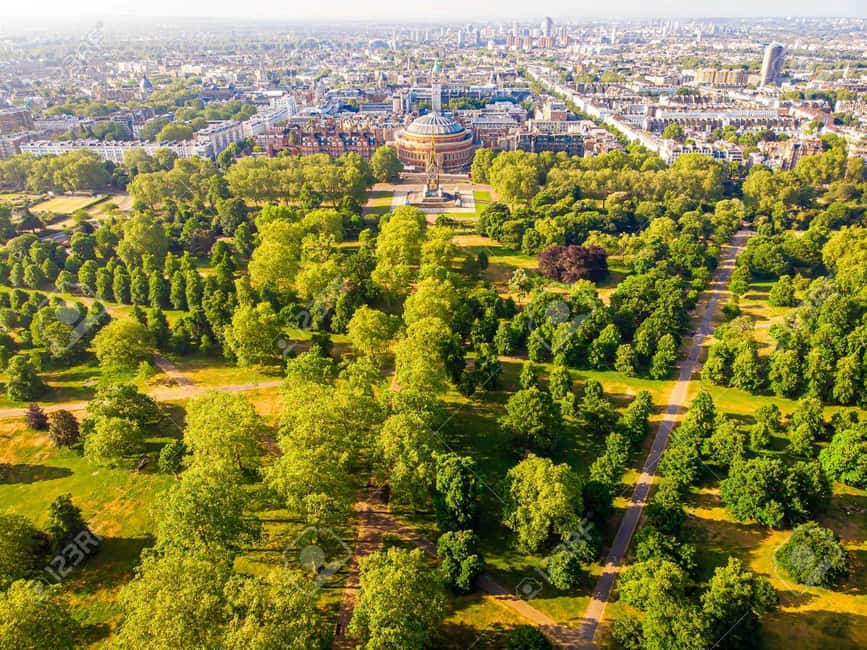
Starting at the Cutty Sark gives you an immediate sense of maritime scale. This tea clipper wasn’t just a ship sitting still; it played a role in maritime trade, and your guide connects its history to the wider world of sailing and routes.
The way I’d use this stop is simple: look at the ship as more than a photo spot. Try to notice how a working ship’s purpose relates to why navigation and timekeeping became so crucial. It makes the later meridian stop feel less like trivia and more like the practical answer to a real problem sailors faced.
London on foot, a few more ways
Greenwich Park: guided walking plus Thames and wildlife breaks
After the ship, the route goes into Greenwich Park. This is where the tour slows a little and gives you that classic Greenwich mix of open green space and skyline views.
What makes this stop especially worth your attention is the viewpoint aspect. You’ll be able to enjoy views across the River Thames towards Docklands and the city, so you’re not only learning history—you’re seeing the setting that shaped it.
And it’s not just scenery. One guide, Mark, was praised for including wildlife sightings like a family of deers and wild squirrels in the park. Even if you don’t get the same sighting, the park break still tends to feel like a reset: a bit of air, a bit of nature, and a breather before the museum and meridian.
Royal Observatory and the Prime Meridian Line: timekeeping meets direction
Next comes the Royal Observatory, where you can stand on the Prime Meridian Line. This is the dividing point between the Eastern and Western Hemispheres, and it’s the kind of location that turns a map idea into a physical experience.
The guide-led portion here matters because you’re not just checking off a famous line. You’ll learn about the history of timekeeping and navigation as you explore the observatory, which is exactly the link you need after starting with a ship.
Here’s how I think about it: standing on the meridian is cool, but understanding why people cared about measuring time and direction is what makes it stick. It connects practical needs—safe travel, coordinated time, accurate navigation—to a place you can literally point to.
National Maritime Museum: artifacts that turn lessons into context
After the outdoor science stop, you move to the National Maritime Museum. The museum is where the walking story gains detail: you’ll discover maritime artifacts and exhibits focused on Britain’s seafaring history.
This is the part that helps if you’re the type who likes cause and effect. The ship introduces trade; the meridian and Observatory introduce the tools; the museum helps fill in the middle with objects, displays, and the wider seafaring picture.
One practical note: museum time can be mentally different from outdoor sightseeing. In two hours total, the guide keeps things moving, so think of this stop as a “highlights-first” approach. If you want to linger over specific exhibits, you can always build extra time after the tour.
Greenwich Market: a short finish for food, crafts, and souvenirs
The tour ends at Greenwich Market, with about 15 minutes to shop. This is a good place to unwind after the main landmarks, and it’s also useful if you want something small to remember the day—plus quick bites since food and drink aren’t included elsewhere.
Because the stop is brief, treat it like a targeted browse. If you want to eat something, you’ll need to pick it quickly and keep your eyes on the clock so you don’t get caught lingering at the first stall.
Guides can make or break a themed walk
This tour is led by a live English guide from Compleat Walks, and the guide quality shows up in how the route is paced. Janet’s experience highlighted that guide Graeme took fitness levels into account and allowed regular stops. That’s a big deal on a walking tour because it makes the landmarks feel enjoyable instead of rushed.
Mark was also praised for going beyond a typical standard tour with extra context and great hotspots. Even when a plan is fixed, the guide’s storytelling turns “places” into “meaning.” If you love history plus practical city tips—where to go next for views or something to eat—this tour style tends to deliver.
Price and what $47 buys you for real
At $47 per person for a 2-hour walk, you’re paying for organized routing, live guidance, and a focused set of major Maritime Greenwich stops. The value comes from efficiency: you hit multiple UNESCO-connected sites in one go, rather than piecing together transport and timing on your own.
This price also makes sense because the tour doesn’t just pass by the famous spots. It includes guided stops at the Cutty Sark area, the Royal Observatory with the meridian experience, Greenwich Park for views, and the National Maritime Museum. Then you get a small market window to cap it off.
What you should watch for is the “time vs depth” trade-off. Since everything fits into two hours, some people will want more time inside the museum or longer in the park after the tour ends. That doesn’t make the tour overpriced—it just means it’s built for momentum and context, not for hours of slow browsing.
Who this walk suits best
This tour is a strong match for you if you want a guided, coherent Greenwich experience without planning your own route from scratch. It’s also ideal if you care about maritime history and enjoy the link between ships, navigation, and scientific measurement.
If you like outdoor breaks, you’ll probably appreciate the Greenwich Park segment and the Thames viewpoints. And if you’re traveling with family, the guided pacing can help keep things manageable; Geraldine noted a good afternoon with her daughter, supported by helpful guidance and tips.
On the other hand, if you prefer deep museum time or you’re someone who hates walking between stops, you may find two hours feels tight. The tour covers a large area, so you’ll want to go in with the right expectations for foot time.
Practical tips so the day feels easy
Start with the basics: wear comfortable shoes. This tour covers a large area, so you’ll be on your feet and moving between stops.
Second, plan to use the guide’s rhythm. Regular stops were specifically mentioned as part of the experience, so if you need a slower pace, that’s the kind of thing a good guide can accommodate.
Finally, set yourself up to enjoy the science-story connection. If you pay attention to the way the guide ties the ship’s trade role to timekeeping and navigation, the meridian stop in particular becomes much more meaningful.
Should you book this Maritime Greenwich guided walking tour?
Book it if you want a tight, well-paced introduction to Maritime Greenwich—with the Cutty Sark, the Prime Meridian moment at the Royal Observatory, outdoor Thames views in Greenwich Park, museum context, and a short market finish. It’s a good use of limited time and a solid way to understand why Greenwich became a hub for maritime navigation and time measurement.
Skip it (or plan extra independent time) if you’re expecting a long, slow museum visit or minimal walking. The walk-first format is the point of the experience, so it works best when you’re ready to move.
FAQ
Where is the meeting point?
The meeting point is Greenwich Pier (SE10 9HT), outside the front of Nando’s right in front of the Cutty Sark.
How long is the tour?
The tour duration is 2 hours.
How much does it cost?
The price is $47 per person.
Is the tour guided?
Yes. It includes a live tour guide and the tour is conducted in English.
What are the main places you visit?
You visit the Cutty Sark, Greenwich Park, the National Maritime Museum, the Royal Observatory/Prime Meridian area, and end at Greenwich Market.
What is included in the tour?
Included items are the guided tour of Maritime Greenwich and the highlighted stops, including the Cutty Sark, Greenwich Meridian/Prime Meridian, Royal Observatory, National Maritime Museum, Greenwich Park, and Greenwich Market.
What is not included?
Transportation to and from the meeting point is not included. Food and drinks are also not included.
Is there free cancellation?
Yes. You can cancel up to 24 hours in advance for a full refund.
Are there options to pay later?
Yes. You can reserve now & pay later, meaning you can book your spot and pay nothing today.
What should I wear?
Wear comfortable shoes, because the tour covers a large area and involves walking.
More Tour Reviews in London
- From London: Harry Potter Warner Bros Studio Tour
★ 4.7 · 26,588 reviews - London: Westminster to Greenwich River Thames Cruise
★ 4.5 · 22,836 reviews - Magical London: Harry Potter Guided Walking Tour
★ 4.7 · 22,044 reviews - London: Madame Tussauds London
★ 4.6 · 20,915 reviews - London: Warner Bros. Studio Harry Potter Tour & Branded Bus
★ 4.7 · 19,194 reviews
More London Walks Worth the Shoe Leather
- Magical London: Harry Potter Guided Walking Tour
★ 4.7 · 22,044 reviews - London: The Original Jack the Ripper Walking Tour
★ 4.7 · 7,833 reviews - Tour for Muggles The Ultimate Harry Potter Walking Tour in London
★ 5.0 · 4,684 reviews - London Jack The Ripper Guided Walking Tour
★ 5.0 · 3,131 reviews - London: Harry Potter Movies Walking Tour (Kids Go Free)
★ 4.7 · 3,071 reviews
More Downriver at Greenwich
- London: Westminster to Greenwich River Thames Cruise
★ 4.5 · 22,836 reviews - Westminster to Greenwich Sightseeing Thames Cruise in London
★ 4.5 · 2,969 reviews - Leeds Castle, Canterbury, Dover & Greenwich Boat ride
★ 4.5 · 604 reviews - ‘Cutty Sark’ Entrance Ticket
★ 4.5 · 373 reviews - Leeds Castle, Canterbury, Dover & Greenwich Cruise from London
★ 4.0 · 369 reviews
Just reviewed around London





London Walking Tours, compared.
 ★ 4.7Magical London: Harry Potter Guided Walking TourFrom $2022,044 reviews
 ★ 4.7The Original Jack the Ripper Walking TourFrom $257,833 reviews
 ★ 5.0Tour for Muggles The Ultimate Harry Potter Walking Tour in LondonFrom $234,684 reviews
 ★ 5.0London Jack The Ripper Guided Walking TourFrom $03,131 reviews
 ★ 4.7Harry Potter Movies Walking Tour (Kids Go Free)From $203,071 reviews
 ★ 5.0Changing of the Guard Guided Walking Tour in LondonFrom $251,793 reviews
 ★ 4.9The Great British Rock and Roll Music Walking TourFrom $361,783 reviews
 ★ 4.8Harry Potter Walking Tour in GermanFrom $201,505 reviews
Browse the lists this tour appears in