
Reviewed · PRIVATE
London in the Swinging 60s – Private Tour
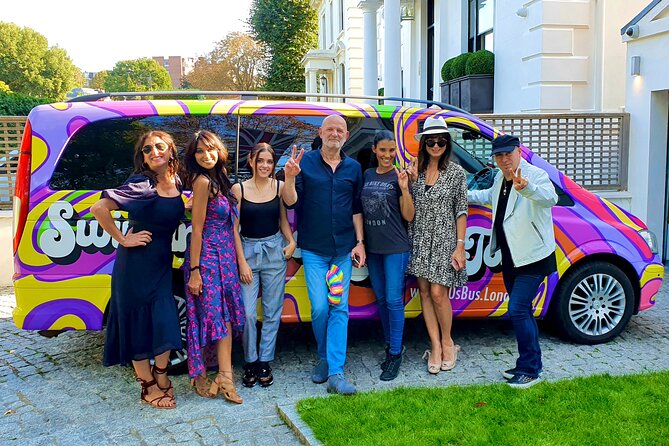
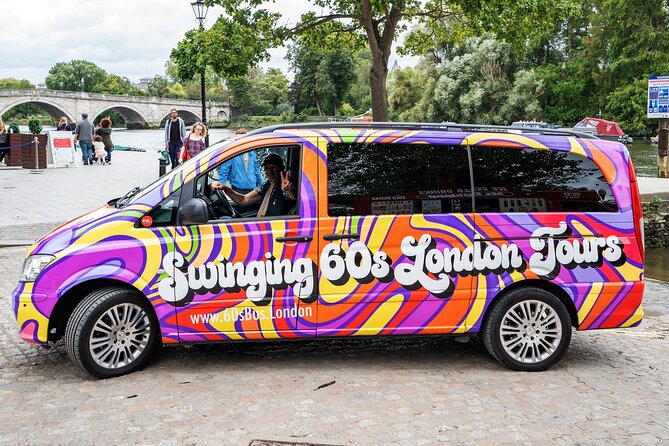
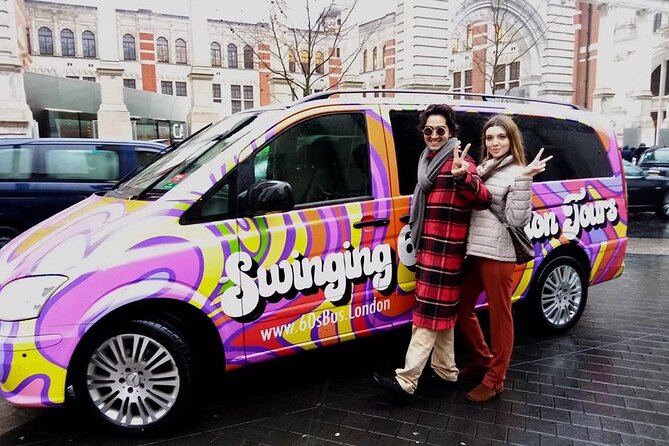
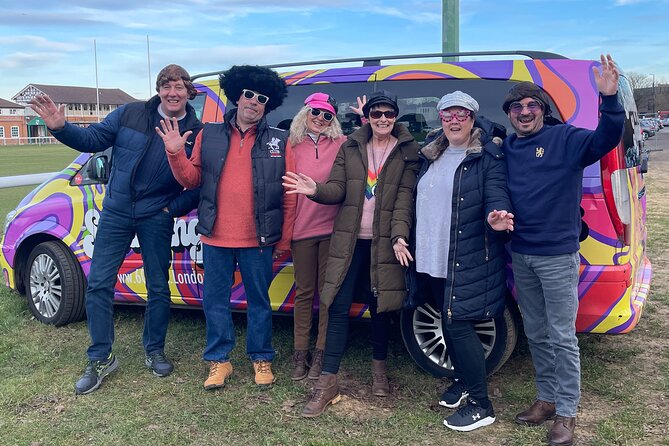
Swinging London starts with a street corner story. This private 1960s London tour strings together music legend sightings with fashion-era landmarks, all from a comfy psychedelic minibus. I love the small-group feel (so you can ask questions instead of shouting over the road), and I love that the stops focus on the “where it happened,” not just big poster names. One consideration: most locations are quick exterior-view moments, so if you want lots of long museum-style entry time, plan for a short, guided hit at each spot.
Your morning begins at Sloane Square, then the route pushes into the Chelsea/Kings Road orbit where London’s sound, style, and celebrity culture all collided. The tour’s big payoffs are the very specific artist connections (Beatles, Rolling Stones, Eric Clapton, and more) and a real venue visit at the end. The main drawback is timing: it’s about 1 hour 30 minutes, so you’ll want to move fast and keep expectations realistic.
If you’re a Beatles, Stones, Clapton, or 60s-music fan, this tour is built for your kind of travel. It’s also a nice option for mixed ages because the guide’s stories are easy to follow and grounded in recognizable names and places. Minimum age is 9, and the experience runs from a central starting point near public transport—an easy win for a half-day schedule.
In This Review
- Key highlights you’ll feel right away
- Sloane Square Start: What the private 90-minute format feels like
- The “Swinging London” route: Chelsea energy without the long slog
- Stop 1: Sloane Square and the Beatles’ early London base
- The Pheasantry: Eric Clapton’s flat and Cream-era London
- Old Church Street: Eric Clapton’s current London abode plus a studio scene
- Cheyne Walk: river-bankside legend homes in an exclusive stretch
- Flood Street and Sgt. Pepper’s photo moment
- Edith Grove: where Jagger, Richards, and Jones were living in 1962
- Troubadour: the 15-minute venue visit that makes the tour feel real
- Guide style, group interaction, and the music-and-fashion lens
- Price and value: $397.75 per group (up to 6)
- Who should book this Swinging 60s London tour?
- Should you book it? My honest recommendation
- FAQ
- FAQ
- How long is the London in the Swinging 60s private tour?
- What’s the group size for this private tour?
- Where does the tour start?
- What time does the tour begin?
- What is included in the price?
- Is transportation to and from the meeting point included?
- Are tickets included for every stop?
- Is there a minimum age requirement?
- Are service animals allowed?
Key highlights you’ll feel right away
- Private small-group setup with a hard cap that keeps the guide’s attention on your crew
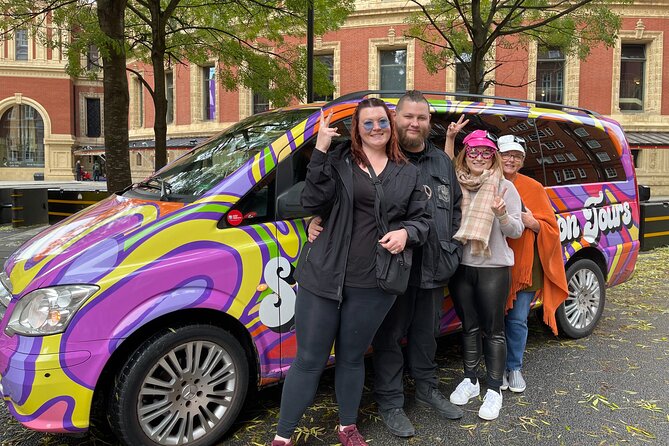
- Psychedelic minibus sightseeing designed for comfortable, chatty route time
- Beatles, Rolling Stones, and Eric Clapton connections at stops tied to where they lived and worked
- Short, meaningful viewing windows that make the most of a 1.5-hour tour
- Troubadour venue visit (15 minutes) with admission included
- No ticket surprises at most stops where the tour notes free or no-cost entry
Still deciding? A handful more London outings we rated
- Harry Potter Studios & Private Transfer from Central London
★ 4.5 · 6,134 reviews - The Premier Classic London: Private 4-Hour Tour in a Black Cab
★ 5.0 · 2,737 reviews - Stonehenge Inner Circle Private Tour from London with Bath Visit
★ 5.0 · 1,909 reviews - Private Tour: Black Taxi Tour of London
★ 5.0 · 1,153 reviews
Sloane Square Start: What the private 90-minute format feels like
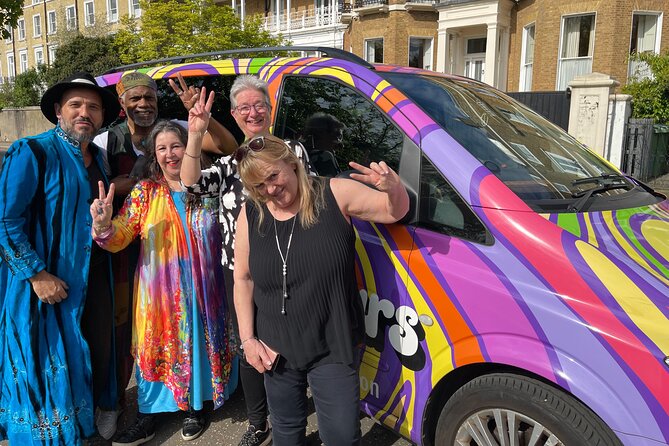
You’ll start at the Royal Court Theatre area, right by Sloane Square (11:00 am). That matters because this tour lives and dies by being centrally located. You’re not spending half your trip commuting across London—you’re stepping into the Swinging era with the least friction possible.
The tour is private for your group, and the experience is designed around a small group size (the tour format highlights a max of eight people). Practically, that means the guide can actually pace the story to the people in the van. If you’re the type who likes follow-up questions—how did a particular club, studio, or street corner change careers—you’ll likely enjoy this style.
Also: the tour uses a mobile ticket. That’s a real comfort on busy travel days. You don’t have to hunt for a paper ticket in a crowded daypack. Just keep it accessible on your phone.
One more practical note: transportation to and from the meeting point isn’t included. You’ll want to plan your own way to Sloane Square first, because the tour doesn’t promise door-to-door pickup.
The “Swinging London” route: Chelsea energy without the long slog
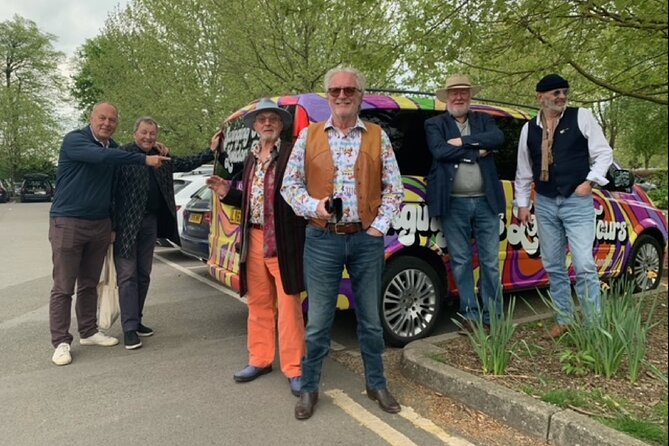
This isn’t a vague 60s bus ride where everyone points at famous buildings. The route is built around the idea of Swinging London as a living scene—music plus fashion plus nightlife—clustered in a few neighborhoods.
As you roll through the central part of the city, you’ll get the big picture fast: the Kings Road and Chelsea area is where style became a cultural signal and where music became a daily reality, not a far-off dream. The guide ties stops to specific people and moments, which helps you connect the names to actual geography.
What I like about this approach is that it makes the city feel smaller and more human. London’s famous, sure. But knowing where artists spent their time gives you a different kind of city confidence—like you can navigate the 60s version of the map, not just the modern one.
Stop 1: Sloane Square and the Beatles’ early London base
Sloane Square is the opening note, and it’s a good one. You’ll see the hotel connected to the Beatles’ first London base in the early 1960s. The payoff here isn’t an inside tour—it’s the “this is the starting line” feeling.
This stop is set for about 2 minutes. That tells you what to expect: quick context, photo-worthy sighting, and then straight back to the story on the move. If you go in expecting a deep dive with doors opening and rooms to walk through, you’ll be disappointed. If you go in expecting a tight, guided orientation, you’ll get exactly what you came for.
Tip: use this first stop to get your bearings. After Sloane Square, you’re traveling into a neighborhood network where the guide’s connections start stacking up. Get your photos early, and you’ll thank yourself later.

The Pheasantry: Eric Clapton’s flat and Cream-era London
Next up is The Pheasantry, with a connection to Eric Clapton in his days with Cream. The stop is short (about 1 minute), and the tour notes that admission isn’t included.
So again, keep expectations aligned. This is less about ticketed entry and more about grounding the legend in place. Clapton isn’t treated as an abstract name here—the guide’s framing makes you think of him as a London resident, not just a stage presence.
If you like music history that feels practical—streets, buildings, routines—this is the kind of stop that works. You can almost imagine the time period as you watch the neighborhood slide by.
Old Church Street: Eric Clapton’s current London abode plus a studio scene
At Old Church Street, the tour focuses on two layers:
- Eric Clapton’s current London abode
- A recording studio associated with big 60s-era names like Pink Floyd, Cat Stevens, and The Who
This is another quick stop (about 5 minutes), but it’s marked as admission free. That’s important for budget peace of mind. It also suggests you won’t need to scramble for extra cash just to satisfy your curiosity.
One way to get the most out of this stop: listen to how the guide links the studio environment to the sound world of the era. Even with only a few minutes, the context can make the music feel more grounded—like it has a physical address.
Cheyne Walk: river-bankside legend homes in an exclusive stretch
Cheyne Walk is where the tour leans into atmosphere. You’ll see homes of music legends along this exclusive part of London on the banks of the River Thames. The stop is about 3 minutes, and admission isn’t included.
This is a “look closely” stop. If you only glance, it can feel like any other upscale riverside street. If you pay attention to the guide’s framing—why these kinds of neighborhoods mattered for social scenes and networking—you’ll get more out of it.
Also, it’s one of those places where the city’s layers show up fast: modern London around you, and then the guide pulling it back to the 60s. That contrast is part of the fun.
Flood Street and Sgt. Pepper’s photo moment
At Flood Street, you’ll head straight into a Beatles milestone. The tour points out the studio where the famous Sgt. Pepper’s Lonely Hearts Club Band album was photographed in 1967.
This stop is around 2 minutes and marked as admission free. That means it’s likely designed to be “see the connection, get the story, and keep moving.” The value here is that the tour doesn’t just name the album—it ties it to a physical production moment.
Quick tip: don’t treat this like a pop-culture trivia stop. Let the guide explain how the album’s visual concept fit the era’s fashion and music attitudes. When those pieces click, the Beatles story stops feeling like a slogan and starts feeling like culture in action.
Edith Grove: where Jagger, Richards, and Jones were living in 1962
Edith Grove is a short stop (about 2 minutes), but it carries major symbolic weight. You’ll learn that it’s connected to Jagger, Richards, and Jones in 1962, when the Rolling Stones were named.
Again, admission isn’t included—so think of this stop as a snapshot of origin. What makes it work is the tour’s focus on timing: the guide frames these places as steps in the band story, not just famous house addresses.
If you love the Rolling Stones beyond the hits, this stop is designed to spark that extra curiosity. You’ll likely leave wanting to map other bands onto specific street-level stories, because the approach makes it feel doable.
Troubadour: the 15-minute venue visit that makes the tour feel real
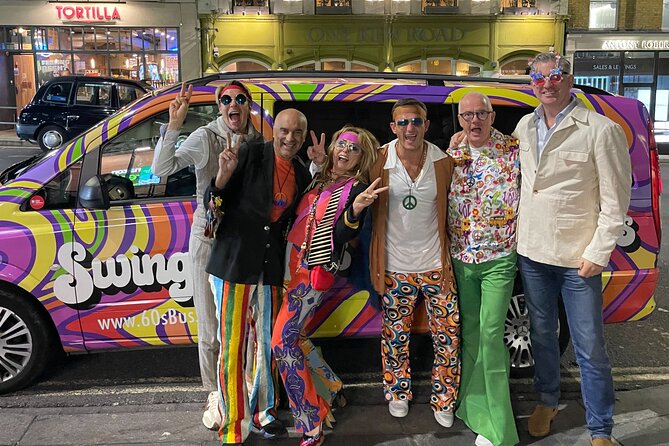
The best “something inside the experience” moment comes at the end: Troubadour, with 15 minutes set aside and admission included.
This is one of London’s important music venues, and the tour treats it like a time capsule. The guide shares that it’s a shrine-like place with very little changed since the 1960s, when Paul Simon, Bob Dylan, and Jimi Hendrix played and chilled out.
This is where the tour’s vibe shifts from street-level storytelling to venue-level authenticity. Even if you’re not a super deep concert-history person, stepping inside a place with those associations turns the whole outing from “fun sightseeing” into something you can feel.
Practical advice: use your time there to look around before you get lost in thinking. Stand where you can see the room layout, take a few photos, and then let the guide’s story connect it to what you’ve been seeing outside.
Guide style, group interaction, and the music-and-fashion lens
A big reason this tour earns a strong reputation is that it’s not run like a lecture. The guide—often referenced as Paul Endacott in past experiences—leans into a friendly, engaging delivery. You’ll get inside-style storytelling tied to real places.
What you should watch for is the tour’s music-and-fashion lens. It doesn’t treat the 60s as only sound or only clothing. It frames how those worlds fed each other: who went where, what scenes overlapped, and how the era’s style helped amplify the cultural impact of the music.
For many people, that’s the best part of a 60s tour: you stop thinking of bands as museum objects and start picturing them as young people caught in a very specific moment in London.
Price and value: $397.75 per group (up to 6)
At $397.75 per group for up to 6 people, this tour isn’t priced like a mass-market coach ride. It’s closer to a tailored small-experience model.
Is it worth it? Usually, it is if:
- You’re traveling as a group that can fill the private setup.
- You want focused guidance instead of earbuds and a route map.
- You care about music history tied to real street locations, not just broad landmarks.
It’s less of a bargain if you’re traveling solo or as a couple who can’t fill the group allocation—because the cost is per group, not per person in a way that scales down aggressively.
My practical take: the best value comes when you split the group cost and use the guide’s attention. If you’ll ask questions at stops and spend actual time at Troubadour, you’ll squeeze more meaning per minute.
One more budgeting note: the tour includes taxes and a professional guide. You don’t have to plan for ticket add-ons at every stop, since several are listed as free or no additional ticket required, and Troubadour is admission included. Alcohol and coffee/tea are not included, so plan to grab a drink before you meet or after you finish.
Who should book this Swinging 60s London tour?
This is a great pick if you:
- Love Beatles, Rolling Stones, Eric Clapton, or 60s music more broadly
- Like small-group tours with room for conversation
- Want a short, high-impact London plan that fits into a busy schedule
- Are traveling with mixed ages and want something that’s fun without being childish
It might feel less ideal if you:
- Want long indoor museum-style time at multiple stops
- Prefer an all-day schedule with lots of stops and frequent breaks
- Need frequent restroom breaks or long sit-down pauses (the itinerary is tight by design)
Should you book it? My honest recommendation
If your goal is to understand Swinging London as a lived scene—streets, studios, homes, and a real venue—this tour is an easy yes. The combo of quick landmark stops plus the Troubadour visit makes the 90 minutes feel purposeful instead of rushed.
Book it when you can go as a group (or at least share the cost), and when you’re okay with the “see it, learn it, move on” pace. This isn’t about lingering. It’s about getting the 60s to snap into place fast, with a guide who makes those connections feel concrete.
FAQ
FAQ
How long is the London in the Swinging 60s private tour?
It runs about 1 hour 30 minutes.
What’s the group size for this private tour?
The tour is private for your group, with a small-group cap mentioned as up to eight people.
Where does the tour start?
The meeting point is at The Royal Court Theatre, 50-51 Sloane Square, London SW1W 8AS, UK.
What time does the tour begin?
The start time is 11:00 am.
What is included in the price?
The tour includes a professional guide, all taxes and handling charges, and admission to Troubadour. You also get a mobile ticket.
Is transportation to and from the meeting point included?
No. You’ll need to arrange your own travel to and from the meeting point.
Are tickets included for every stop?
Not for every stop. The tour notes some stops as admission ticket not included, while Old Church Street and Flood Street are marked free, and Troubadour is admission included.
Is there a minimum age requirement?
Yes, the minimum age is 9 years.
Are service animals allowed?
Yes, service animals are allowed.
More Private in London
- Harry Potter Studios & Private Transfer from Central London
★ 4.5 · 6,134 reviews - The Premier Classic London: Private 4-Hour Tour in a Black Cab
★ 5.0 · 2,737 reviews - Stonehenge Inner Circle Private Tour from London with Bath Visit
★ 5.0 · 1,909 reviews - Private Tour: Black Taxi Tour of London
★ 5.0 · 1,153 reviews - Private London Arrival Transfer – Airport to Hotel / Accommodation
★ 3.5 · 1,085 reviews
More Tours in London
- From London: Harry Potter Warner Bros Studio Tour
★ 4.7 · 26,588 reviews - Magical London: Harry Potter Guided Walking Tour
★ 4.7 · 22,044 reviews - London: Warner Bros. Studio Harry Potter Tour & Branded Bus
★ 4.7 · 19,194 reviews - London Big Bus Hop-On Hop-Off Tour with Optional River Cruise
★ 3.5 · 10,803 reviews - London Small Group Tour of Historical Pubs
★ 5.0 · 10,422 reviews
More Tour Reviews in London
- From London: Harry Potter Warner Bros Studio Tour
★ 4.7 · 26,588 reviews - London: Westminster to Greenwich River Thames Cruise
★ 4.5 · 22,836 reviews - Magical London: Harry Potter Guided Walking Tour
★ 4.7 · 22,044 reviews - London: Madame Tussauds London
★ 4.6 · 20,915 reviews - London: Warner Bros. Studio Harry Potter Tour & Branded Bus
★ 4.7 · 19,194 reviews
Just reviewed around London





Private, compared.
 ★ 4.5Harry Potter Studios & Private Transfer from Central LondonFrom $2296,134 reviews
 ★ 5.0The Premier Classic London: Private 4-Hour Tour in a Black CabFrom $5532,737 reviews
 ★ 5.0Stonehenge Inner Circle Private Tour from London with Bath VisitFrom $1881,909 reviews
 ★ 5.0Private Tour: Black Taxi Tour of LondonFrom $3061,153 reviews
 ★ 3.5Private London Arrival Transfer – Airport to Hotel / AccommodationFrom $861,085 reviews
 ★ 5.0British Museum London Guided Tour Semi-Private 8ppl MaxFrom $108984 reviews
 ★ 5.0London Sightseeing Private Black Cab Tour with Hotel Pick UpFrom $441917 reviews
 ★ 4.5VIP Tower of London and Crown Jewels Tour with Private Beefeater Meet & GreetFrom $155849 reviews