
Reviewed · SELF-GUIDED TOURS
London Charles Dickens Puzzle Questo and Self-Guided Tour
London can be quiet and clever at the same time. This self-guided Dickens puzzle walk turns famous literary stops into answers-you-hunt-your-own-way sightseeing. It’s built around the author’s rags-to-riches story and a game that keeps you moving from site to site at your pace.
I especially like the flexibility: you can start when you want, take breaks, and resume later without coordinating with anyone. I also like that it’s designed as a private experience with no human contact, which makes it feel calm even in the middle of central London.
The trade-off is simple: there’s no physical guide telling you what to notice. If you want a lot of spoken context on demand, you’ll have to slow down and read what’s on-site.
In This Review
- Key highlights you’ll feel right away
- Entering Dickens’s London, one clue at a time
- Starting at Doughty Street, then heading toward Fleet Street
- Stop-by-stop: the route that mixes Dickens with London’s literary maze
- 1) Charles Dickens Museum (48 Doughty Street)
- 2) Vine Street / Man in the Moon Passage area
- 3) The inn that became Three Cripples (Oliver Twist connection)
- 4) Staple Inn (1585) and the scars of London’s disasters
- 5) Lincoln’s Inn Fields Theatre (Duke’s Theatre, Lisle’s Tennis Court origin)
- 6) The Maughan library building (1851, Pennethorne, Gaunt Francis Architects renovation)
- 7) Dr Johnson’s House (Samuel Johnson, rented 1748–1759)
- 8) Ye Olde Cheshire Cheese (1530s origins, rebuilt after the Great Fire)
- 9) St Peter of all Nations (1863 basilica-style, WWII use)
- 10) Royal College of Surgeons origins (Barbers and Fellowship of Surgeons)
- 11) St Dunstan-in-the-West and the Romanian Orthodox chapel
- The Man in Black clue: what you should expect from the puzzle
- Flexibility that makes the walk feel like your day
- Value and pacing: why $8.33 feels fair
- Who this self-guided Dickens puzzle is best for
- Should you book this Dickens Puzzle Questo tour?
- FAQ
- Do I need internet to play?
- Is there a physical guide with me?
- How long does the tour take?
- Can I start at any time?
- Where do I start and where does it end?
- What language is the experience offered in?
- Is this tour private?
- Can I cancel for a full refund?
- Are service animals allowed?
Key highlights you’ll feel right away
- Start any hour, pause any time for a game-shaped walk that fits your day
- Offline play so you can hunt clues without worrying about data
- No human contact and private group setup means fewer crowds and more control
- Dickens focus plus nearby literary sights, from his house to pubs and theatres
- The Man in Black clue gives the quest a memorable storyline moment
- Budget-friendly at about $8.33 per person for roughly an hour of walking and problem-solving
Still deciding? A handful more London outings we rated
- Magical London: Harry Potter Guided Walking Tour
★ 4.7 · 22,044 reviews - London: Emirates Stadium Entry Ticket and Audio Guide
★ 4.7 · 5,513 reviews - London: Christmas Lights Bus Tour With Live Guide
★ 4.0 · 5,410 reviews - Stonehenge, Windsor Castle and Bath Full Day Guided Tour
★ 4.5 · 5,346 reviews
Entering Dickens’s London, one clue at a time
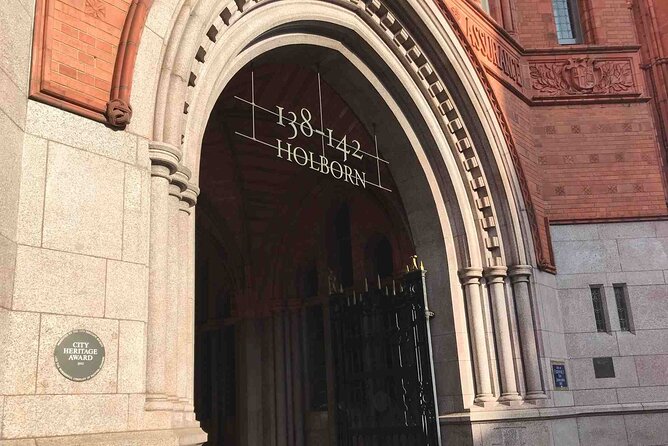
This is a puzzle-driven tour that strings together real places tied to Charles Dickens and the wider literary world around him. Instead of meeting a guide and following a script, you work through a set of challenges that push you to look closely at what’s in front of you. The pacing is the point: you’re not just moving from photo spot to photo spot—you’re stopping, scanning details, and answering your way to the next location.
The value here is that you’re paying for a guided-style itinerary without the guide cost. For about an hour, you get a route, a storyline, and motivation to slow down. And because it’s self-guided, you can match your energy: quick look-and-go, or take extra time in the places that grab you.
The setting also matters. Your route runs through central London neighborhoods where you’ll see layers of the city—Georgian townhouses, historic inns, old church spaces, and buildings that date back centuries. Even if you’re not a Dickens die-hard, the format helps you connect names to the actual bricks.
Starting at Doughty Street, then heading toward Fleet Street
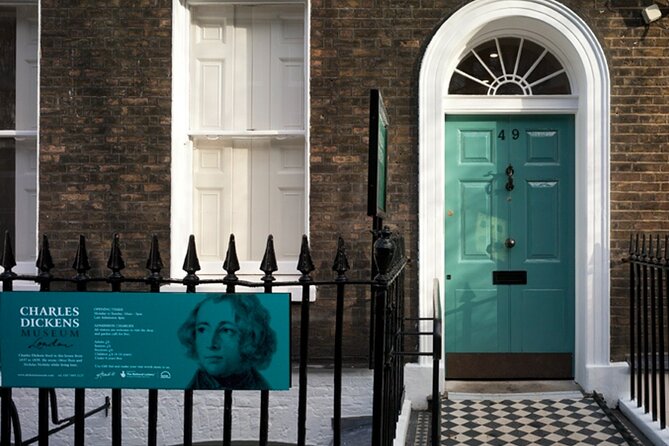
Your walk begins at 47 Doughty St, London WC1N 2LW, and the first big stop is the Charles Dickens Museum at 48 Doughty Street. This is an author’s house museum in a typical Georgian terraced home where Dickens lived from 25 March 1837 (about a year after his marriage) to December 1839.
What you do here is simple: you look around to find the answer to the challenge that advances you to the next spot. That “look around” requirement is a big part of why this works. It gets you out of the mode where you just pass buildings and into the mode where you actually notice things like layout, plaques, and period details.
From there, the game keeps pulling you along the trail toward your endpoint at 145 Fleet St, London EC4A 2BU. Expect the vibe to shift as you move from the Dickens house area toward the City’s dense cluster of historic venues.
Stop-by-stop: the route that mixes Dickens with London’s literary maze
Still deciding? A handful more London outings we rated
1) Charles Dickens Museum (48 Doughty Street)
This is where the quest gives you its anchor: Dickens’s home for those crucial 1837–1839 years. The house is in a Georgian terraced structure, and the museum setting makes it easier to connect the author to a specific place rather than a vague “old London.”
Best way to do this stop: keep your eye open for information that feels like it’s meant to be read up close. Even if you don’t linger long, you’re training your brain to “hunt” the answer, which makes the rest of the walk easier.
2) Vine Street / Man in the Moon Passage area
Next you move into a part of London tied to older street layouts. Here, the game points you toward the area around Vine Street and the passage known as the Man in the Moon Passage, which was laid out around 1686. Historical mapping is part of the intrigue: John Rocque’s 1746 Map of London shows Vine Street extending from Piccadilly northeast to Warwick Street, and in 1720 the main properties included a brewery and a carpenter’s yard.
This stop is interesting because it’s less about a single famous person and more about urban history you can feel in the street pattern. You’re still solving a clue, but you’re also absorbing how the neighborhood functioned.
Practical note: this is the type of stop where you may need to slow down and look at small details. If you’re walking fast, you’ll likely miss what the clue expects you to see.
3) The inn that became Three Cripples (Oliver Twist connection)
The quest then brings you to a historic inn with literary fame. The building dates to 1759, but its moment of notoriety came in 1838, when Dickens changed its name to the Three Cripples and used it as Bill Sykes’ watering hole in Oliver Twist.
This stop is fun because it turns Dickens’s fiction into a location-based scavenger hunt. You’re not just reading the story in the abstract; you’re checking the places where Dickens said certain scenes happened or drew inspiration from.
If you like linking books to real spaces, you’ll appreciate how the puzzle forces you to pay attention rather than just admire the facade.
4) Staple Inn (1585) and the scars of London’s disasters
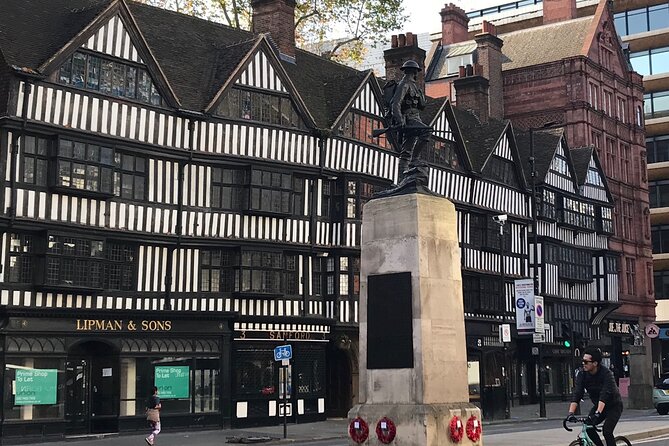
Then you hit Staple Inn, dating from 1585. It once functioned as the wool staple, where wool was weighed and taxed. The building survived the Great Fire of London and later took major damage in 1944 from Luftwaffe aerial bombing, before being restored.
This is a stop where the clue-hunting overlaps with a place that’s already dramatic in real life. The old structure survived major turning points in the city, which gives you a sense of continuity. You’ll probably find yourself pausing longer here just to take in the scale and survival story.
One caution: because it has meaning beyond Dickens, it can be tempting to read everything slowly. Keep a light grip on time so you still make it to the later stops.
5) Lincoln’s Inn Fields Theatre (Duke’s Theatre, Lisle’s Tennis Court origin)
Next is the history of a theatre space. The Lincoln’s Inn Fields Theatre was located in the Fields from 1661 to 1848. It was originally called the Duke’s Theatre, and it was created by converting Lisle’s Tennis Court in 1695.
Even though theatre buildings come and go, the puzzle format helps you imagine what the site must have felt like at the time. It’s also one of the route stops that reminds you London’s “old” places often have layered purposes—storage, commerce, performances, and more.
6) The Maughan library building (1851, Pennethorne, Gaunt Francis Architects renovation)
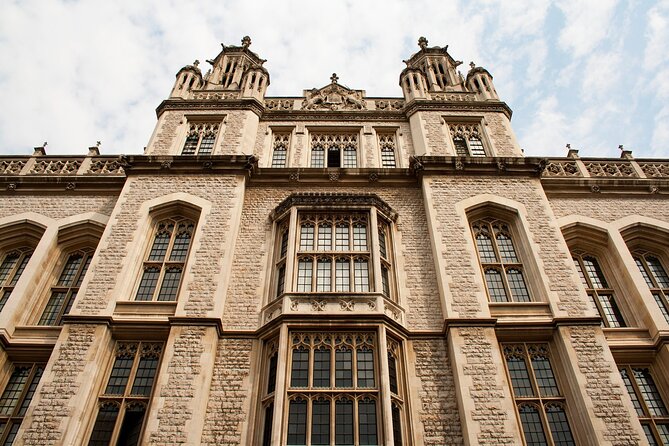
After that you encounter one of the bigger modern-with-old bones moments on the list: The Maughan. Following a £35m renovation designed by Gaunt Francis Architects, it became the largest new university library in the UK since World War II. The core structure was designed by Sir James Pennethorne and constructed in 1851, with further extensions between 1868 and 1900. It’s a Grade II listed building.
This stop is valuable because it’s not just “Victorian London as a postcard.” It’s a working modern institution inside a historic shell. That gives the walk variety: after Dickens-related scenes and older commercial buildings, you get something that’s very much alive today.
7) Dr Johnson’s House (Samuel Johnson, rented 1748–1759)
Then you go to Dr Johnson’s House, which was probably originally built for a City merchant. Samuel Johnson rented it from 1748 to 1759, making it his most famous resident.
This part of the quest widens the literary lens. Dickens can dominate your attention, but Johnson brings you another face of the same intellectual London. The clue format keeps it active, so you’re not just reading from a distance.
8) Ye Olde Cheshire Cheese (1530s origins, rebuilt after the Great Fire)
Next comes one of the most famous pub names in the area: Ye Olde Cheshire Cheese. It dates to the 1530s, but the original pub was lost in the Great Fire of London in 1666. The current pub dates to 1667, and it was one of the first London buildings reconstructed after the fire.
This is where I think the quest’s pacing can shine. There’s something about hunting clues around a pub that feels natural—your brain is already in “spot the details” mode, and the setting makes the walk feel like part of the city, not a museum hallway.
Also, the provided review notes that people enjoyed stopping at pubs during the route, which lines up with how this stop fits into the flow.
9) St Peter of all Nations (1863 basilica-style, WWII use)
The route continues to St Peter of all Nations. It was consecrated on 16 April 1863 as the Church of St Peter of all Nations. At the time of consecration, it was the only basilica-style church in the UK. Its organ was built in 1886 by Belgian Anneesen. During World War II, when Italian immigrants were interned, Irish Pallottines made use of the church.
This stop is a reminder that London buildings often carry multiple eras of human stories. For the puzzle itself, expect you’ll be looking for some specific clue-related detail, but the church’s history makes it worth slowing down, even briefly.
10) Royal College of Surgeons origins (Barbers and Fellowship of Surgeons)
Then you reach the Royal College of Surgeons, tied to a long institutional story. The earliest origins go back to the 1540s, when the Company of Barbers and the Fellowship of Surgeons joined to form the Company of Barber-Surgeons. In the 1700s, medicine became an academic discipline, and surgeons pushed for more recognition for their expertise.
You might not expect a medical-history stop in a Dickens quest, but that’s part of why the route feels like real London. This is the City’s “I’m here for the professions” side, sitting alongside the literary places.
11) St Dunstan-in-the-West and the Romanian Orthodox chapel
The last listed stop is Romanian Orthodox chapel St Dunstan-in-the-West, which shares its building with the Romanian Orthodox community (St. George church). The chapel to the left of the main altar is closed off by an iconostasis, formerly from Antim Monastery in Bucharest, dedicated in 1966.
This is a great capper because it adds a modern-to-foreign connection without feeling random. The quest ends near Fleet Street, so you finish with that sense of London as a meeting place of many stories.
The Man in Black clue: what you should expect from the puzzle
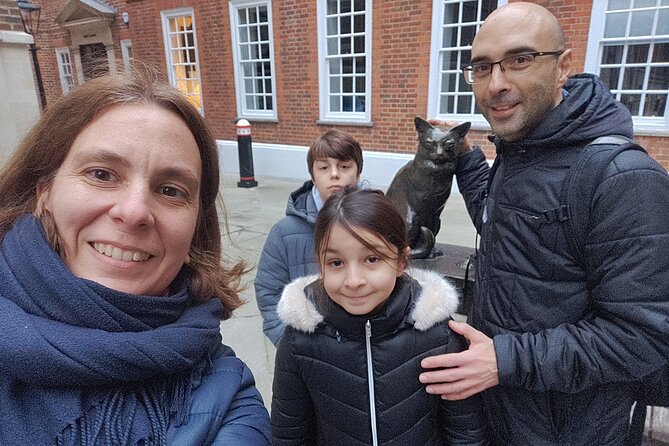
One review singled out the call to Go find the Man in black* and that gives you a sense of the emotional style of this quest. You’re not just doing a scavenger hunt for facts; you’re chasing a narrative thread, and the “find” wording fits the activity.
In terms of difficulty, the same review described the clues as not too easy and not too difficult. That’s the sweet spot for a self-guided game. If you want something relaxing, this should feel doable without turning into a full-time detective case. If you like a mental workout, it’s still engaging.
My advice: give each stop 5–10 minutes before you start walking in circles. If the answer doesn’t appear fast, pause, change your approach, and look at the parts you’d normally skim: plaques, inscriptions, and architectural details. The tour’s theme depends on you noticing.
Flexibility that makes the walk feel like your day
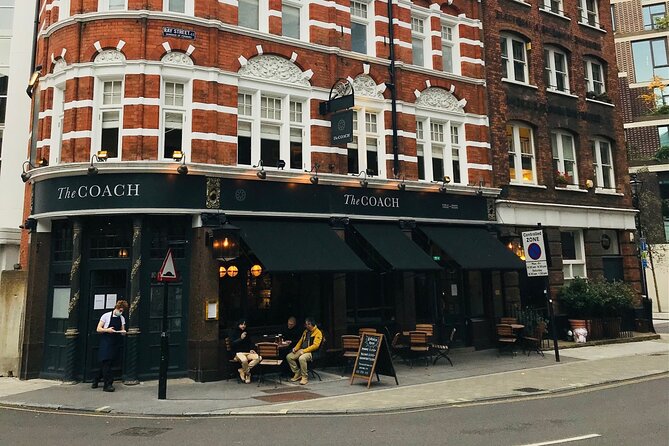
This experience is built for flexibility. You can start at any hour and the game is available 24/7. You can also take a break and come back later and resume from where you left off.
That matters because London plans can go sideways. Rain happens. You might find a pub you want to actually sit in for a bit. Or you might want more time at one stop and less at another. A traditional guided tour can feel rigid. A self-paced puzzle walk is easier to stretch without ruining the whole day.
You also get a mobile ticket and offline play, meaning you don’t need to keep hunting for internet just to keep the game going. That’s a real quality-of-life upgrade in a city where reception can be fine in some streets and weird in others.
Value and pacing: why $8.33 feels fair
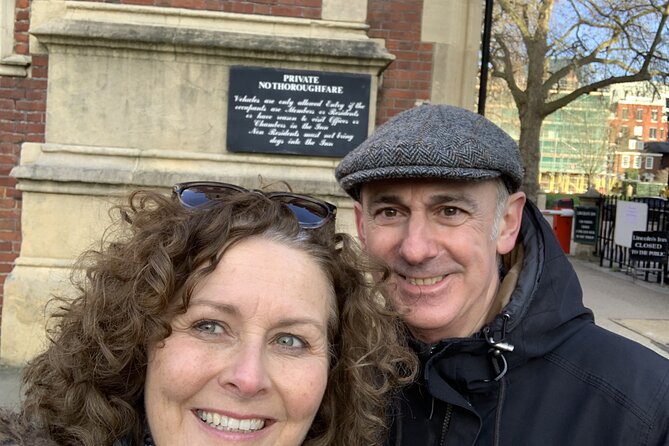
At about $8.33 per person and roughly 1 hour of gameplay, you’re buying an itinerary plus a reason to use it. You’re not paying for expert narration or a live guide’s time. Instead, you’re paying for structure, challenges, and the convenience of a set route from Doughty Street to Fleet Street.
This is the sort of value that works best if you:
- like exploring on your own
- enjoy puzzles or interactive activities
- want to reduce the cost of doing multiple stops
It’s also a smart budget alternative if you already know some Dickens basics and want a new way to see places you might otherwise rush past. The route mixes the big name Dickens sites with nearby stops that broaden the picture—Johnson, historic inns, old theatre origins, major buildings like The Maughan, and even St Dunstan-in-the-West.
Who this self-guided Dickens puzzle is best for
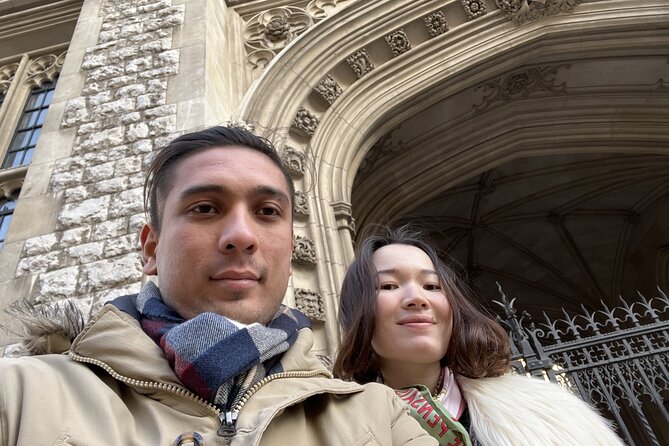
I’d point you to this tour if you want:
- quiet sightseeing with no human contact
- an easy “start whenever” activity
- a plan that nudges you into reading details you’d normally ignore
- a fun way to see central London without a strict group schedule
It may not be your best fit if you strongly prefer a guide’s voice, deeper storytelling on demand, or if you dislike puzzle-style tasks. Since the format relies on you finding answers by looking around, you’ll want a mindset that’s happy to slow down and observe.
Should you book this Dickens Puzzle Questo tour?
Book it if you want a practical, low-cost way to connect Dickens-era places with a game that keeps your attention on what’s in front of you. The biggest wins are the self-paced flexibility, offline access, and that private, no-guide setup that helps it feel calm rather than crowded.
Skip it only if you know you want a live guide to explain everything in real time. Otherwise, this is an efficient way to do a themed route through Holborn and toward Fleet Street while still keeping your day under your control.
FAQ
Do I need internet to play?
No. The tour is designed so you can play offline, so you don’t need an internet connection to use the game.
Is there a physical guide with me?
No. This tour does not include a physical tour guide. It’s private and self-guided.
How long does the tour take?
The duration is listed as about 1 hour.
Can I start at any time?
Yes. The experience lets you start at any hour, and it’s available 24/7 every day.
Where do I start and where does it end?
Start at 47 Doughty St, London WC1N 2LW and end at 145 Fleet St, London EC4A 2BU.
What language is the experience offered in?
It’s offered in English.
Is this tour private?
Yes. It’s listed as a private tour/activity, so only your group participates.
Can I cancel for a full refund?
Yes, you can cancel for a full refund if you cancel at least 24 hours before the experience start time. If you cancel within 24 hours, the amount paid is not refunded.
Are service animals allowed?
Yes. Service animals are allowed.
More Guided in London
- Magical London: Harry Potter Guided Walking Tour
★ 4.7 · 22,044 reviews - London: Emirates Stadium Entry Ticket and Audio Guide
★ 4.7 · 5,513 reviews - London: Christmas Lights Bus Tour With Live Guide
★ 4.0 · 5,410 reviews - Stonehenge, Windsor Castle and Bath Full Day Guided Tour
★ 4.5 · 5,346 reviews - London Jack the Ripper Guided Tour with Ripper-Vision
★ 4.5 · 4,840 reviews
More Tours in London
- From London: Harry Potter Warner Bros Studio Tour
★ 4.7 · 26,588 reviews - Magical London: Harry Potter Guided Walking Tour
★ 4.7 · 22,044 reviews - London: Warner Bros. Studio Harry Potter Tour & Branded Bus
★ 4.7 · 19,194 reviews - London Big Bus Hop-On Hop-Off Tour with Optional River Cruise
★ 3.5 · 10,803 reviews - London Small Group Tour of Historical Pubs
★ 5.0 · 10,422 reviews
More Tour Reviews in London
- From London: Harry Potter Warner Bros Studio Tour
★ 4.7 · 26,588 reviews - London: Westminster to Greenwich River Thames Cruise
★ 4.5 · 22,836 reviews - Magical London: Harry Potter Guided Walking Tour
★ 4.7 · 22,044 reviews - London: Madame Tussauds London
★ 4.6 · 20,915 reviews - London: Warner Bros. Studio Harry Potter Tour & Branded Bus
★ 4.7 · 19,194 reviews
Just reviewed around London





Self-Guided Tours, compared.
 ★ 4.7Emirates Stadium Entry Ticket and Audio GuideFrom $475,513 reviews
 ★ 4.0Westminster Abbey Entrance Ticket Including Audio GuideFrom $41661 reviews
 ★ 4.5British Museum Audio Tour & Priority Entrance TicketFrom $9631 reviews
 ★ 4.6Churchill War Rooms Ticket & Political London AudioFrom $62224 reviews
 ★ 3.5Windsor Castle Tour from London with Transportation & Audio GuideFrom $94222 reviews
 ★ 4.0London Panoramic Open Top Bus Tour with Audio GuideFrom $48209 reviews
 ★ 4.8Royal Walking Tour and Buckingham Palace Audio TourFrom $100154 reviews
 ★ 4.3Self-Guided Notting Hill Walking Tour with an APPFrom $14120 reviews
Browse the lists this tour appears in