
Reviewed · BRITISH MUSEUM TOURS
London: British Museum Tour with Archaeologist Guide
You can walk in as a tourist and leave with stories. This British Museum tour uses an archaeologist guide to connect huge collections into one clear timeline of ancient life. I love how the tour turns objects into explanations you can remember, not just plaques you skim.
Two things I especially liked: the guide’s storytelling (the kind that makes you look twice at what you thought you already knew) and the tight focus on major highlights without making you feel rushed. One thing to consider: the tour starts with a prompt departure, and the museum can get crowded, so you’ll want to keep up with the group.
In This Review
- Key highlights worth your attention
- Why an archaeologist guide changes everything at the British Museum
- Russell Square meet-up and the 9:45am departure rule
- Gallery focus: seeing the Rosetta Stone as a turning point
- Ramses II and the Assyrian world: when power gets carved in stone
- The Parthenon Marbles: seeing context, not just controversy
- Lewis Chessmen and the Viking angle: everyday objects with big reach
- Sutton Hoo hoard: stepping into the so-called Dark Ages
- Aztec crowns, Moai statues, and Easter Island mysteries
- How the 2.5 hours actually feels in a crowded museum
- What’s included, and what you’ll need to plan on your end
- Is it worth $58? Here’s how I’d judge the value
- Who should book this tour—and who might prefer something else
- Should you book the British Museum archaeologist tour?
- FAQ
- Where do we meet for the British Museum tour?
- How long is the tour?
- What time does the group leave?
- Is entry included?
- Do we skip the line?
- What languages is the guide available in?
- Is the tour wheelchair accessible?
- Do I need to bring anything?
- Is food included?
- Are there restrictions on bags or items?
Key highlights worth your attention
- Skip-the-line entrance to cut down time lost in crowds
- Archaeologist guide who connects artifacts to real questions scholars still debate
- Big hitters like the Rosetta Stone, Ramses II, Parthenon Marbles, and Lewis Chessmen
- Cross-civilization tour format linking Egypt, Greece, Vikings, and beyond in one run
- Built for questions, with time to ask and get answers during the galleries
- Pacing that fits 2.5 hours, so you don’t feel forced to choose what to see
More among the marbles and mummies
- London: British Museum Guided Tour
★ 4.3 · 1,182 reviews - British Museum London Guided Tour Semi-Private 8ppl Max
★ 5.0 · 984 reviews - London: British Museum Guided Tour with Entrance Tickets
★ 4.9 · 748 reviews - London: Tour of the British Museum
★ 4.1 · 678 reviews
Why an archaeologist guide changes everything at the British Museum
The British Museum is famous for a reason. It’s also famous for being huge, crowded, and a little overwhelming. A standard self-guided visit often turns into a frantic checklist: see famous things, move on, forget the why.
This tour fixes that problem by adding an expert lens. You get an archaeologist’s way of explaining what an object can tell us—who made it, how it was used, and what might still be unknown. That approach helps the museum feel less like a storage hall and more like a timeline of human problem-solving.
I also like that the experience stays practical. You’re not asked to memorize everything. You’re guided to the displays that do the heavy lifting, then you’re encouraged to keep exploring after the tour with a better sense of where your interests fit.
Russell Square meet-up and the 9:45am departure rule
The meeting point is at the entrance of Russell Square Station, and your guide is holding a tablet that shows Spirit of Discovery. That makes it straightforward to find the group without guessing.
The one operational detail that matters: they leave promptly at 9:45am to hit the museum entry slot. If you drift in late, you can miss that flow. If you’re even a little unsure, arrive earlier than you think you need to, use the restrooms if required, and get your route to the entrance ironed out before your departure time.
The practical perks here are real. With a separate entrance and a guided start, you lose less time to lines and regrouping. In a museum this packed, saving even 20 minutes can be the difference between a calm visit and a stressful one.
Gallery focus: seeing the Rosetta Stone as a turning point
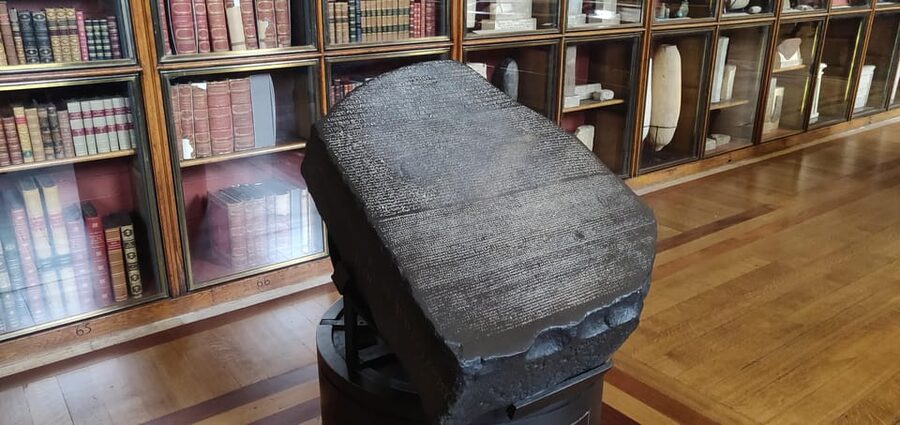
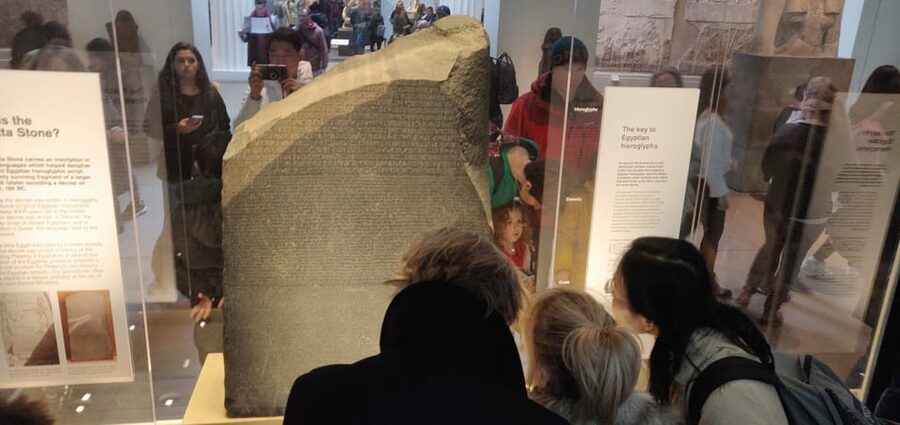
One of the tour’s best “aha” moments is standing before the Rosetta Stone area and understanding why it mattered. You’ll hear the story of how it helped unlock Egyptian hieroglyphs, and why that breakthrough changed how people could read ancient Egyptian writing.
Here’s what that does for your visit. Without context, the Rosetta Stone can feel like a famous rock behind glass. With the explanation, it becomes a tool that bridged languages and made a whole civilization legible to modern scholars.
If you’re the kind of person who likes figuring out how knowledge is built, you’ll appreciate this stop. It’s not just about what the artifact is; it’s about how new methods solved old mysteries.
Still deciding? A handful more London outings we rated




Ramses II and the Assyrian world: when power gets carved in stone
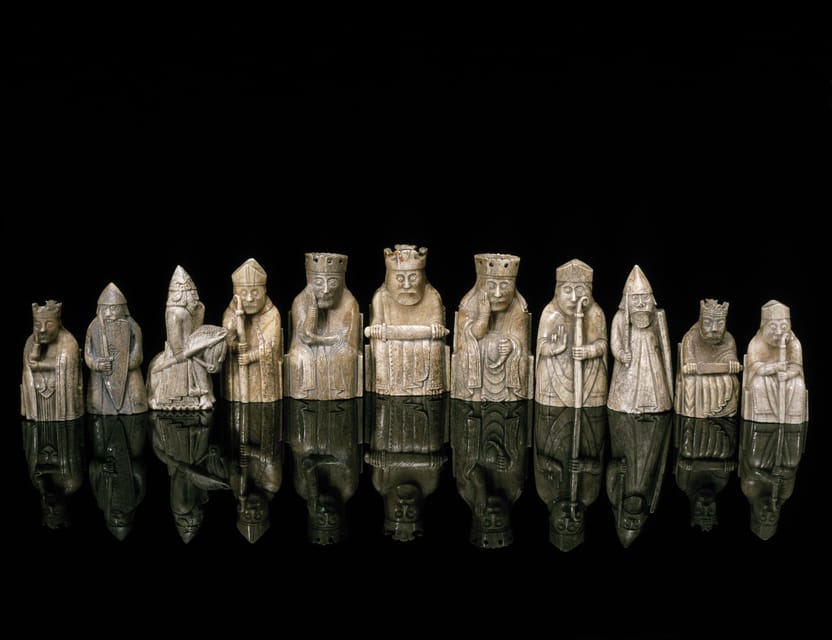
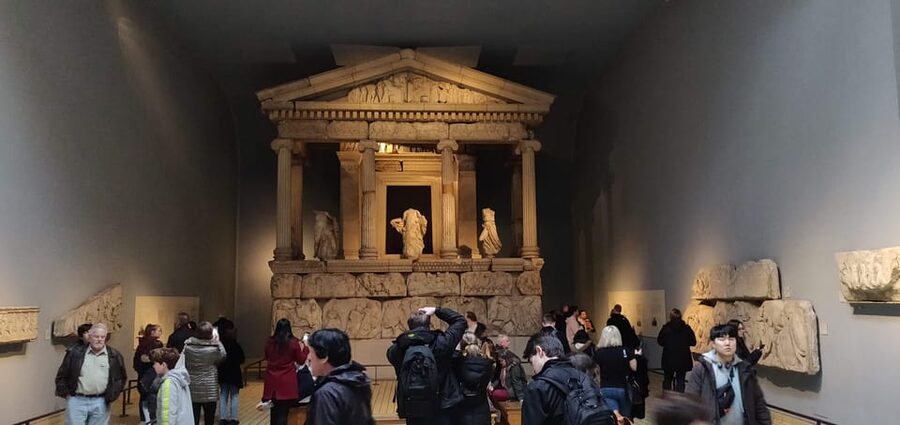
After the Egyptian writing story, the tour keeps moving through monumental displays. Expect time around the colossal statue of Pharaoh Ramses II and the grand visual language of the Assyrian Empire, including towering palaces and their scale-driven impact.
This is where the archaeologist approach shines again. You’re not only seeing impressive art. You’re learning how rulers used imagery—what they wanted people to believe, and how those messages were built to last.
A big value here is that the guide helps you connect style to purpose. Ancient civilizations weren’t making objects just to decorate walls. They made them to communicate status, authority, belief, and control—often to people who might never meet the ruler in person.
The Parthenon Marbles: seeing context, not just controversy
You’ll also get time for the Parthenon Marbles, one of the British Museum’s most recognized highlights. These pieces can feel intimidating if you only approach them as a famous artwork.
The tour helps by framing them in plain language: what they are, why they were made, and how the story of discovery and collection shaped what you see today. That shift matters. It turns a “look at this important thing” moment into a “understand how this artifact traveled through time” moment.
Keep your expectations realistic. A 2.5-hour tour can’t cover every nuance of the marbles’ history in one pass. What it can do—and what it does here—is give you a grounded starting point so you can process the display when you return on your own.
Lewis Chessmen and the Viking angle: everyday objects with big reach
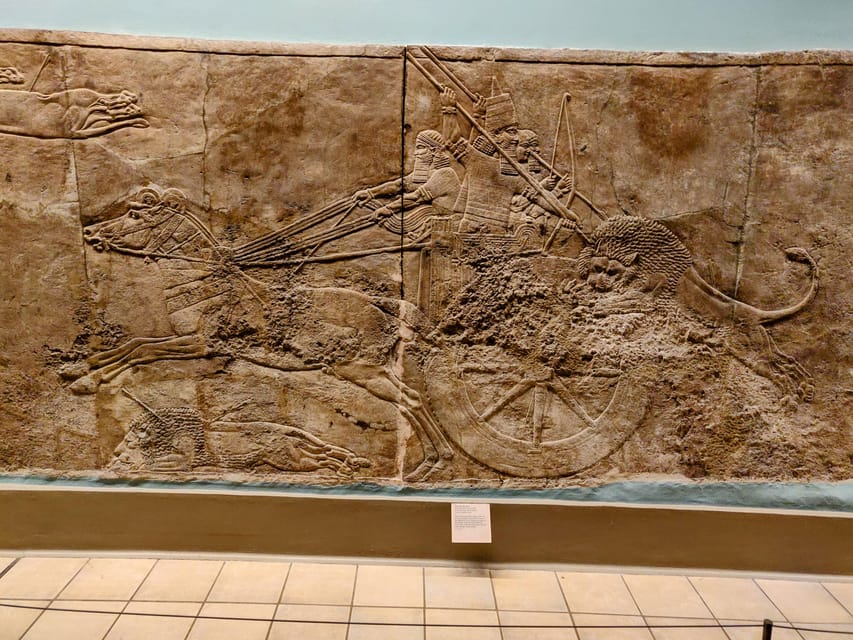
If you think the Vikings were only about raids and ships, this part is a reality check—in a good way. You’ll see the Lewis Chessmen, which are often described as among the most astonishing relics of the Viking Age.
These are the kinds of artifacts that make archaeology fun, because they connect to daily life: games, skill, objects made with care, and the cultural travel of ideas. The guide’s explanations help you see the chessmen not just as Viking-famous, but as evidence of how people thought, played, and shaped their world.
One detail I really appreciated in the tour style is that the guide doesn’t treat the Vikings as a single-style stereotype. The emphasis stays on what the objects actually show, and how they fit into broader historical patterns.
Sutton Hoo hoard: stepping into the so-called Dark Ages
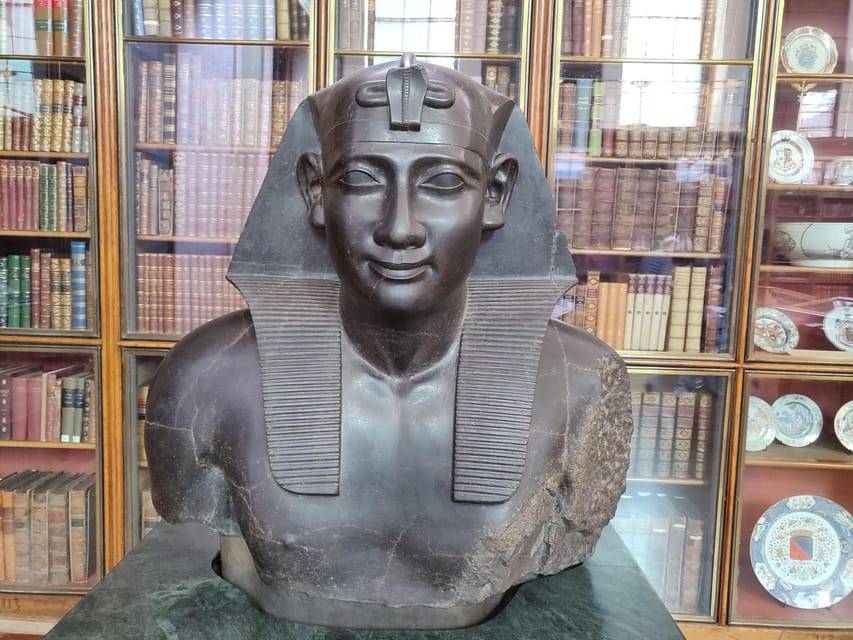
Then you get a turn toward early medieval England with the Sutton Hoo hoard. This stop is a standout because it shows how much detail survives from a world people often dismiss as unclear.
The hoard gives you a tangible window into the power and mystery tied to the mysterious King Raedwald. You’ll walk away with a stronger sense that “Dark Ages” is more of a lazy label than a real description of what people were doing.
This is also a good stop if you want to understand why archaeology is still a work in progress. Some interpretations stay contested; some questions remain open. The tour’s approach helps you feel comfortable with that uncertainty instead of treating it as a failure.
Aztec crowns, Moai statues, and Easter Island mysteries
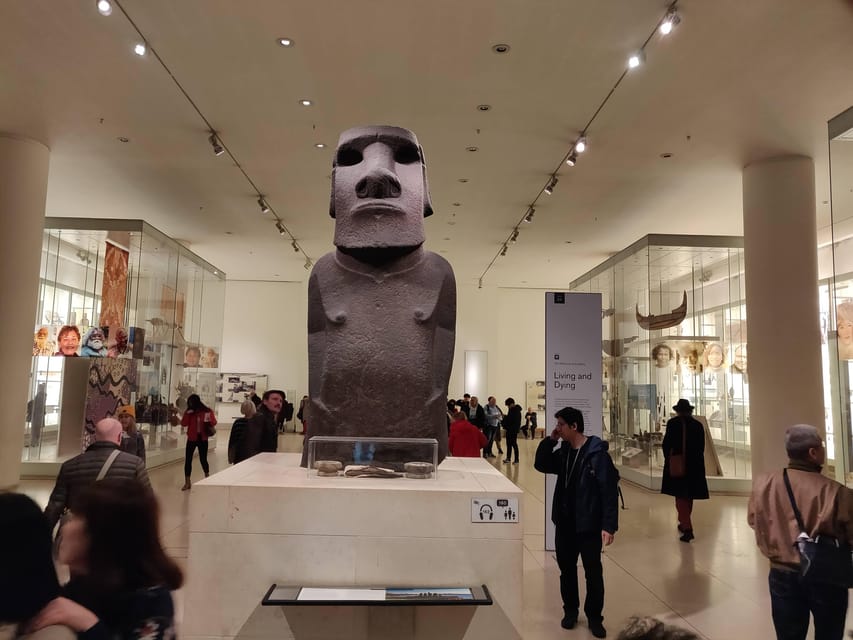
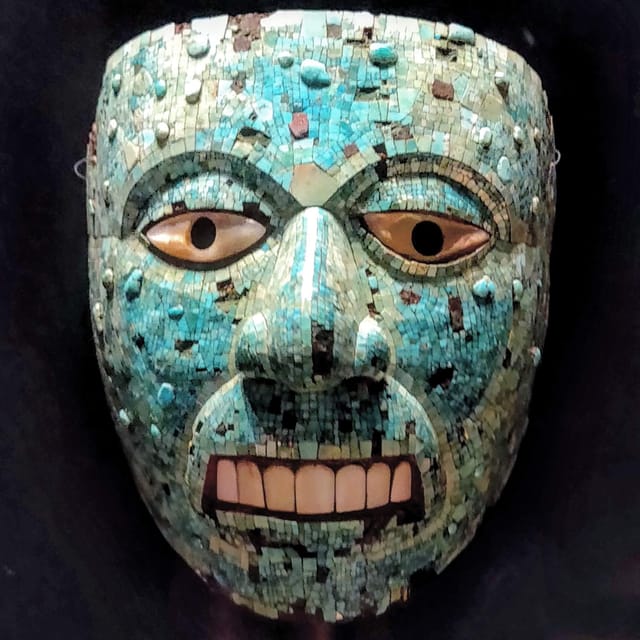
Not everything here is purely “British history.” The tour also brings in global highlights like the crown jewels of the Aztec Empire and the Moai statues connected to Easter Island.
You’ll also get mention of the enigmatic story behind those Moai statues and how the artifacts are understood in modern interpretation. This is part of what keeps the tour from feeling like one long lecture. It’s a series of time windows—different worlds—linked by the basic archaeological questions: what’s here, how do we know it, and what do we still wonder about?
For many people, the Aztec and Moai stops are the most surprising. They’re also a reminder that a museum isn’t just about one country. It’s about collecting evidence across continents, so you can compare how societies solve problems—belief, power, commemoration, and identity.
How the 2.5 hours actually feels in a crowded museum
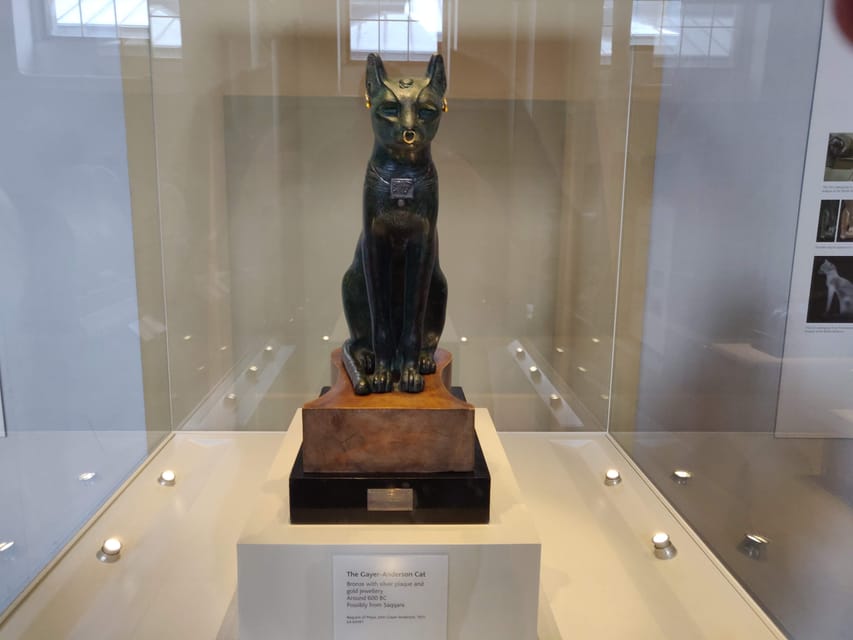
Let’s talk logistics because they affect your enjoyment. The British Museum is packed, and it can feel like you’re moving through a crowd-shaped obstacle course. This tour is designed to prevent that chaos from swallowing the day.
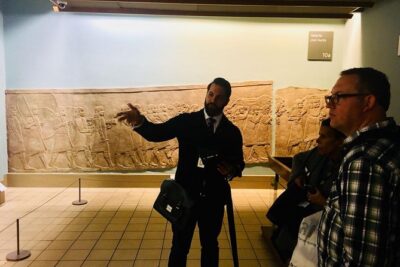
The structure is built around staying together and focusing on a curated set of displays. In one example, the group size was seven people, which helped with staying together and hearing the guide clearly.
Also: the guide’s voice matters in a noisy room. Several guests highlighted that the guide’s speaking volume and clarity make it easier to follow along even when other visitors are close by. You’ll want to position yourself where you can hear best, especially in the larger galleries.
One small drawback to keep in mind: if you’re a slow walker or you stop to read every label the moment you arrive, you might feel a bit “time-anchored” by the guided pace. The good news is that the tour keeps you moving without turning into a sprint.
What’s included, and what you’ll need to plan on your end
Included in the ticket:
- Entry to the British Museum
- The British Museum guided tour
- An archaeologist guide
- Skip-the-line entry via a separate entrance
Not included:
- Food and drinks
What you should bring:
- Comfortable shoes
- Water
That’s it. No special gear is required. But I’d still treat this like a walking tour day. Wear shoes that handle stone floors and long indoor routes, and bring a water bottle you’ll actually drink. Your feet will do most of the work, even if your brain is busy.
Is it worth $58? Here’s how I’d judge the value
At $58 per person for a 2.5-hour guided experience, the price isn’t cheap in the way museum entry can feel cheap. But value here comes from time and understanding.
You’re paying for:
- A trained guide who connects artifacts to meaning
- A guided route through a massive museum, so you don’t waste hours guessing what to prioritize
- A format that tends to keep you oriented in crowded galleries
- A chance to ask questions and get real explanations rather than guesses
A museum like this can eat half your day fast. If you only have a limited window in London, a paid guide often makes the time work better. You get your “best-of” highlights plus context, and then you can decide what to revisit on your own afterward.
If you already know everything about Egyptian hieroglyphs, Assyria, and early medieval England, you might feel less wowed per dollar. But for most people, the guide turns famous artifacts into understandable stories, and that’s where the money shows up.
Who should book this tour—and who might prefer something else
This is a great match if you:
- Want to see major museum highlights without turning your day into a frantic map-reading exercise
- Prefer explanations tied to objects, not just general museum facts
- Like stories and questions as part of learning
- Are traveling with kids or teens who get bored with long reading
It’s also a smart fit if you’re the type who likes to return to museums afterward with purpose. The tour can give you the mental framework to explore more galleries with better confidence.
It might be less ideal if you:
- Want total freedom to wander at your own pace for the full time
- Hate being in a group line while you look for your next stop
- Arrive late and can’t realistically manage a prompt start
Should you book the British Museum archaeologist tour?
If you have limited time and you want the British Museum to make sense fast, I’d book it. The blend of major artifacts—Rosetta Stone, Parthenon Marbles, Lewis Chessmen, and Sutton Hoo—plus the archaeologist’s explanations is exactly the kind of value that turns a famous museum into an actual experience.
My practical advice: plan to arrive early at Russell Square, wear shoes you can walk in for a few hours, and come ready to listen. If you do that, you’ll leave with more than photos. You’ll have a story track you can follow the next time you see these objects, whether you return the same day or years later.
FAQ
Where do we meet for the British Museum tour?
You meet at the entrance of Russell Square Station. Your guide will be holding a tablet showing Spirit of Discovery.
How long is the tour?
The tour lasts about 2.5 hours.
What time does the group leave?
They need to leave promptly at 9:45am to make the museum entry slot.
Is entry included?
Yes. British Museum entry is included, along with the guided tour.
Do we skip the line?
Yes. The tour includes a separate entrance to skip the usual line.
What languages is the guide available in?
The live tour guide speaks English.
Is the tour wheelchair accessible?
Yes, the tour is wheelchair accessible.
Do I need to bring anything?
Bring comfortable shoes and water.
Is food included?
No. Food and drinks are not included.
Are there restrictions on bags or items?
Weapons or sharp objects are not allowed, and luggage or large bags are not allowed.
More Tours in London
- From London: Harry Potter Warner Bros Studio Tour
★ 4.7 · 26,588 reviews - Magical London: Harry Potter Guided Walking Tour
★ 4.7 · 22,044 reviews - London: Warner Bros. Studio Harry Potter Tour & Branded Bus
★ 4.7 · 19,194 reviews - London Big Bus Hop-On Hop-Off Tour with Optional River Cruise
★ 3.5 · 10,803 reviews - London Small Group Tour of Historical Pubs
★ 5.0 · 10,422 reviews
More Tour Reviews in London
- From London: Harry Potter Warner Bros Studio Tour
★ 4.7 · 26,588 reviews - London: Westminster to Greenwich River Thames Cruise
★ 4.5 · 22,836 reviews - Magical London: Harry Potter Guided Walking Tour
★ 4.7 · 22,044 reviews - London: Madame Tussauds London
★ 4.6 · 20,915 reviews - London: Warner Bros. Studio Harry Potter Tour & Branded Bus
★ 4.7 · 19,194 reviews
The British Museum, Continued
- London: British Museum Guided Tour
★ 4.3 · 1,182 reviews - British Museum London Guided Tour Semi-Private 8ppl Max
★ 5.0 · 984 reviews - London: British Museum Guided Tour with Entrance Tickets
★ 4.9 · 748 reviews - London: Tour of the British Museum
★ 4.1 · 678 reviews - London: British Museum Audio Tour & Priority Entrance Ticket
★ 4.5 · 631 reviews
Just reviewed around London





British Museum Tours, compared.
 ★ 4.3British Museum Guided TourFrom $231,182 reviews
 ★ 5.0British Museum London Guided Tour Semi-Private 8ppl MaxFrom $108984 reviews
 ★ 4.9British Museum Guided Tour with Entrance TicketsFrom $39748 reviews
 ★ 4.1Tour of the British MuseumFrom $14678 reviews
 ★ 4.5British Museum Audio Tour & Priority Entrance TicketFrom $9631 reviews
 ★ 5.0The British Museum London – Exclusive Guided Museum TourFrom $108555 reviews
 ★ 4.2Afternoon Tea at the British MuseumFrom $58511 reviews
 ★ 4.0British Museum Guided TourFrom $18470 reviews
Browse the lists this tour appears in