
Reviewed · BRITISH MUSEUM TOURS
London: British Museum Private Guided Tour with Tickets
Two and a half hours beats a full day. This private British Museum guided visit is designed to help you see the right objects fast, then understand what they meant to the people who made them. You get a licensed Blue Badge professional who can connect Egypt, Greece, Rome, and early England without turning it into a lecture.
What I like most: you focus on standout masterpieces like the Rosetta Stone and the Sutton Hoo burial story, so your museum time feels like it has a shape. The other big win is the guide’s delivery style: you’re not just looking at artifacts, you’re learning the why behind them, including archaeology and how scholars read clues from damaged, incomplete finds.
One thing to consider: this is a highlights tour, not an everything tour. If you want to wander the full museum floor-by-floor, you’ll still need extra time after the 2.5 hours.
In This Review
- Key things you’ll notice on this British Museum private tour
- Entering The British Museum with a Blue Badge guide’s plan
- Meeting on Great Russell Street and using express security
- Rosetta Stone and Tutankhamun: Egypt’s stories in real time
- Why the Rosetta Stone isn’t just famous
- Tutankhamun’s end and the one-pharaoh-grave puzzle
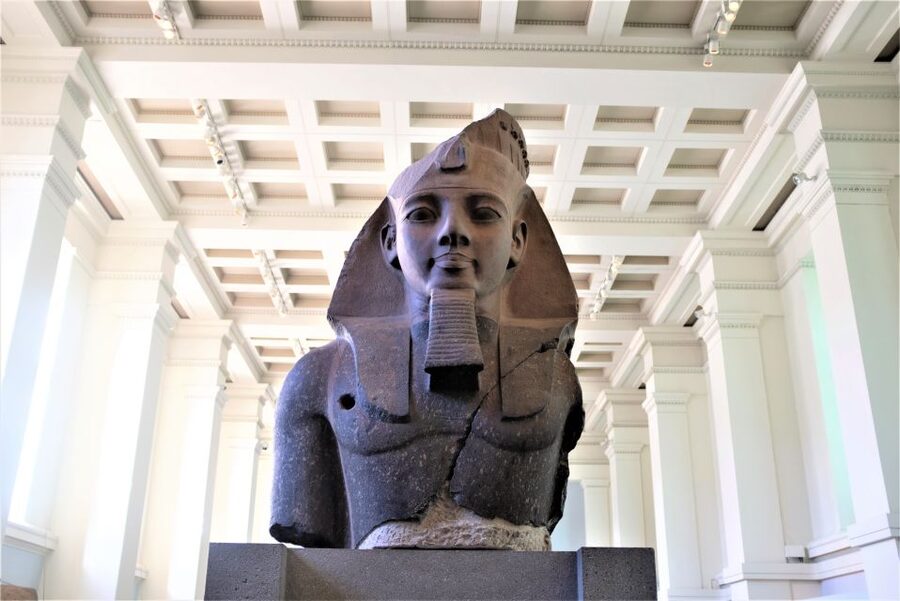
- More Egypt objects: Ramesses II, a sacred cat, and a scarab
- Greek antiquities: Parthenon sculptures and the politics behind the stone
- Seeing the Parthenon sculptures without losing the plot
- Why the object-and-story connection is the point
- Roman highlights: conquest across the Mediterranean and objects with attitude
- Gladiator helmet, Roman glass, and an emperor’s face
- Why this Roman section feels practical
- Sutton Hoo mysteries: the Anglo-Saxon world in a museum spotlight
- Why this isn’t just English trivia
- The emotional payoff
- Price and Logistics: is $337 per group up to 6 worth it?
- Who this British Museum private tour suits best
- Tips so you enjoy the full 2.5 hours
- Should you book this private British Museum guided tour?
Key things you’ll notice on this British Museum private tour
- Blue Badge guidance that explains what you’re actually looking at
- Fast entry with an express security check so you start sooner
- Egypt highlights built around the Rosetta Stone and Tutankhamun’s story
- Greek and Roman stops that connect objects to real places like Sparta and Athens
- A Sutton Hoo segment that makes Anglo-Saxon England feel understandable
- A pace that works for families, including kids who usually lose interest
More among the marbles and mummies
- London: British Museum Guided Tour
★ 4.3 · 1,182 reviews - British Museum London Guided Tour Semi-Private 8ppl Max
★ 5.0 · 984 reviews - London: British Museum Guided Tour with Entrance Tickets
★ 4.9 · 748 reviews - London: Tour of the British Museum
★ 4.1 · 678 reviews
Entering The British Museum with a Blue Badge guide’s plan
The British Museum is huge. Even if you love history, “just walking around” can turn into a blur of rooms and labels. This private format helps because someone with a license and deep museum training leads you to a set of objects that actually talk to each other across centuries.
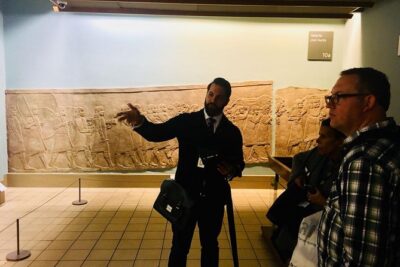
In practice, the tour works like a guided argument for how we know what we know. Instead of only saying an artifact is old, your guide ties it to evidence, language, and the messy reality of archaeology. And since it’s a private group, you can ask questions and steer the pace toward what grabs you.
If your guide is Anthony Matthews (a name that shows up often in bookings), you’ll likely feel that extra layer of context. Multiple groups describe him as a retired archaeologist who makes the objects feel alive, not just displayed.
Meeting on Great Russell Street and using express security
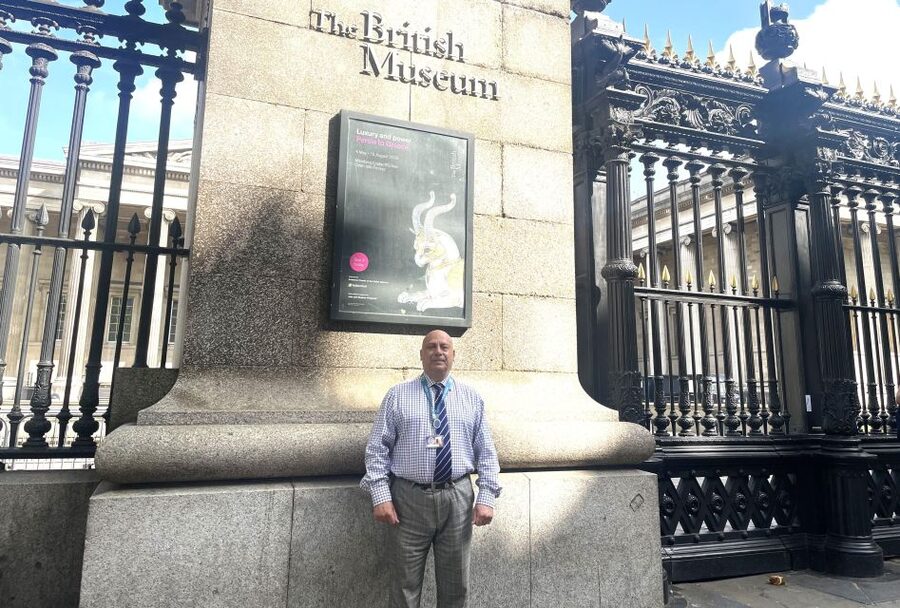
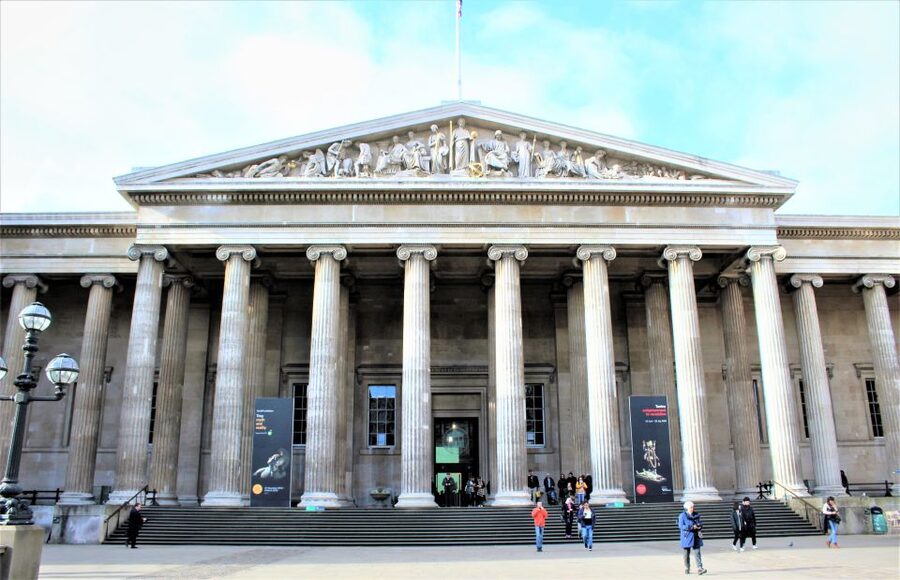
You meet outside the main entrance area on Great Russell Street. Look to the right of the red telephone boxes, left of the main entrance gates, opposite Starbucks. You also need to show up 15 minutes early so you can start with the group and skip the line through an express security check.
That “arrive early” detail matters more than it sounds. The museum is busy, and being on time is how you keep the tour flowing instead of waiting around in a crowded entrance zone. It’s also a rain-or-shine situation, so bring whatever keeps you comfortable outdoors.
Practical note: audio recording isn’t allowed. If you like to capture details, plan to use photos (where permitted) and take quick notes on what you find confusing. If you’re traveling with limited mobility, the tour is wheelchair accessible, and the private setup generally makes it easier to manage stops.
Rosetta Stone and Tutankhamun: Egypt’s stories in real time
The tour’s Egypt portion gives you a strong “start here” foundation. You’ll see the objects that make people say the British Museum feels like a time machine, but you’ll also get the context to understand why those objects were so important.
Still deciding? A handful more London outings we rated

Why the Rosetta Stone isn’t just famous
The Rosetta Stone is the star because it’s the key to unlocking Egyptian writing for modern readers. Your guide explains why it’s crucial: it links known language to unknown inscriptions, turning a mystery into something you can actually decode. If you’ve ever stared at hieroglyphs and wondered what the marks mean, this stop usually turns that confusion into curiosity.
One standout detail from the guide’s style: if Anthony Matthews is leading, he can handle reading multiple scripts connected to the Rosetta Stone, including hieroglyphics. That means you’re not only hearing a story about decipherment—you’re getting a sense of what decipherment looks like in practice.
Tutankhamun’s end and the one-pharaoh-grave puzzle
Next comes the Tutankhamun segment, including how he died and the claim that his was the only pharaoh’s grave never discovered. Even if you’ve heard bits and pieces before, the framing matters. You get a clearer picture of the uncertainties around ancient histories—what evidence suggests, what remains debated, and why the absence of a discovery can be as meaningful as a discovery itself.
More Egypt objects: Ramesses II, a sacred cat, and a scarab
Then the tour keeps stacking the details with stops like:
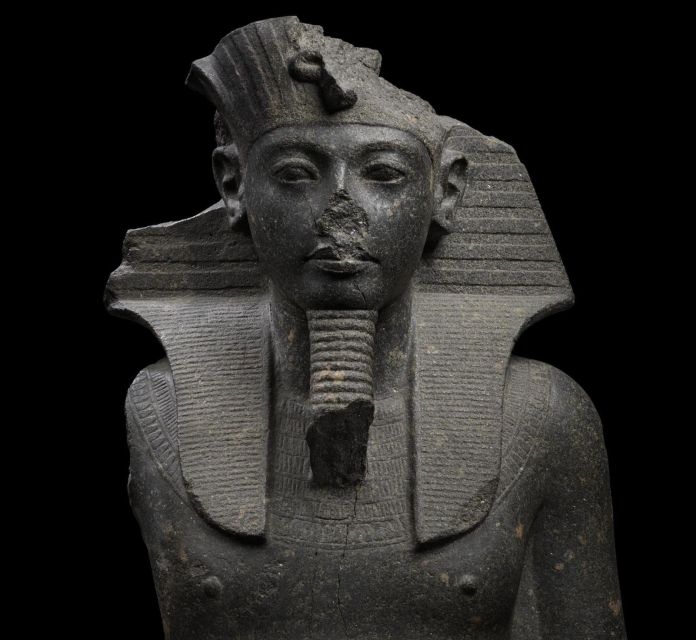
- A great statue of Ramesses II
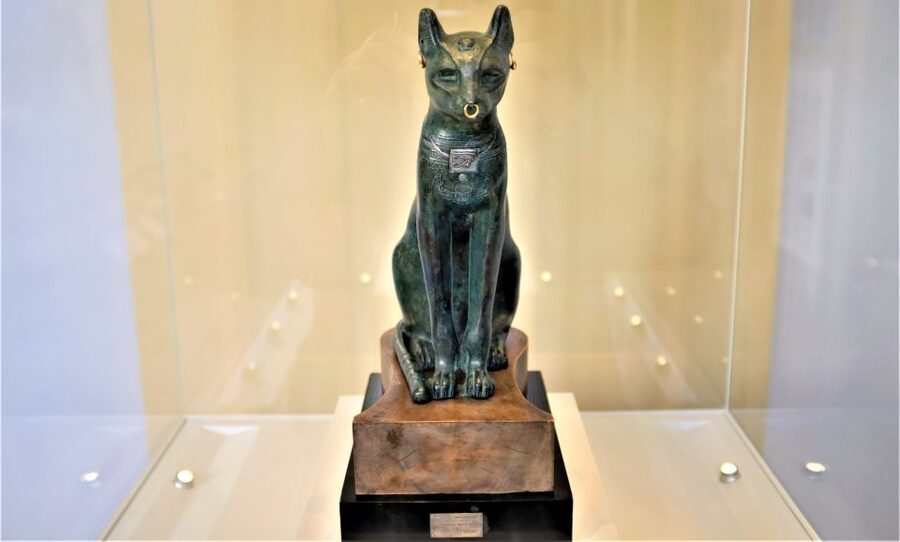
- A sacred metal cat
- A giant scarab beetle
These aren’t random collectibles. They help you see how Egyptian belief systems and symbolism show up as art you can stand in front of. The cat and scarab highlights in particular are perfect for understanding that ancient Egyptians didn’t just build objects to worship ideas—they built objects that represented ideas you could hold onto.
What you’ll love here: you’ll leave with a mental map of Egypt’s big themes: language, royal authority, and sacred symbolism, all tied to specific objects.
What to watch for: if you’re not into Egypt at all, you might feel the time spent here more than you’d like. But the tour is designed so Egypt gives you the tools to understand the later sections too.
Greek antiquities: Parthenon sculptures and the politics behind the stone
After Egypt, the tour shifts to Greek culture, and it stays tightly connected to place and power. You’ll spend time with Greek antiquities, including the Parthenon sculptures.
Seeing the Parthenon sculptures without losing the plot
It’s easy to treat sculptures as “pretty old stuff.” This tour pushes you to notice the structure and the design logic—your guide even explains why the room feels architecturally flawless. That matters because it changes how you look. You stop treating the display as storage and start seeing it as part of the storytelling.
You’ll also hear about the politics of city-states in a way that makes the art feel less random. The guide covers topics like Sparta and Athens, so the sculptures don’t sit in your head as isolated masterpieces. They become connected to real communities with rival systems.
Why the object-and-story connection is the point
This is where a private guide earns its cost. The British Museum has enough highlights to overwhelm you. When someone explains how an object relates to Greek identity, you’re no longer only “seeing” the museum—you’re learning how to read it.
Roman highlights: conquest across the Mediterranean and objects with attitude
Next comes Rome, and the tour doesn’t slow down. The big idea is clear: how and why Rome conquered every country bordering the Mediterranean. That’s a huge claim, so your guide keeps it grounded in the material culture you can see.
Gladiator helmet, Roman glass, and an emperor’s face
You’ll look at Roman artifacts including:
- A gladiator’s helmet
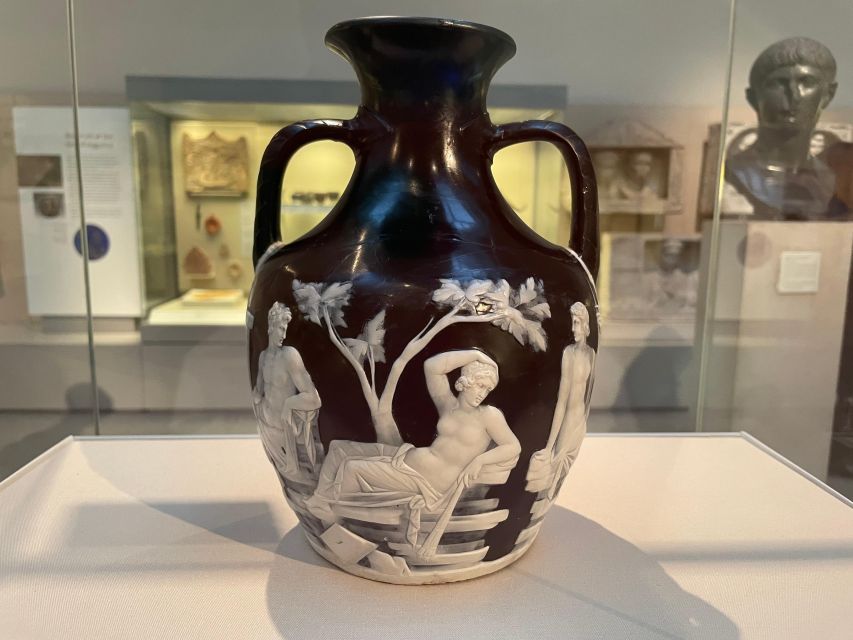
- Brilliant Roman glass
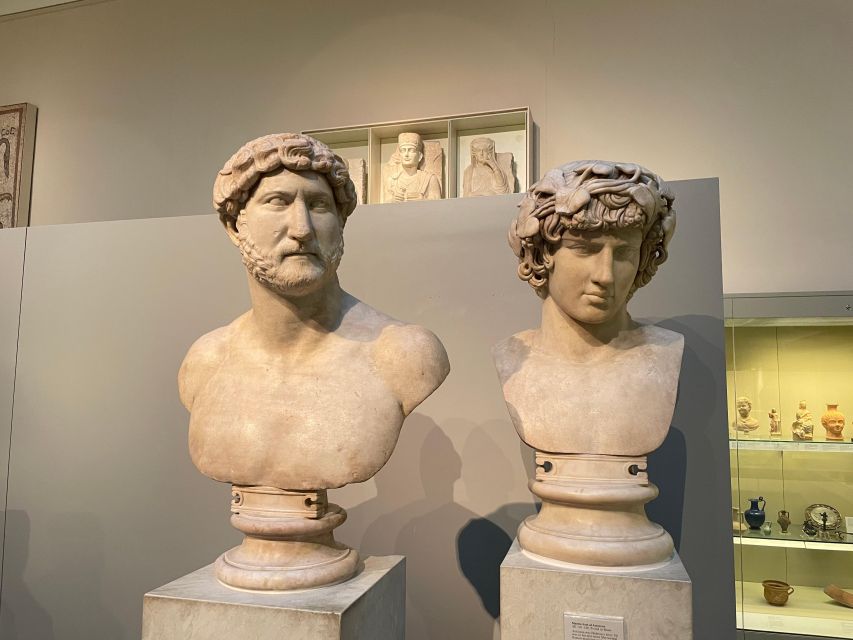
- A bust of the greatest emperor of Rome
Those choices make sense. They span entertainment, technology, and authority. Gladiator equipment helps you picture public spectacle. Glass shows skill and everyday luxury. A high-status bust anchors the whole idea of propaganda and political legitimacy—Rome wanted you to admire power, not just tolerate it.
Why this Roman section feels practical
Rome can become abstract if you only memorize dates and rulers. Here, the objects act like “proof points.” You see how conquest, empire-building, and social life show up in things people made, wore, used, and displayed.
If you love Roman history, this segment is a fast hit.
If you’re less into Rome, the objects still work because they’re tangible and visual.
Sutton Hoo mysteries: the Anglo-Saxon world in a museum spotlight
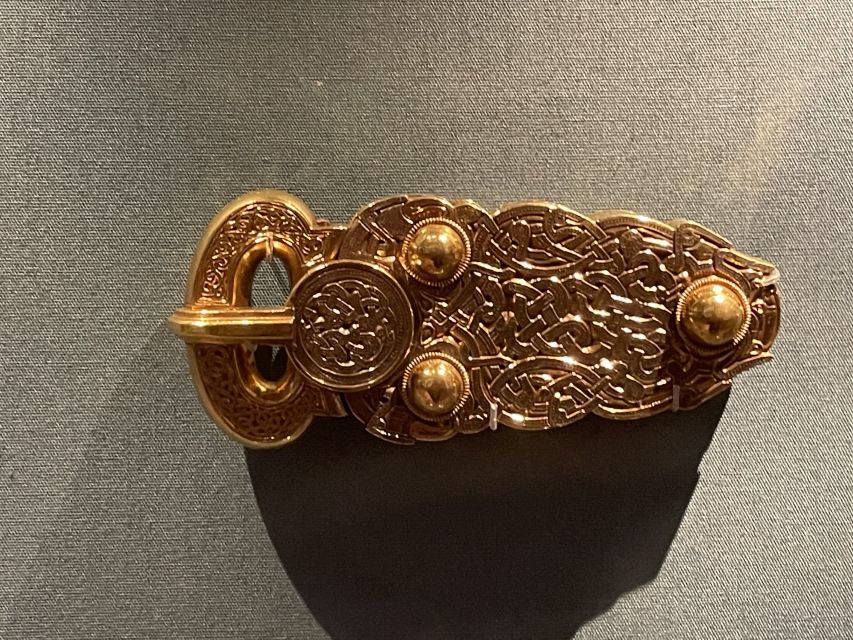
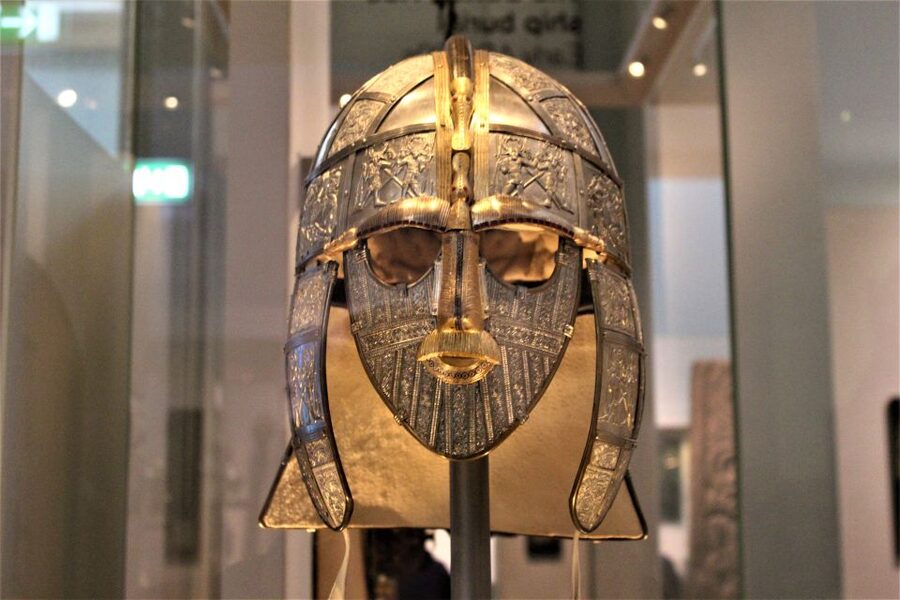
The tour’s final act turns toward England’s early history through the Sutton Hoo burial.
Why this isn’t just English trivia
Sutton Hoo is powerful because it changes the scale of early England. You’re not just learning names in a timeline. You’re glimpsing a world that helped form what England became. The guide explains the mysteries around the burial and why the finds matter, which makes the objects feel connected to human decisions and belief systems—not just ancient loot.
If you like archaeology that feels like detective work, this is the portion that often gets your attention most. “Mysteries” is doing real work here. It signals uncertainty: what we can infer, what we can’t, and how evidence shaped the story over time.
The emotional payoff
By the time you reach Sutton Hoo, you’ve already seen Egypt’s decoding story, Greece’s civic identity, and Rome’s power machinery. Then early England arrives as a final thread that makes the museum feel unified rather than like separate collections stitched together.
Price and Logistics: is $337 per group up to 6 worth it?
At $337 per group up to 6 for a 2.5-hour private tour, the cost can feel high at first glance. But you should compare it to two alternatives:
- Paying for just tickets and trying to plan your own route through a museum that can easily take a full day
- Hiring a guide where you still risk wandering into the wrong rooms or missing the connections that make artifacts meaningful
This tour includes private guiding plus entry tickets, and it also includes skip-the-line express security. That combination matters in London museums where time gets eaten by queues.
The value really shows if:
- You want a guided highlights route that avoids decision fatigue
- You care about meaning, not only age
- You’re traveling with kids or multiple adults and want everyone to stay engaged
If your group is only one or two people and you’re on a tight budget, it may be better to self-guide a shortlist of rooms. But if you can spread the cost across up to six people, it becomes a far easier pill to swallow.
Who this British Museum private tour suits best
This tour is built for people who like structure. You get a plan, but you also get room for questions. That’s why it works for different ages—especially families with kids who need stories instead of long lists.
I’d put it at the top of your list if:
- You want Egypt, Greece, Rome, and early England covered in one tight window
- You don’t want to spend your limited London time lost in the museum maze
- You’d rather pay for a guide who can explain why objects matter
I might skip it if:
- You plan to spend the day at the British Museum no matter what and want maximum room coverage
- You prefer quiet self-paced reading and don’t want to coordinate around a set tour route
- Your group already has a deep archaeology guidebook strategy and doesn’t need help prioritizing
Tips so you enjoy the full 2.5 hours
A few small moves make a big difference.
- Arrive early at the meeting point so you actually start on time. The tour is designed to run efficiently.
- Decide your top two interests before you go. Egypt? Greeks and Romans? Sutton Hoo and Anglo-Saxon England? The guide can steer the emphasis.
- Prepare one question you’d really like answered. The format rewards curiosity, especially in the Rosetta Stone and Sutton Hoo segments.
- Wear comfortable shoes. The British Museum is all walking, and 2.5 hours goes by quickly.
One more practical note: because audio recording isn’t allowed, consider taking short notes on what you want to look up later. You’ll remember more when you’ve written the parts that surprised you.
Should you book this private British Museum guided tour?
Book it if you want a smart, guided highlights route that connects major civilizations through specific objects—Rosetta Stone and Egypt, Parthenon sculptures and the city-states, Roman power and everyday craft, then Sutton Hoo and early England. The private format, included tickets, and express security are exactly what you want if you dislike wasting time in lines or deciding where to go.
I’d hesitate only if you’re aiming to see everything in one visit or you prefer an unstructured museum drift. In that case, self-guiding may suit you better.
If your goal is understanding in a limited time, this is one of the most efficient ways to experience the British Museum without turning it into a stressful scavenger hunt.
More Tours in London
- From London: Harry Potter Warner Bros Studio Tour
★ 4.7 · 26,588 reviews - Magical London: Harry Potter Guided Walking Tour
★ 4.7 · 22,044 reviews - London: Warner Bros. Studio Harry Potter Tour & Branded Bus
★ 4.7 · 19,194 reviews - London Big Bus Hop-On Hop-Off Tour with Optional River Cruise
★ 3.5 · 10,803 reviews - London Small Group Tour of Historical Pubs
★ 5.0 · 10,422 reviews
More Tour Reviews in London
- From London: Harry Potter Warner Bros Studio Tour
★ 4.7 · 26,588 reviews - London: Westminster to Greenwich River Thames Cruise
★ 4.5 · 22,836 reviews - Magical London: Harry Potter Guided Walking Tour
★ 4.7 · 22,044 reviews - London: Madame Tussauds London
★ 4.6 · 20,915 reviews - London: Warner Bros. Studio Harry Potter Tour & Branded Bus
★ 4.7 · 19,194 reviews
The British Museum, Continued
- London: British Museum Guided Tour
★ 4.3 · 1,182 reviews - British Museum London Guided Tour Semi-Private 8ppl Max
★ 5.0 · 984 reviews - London: British Museum Guided Tour with Entrance Tickets
★ 4.9 · 748 reviews - London: Tour of the British Museum
★ 4.1 · 678 reviews - London: British Museum Audio Tour & Priority Entrance Ticket
★ 4.5 · 631 reviews
Just reviewed around London





British Museum Tours, compared.
 ★ 4.3British Museum Guided TourFrom $231,182 reviews
 ★ 5.0British Museum London Guided Tour Semi-Private 8ppl MaxFrom $108984 reviews
 ★ 4.9British Museum Guided Tour with Entrance TicketsFrom $39748 reviews
 ★ 4.1Tour of the British MuseumFrom $14678 reviews
 ★ 4.5British Museum Audio Tour & Priority Entrance TicketFrom $9631 reviews
 ★ 5.0The British Museum London – Exclusive Guided Museum TourFrom $108555 reviews
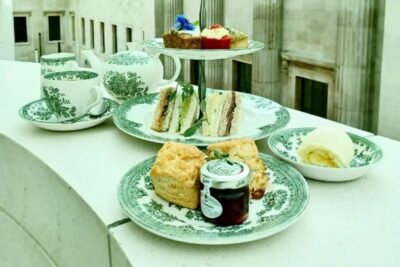 ★ 4.2Afternoon Tea at the British MuseumFrom $58511 reviews
 ★ 4.0British Museum Guided TourFrom $18470 reviews
Browse the lists this tour appears in