
Reviewed · BRITISH MUSEUM TOURS
London: British Museum Guided Tour with Free Entrance Ticket
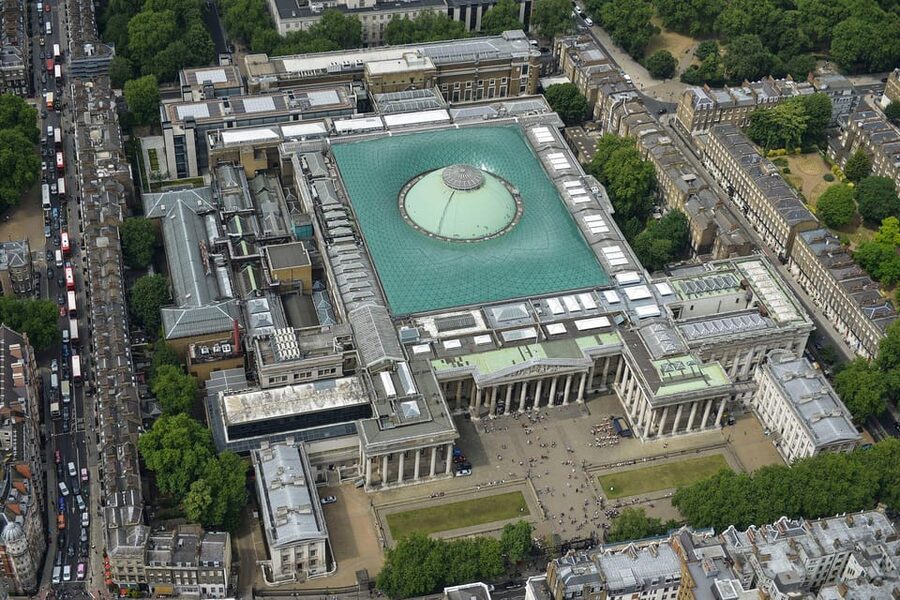
The British Museum in two hours. It’s a smart way to hit the places you’ll actually remember, with a guided route that strings together global icons like the Rosetta Stone and the Elgin Marbles. You also get fast-track entry, which matters in a museum this popular.
I love that the tour focuses on story over scrolling. You’ll see big-name objects like the colossal statue of Ramses II, the Assyrian human-headed winged lions, and the rare Aztec double-headed mosaic snake, and you’ll learn the hidden stories tied to them.
One drawback to plan around: the meeting instructions can shift based on crowd flow. The guide meets you at the main entrance after security on the staircase, but if things get crowded, you may need to use an alternate entrance and confirm details in your WhatsApp messages.
In This Review
- Key highlights worth planning for
- Why this 2-hour British Museum route feels efficient
- Fast-track entry and the real-world meeting point at the museum
- Rosetta Stone and Ramses II: the power duo that anchors the tour
- Elgin Marbles and Parthenon sculptures: seeing controversy with context
- Assyrian winged lions and the Aztec double-headed mosaic snake
- Moai and Sutton Hoo: when the museum stops being just art
- Mold Cape from Stonehenge and Lewis chessmen: the “small detail” payoff
- Is $35 good value for this guided British Museum hit?
- What it’s like in practice: pace, group size, and guide style
- Who should book this tour, and who should skip it
- Should you book this British Museum guided tour?
- FAQ
- Where do I meet the guide for the British Museum tour?
- How long is the tour?
- Is there fast-track entry?
- What languages are available for the live tour guide?
- Are flash photography and backpacks allowed?
- Is the tour suitable for wheelchair users or people with mobility impairments?
Key highlights worth planning for
- Fast-track entry helps you spend more time inside, not stuck at the gate
- Rosetta Stone first focus: you’ll hear how it unlocked secrets of ancient Egypt
- Ramses II and Parthenon debates in one run, including the controversial Elgin Marbles
- Cross-continental object contrasts: Assyrian winged lions to an Aztec double-headed mosaic snake
- Big surprises beyond Egypt and Greece: Moai, Sutton Hoo, Mold Cape, and Lewis chessmen
More among the marbles and mummies
- London: British Museum Guided Tour
★ 4.3 · 1,182 reviews - British Museum London Guided Tour Semi-Private 8ppl Max
★ 5.0 · 984 reviews - London: British Museum Guided Tour with Entrance Tickets
★ 4.9 · 748 reviews - London: Tour of the British Museum
★ 4.1 · 678 reviews
Why this 2-hour British Museum route feels efficient
The British Museum is massive, and that’s the trap. If you show up and wander, you’ll end up with a blur of rooms and a half-formed memory of what you saw. This tour is built to prevent that.
The point isn’t to cover everything. It’s to hit the museum’s most famous objects and connect them with the kinds of stories that make objects click. When you walk in and then meet a guide right after security, you’re already moving. That pacing is what makes a short museum visit feel complete.
And because you’re seeing items from wildly different cultures in one sweep, you’ll notice the museum’s range right away. It’s not just one region, one era, or one style. In two hours you can move from Egypt to Athens, then to Assyria and beyond, and still leave with a sense of how people communicated, represented power, and built meaning through art and artifacts.
Fast-track entry and the real-world meeting point at the museum
This tour is designed to skip the long entry lines, but you need to set yourself up to use that advantage.
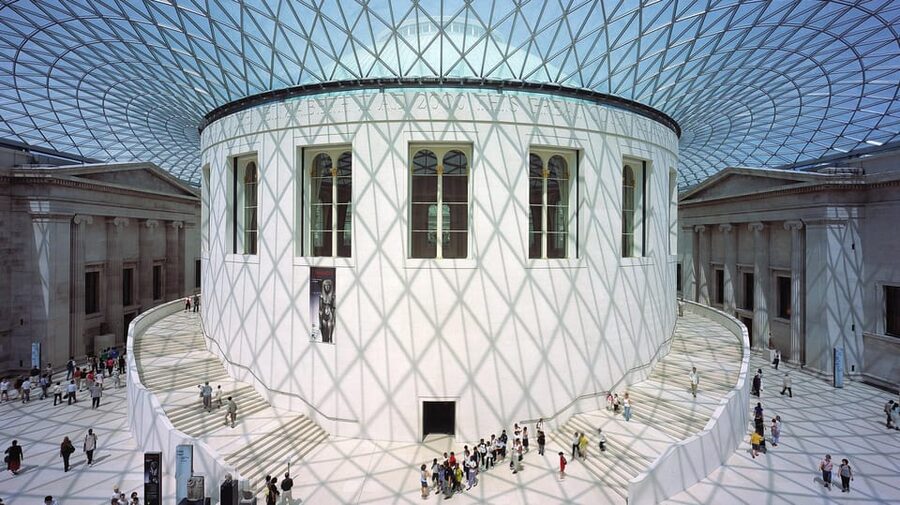
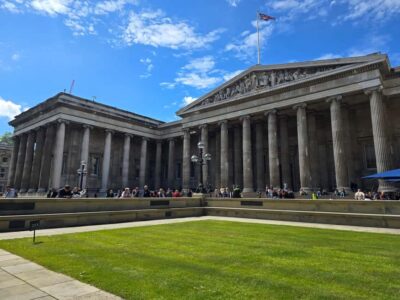
Your meeting point is specific: meet your guide at the main entrance after security on the staircase. Arrive at least 15 minutes early so you’re not scrambling if the security line runs long.
Here’s the practical part I really like: you’ll get instructions to check WhatsApp messages for possible changes. The museum is the most visited in the world, and during busy times it can be very tough to get in. When that happens, the entrance you use can change (including an alternate at Montague Place). If you arrive on time and check WhatsApp, you stay calm instead of guessing.
Also note the small but important constraint: flash photography isn’t allowed, and backpacks aren’t allowed. That affects how you dress and what you carry. Wear comfortable shoes, bring water, and keep your camera ready without trying to sneak in flash.
One more logistics wrinkle from real experience: if your group is larger than 8 people, you may not be allowed to enter via the front staircase route. In that case, you’ll walk to a different entry area inside the museum. It’s not a deal-breaker, but it’s good to know because it can change where you first step in.
Rosetta Stone and Ramses II: the power duo that anchors the tour
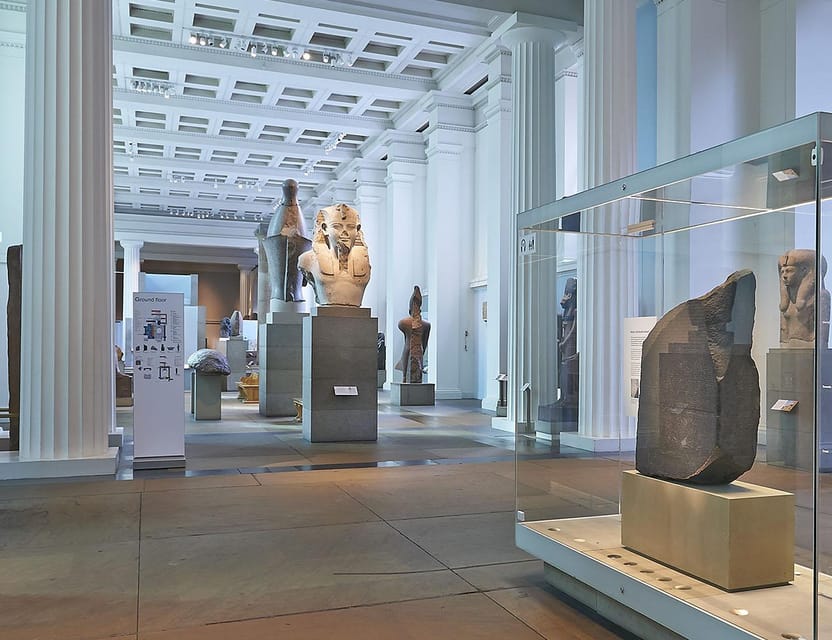
If your time is tight, you want your first stop to do two jobs at once: pull you in, and set context for the rest. The tour starts by sending you toward the Rosetta Stone and the colossal statue of Ramses II, and that’s a smart pairing.
You’ll get a guided look at the Rosetta Stone, described here as the object that unlocked the secrets of ancient Egypt. The museum doesn’t treat it like just another artifact. It’s presented as a key, the kind of object that changes what people can read and understand. Seeing it on a guided route helps because you’re not just looking at an impressive stone. You’re looking with a framework for why it matters.
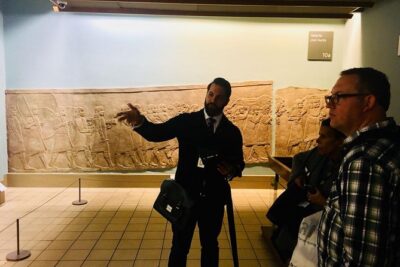
Then you’ll see the colossal statue of Ramses II, framed as the most powerful pharaoh. That detail matters. When you stand in front of a large figure like this, it’s easy to get stuck on scale alone. The tour gives you a reason to notice how power is expressed through sculpture, presentation, and presence.
This section is where the tour earns its “two-hour” promise. It gives you a strong sense of what to pay attention to before you move into other, less obvious highlights.
Still deciding? A handful more London outings we rated

Elgin Marbles and Parthenon sculptures: seeing controversy with context
Next up is the Parthenon story you’ve probably heard in fragments: the Parthenon sculptures known as the Elgin Marbles from Athens.
The tour doesn’t present them like a single neat museum label. It frames them as controversial, and that’s exactly the right angle for a museum visit. These objects often come with debates around ownership and how modern institutions handle ancient heritage. Even without turning it into a courtroom, the guided approach helps you see why the sculptures are more than pretty stone.
When you look at the Elgin Marbles with a guide, you’re better able to notice how the museum itself tells the story. You’re also more likely to remember the object after you leave, because you’re not just thinking, That looks old. You’re thinking, This is part of an ongoing conversation.
Assyrian winged lions and the Aztec double-headed mosaic snake
From there, the tour shifts gears in a way I really like: it moves away from the most universally famous Egypt-and-Greece headlines and introduces you to artifacts that feel oddly specific and deeply symbolic.
You’ll admire the Assyrian human-headed winged lions. In practical terms, this kind of display rewards a guided stop because you’re given a clear reading of what you’re seeing. Human-headed winged creatures aren’t random decoration, and the guide helps you understand the role they play in meaning and representation.
Then comes one of the rarest-feeling highlights on the route: the Aztec double-headed mosaic snake. The tour describes it as one of the most rare objects in the museum. That wording matters because it hints at something you might not notice if you’re speed-scanning: rarity changes the experience. You slow down, you look closer, and you don’t treat it like just another exhibit.
If you’re the type who likes variety and surprises, this part is the payoff. You go from major iconic “must-sees” to objects that feel more like discoveries.
Moai and Sutton Hoo: when the museum stops being just art
One risk with short museum tours is that they accidentally turn into a list of famous names. This one avoids that by adding objects that broaden what you think “collection” means.
You’ll see the Moai sculpture from Easter Island. It’s a strong reminder that sculpture isn’t limited to one region or one style. Even if you’ve only heard the term Moai before, a guided visit helps you orient your attention so it doesn’t turn into a quick glance photo moment.
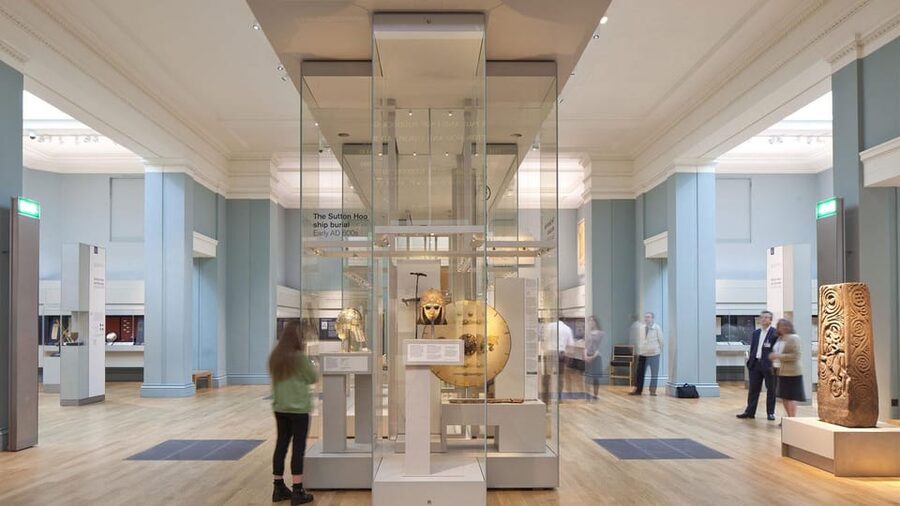
Then the tour brings you to the Sutton Hoo burial ship, presented as one of the most spectacular discoveries in British archeology and tied to Roman Britain. This is where I think the tour becomes especially valuable for many visitors: it signals that the museum isn’t only about masterpieces of painting and sculpture. It’s also about evidence—about what the past left behind and what those remnants tell us.
On a guided route, you’re more likely to notice the connections between artifacts, not just the objects themselves. The museum’s variety becomes the point, not a random side effect.
Mold Cape from Stonehenge and Lewis chessmen: the “small detail” payoff
The final stretch leans into objects that feel very different from the monumental statues and celebrity-name stones earlier in the tour. You’ll see the Mold Cape from Stonehenge and the medieval Chessmen from the island of Lewis.
This is a fun end-cap because it changes your pace mentally. Instead of staring at something huge or instantly recognizable, you start thinking about craft, design, and what people made and valued.
Lewis chessmen are particularly good for visitors because the name itself is memorable, and the description as medieval chessmen from the island of Lewis gives you a clean entry point for understanding why they’re special.
And the Mold Cape label ties the tour back to Stonehenge in a way that broadens your sense of the British Museum beyond the usual “Egypt and Greece” loop. Even if you don’t know the full background, the guided explanation helps you place it in a bigger British-and-beyond story.
Is $35 good value for this guided British Museum hit?
At about $35 per person for a 2-hour guided tour, the value comes from three places.
First, you’re paying for time savings through fast-track entry. In a top-visited museum, getting in smoothly can be the difference between enjoying the day and feeling trapped outside.
Second, you’re paying for an expert tour guide who connects the objects. The tour isn’t sold as a photo hunt. It’s sold as learning the secrets and hidden stories of the museum’s most famous objects. When that’s done well, you leave with more than images; you leave with context you can repeat later.
Third, the route bundles a lot of heavy hitters into one visit: Rosetta Stone, Ramses II, the Elgin Marbles, Assyrian winged lions, an Aztec double-headed mosaic snake, Moai, Sutton Hoo burial ship, Mold Cape from Stonehenge, and the Lewis chessmen. If you were trying to do all of that alone in only two hours, you’d spend time making decisions, rerouting, and guessing what order makes sense.
What’s not included matters too. There’s no hotel pickup or drop-off, and food and drinks are on you. The tour also doesn’t cover personal expenses. For most people, that’s fine. Just don’t assume this ticket includes a day’s worth of logistics. It’s a focused museum sprint.
What it’s like in practice: pace, group size, and guide style
This tour runs for 2 hours, which is long enough to feel guided but short enough that you’ll be standing a lot. Plan around that with comfortable shoes and water.
The tour offers live guiding in English, Spanish, and Italian, which is great if you want the explanation in your preferred language. If you’re traveling with mixed-language needs, you’ll still likely find a suitable option in those languages.
Guide quality is also a deciding factor, and there’s some concrete proof here. One guide named Angel has been reported as having great stories, and he also handled a train delay by contacting the group so they knew what to do while waiting. That kind of proactive communication is what keeps a short tour from turning frustrating.
On the other hand, group entry rules can vary depending on group size. If you’re going with a bigger group, you might not get the exact same entrance route as described for the standard meeting point, so follow WhatsApp updates.
Who should book this tour, and who should skip it
This experience is ideal if you want:
- A guided highlights route in a short window
- Fast-track entry so you spend less time waiting
- Clear explanations around famous artifacts, including controversial topics like the Elgin Marbles
- A mix of cultures and time periods, from ancient Egypt to Roman Britain and medieval Europe
It’s probably not the best fit if you:
- Need mobility access. The tour is noted as not suitable for people with mobility impairments or wheelchair users.
- Want a slow, self-paced museum day. This is structured and fast, not wandering-by-whim.
If you’re on a first trip to London and want a museum win without committing an entire day, this two-hour format is one of the most efficient choices you can make.
Should you book this British Museum guided tour?
I’d book it if you’re aiming for a concentrated British Museum experience: fast entry, a guided route, and a shortlist of the museum’s most famous objects all in one visit. It’s also a smart choice if you don’t want to spend your precious London time map-reading and second-guessing.
I wouldn’t book it if you want accessibility accommodations or if you prefer total freedom inside the museum. In that case, you’d probably be happier doing a self-guided visit with your own pacing.
If you do book, my practical advice is simple: arrive early, wear comfy shoes, keep your hands free (no backpacks), and check WhatsApp for any entrance changes. That’s how you protect the biggest benefit: getting in and getting started.
FAQ
Where do I meet the guide for the British Museum tour?
Meet your guide at the main entrance after the security check, on the staircase. Plan to arrive at least 15 minutes early.
How long is the tour?
The tour duration is 2 hours.
Is there fast-track entry?
Yes. The tour includes fast track entry to help you skip the long lines.
What languages are available for the live tour guide?
The tour is available with a live guide in English, Spanish, and Italian.
Are flash photography and backpacks allowed?
Flash photography is not allowed, and backpacks are not allowed.
Is the tour suitable for wheelchair users or people with mobility impairments?
No. The tour is not suitable for people with mobility impairments or wheelchair users.
More Tours in London
- From London: Harry Potter Warner Bros Studio Tour
★ 4.7 · 26,588 reviews - Magical London: Harry Potter Guided Walking Tour
★ 4.7 · 22,044 reviews - London: Warner Bros. Studio Harry Potter Tour & Branded Bus
★ 4.7 · 19,194 reviews - London Big Bus Hop-On Hop-Off Tour with Optional River Cruise
★ 3.5 · 10,803 reviews - London Small Group Tour of Historical Pubs
★ 5.0 · 10,422 reviews
More Tour Reviews in London
- From London: Harry Potter Warner Bros Studio Tour
★ 4.7 · 26,588 reviews - London: Westminster to Greenwich River Thames Cruise
★ 4.5 · 22,836 reviews - Magical London: Harry Potter Guided Walking Tour
★ 4.7 · 22,044 reviews - London: Madame Tussauds London
★ 4.6 · 20,915 reviews - London: Warner Bros. Studio Harry Potter Tour & Branded Bus
★ 4.7 · 19,194 reviews
The British Museum, Continued
- London: British Museum Guided Tour
★ 4.3 · 1,182 reviews - British Museum London Guided Tour Semi-Private 8ppl Max
★ 5.0 · 984 reviews - London: British Museum Guided Tour with Entrance Tickets
★ 4.9 · 748 reviews - London: Tour of the British Museum
★ 4.1 · 678 reviews - London: British Museum Audio Tour & Priority Entrance Ticket
★ 4.5 · 631 reviews
Just reviewed around London





British Museum Tours, compared.
 ★ 4.3British Museum Guided TourFrom $231,182 reviews
 ★ 5.0British Museum London Guided Tour Semi-Private 8ppl MaxFrom $108984 reviews
 ★ 4.9British Museum Guided Tour with Entrance TicketsFrom $39748 reviews
 ★ 4.1Tour of the British MuseumFrom $14678 reviews
 ★ 4.5British Museum Audio Tour & Priority Entrance TicketFrom $9631 reviews
 ★ 5.0The British Museum London – Exclusive Guided Museum TourFrom $108555 reviews
 ★ 4.2Afternoon Tea at the British MuseumFrom $58511 reviews
 ★ 4.0British Museum Guided TourFrom $18470 reviews
Browse the lists this tour appears in