
Reviewed · BRITISH MUSEUM TOURS
London: British Museum Guided Tour
Ancient artifacts make sense fast. That’s what I like most about this British Museum tour: you’re not wandering alone—you’re decoding major galleries with a live guide and a small group. You’ll spend the 2 hours working through big ideas behind Mesopotamia and other civilizations, with expert-led discussion that keeps you moving with purpose.
What I also love is the way the guide can shape the visit around your interests. I’ve seen guides such as Wesley and Diana adjust the route and emphasis so it feels less like a script and more like a conversation. My only caution is simple: if sections of the museum are closed on the day, your focus may shift, which can affect how much you get through.
Meeting point is clear and easy to find: the guide meets you in front of Starbucks just across the museum entry. The tour runs 2 hours and stays in English, limited to 10 participants, so questions don’t get lost in the shuffle. If you want a focused way to handle a museum that can feel overwhelming on your own, this is a smart use of time.
In This Review
- Key highlights to expect
- Meeting Your Guide Across From the British Museum Entrance
- A 2-Hour Route That Hits Mesopotamia, Egypt, Greece, and More
- Mesopotamia: The Cradle of Civilization, Explained in Plain Human Terms
- Egypt and the Rosetta Stone Moment
- Greece and the Elgin Marbles: Art, Power, and Context
- Other Art and Temple Details: Learning to Look at Surfaces
- Why the Guides Make This Tour Worth It
- Group Size (Up to 10) and What That Changes in the Museum
- Price and Value: Is $90 a Good Deal for Two Hours?
- What Happens If Galleries Are Closed
- Who Should Book This Tour
- Should You Book This British Museum Guided Tour?
- FAQ
- How long is the British Museum guided tour?
- What’s the meeting point for the guide?
- What’s included in the price?
- Is food or drink included?
- How big is the group?
- What language is the tour in?
- Are pets allowed?
- What’s the cancellation rule?
Key highlights to expect
- Mesopotamia first: you’ll build context for the cradle of civilization before you branch out to other cultures.
- Small group energy: up to 10 people means you can actually ask questions and get follow-up answers.
- Guides who flex the plan: routes can shift based on your interests, with guides like Wesley and Diana showing that flexibility.
- Big-name objects with real context: you’ll discuss items such as the Rosetta Stone and the Elgin Marbles, not just point at them.
- A short, practical format: at 2 hours, you come away with clearer connections instead of museum fatigue.
More among the marbles and mummies
- London: British Museum Guided Tour
★ 4.3 · 1,182 reviews - British Museum London Guided Tour Semi-Private 8ppl Max
★ 5.0 · 984 reviews - London: British Museum Guided Tour with Entrance Tickets
★ 4.9 · 748 reviews - London: Tour of the British Museum
★ 4.1 · 678 reviews
Meeting Your Guide Across From the British Museum Entrance
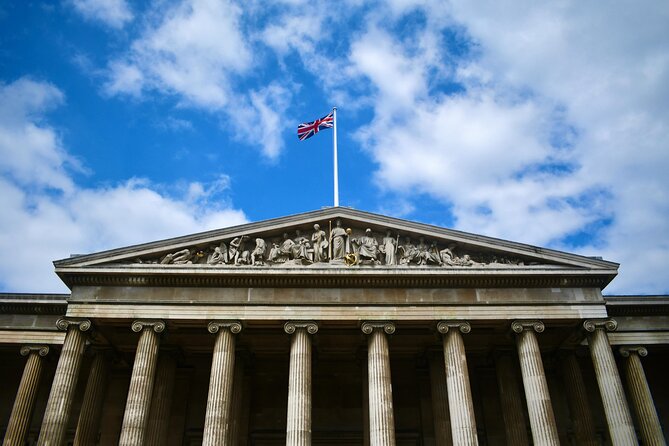
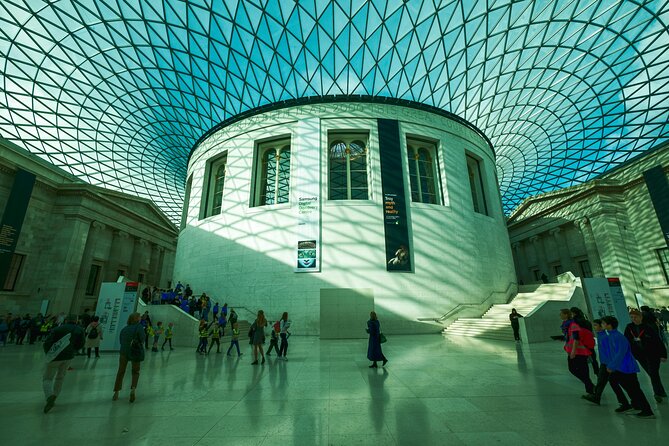
I like that this tour starts with a pinpoint meeting spot. You’ll meet the guide in front of Starbucks, just across from the museum entry. That matters because the British Museum can look simple from outside, but inside you can burn time finding the right entrances and galleries.
Once you’re together, the group stays small (up to 10), which changes the whole tone. Instead of the guide talking at you for two hours, you’re pulled into a guided route with time to react and ask.
Practical tip: arrive a few minutes early. It gives you time to orient, grab a quick coffee if you want, and settle before you start.
A 2-Hour Route That Hits Mesopotamia, Egypt, Greece, and More
This is not a “see everything” tour. It’s a focused sweep through major themes, using standout artifacts as anchors. The goal is to decode the meaning behind the objects—how people lived, what they valued, and why certain discoveries changed later history.
In that 2-hour window, the tour generally moves through the museum’s major civilization areas, with guided stops connected by one big thread: how cultures connect over time. The tour framing specifically calls out Mesopotamia as a starting point, then expands outward into ancient Egypt and Greece, with additional discussion of other cultures and artifacts you encounter along the way.
What makes this format valuable is the structure. If you’ve ever visited the British Museum and felt like you were speed-reading labels, you’ll appreciate the difference here. The guide ties objects to bigger stories, so you’re not just collecting trivia—you’re building context you can remember.
Mesopotamia: The Cradle of Civilization, Explained in Plain Human Terms
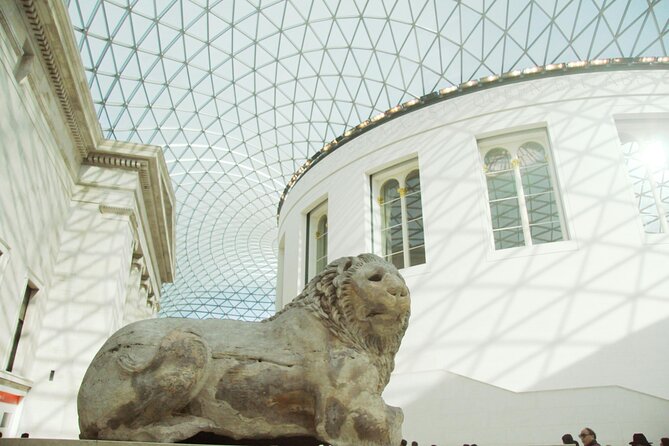
Mesopotamia is a perfect opening theme because it gives you a foundation for understanding later empires. With this tour, the guide uses Mesopotamian artifacts to set up why the region matters so much—cities, early writing, complex religions, trade, and the practical systems societies built to function.
I like how this is handled: you’re not asked to memorize dates. You’re taught what to look for and how to connect clues across objects. When a guide points out what an artifact suggests about daily life or beliefs, your brain stops treating everything as random “old stuff.”
Because the tour is designed around discussion, you can steer questions too. If you’re curious about how writing spread or what symbol systems meant, you can ask. That’s where small-group touring pays off.
Still deciding? A handful more London outings we rated




Egypt and the Rosetta Stone Moment
The tour specifically references the Rosetta Stone as one of the major points where the guide provides context and historical significance. That’s the kind of object that can turn a museum visit from confusing into satisfying.
On your own, the Rosetta Stone can read like a wall of text you can’t access. With a guide, you get the story behind why it mattered—how decipherment unlocked understanding of Egyptian writing and helped scholars make sense of older records. The guide’s job is to connect the object to the broader shift it caused in how we read the ancient world.
If you’re the type who likes “why this matters” explanations, this stop is where you’ll feel it most.
Greece and the Elgin Marbles: Art, Power, and Context
Greece shows up through headline material too, including the Elgin Marbles. These sculptures can be stunning even when you don’t know the background, but they become a lot more meaningful once you understand what they were meant to represent and why they’re discussed so often.
A good tour guide doesn’t just say what something is. They give you a set of lenses so you can interpret what you’re seeing—style, symbolism, political messages tied to architecture, and the way art functioned in public life.
On this tour, you’re guided toward that kind of reading. You’ll get historical significance and anecdotes that help you interpret details instead of just taking in size and shape.
Other Art and Temple Details: Learning to Look at Surfaces
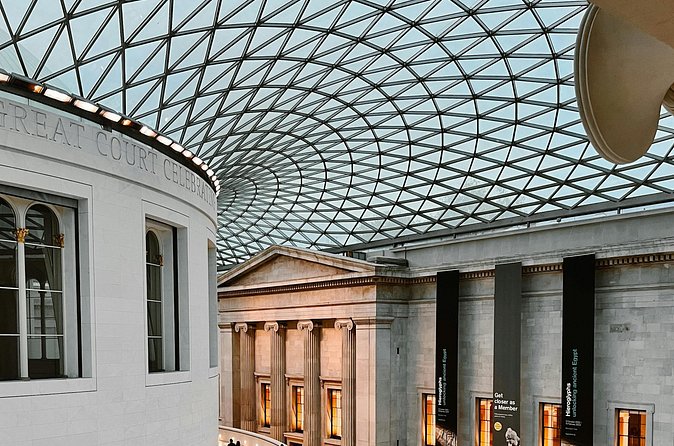
The tour description also points to intricate architectural and temple-related details (including the Rosalila Temple). Even if you don’t leave memorizing the name of every carved element, what you gain is a skill: seeing how material, pattern, and structure communicate meaning.
This matters because the British Museum is huge. Without a guide, you tend to either miss the subtle stuff or get stuck on it without understanding why it’s there. With a guide, you’re shown what to notice—and why those choices show up in monuments and artifacts.
I found this kind of stop especially useful if you enjoy art history but don’t want to treat it like a lecture. The guide helps you connect visual features to cultural purpose.
Why the Guides Make This Tour Worth It
The guides are the real engine here. This isn’t just “a person with a key to the collections.” It’s expert interpretation plus conversation.
In the feedback people shared, a few names came up: Wesley, Vincent, and Diana. The common thread is practical teaching. Wesley was highlighted for being willing to customize based on interests, and Diana was praised for being flexible in what the group could and should visit. Vincent also came up as a strong communicator.
That flexibility matters for you because it turns a rigid schedule into a better experience. If you care more about Egypt than Greece, the guide can emphasize what’s most aligned with your priorities inside the time limit. If you’re returning to the museum, you can focus on a narrower set of objects instead of repeating the same highlights.
Also, since the group is capped at 10, you’re more likely to get real answers instead of quick one-liners. The tour description calls out lively discussion and dialogue, and that’s exactly the difference between a guided tour that feels helpful and one that feels performative.
Group Size (Up to 10) and What That Changes in the Museum
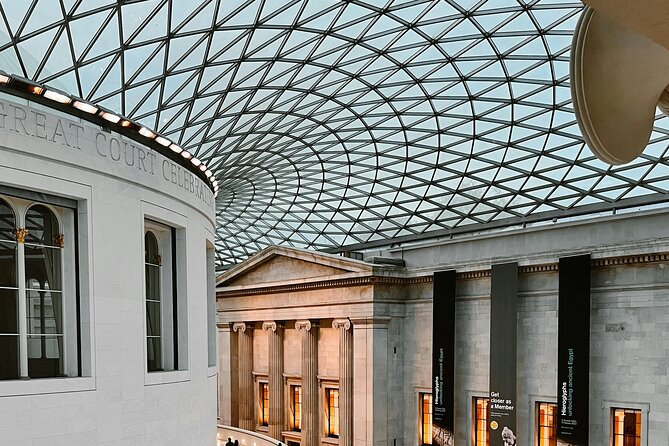
I’m a fan of small groups for one reason: you don’t lose the plot. In a larger crowd, you’re mostly listening while trying not to get separated. Here, you stay close enough that the guide can bring you back when attention shifts, and you can ask questions without feeling like you’re interrupting.
This is also how you end up with a more personal rhythm. One guide experience can turn into a discussion rather than a march. If your group stays small on the day, the experience can feel even more tailored.
For practical value, this small cap means you can actually see what the guide points out—details you’d normally miss at museum speed.
Price and Value: Is $90 a Good Deal for Two Hours?
Let’s talk money like adults. At $90 per person for 2 hours, you’re paying for three things:
- Museum entry is included.
- A live tour guide is included.
- You’re buying time and focus in a museum that’s too big to manage casually.
If you’re visiting solo or with someone who isn’t into museums, this price can feel steep at first. But for me, the value clicks when you consider how expensive time is while you’re there. Two hours with a guide can give you a coherent story across civilizations, which is hard to replicate by wandering and reading labels only.
If you already know the museum well and don’t need guidance, you might get better value by choosing a self-guided route. But if you’re overwhelmed by the size, or you want context for big objects like the Rosetta Stone and Elgin Marbles, the guide fee starts to feel reasonable fast.
One more note: food and drinks aren’t included. So plan to eat before or after, not during the tour. That’s normal for London museum tours, but it matters for budgeting.
What Happens If Galleries Are Closed
A fair concern: parts of the museum can be shut on certain days. In one experience, a guide still delivered an excellent visit even though a portion of the museum was unavailable, but it still reduced how much could be covered.
So here’s the practical mindset to take: don’t expect a guaranteed path through every gallery. A good guide adapts, but your experience can change depending on what’s open.
If you’re choosing this tour as your one chance to see specific objects, go with an open plan. Focus on the learning goals—how civilizations connect, and how objects communicate meaning—rather than treating it like a checklist.
Who Should Book This Tour
This tour fits best if you want structure without losing the joy of discovery.
You’ll likely love it if:
- You find the British Museum overwhelming and want a guided route that makes sense.
- You enjoy history and art, but you want the context explained in human language.
- You’re returning and want a sharper lens instead of repeating the same basic highlights.
- You prefer small groups where questions are welcome.
It may be less ideal if:
- You’re determined to see only specific galleries and you’re happy navigating alone.
- You need a very fast, checklist-style tour with zero discussion time.
- You travel with pets, since pets aren’t allowed.
Should You Book This British Museum Guided Tour?
If your goal is to leave with a clearer understanding of the British Museum’s biggest threads, I’d book it. The combination of small-group size, a live English guide, and the focus on major civilizations—especially Mesopotamia—makes it a strong use of two hours. You also get entry included, which keeps the real cost simpler to justify.
I’d only hesitate if you’re highly dependent on specific rooms being open at that moment. Otherwise, this is exactly the kind of guided experience that turns a giant museum into something you can actually understand.
FAQ
How long is the British Museum guided tour?
The tour lasts 2 hours.
What’s the meeting point for the guide?
The guide meets you in front of Starbucks, just across the museum entry.
What’s included in the price?
Museum entry and a tour guide are included.
Is food or drink included?
No. Food and drinks are not included.
How big is the group?
It’s a small group limited to 10 participants.
What language is the tour in?
The tour is in English.
Are pets allowed?
No, pets are not allowed.
What’s the cancellation rule?
Free cancellation is available up to 24 hours in advance for a full refund.
More Tours in London
- From London: Harry Potter Warner Bros Studio Tour
★ 4.7 · 26,588 reviews - Magical London: Harry Potter Guided Walking Tour
★ 4.7 · 22,044 reviews - London: Warner Bros. Studio Harry Potter Tour & Branded Bus
★ 4.7 · 19,194 reviews - London Big Bus Hop-On Hop-Off Tour with Optional River Cruise
★ 3.5 · 10,803 reviews - London Small Group Tour of Historical Pubs
★ 5.0 · 10,422 reviews
More Tour Reviews in London
- From London: Harry Potter Warner Bros Studio Tour
★ 4.7 · 26,588 reviews - London: Westminster to Greenwich River Thames Cruise
★ 4.5 · 22,836 reviews - Magical London: Harry Potter Guided Walking Tour
★ 4.7 · 22,044 reviews - London: Madame Tussauds London
★ 4.6 · 20,915 reviews - London: Warner Bros. Studio Harry Potter Tour & Branded Bus
★ 4.7 · 19,194 reviews
The British Museum, Continued
- London: British Museum Guided Tour
★ 4.3 · 1,182 reviews - British Museum London Guided Tour Semi-Private 8ppl Max
★ 5.0 · 984 reviews - London: British Museum Guided Tour with Entrance Tickets
★ 4.9 · 748 reviews - London: Tour of the British Museum
★ 4.1 · 678 reviews - London: British Museum Audio Tour & Priority Entrance Ticket
★ 4.5 · 631 reviews
Just reviewed around London





British Museum Tours, compared.
 ★ 4.3British Museum Guided TourFrom $231,182 reviews
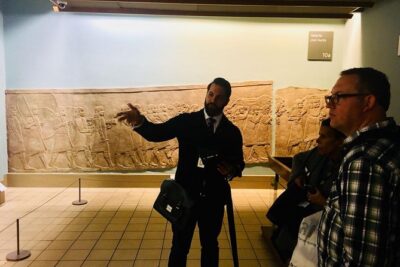 ★ 5.0British Museum London Guided Tour Semi-Private 8ppl MaxFrom $108984 reviews
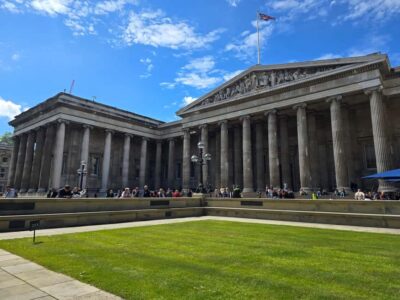 ★ 4.9British Museum Guided Tour with Entrance TicketsFrom $39748 reviews
 ★ 4.1Tour of the British MuseumFrom $14678 reviews
 ★ 4.5British Museum Audio Tour & Priority Entrance TicketFrom $9631 reviews
 ★ 5.0The British Museum London – Exclusive Guided Museum TourFrom $108555 reviews
 ★ 4.2Afternoon Tea at the British MuseumFrom $58511 reviews
 ★ 4.0British Museum Guided TourFrom $18470 reviews
Browse the lists this tour appears in