
Reviewed · BRITISH MUSEUM TOURS
London: British Museum Guided Tour
A 2-hour tour that cuts through the British Museum chaos. You’ll move fast but not randomly, starting in Ancient Egypt with the Rosetta Stone and ending with standout objects that stretch from Anglo-Saxon England to Easter Island. What makes this one work is the guide-led route, with a tailor-made feel for seeing the museum’s most remarkable public highlights.
I especially like how the tour gives you story context, not just dates. Guides like Filomena, Stuart, Tara, and Rebekka are repeatedly praised for turning big galleries into something you can actually follow, and for making the museum easier to navigate. I also like the value angle: for $39, you’re paying for guided interpretation that saves you the time of guessing what matters most.
One consideration: the museum gets loud. If you’re in a group where sound is hard to catch, you might want to position yourself where you can hear clearly and watch how the guide controls the pace.
In This Review
- Key highlights to look forward to
- 2 Hours That Actually Make Sense in the British Museum
- Getting to the meeting point: where the tour really starts
- Skip-line entry and why it matters for a 2-hour visit
- The tour route: Egypt to Rome to the far edge of human story
- Ancient Egypt and the Rosetta Stone moment
- Ancient Greece: Parthenon sculptures and Western thought
- Ancient Rome: emperors, engineering, mosaics, gods and heroes
- Sutton Hoo: Anglo-Saxon treasures with a strong punch
- Hoa Hakananaiʻa moai: Easter Island, spirituality, and distance
- Final stops: objects from around the globe
- Guides who keep the museum from turning into noise
- Price and value: $39 for time, direction, and interpretation
- Who this tour suits best
- Should you book the British Museum guided tour?
- My quick decision rule
- FAQ
- How long is the British Museum guided tour?
- What does the tour cost?
- What time should I plan to meet the guide?
- What is the meeting point exactly?
- What’s included in the tour price?
- What’s not included?
- What languages are offered?
- Does it help with security lines?
- Is the museum tour accessible?
- What’s the cancellation policy?
Key highlights to look forward to
- Rosetta Stone + Egyptian hieroglyphs: the tour focuses on how decoding works, not just what the object is
- Parthenon sculptures in context: you’ll hear about the Elgin Marbles controversy as part of the broader story
- Rome beyond emperors: expect mosaics, statues of gods and heroes, and engineering-era wonder
- Sutton Hoo treasures: a sharp turn into early English life through Anglo-Saxon finds
- Hoa Hakananaiʻa moai: you’ll connect a distant civilization to what you can see in the galleries
- A route that adapts: the tour is described as tailor-made to hit standout public museum sections
More among the marbles and mummies
- London: British Museum Guided Tour
★ 4.3 · 1,182 reviews - British Museum London Guided Tour Semi-Private 8ppl Max
★ 5.0 · 984 reviews - London: British Museum Guided Tour with Entrance Tickets
★ 4.9 · 748 reviews - London: Tour of the British Museum
★ 4.1 · 678 reviews
2 Hours That Actually Make Sense in the British Museum
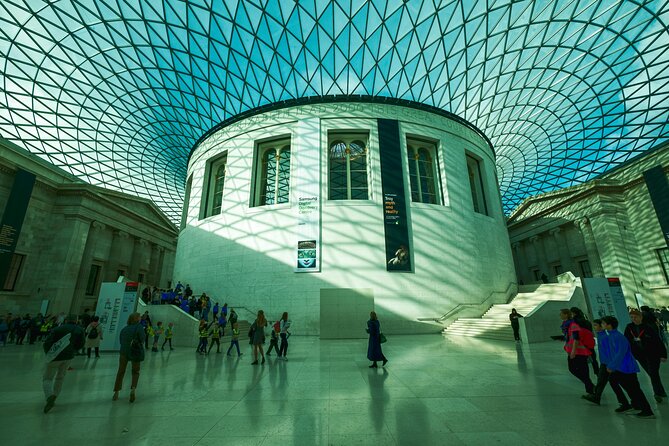
The British Museum can feel like a maze with no walls. You walk in, and suddenly you’re surrounded by centuries of art and artifacts, with tiny labels that don’t help much when you’re hungry, tired, and standing still.
This guided tour is built for the reality of the place. In about two hours, the focus is on a sequence you can understand: Egypt first, then Greece and its philosophy and art, then Rome and its power and craft, and finally a jump across time to Anglo-Saxon England and Easter Island. That structure matters because it keeps you from turning the visit into a random museum stroll.
You also get an experience rhythm. You’re not just walking. You’re hearing what to notice and why it matters, which is a big deal in a museum where the collection is so huge you could spend a week and still miss the point.
And yes, the guide is a licensed one, with English, French, or Italian live narration. You’ll also skip the normal headache of security lines thanks to an express-style entry flow.
Getting to the meeting point: where the tour really starts
Logistics can make or break a short museum tour, and this one is pretty clear if you read it carefully.
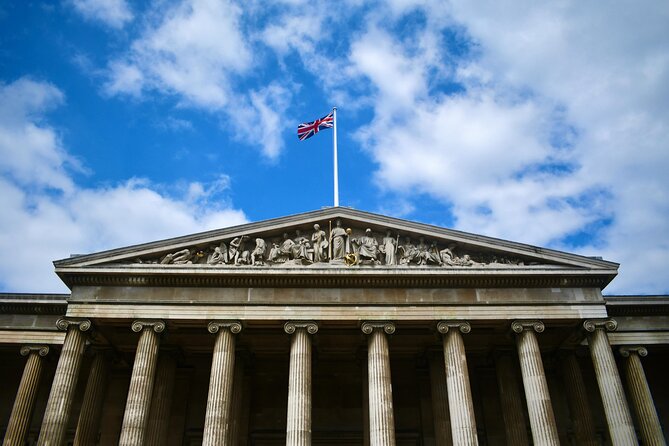
Meet your guide in front of the British Museum portals, on the stairs near the pillars, after you pass security. This means not outside the gates. The wording is specific for a reason: you want to be in the right zone once security is done, not trying to regroup with a guide on the street.
Tickets are handled by WhatsApp. You should receive them about 1 hour before the tour. If you don’t have WhatsApp, you’ll need to contact the provider by email so they can send entry tickets another way. Since this is time-sensitive, I’d treat it like a “check-in” task on your schedule, not something to remember later.
If you like smooth starts, arrive a few minutes early. In busy museums, “a few minutes” is the difference between feeling calm and searching for the meeting stairs while people stream by.
Skip-line entry and why it matters for a 2-hour visit
Even if you’re a fast museum walker, security and entry queues can eat half your visit. That’s exactly what you’re trying to avoid here.
The tour includes an express security check, so you’re not stuck losing time before you even reach the first gallery. Over a two-hour tour, every minute counts. It also helps you keep momentum. You don’t want to arrive at the museum’s best objects already mentally “spent.”
One more practical point: because the tour can run with two languages at the same time depending on demand, you may hear mixed instruction in the galleries. If you care a lot about following every detail, pick the language you’re most comfortable with and stay close to the guide for clearer sound.
Still deciding? A handful more London outings we rated




The tour route: Egypt to Rome to the far edge of human story
This tour works like a guided sprint through big themes. Here’s what you can expect from the route, in plain terms.
Ancient Egypt and the Rosetta Stone moment
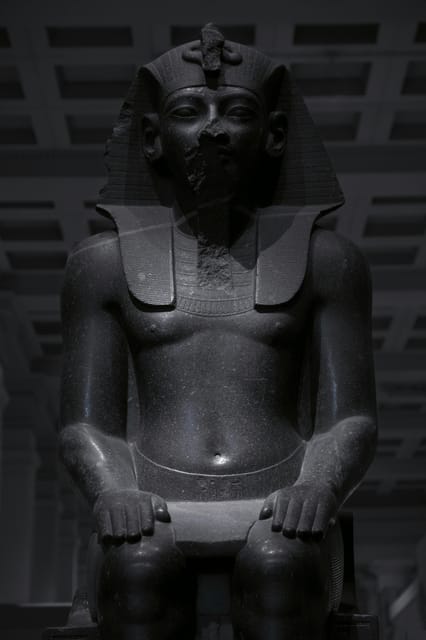
The tour starts with Egypt, and it’s a smart opener. Egypt sets the tone: long timelines, powerful visuals, and the sense that symbols were meant to last.
You’ll focus on pharaoh-era relics and the Rosetta Stone, presented as the key that helped people decipher Egyptian hieroglyphics. The point isn’t only to see a famous object. It’s to understand what made it solvable for modern readers and why that changed the study of Egyptian culture.
If you’ve ever looked at hieroglyphs and felt like they were just decorative, this is the section where the tour helps you connect the dots. You’re not learning every letter. You’re learning the idea of why decoding became possible.
Ancient Greece: Parthenon sculptures and Western thought
Next comes Greece, with a strong emphasis on philosophy and art. The highlight here is the iconic Parthenon sculptures, including the context around the Elgin Marbles controversy.
This part is valuable even if you don’t care about museum politics, because it reframes the objects as more than “pretty stone.” You’ll hear about how these sculptures and inscriptions shaped how people think about art, politics, and ideas in the West.
Also, there’s a mental shift here. Egypt can feel like a system of belief expressed through images. Greece is more like a conversation: debates, ethics, and aesthetics. A good guide will help you see that change without turning it into a lecture.
Ancient Rome: emperors, engineering, mosaics, gods and heroes
After Greece, Rome ramps up the drama. You’ll see relics linked to emperors and engineering feats, plus objects like mosaics and statues of gods and heroes.
This is where the tour helps you connect “Empire” to everyday things. Rome isn’t only thrones and speeches. It’s also design, workmanship, and the way public life used art to communicate power.
If you’re a visual person, this section tends to land well because mosaics and sculpted figures give you details you can notice even at a glance—especially when your guide points out what’s worth your attention.
Sutton Hoo: Anglo-Saxon treasures with a strong punch
Then the tour makes a big time jump: Sutton Hoo. This is one of the tour’s best “mental reset” stops.
Anglo-Saxon treasures are not as familiar to many first-time museum-goers as the Roman and Greek sections. That’s exactly why the guide route is useful. You get variety without sacrificing understanding, and you start realizing the British Museum isn’t a single civilization museum. It’s a world collection with clear links between times and places.
Hoa Hakananaiʻa moai: Easter Island, spirituality, and distance
After Sutton Hoo, you’ll see Hoa Hakananaiʻa, a moai from Easter Island. The tour frames it as connected to the spiritual essence of a distant civilization.
This is another moment where context matters. Without it, a moai can read as just a sculpture. With the tour’s explanation, you’re more likely to notice how meaning is carried through form and craftsmanship.
You also get a satisfying sense of scope: you’re not only walking through “ancient Europe.” You’re seeing how far-reaching human culture is.
Final stops: objects from around the globe
The tour finishes by bringing you back out to a wider view with additional artifacts from around the world. The exact gallery choices can vary, since the tour is described as tailor-made.
That matters because it prevents you from expecting a fixed checklist and then getting disappointed. Instead, you’re getting a curated route within the museum’s public highlights, guided by what your group needs most.
Guides who keep the museum from turning into noise
One of the most praised parts of this tour is the human side: the guide. Names you’ll see in past bookings include Filomena, Stuart, Tara, Rebekka, Lucia, Maya, and Stewart. That range matters because it suggests the experience isn’t dependent on one superstar—it’s built around consistently strong guiding.
Here’s what the standout guides tend to do well, based on the pattern of feedback:
- They help you navigate the museum’s huge scale, so you’re not wandering in circles
- They explain what you’re seeing in a way that keeps you engaged
- They make controversial or complex subjects easier to understand without turning it into hostility
Some guide-specific notes from feedback: Filomena is repeatedly singled out for enthusiasm and being inspiring. Stuart and Stewart are praised for taking the time to cover highlights (and in one case, even guiding a nearly private-feeling experience). Tara and Rebekka are praised for turning the visit into something you can follow instead of drowning in information. And Maya is noted for handling both adults and children effectively in the limited two-hour window.
There’s also one honest caution from feedback: in a crowded, noisy gallery, it can be hard to hear. That doesn’t mean the tour is bad—it means you should plan to stand closer to the guide and stay alert to where sound carries best.
Price and value: $39 for time, direction, and interpretation
Let’s talk value, because $39 in London is either a smart move or a questionable one. Here’s why it often works.
A British Museum visit on your own is free, but that’s only part of the story. The museum’s free admission doesn’t include guidance on what’s most important, how the sections connect, and what details you should look for. In a two-hour window, self-guided wandering can leave you feeling like you saw a few rooms but didn’t really understand the whole arc.
By paying $39, you’re buying:
- A route that connects major civilizations without you guessing
- A licensed guide who tells you what to notice and what the object means
- Time savings, helped by the express security flow
So if you’re the type who likes reading labels and soaking up atmosphere, you might feel a tour isn’t necessary. But if you want structure, context, and efficient sight selection, this is priced like a practical add-on.
Also, the “reserve now & pay later” setup and free cancellation policy can reduce risk if your plans are still flexible. That makes this easier to try without feeling trapped.
Who this tour suits best
This British Museum guided tour is a great fit if:
- You only have a short time in London and want the big-name highlights plus surprise objects
- You like history explained through objects, not just timelines
- You want a route that helps you see more than the first couple of rooms you reach
- You’re visiting with family or mixed ages and need a guide to keep attention on track
It may be less perfect if:
- You plan to spend hours reading every placard and you prefer slow, unscripted wandering
- You’re extremely sensitive to crowd noise and hearing conditions in galleries
Should you book the British Museum guided tour?
If you’re trying to see the British Museum’s main stories without losing hours to indecision, I’d book it. The two-hour format is exactly the sweet spot where a guide turns a huge museum into something coherent: Egypt’s Rosetta Stone, the Greek Parthenon sculptures and the Elgin Marbles controversy context, Rome’s art and engineering world, and then jumps to Sutton Hoo and Hoa Hakananaiʻa.
On the other hand, if you’re a slow museum “label reader” who wants to linger, you might not benefit as much from a structured route.
My quick decision rule
Book this tour if you want direction and context more than you want freedom. Skip it if you’re planning a long, self-paced museum day.
FAQ
How long is the British Museum guided tour?
The tour lasts 2 hours.
What does the tour cost?
The price is $39 per person.
What time should I plan to meet the guide?
Meet your guide in front of the British Museum portals on the stairs near the pillars after security. Tickets are provided about 1 hour before the tour via WhatsApp (or by email if you don’t have WhatsApp).
What is the meeting point exactly?
Meet in front of the British Museum portals on the stairs near the pillars after passing the security check (not outside of the gates).
What’s included in the tour price?
The tour guide is included.
What’s not included?
Transportation is not included.
What languages are offered?
The live guide is available in English, French, and Italian. The tour may include two languages at the same time depending on demand.
Does it help with security lines?
Yes. The tour includes an express security check.
Is the museum tour accessible?
Yes. The tour is wheelchair accessible.
What’s the cancellation policy?
You can cancel up to 24 hours in advance for a full refund.
More Tours in London
- From London: Harry Potter Warner Bros Studio Tour
★ 4.7 · 26,588 reviews - Magical London: Harry Potter Guided Walking Tour
★ 4.7 · 22,044 reviews - London: Warner Bros. Studio Harry Potter Tour & Branded Bus
★ 4.7 · 19,194 reviews - London Big Bus Hop-On Hop-Off Tour with Optional River Cruise
★ 3.5 · 10,803 reviews - London Small Group Tour of Historical Pubs
★ 5.0 · 10,422 reviews
More Tour Reviews in London
- From London: Harry Potter Warner Bros Studio Tour
★ 4.7 · 26,588 reviews - London: Westminster to Greenwich River Thames Cruise
★ 4.5 · 22,836 reviews - Magical London: Harry Potter Guided Walking Tour
★ 4.7 · 22,044 reviews - London: Madame Tussauds London
★ 4.6 · 20,915 reviews - London: Warner Bros. Studio Harry Potter Tour & Branded Bus
★ 4.7 · 19,194 reviews
The British Museum, Continued
- London: British Museum Guided Tour
★ 4.3 · 1,182 reviews - British Museum London Guided Tour Semi-Private 8ppl Max
★ 5.0 · 984 reviews - London: British Museum Guided Tour with Entrance Tickets
★ 4.9 · 748 reviews - London: Tour of the British Museum
★ 4.1 · 678 reviews - London: British Museum Audio Tour & Priority Entrance Ticket
★ 4.5 · 631 reviews
Just reviewed around London





British Museum Tours, compared.
 ★ 4.3British Museum Guided TourFrom $231,182 reviews
 ★ 5.0British Museum London Guided Tour Semi-Private 8ppl MaxFrom $108984 reviews
 ★ 4.9British Museum Guided Tour with Entrance TicketsFrom $39748 reviews
 ★ 4.1Tour of the British MuseumFrom $14678 reviews
 ★ 4.5British Museum Audio Tour & Priority Entrance TicketFrom $9631 reviews
 ★ 5.0The British Museum London – Exclusive Guided Museum TourFrom $108555 reviews
 ★ 4.2Afternoon Tea at the British MuseumFrom $58511 reviews
 ★ 4.0British Museum Guided TourFrom $18470 reviews
Browse the lists this tour appears in