
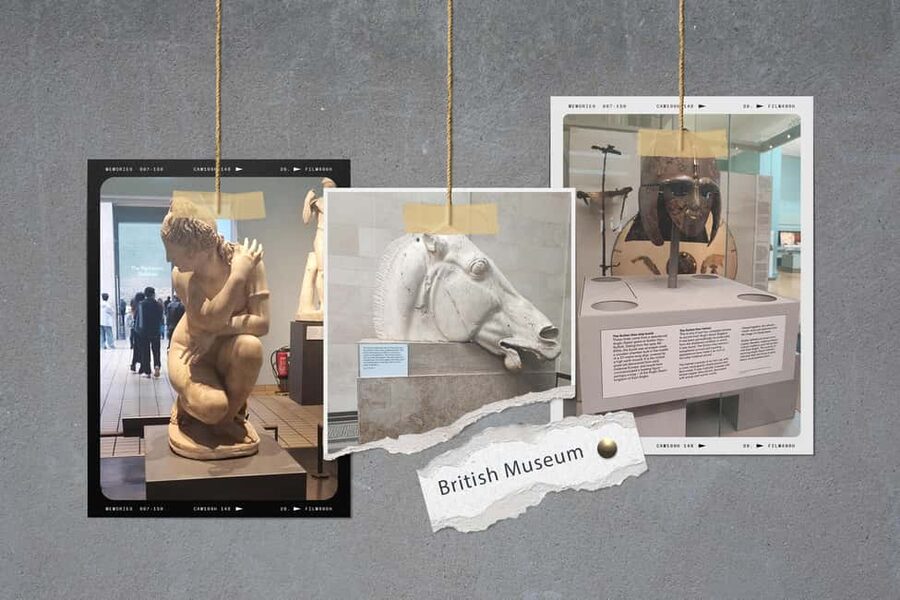
Reviewed · BRITISH MUSEUM TOURS
London: British Museum: Ancient Greek Treasures Private Tour
Greek beauty, explained fast. I like the art-specialist storytelling and the way the tour keeps you moving through big ideas without losing you in museum noise. The one drawback: it’s about 2 hours of moderate walking and it is not suitable for wheelchair users.
This private experience runs for your group only (priced per group up to 8, with the private booking described as reserved for up to 6). You meet at the Edward VII’s Entrance group entrance, where the guide holds a sign that says My London Guide.
The guide I’m most likely to look for is Richard, since his name shows up with praise for both knowledge and enthusiasm. If you value a clear narrative and quick art-reading tips, this format should suit you well.
In This Review
- Key highlights worth planning around
- Why this British Museum tour feels focused, not exhausting
- Getting in smoothly: Edward VII’s Entrance and express security
- Your Greek-first story: Parthenon marbles, Caryatid, and beauty ideals
- Rosetta Stone: the moment language stops being a wall
- Egyptian mummies: life, death, and why bodies mattered
- Medieval comic books and the childhood of Jesus
- How the tour connects many civilizations without getting messy
- Price and value: $129 per group for two hours of focus
- What to do (and not do) once you’re inside
- Who this tour fits best (and who might want a different plan)
- Should you book this private Ancient Greece British Museum tour?
- FAQ
- What is included in the private tour?
- Where do we meet for the tour?
- Does this tour include skip-the-line entry?
- What are the main subjects the guide focuses on?
- What are the rules for photos and personal items inside?
- Is it suitable for wheelchair users, and how much walking is involved?
Key highlights worth planning around
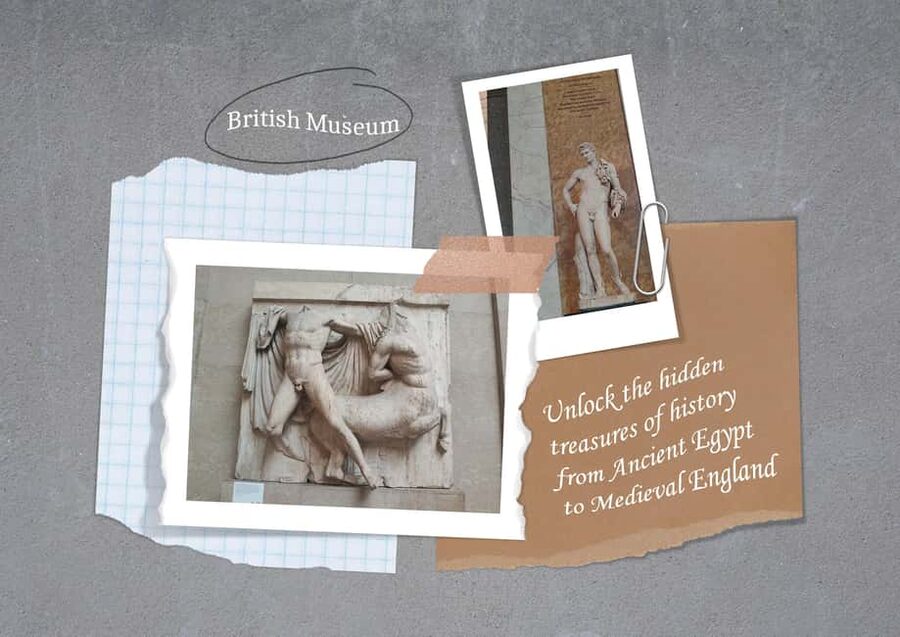
- Greek-first route through the Parthenon, Caryatid, and Greek vases with “beauty ideas” as the thread
- Fast-track entry plus an express security check so you start learning sooner
- Parthenon marbles used to trace how “beauty” changes over time, not just what’s famous
- Rosetta Stone as your key to understanding how lost languages became readable again
- Egyptian mummies paired with the tour’s theme of life, death, and the human body
- Medieval comic books that shift how you think about Jesus Christ and childhood stories
More among the marbles and mummies
- London: British Museum Guided Tour
★ 4.3 · 1,182 reviews - British Museum London Guided Tour Semi-Private 8ppl Max
★ 5.0 · 984 reviews - London: British Museum Guided Tour with Entrance Tickets
★ 4.9 · 748 reviews - London: Tour of the British Museum
★ 4.1 · 678 reviews
Why this British Museum tour feels focused, not exhausting
The British Museum is huge. You can walk for hours and still feel like you only brushed the surface. This tour is designed to solve that problem with a tight runtime and a strong storyline.
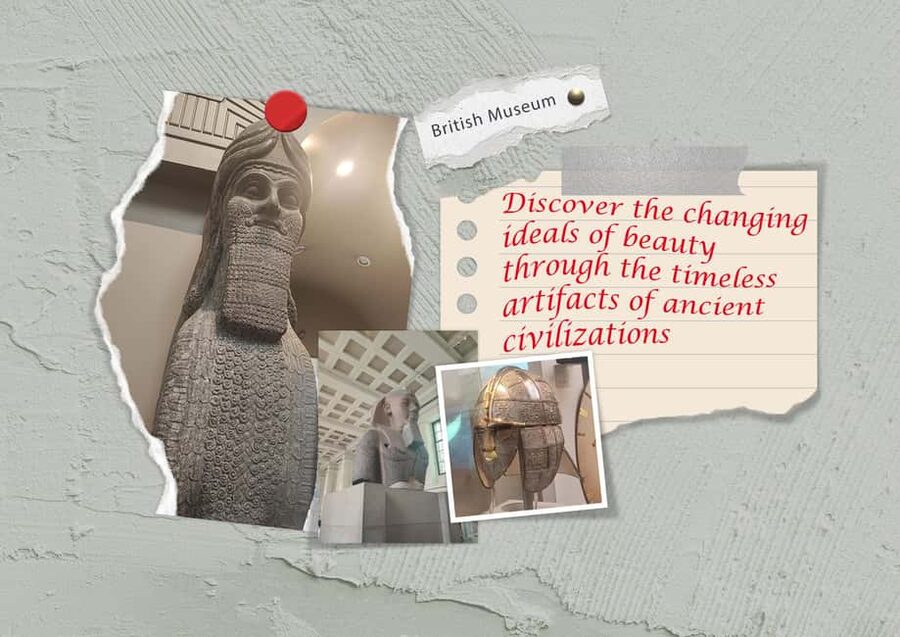
I like that the experience is guided by an art specialist who keeps returning to one question: how did people define beauty, and how did that definition change as cultures changed? That’s a smart way to see the museum, because you’re not just collecting facts. You’re following an argument.
The route also starts with Ancient Greece, which helps you build a baseline. From there, the tour uses other civilizations—especially Egypt and the setting of Christianity in medieval sources—to widen your perspective. You finish with more than “what is this object?” You end with “why did they make it this way, and what did it mean?”
Getting in smoothly: Edward VII’s Entrance and express security
Logistics can make or break a museum day, especially when you’re paying for a guided experience. Here, you get fast-track entry and you skip the line through the express security check, which helps you spend your paid time inside instead of standing outside.
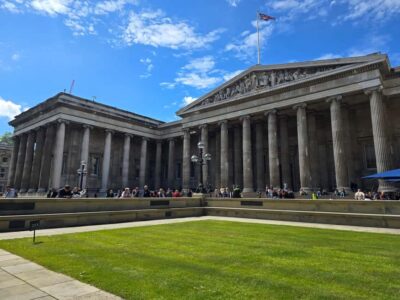
You’ll meet at the group entrance to the British Museum at Edward VII’s Entrance. The guide will be holding a sign that reads My London Guide, which is a comfort because it cuts down on that early-morning guessing game.
Plan for a moderate amount of walking. The museum galleries are not one long hallway, and even a focused route still involves moving between sections. Also, photography is allowed without flash, so you can bring your camera and use it freely where permitted, as long as you follow the no-flash rule.
Your Greek-first story: Parthenon marbles, Caryatid, and beauty ideals
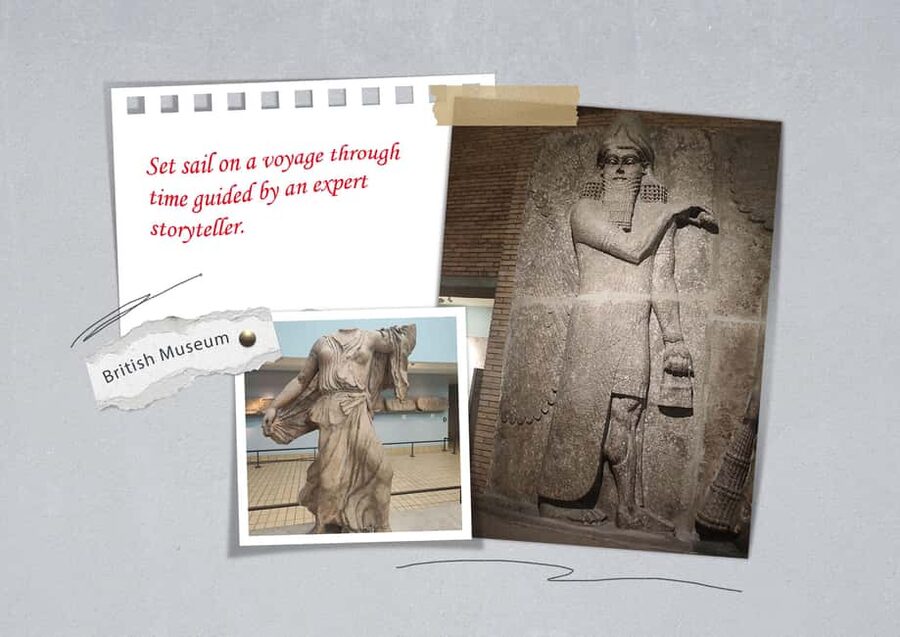
This is where the tour earns its title. The experience has a special focus on the Greek section, and it’s not random. It’s built around how Greek art shaped ideas of beauty that still show up in how we judge art today.
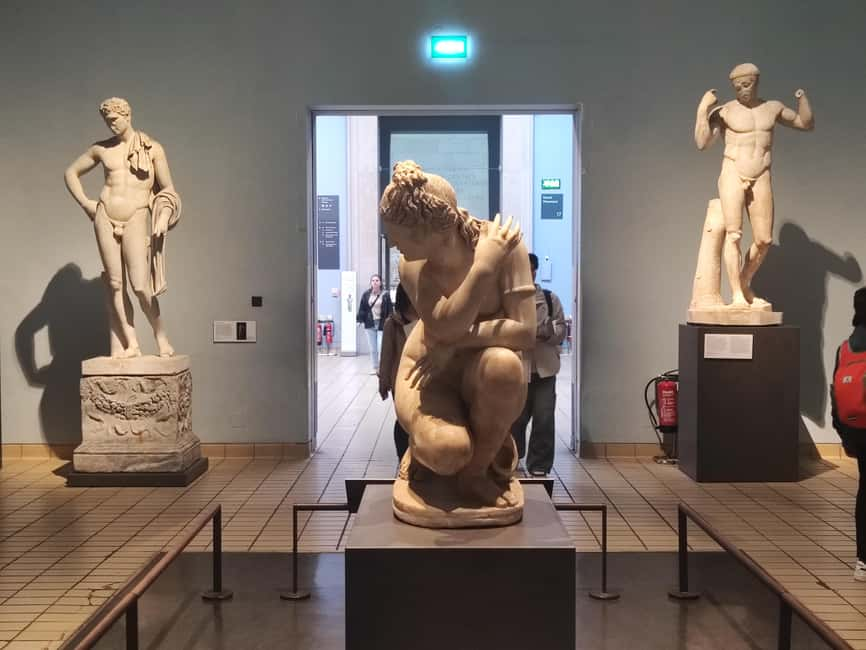
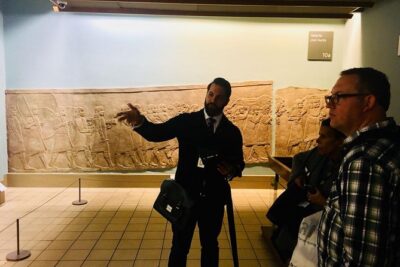
You’ll look at the Parthenon material and the Parthenon marbles, and you’ll be guided through what those sculptures were trying to communicate—how form, proportion, and idealized bodies worked as more than decoration. This is where a good art guide matters, because it’s easy to see marble and move on. A storyteller helps you see the choices: what was emphasized, what was toned down, and why.
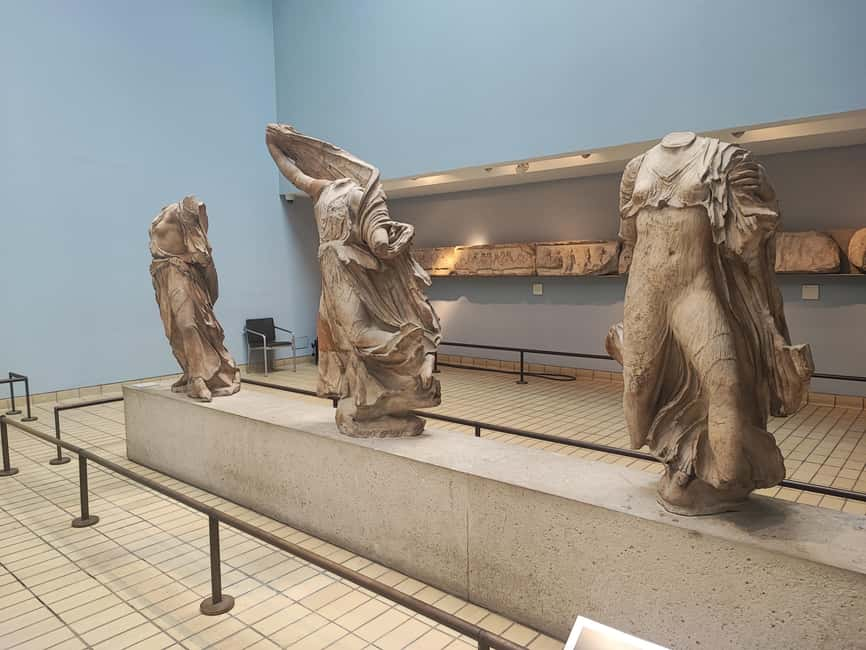
You’ll also encounter the Caryatid—the kind of sculpture you can miss if you’re rushing, because it looks like architecture that happens to be human-shaped. But it’s also a design solution. It shows how the Greeks blended sculpture and building into a single visual experience.
Then the tour connects to Greek vases. Vases are some of the most human objects in the collection. You often get scenes that feel like everyday life, myth, or ceremony, but with a carefully designed visual language. In a two-hour tour, focusing on vases makes sense because they’re vivid teaching tools: you learn how stories and images fit into an idea of beauty, not just how marble looks from across a room.
What you’re really getting from this section: a “lens.” You learn how to look at Greek art in terms of ideals—beauty as an organized system, not a vague feeling.
Still deciding? A handful more London outings we rated


Rosetta Stone: the moment language stops being a wall
One of the most famous artifacts in the museum is the Rosetta Stone, and this tour treats it like a turning point. The highlight is discovering lost languages through the story behind it and how it helped make hieroglyphs readable.
Even if you’ve seen the Rosetta Stone in passing photos, a guided explanation changes the experience. You stop thinking of it as one more “old stone” and start thinking of it as a bridge—how scholarship and text systems can transform what you can understand about a civilization.
This part is especially valuable if you’ve ever felt intimidated by writing systems. Hieroglyphs can look like pure symbols. When someone connects the dots and gives you a way to read what you’re seeing, the whole museum shifts from “things behind glass” into “evidence of real people communicating.”
Practical tip: in a busy museum, artifacts can feel like traffic. Stay close to your guide here. The key to enjoying this stop is catching the explanation in real time, not trying to reconstruct it later from memory.
Egyptian mummies: life, death, and why bodies mattered
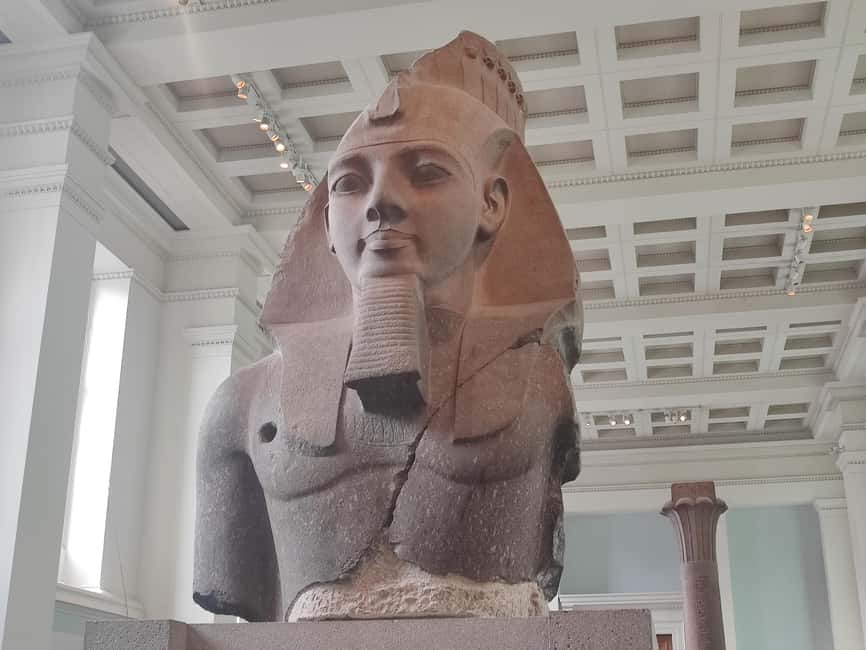
After Greece, the tour pivots to Egyptian mummies, using them to explore the theme of life and death. This is a useful pairing because Greek art and Egyptian practices can feel worlds apart at first glance. But the themes overlap: how humans think about the body, the afterlife, and what continuity means.
Mummies aren’t just a “scary museum thing.” When a guide frames them properly, you understand them as part of a broader worldview—one where careful handling of the body ties into beliefs about survival.
For your tour experience, this stop works best as a contrast. Greece gets you into ideals of form and beauty. Egypt adds the other side: beauty, body, and preservation as a cultural strategy for meaning.
You’ll likely find that your questions change here. Instead of “why is it beautiful?” your mind shifts to “what did this represent to them, and how did materials help that purpose?”
Medieval comic books and the childhood of Jesus
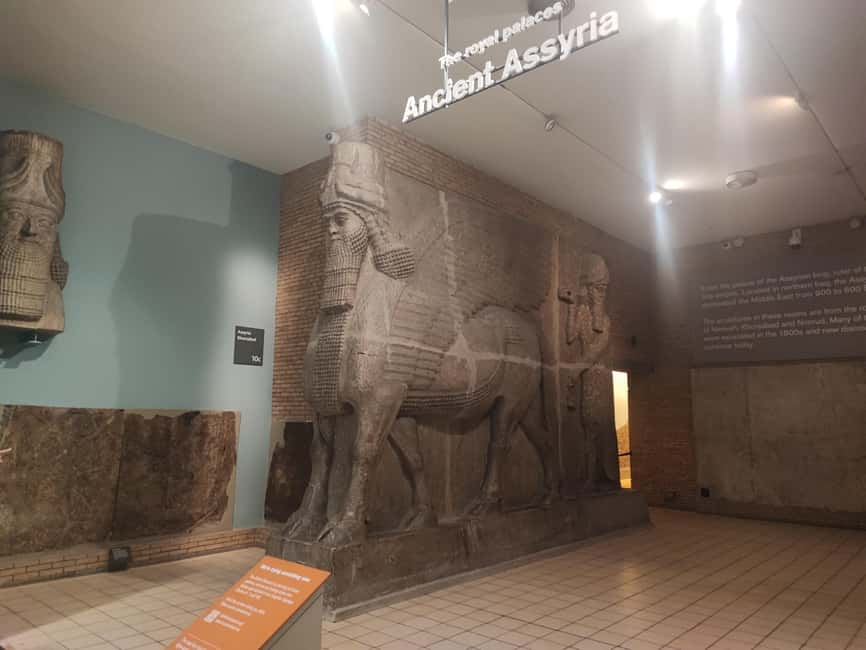
This is one of the most surprising highlights, and it’s why the tour feels alive rather than purely academic. The tour includes medieval comic books that relate to the childhood of Jesus Christ, a topic that reframes how religious stories were told and visualized.
You don’t need to be a theology expert to enjoy this section. The value here is the angle: you get alternative narratives beyond the most standard version you might hear in modern settings. The tour approach encourages you to see medieval art as storytelling technology—images that helped people visualize beliefs and ideas of holiness.
If you’ve ever wondered how a culture teaches big spiritual concepts to people who are young or new to the story, this stop addresses it directly. It treats the artwork as communication, not just religious decoration.
It also works well as a pacing tool. After Greek sculpture and Egyptian funerary practices, you get something that feels more plot-driven—less about form alone, more about narrative.
How the tour connects many civilizations without getting messy
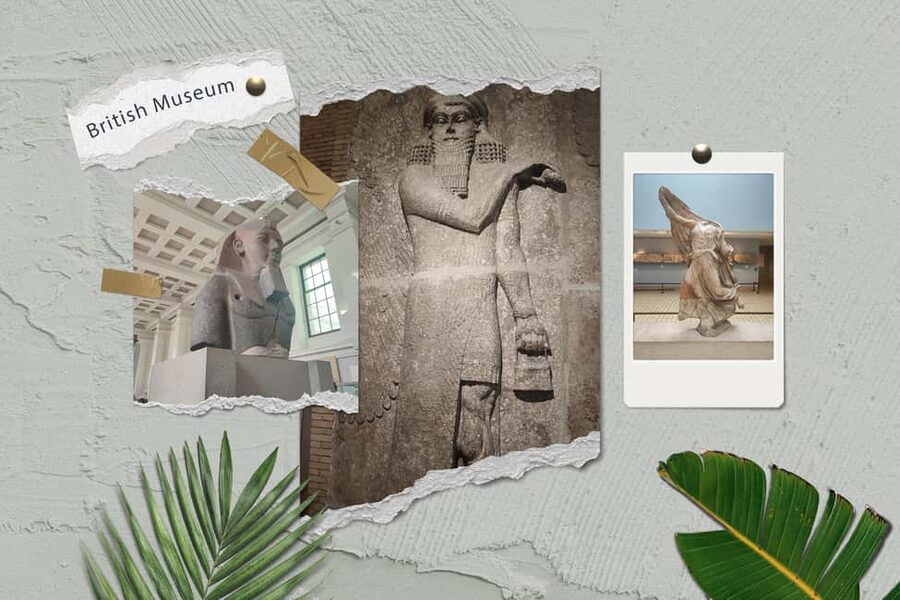
The overview of the experience includes a sweep across major civilizations—Egypt, Mesopotamia, India, England, and then the course of Christianity through Jesus Christ. The key is that the tour keeps that range controlled.
You’re not being asked to master five continents in two hours. Instead, the guide uses those references like signposts. For example, you’re guided to see how ancient ideas spread: how societies invented, preserved, recorded, performed, and retold stories in different ways.
That matters because the British Museum can tempt you to treat everything as separate. This tour pushes you to see relationships, such as how one culture’s artistic ideals can shape another culture’s later taste—and how human beings keep reusing the same big questions (beauty, body, belief) with different answers.
In plain terms: you leave with a better sense of how art travels through time.
Price and value: $129 per group for two hours of focus
At $129 per group for a 2-hour private tour, you’re not paying for access—you’re paying for a specialist to help you see faster and smarter.
Here’s the value logic I see:
- You get a guide who speaks to art and meaning, not just labels. In a museum like this, that’s what saves you from wandering.
- You get fast-track entry with express security, so you start earlier than you would on your own.
- It’s private, so you can ask questions and stay on the stops that interest you most, especially the Greek section and the beauty theme.
Whether it’s a bargain depends on your group size and how much you care about the narrative. If you and your people like art and want a clear route, the cost per person can feel very reasonable. If your group is more of a casual “we’ll roam around” type, you might do better spending time exploring on your own.
Also note the group-size details: the summary mentions a group up to 8, while the included description says private reserved exclusively for your group of up to 6. If you’re booking for a larger crew, verify the cap in your booking confirmation.
What to do (and not do) once you’re inside
This tour has the same museum rules you’ll hear elsewhere, but it’s worth noting so you don’t get surprised.
You can take photos without flash. You can’t use selfie sticks, and flash photography is not allowed. You also can’t touch exhibits. The restrictions include no weapons or sharp objects, and pets aren’t allowed (assistance dogs are allowed).
Large bags and backpacks are not allowed inside the museum. If you’re carrying bulky items, plan how you’ll manage them before you arrive at Edward VII’s Entrance. Food and drinks aren’t permitted inside the exhibition halls, so it’s best to eat before or after the tour.
None of this is unusual, but it’s the kind of detail that makes the difference between a calm start and a rushed scramble at security.
Who this tour fits best (and who might want a different plan)
This is a great match if you:
- Want a Greek-focused way to read the museum, especially through beauty ideals
- Like structured explanations and clear stop-by-stop guidance
- Prefer a small private format so the experience can move at a pace your group can handle
- Enjoy cross-cultural connections (Greece, Egypt, and medieval Christian storytelling)
It may not be the best fit if:
- You’re in a wheelchair, since it’s listed as not suitable for wheelchair users
- Your group wants a purely self-guided museum wander with no set route
- You dislike moderate walking and timed indoor transitions
Should you book this private Ancient Greece British Museum tour?
If your goal is to see the British Museum with a plan and a theme, I’d book it. The big reason is the combination: a tight 2-hour window, fast-track entry, and an art-specialist who keeps the focus on Ancient Greece and beauty ideas while still making Egypt and medieval storytelling feel connected rather than random.
I’d hesitate only if your group’s energy is low on walking, or if you’d rather spend the day drifting freely instead of following a guided narrative.
FAQ
What is included in the private tour?
It includes fast-track entry to the British Museum, a live English-speaking guide, and a duration of about 2 hours. The tour is private and reserved exclusively for your group. Food and drinks are not included.
Where do we meet for the tour?
Meet at the group entrance to the British Museum at Edward VII’s Entrance. The guide will be holding the sign My London Guide.
Does this tour include skip-the-line entry?
Yes. You’ll use express security and skip the line through the express security check.
What are the main subjects the guide focuses on?
The tour has a special focus on the Greek section, including Parthenon, Caryatid, Greek vases, and beauty ideas. It also highlights Rosetta Stone, Egyptian mummies, Parthenon marbles, and medieval comic books about the childhood of Jesus Christ.
What are the rules for photos and personal items inside?
Photography is allowed without flash. Selfie sticks are not allowed, flash photography is not allowed, and you can’t touch exhibits. Large bags and backpacks are not allowed inside the museum. Food and drinks are not permitted inside the exhibition halls.
Is it suitable for wheelchair users, and how much walking is involved?
The tour involves a moderate amount of walking and it is not suitable for wheelchair users.
More Tours in London
- From London: Harry Potter Warner Bros Studio Tour
★ 4.7 · 26,588 reviews - Magical London: Harry Potter Guided Walking Tour
★ 4.7 · 22,044 reviews - London: Warner Bros. Studio Harry Potter Tour & Branded Bus
★ 4.7 · 19,194 reviews - London Big Bus Hop-On Hop-Off Tour with Optional River Cruise
★ 3.5 · 10,803 reviews - London Small Group Tour of Historical Pubs
★ 5.0 · 10,422 reviews
More Tour Reviews in London
- From London: Harry Potter Warner Bros Studio Tour
★ 4.7 · 26,588 reviews - London: Westminster to Greenwich River Thames Cruise
★ 4.5 · 22,836 reviews - Magical London: Harry Potter Guided Walking Tour
★ 4.7 · 22,044 reviews - London: Madame Tussauds London
★ 4.6 · 20,915 reviews - London: Warner Bros. Studio Harry Potter Tour & Branded Bus
★ 4.7 · 19,194 reviews
The British Museum, Continued
- London: British Museum Guided Tour
★ 4.3 · 1,182 reviews - British Museum London Guided Tour Semi-Private 8ppl Max
★ 5.0 · 984 reviews - London: British Museum Guided Tour with Entrance Tickets
★ 4.9 · 748 reviews - London: Tour of the British Museum
★ 4.1 · 678 reviews - London: British Museum Audio Tour & Priority Entrance Ticket
★ 4.5 · 631 reviews
Just reviewed around London





British Museum Tours, compared.
 ★ 4.3British Museum Guided TourFrom $231,182 reviews
 ★ 5.0British Museum London Guided Tour Semi-Private 8ppl MaxFrom $108984 reviews
 ★ 4.9British Museum Guided Tour with Entrance TicketsFrom $39748 reviews
 ★ 4.1Tour of the British MuseumFrom $14678 reviews
 ★ 4.5British Museum Audio Tour & Priority Entrance TicketFrom $9631 reviews
 ★ 5.0The British Museum London – Exclusive Guided Museum TourFrom $108555 reviews
 ★ 4.2Afternoon Tea at the British MuseumFrom $58511 reviews
 ★ 4.0British Museum Guided TourFrom $18470 reviews
Browse the lists this tour appears in