
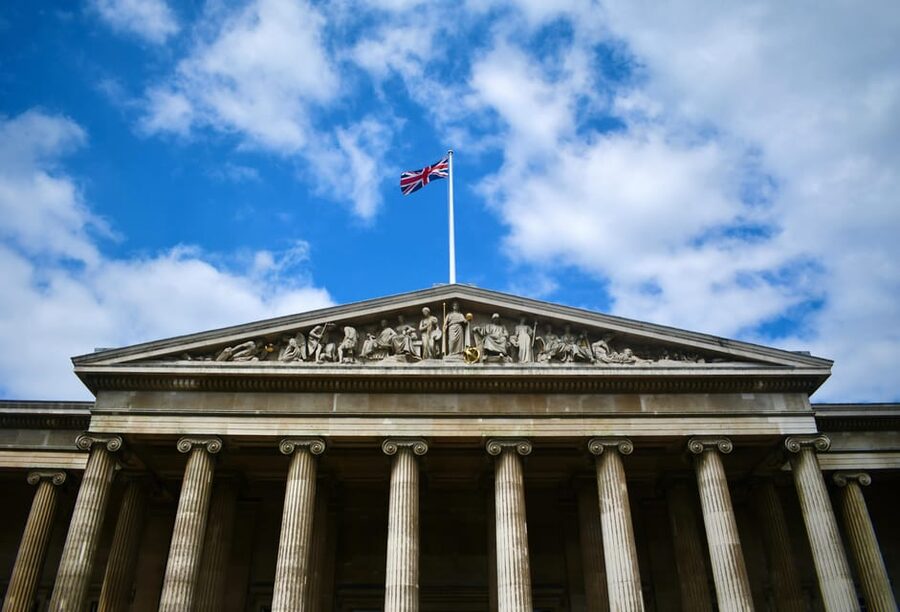
Reviewed · BRITISH MUSEUM TOURS
London: 2-Hour Guided Tour of the British Museum and History
The British Museum feels endless until someone plans the route. This 2-hour guided highlights tour uses a licensed guide to point you toward the most meaningful objects—so you leave with a clear sense of human history without getting lost in the galleries.
I especially like how the tour starts in ancient Egypt with the Rosetta Stone story, then moves logically through Greece and Rome. I also like the pace: it’s fast, but not rushed, and it aims at the museum’s “you really should see this” moments. A fair consideration is that the experience depends heavily on your ability to hear and follow the guide in a busy space; one poor audio experience was reported when a guide’s accent was hard to understand and the group couldn’t hear well.
In This Review
- Key highlights worth your attention
- A 2-hour British Museum game plan that beats wandering
- Egypt first: Rosetta Stone and the thrill of reading hieroglyphs
- Greece and Rome highlights: Parthenon legacy and the Elgin Marbles conversation
- The objects that make history feel personal: Sutton Hoo and Hoa Hakananai’a
- How the guide keeps a giant museum from eating your time
- Price and value: is $37 fair for a British Museum highlights tour?
- Who should book, and who might prefer DIY
- Should you book this British Museum guided highlights tour?
- FAQ
- How long is the guided tour?
- What is included in the price?
- Where do I meet the guide?
- How do I get the tickets?
- What languages are available?
- Is the museum wheelchair accessible?
Key highlights worth your attention
- Rosetta Stone decoding: learn the idea behind deciphering Egyptian hieroglyphs
- Parthenon influence: see how Greek art and thought traveled through time
- Elgin Marbles context: you’ll be guided through the controversy, not just the spectacle
- Roman artifacts with personality: mosaics and statues that feel lived-in, not distant
- Sutton Hoo treasures: Anglo-Saxon finds that shift how you think about early England
- Hoa Hakananai’a (Moai): a powerful detour to Easter Island’s spiritual art
More among the marbles and mummies
- London: British Museum Guided Tour
★ 4.3 · 1,182 reviews - British Museum London Guided Tour Semi-Private 8ppl Max
★ 5.0 · 984 reviews - London: British Museum Guided Tour with Entrance Tickets
★ 4.9 · 748 reviews - London: Tour of the British Museum
★ 4.1 · 678 reviews
A 2-hour British Museum game plan that beats wandering

The British Museum can overwhelm you in minutes. This tour is designed to prevent that by moving in a guided storyline rather than a “checklist of rooms.” You’re not trying to see everything—you’re getting the best parts that help the rest of the museum click when you continue on your own.
The value is in the format. With entry included and a licensed guide leading, you’re paying for direction, context, and time saved—especially if you only have a short window in London. And because the route is described as tailor-made to the museum’s best public highlights, you should feel the selection effort, not just generic sightseeing.
One quick practical note: you’ll meet your guide inside the museum. Plan on finding the guide in front of the British Museum portals on the stairs near the pillars after passing security (not outside the gates). Your tickets are sent via WhatsApp 1–2 hours before the tour; if you don’t use WhatsApp, the provider can send them by email instead.
Egypt first: Rosetta Stone and the thrill of reading hieroglyphs
Starting with ancient Egypt is a smart move because it gives you a hook. You’ll be guided through pharaonic relics and the big turning point of how people learned to understand hieroglyphs—centered on the Rosetta Stone. Even if you’ve read the basics before, hearing the story in sequence helps it feel less like a trivia fact and more like a breakthrough in communication.
This section works well for first-timers because Egypt’s “star objects” are instantly recognizable. The Rosetta Stone is also the perfect lead-in to the way the museum thinks: cultures are presented as networks of ideas, not sealed-off worlds. You’ll come away with a clearer sense of why scholars cared so much about that artifact and what it unlocked.
If you tend to get impatient waiting for the “main event,” Egypt usually helps. It sets the tone early, and it gives you something to look for as you move forward into Greece and Rome.
Greece and Rome highlights: Parthenon legacy and the Elgin Marbles conversation
After Egypt, the tour shifts into ancient Greece, where you’ll connect philosophy, art, and political ideas in a way that’s easy to remember. You’ll see iconic sculptures associated with the Parthenon, and you’ll also hear about how marble inscriptions shaped Western thought. That matters because it turns the art from “pretty stone” into a record of ideas people argued about and lived with.
Then comes ancient Rome, and that’s where the museum’s engineering brain shows up. You’ll look at mosaics and statues depicting gods and heroes, plus relics tied to imperial power. The Roman segment is useful because it demonstrates continuity: Rome didn’t reinvent everything from scratch—it adapted, repackaged, and redistributed.
The Elgin Marbles are part of the experience too, with mention of their controversy. The goal isn’t to make you take a side in 2 hours. It’s to help you understand why the objects are discussed so intensely and why museums still face ethical questions today. In a highlights tour, that kind of context is the difference between seeing headlines and actually learning something.
Still deciding? A handful more London outings we rated




The objects that make history feel personal: Sutton Hoo and Hoa Hakananai’a
One of the best reasons to do a guided version is that it helps you notice the museum’s emotional range. After the big classical arcs, you’ll be led to Sutton Hoo, where Anglo-Saxon treasures offer a glimpse into early English life. Even without getting lost in scholarship, these objects tend to hit differently because they feel connected to real people and real burial rituals.
Then the tour makes a striking leap to Easter Island with Hoa Hakananai’a, a Moai. That’s a great reminder that “human history” is not only Europe and not only empires. When you see how the museum places this spiritual art next to other global artifacts, the whole collection starts to read like a story of meanings—ritual, authority, memory—rather than a single timeline.
This mix is also practical. If you only see one civilization, the museum can feel like a series of disconnected rooms. Sutton Hoo and Easter Island act like contrast, so your brain remembers more of what you’ve seen.
How the guide keeps a giant museum from eating your time
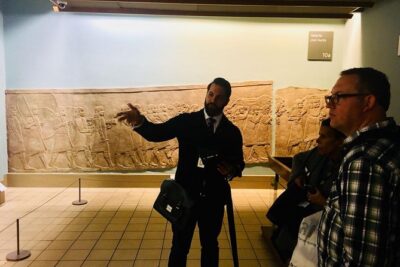
In a museum this large, the difference between a good tour and a frustrating one is navigation. The strongest parts of this experience are described as skillful routing around crowds and the ability to cover big, important exhibits within the short time window. That’s exactly where a licensed guide earns their keep.
I also like that the tour is flexible enough to tailor which remarkable parts you hit. Even when galleries are busy, a good guide can adjust the route so you don’t spend your highlight time stuck behind a school group. One review highlighted a free-flowing, informative style and strong crowd management in the 2-hour slot, which is the whole point of a highlights tour.
The guide’s communication matters, too. The tour is offered in English, French, and Italian, and past guides named in reviews include Daniel and Filomena. Still, if you know you struggle with accents or hearing in crowded rooms, sit close and position yourself where you can see the guide’s face and mouth clearly.
Price and value: is $37 fair for a British Museum highlights tour?
Let’s do the simple math and then the real math. This tour costs $37 per person and includes the entry ticket plus the guided tour. If you’re visiting the British Museum anyway, you’re already covering the admission part, so the incremental cost is the guide and the time-saving route plan.
For many people, the real “value” is that you don’t waste the first hour trying to pick the right galleries. Without guidance, it’s easy to see a few impressive items and still leave feeling confused about how they connect. With this tour, you get a structured sequence across Egypt, Greece, Rome, Anglo-Saxon England, and beyond—so you can keep exploring afterward with better context.
The only value risk is personal learning style. One report described a mismatch between what the group expected (highlights with strong focus) and what the guide prioritized (spending extra time on an item some people found less relevant). That’s not something you can fully predict, so the safest mindset is: treat it as a curated orientation. If you’re the type who wants only blockbuster masterpieces and nothing else, you might be happier pairing this with your own self-guided time afterward.
Who should book, and who might prefer DIY
This tour is best for you if you want a fast introduction that still feels meaningful. It’s a strong choice for first-time visitors, people with limited time, or anyone who doesn’t want to spend vacation hours planning where to start.
You’ll also like it if you enjoy cultural connections—how Egypt’s breakthrough in writing links to later civilizations, how Greek art and philosophy echoes through time, and how Rome’s artistic language carried forward. The inclusion of Sutton Hoo and Hoa Hakananai’a makes it more memorable than a purely European tour.
If you’re traveling with children, the experience may work well too, since one guide was praised for contagious passion for history (even though the group was adult-only in that specific case). That said, the tour is described as a highlights walk through big objects, so it may be best for kids who can handle a brisk pace and lots of looking.
If you’re highly sensitive to sound, language accent, or group crowding, plan to use your own coping strategy: choose a spot where you can hear well, and consider having a museum audio guide option as a backup for anything you miss during busy moments.
Should you book this British Museum guided highlights tour?
Yes, I’d book it if you want a 2-hour orientation that covers major parts of the museum in a logical story. The biggest selling points are the guided framing—Rosetta Stone, Parthenon, Elgin Marbles context, plus the curveballs of Sutton Hoo and Easter Island—together in one efficient run.
Skip it only if you know you need very specific content depth (like deep scholarship on a single collection) or you’re likely to get stuck with poor hearing in crowded conditions. In that case, you might prefer a self-guided visit with extra time in the galleries you love most.
If you do book, you’ll set yourself up for a better rest of your day at the museum. This tour is meant to help you understand what you’re seeing next.
FAQ
How long is the guided tour?
It lasts 2 hours.
What is included in the price?
The tour includes the British Museum entry ticket and the guided tour.
Where do I meet the guide?
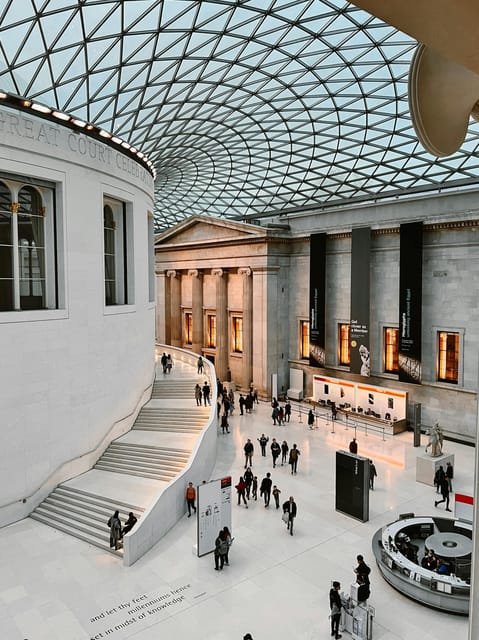
Meet in front of the British Museum portals on the stairs near the pillars after you pass security (not outside of the gates).
How do I get the tickets?
Tickets are provided 1–2 hours before the tour via WhatsApp. If you don’t have WhatsApp, contact via email so they can send the tickets another way.
What languages are available?
The live guide is available in English, French, and Italian.
Is the museum wheelchair accessible?
Yes, the British Museum is wheelchair accessible for this activity.
More Tours in London
- From London: Harry Potter Warner Bros Studio Tour
★ 4.7 · 26,588 reviews - Magical London: Harry Potter Guided Walking Tour
★ 4.7 · 22,044 reviews - London: Warner Bros. Studio Harry Potter Tour & Branded Bus
★ 4.7 · 19,194 reviews - London Big Bus Hop-On Hop-Off Tour with Optional River Cruise
★ 3.5 · 10,803 reviews - London Small Group Tour of Historical Pubs
★ 5.0 · 10,422 reviews
More Tour Reviews in London
- From London: Harry Potter Warner Bros Studio Tour
★ 4.7 · 26,588 reviews - London: Westminster to Greenwich River Thames Cruise
★ 4.5 · 22,836 reviews - Magical London: Harry Potter Guided Walking Tour
★ 4.7 · 22,044 reviews - London: Madame Tussauds London
★ 4.6 · 20,915 reviews - London: Warner Bros. Studio Harry Potter Tour & Branded Bus
★ 4.7 · 19,194 reviews
The British Museum, Continued
- London: British Museum Guided Tour
★ 4.3 · 1,182 reviews - British Museum London Guided Tour Semi-Private 8ppl Max
★ 5.0 · 984 reviews - London: British Museum Guided Tour with Entrance Tickets
★ 4.9 · 748 reviews - London: Tour of the British Museum
★ 4.1 · 678 reviews - London: British Museum Audio Tour & Priority Entrance Ticket
★ 4.5 · 631 reviews
Just reviewed around London





British Museum Tours, compared.
 ★ 4.3British Museum Guided TourFrom $231,182 reviews
 ★ 5.0British Museum London Guided Tour Semi-Private 8ppl MaxFrom $108984 reviews
 ★ 4.9British Museum Guided Tour with Entrance TicketsFrom $39748 reviews
 ★ 4.1Tour of the British MuseumFrom $14678 reviews
 ★ 4.5British Museum Audio Tour & Priority Entrance TicketFrom $9631 reviews
 ★ 5.0The British Museum London – Exclusive Guided Museum TourFrom $108555 reviews
 ★ 4.2Afternoon Tea at the British MuseumFrom $58511 reviews
 ★ 4.0British Museum Guided TourFrom $18470 reviews
Browse the lists this tour appears in