
Reviewed · JACK THE RIPPER TOURS
Jack the Ripper – What About the Women?
Jack the Ripper, but not the way you expect. This evening walk through East London centers the women’s lives, not the killer’s myth, with stops that connect street corners to real Victorian hardship. I especially liked the way the guide makes the stories feel human and local, using places you can actually stand in. You’ll also get Old Spitalfields Market, Brick Lane, and Whitechapel in one smooth loop, with a small group at night.
Two things I really love: first, the focus on Martha Tabram, Polly Nichols, Annie Chapman, Elizabeth Stride, and Catherine Eddowes keeps the story grounded in real people. Second, the guide (Cecily or Ellie, depending on your date) keeps it factual and respectful, with no sensational gore—just context. It’s history that helps you understand how society, not just a single criminal, shaped outcomes.
One possible drawback: it’s a lot of walking and you’ll want good night footwear. The tour is built for evening streets, so if you’re sensitive to crowds or uneven pavement, plan accordingly.
In This Review
- Key highlights at a glance
- Why this Jack the Ripper tour feels different at 6:30 pm
- Meeting point near Aldgate High St: where your night walk really begins
- The story behind Whitechapel Road and the women’s first turning points
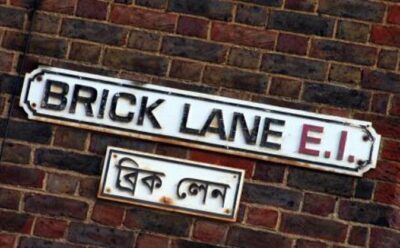
- Brick Lane: Polly Nichols, alcoholism, and how immigration changed the neighborhood
- Spitalfields Market and the Truman Brewery: where Annie Chapman’s life meets the headlines
- Old Spitalfields Market: Victorian contrasts you can actually see
- Petticoat Lane Market: textiles, work, and what kept the area moving
- St Botolph’s Aldgate and the end of the route near Mitre Square
- The guide makes or breaks it: Cecily and Ellie’s tone and pacing
- Price and value: what $34.28 buys you in London
- Best way to enjoy it: who should book and what to expect
- Should you book Jack the Ripper – What About the Women?
- FAQ
- FAQ
- How long is the tour?
- Where does the tour start and end?
- What time does it begin?
- Is the tour offered in English?
- Is it a good choice for children since it’s Jack the Ripper themed?
- Do they allow service animals?
Key highlights at a glance
- Women-first storytelling: the victims’ lives, work, and pressures are the main event
- East London by night: an evening route that makes the setting feel immediate
- Small group size (max 20): easier to ask questions and follow the narrative
- Site-by-site stops: Whitechapel Road, Brick Lane, Spitalfields Market, and Aldgate churchyard areas
- Respectful tone: no grisly photos or explicit descriptions, making it gentler than many true-crime tours
More of the East End after dark
- London: The Original Jack the Ripper Walking Tour
★ 4.7 · 7,833 reviews - London Jack the Ripper Guided Tour with Ripper-Vision
★ 4.5 · 4,840 reviews - London: Jack the Ripper Small Group Tour
★ 4.7 · 3,159 reviews - London Jack The Ripper Guided Walking Tour
★ 5.0 · 3,131 reviews
Why this Jack the Ripper tour feels different at 6:30 pm
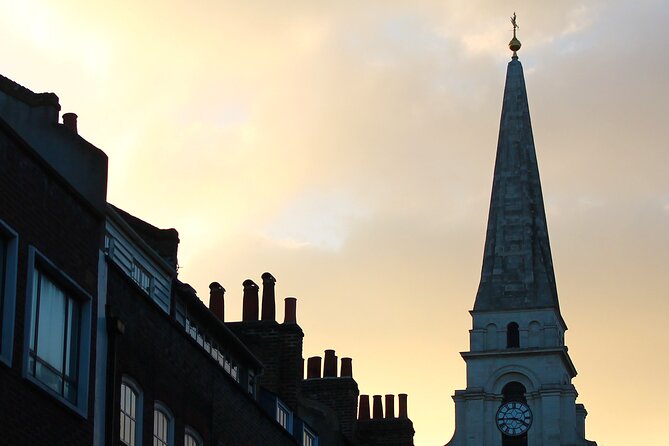
Most Jack the Ripper tours treat the murders like a headline and the killer like a character. This one flips the focus. You start near Aldgate High St and head into Whitechapel and Spitalfields while the streets are busy and dim—so the atmosphere matches the era without turning into theatrical shock.
At a cost of $34.28 for about two hours, you’re paying for a guide-led route with a tight story arc. The best value move here is that you’re not paying for museum entry or separate ticketed stops. You’re getting one guided session plus the benefit of not having to stitch together ten different walking routes by yourself.
Also: the tour is explicitly designed around the female victims and the everyday systems around them. That means you’ll hear about dosshouses, workhouses, and other working-class lodging, not just names and dates. You’ll leave with a different mental map of Whitechapel—one that includes charities that still do work in the area and the way modern communities remember and reshape the past.
Meeting point near Aldgate High St: where your night walk really begins
You meet at Aldgate High St (EC3N 1AH), outside Aldgate station, with the tour starting at 6:30 pm. That’s a good anchor point if you’re coming in by Tube, bus, or train—public transportation is right nearby.
The ending point is at Spitalfields Market (65 Brushfield St, E1 6AA). So you get a night walk that starts with transit convenience and finishes in a busy area where it’s easy to find food or grab a final drink afterward.
Because this is an evening route, I recommend two small things:
- Wear shoes you’d use for a regular city walk, not museum slippers.
- Bring a light layer if the weather turns cool, even if the day was warm.
The story behind Whitechapel Road and the women’s first turning points
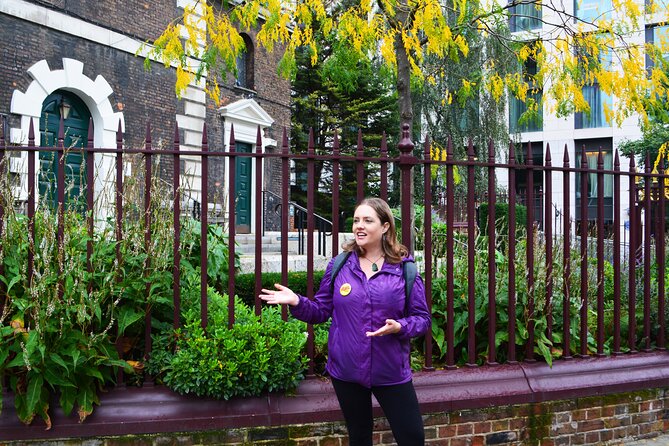
Your first stop is Whitechapel Road, where the tour sets the emotional and social groundwork. You’ll hear about Martha Tabram and Polly Nichols, but you’ll also get the point behind those names: the setting was built around scarcity.
The guide explains what life could mean for working-class residents in the Victorian East End—especially women who had limited options for housing and stable income. You’ll hear terms tied to survival lodging, including dosshouses and workhouses, plus other types of accommodations. It’s not abstract. The goal is to show how precarious daily life could make someone more vulnerable.
Another thoughtful touch: you’ll be shown charities still working in the area today. That helps your brain connect the past to the present without turning it into a lecture. About 20 minutes at this stop gives you time to absorb what you’re seeing before you move on.
Possible consideration: if you’re expecting a straight true-crime recounting, this first stop may feel more like social history than plot. That’s the point.
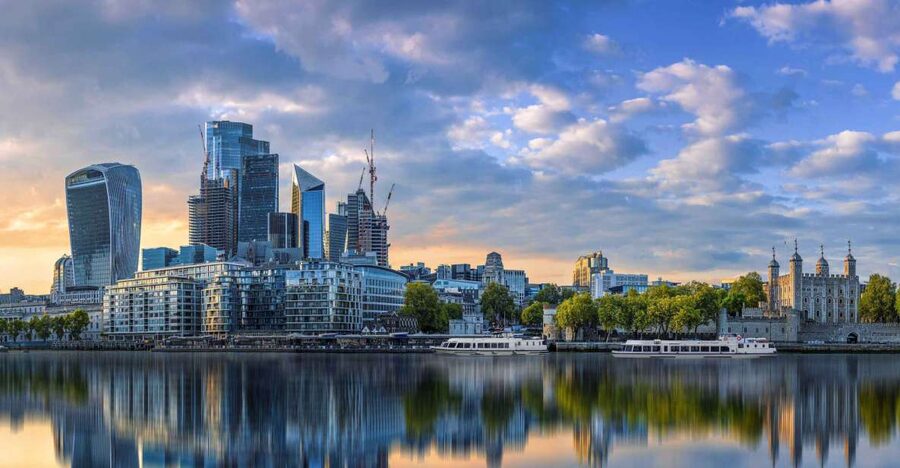
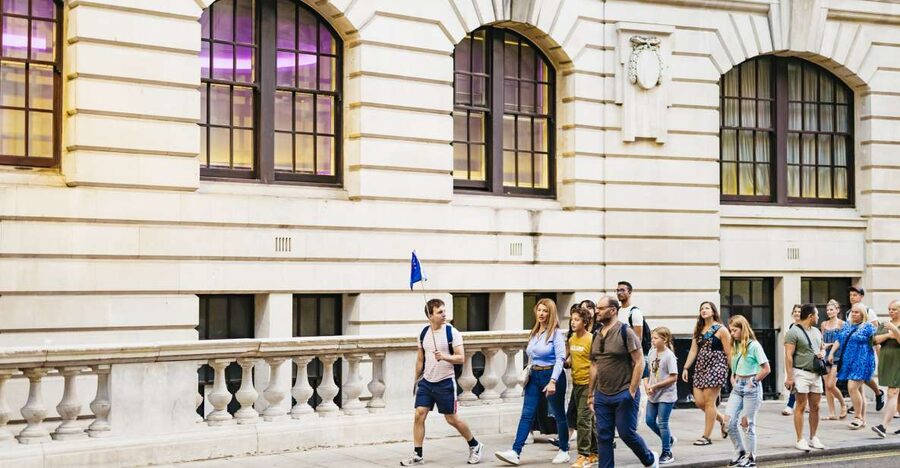

Brick Lane: Polly Nichols, alcoholism, and how immigration changed the neighborhood
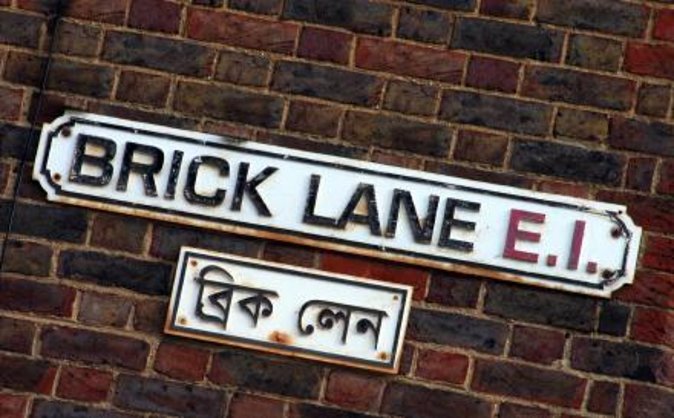
Next is Brick Lane, with a stop at the site of the pub where Polly Nichols was on her final night. Then the guide focuses on alcoholism and addiction in the Victorian era, tying it to circumstances rather than moralizing.
After the Nichols material, you’ll also pause at the Brick Lane Mosque. This is where the tour widens the lens. You’ll hear about immigration into the East End and the area’s cultural diversity—a reminder that Whitechapel and Spitalfields aren’t frozen in 1888. They keep changing, and the people always bring new stories with them.
This stop is shorter—about 15 minutes—but it helps the tour avoid tunnel vision. One moment you’re in a painful personal story. The next you’re in a living neighborhood shaped by migration and community.
Spitalfields Market and the Truman Brewery: where Annie Chapman’s life meets the headlines
At Spitalfields Market (E1), you get multiple layers in a small space. The tour visits the area of the former Truman Brewery, once described as the largest in the world. That brewery detail matters because it’s a reminder: this part of London was tied to work, supply chains, and daily labor.
Near there, the guide points to 29 Hanbury Street, where Annie Chapman was found the morning of September 8. Then you’ll hear more about Annie’s life and how the damage rippled outward beyond the headlines.
From there you’ll move toward the Ten Bells Pub, where the tour connects past and present memory. One of the most interesting points here is how activism mattered: the movement Reclaim the Night pushed to have the pub’s name changed back to the Ten Bells from the Jack the Ripper-branded version. It’s a modern example of how communities decide what stories deserve to be displayed—and which ones they’d rather retire.
This segment is about 10 minutes, but it lands hard because you’re seeing industrial history, a specific address, and the way a business can become a symbol.
Old Spitalfields Market: Victorian contrasts you can actually see
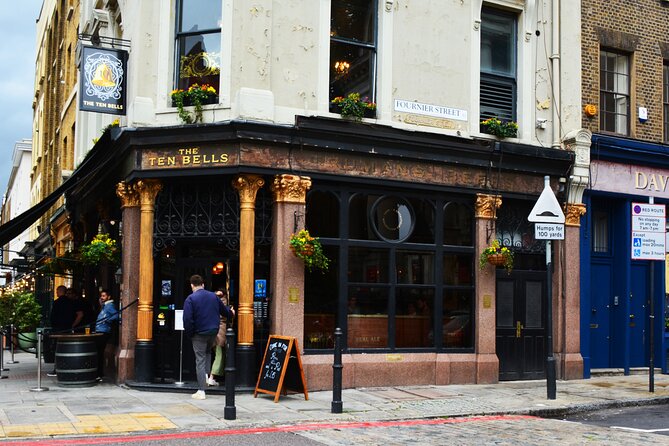
Your next stop is Old Spitalfields Market, where you spend about 15 minutes. The tour notes that the market opened in 1887—the same era as Queen Victoria’s Golden Jubilee, and the year before the Whitechapel murders began.
That timing isn’t trivia. It’s a way to show you the contrast: pomp and empire celebrations on one hand, and intense everyday struggle on the other. This tour leans into the contrast visually and in the story, so you feel the mismatch between the official image of Britain and the lives most people never saw.
From there, you’ll see Crispin Street, tied to a refuge for working-class people that actually worked. That phrase matters. The tour uses it to highlight something you might miss if you only focus on crime scenes: supportive systems existed, but access and survival still came down to harsh realities.
The stop also points to the former site of Mary Jane Kelly’s residence, described as the last victim and noted as especially mysterious. You don’t get sensational reenactment. You get the weight of the location and the reality that an entire life led up to that point.
Petticoat Lane Market: textiles, work, and what kept the area moving
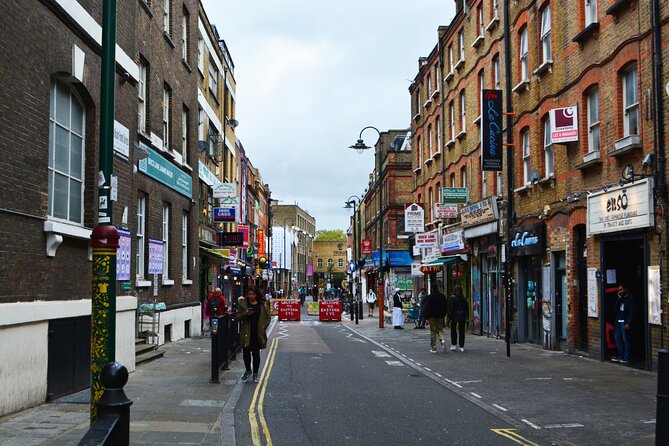
You’ll pass through Petticoat Lane Market, described as the former heart of the textile industry. It’s a short stop—about 5 minutes—but it adds a key piece to the puzzle.
When you’ve already heard about housing, work pressures, and addiction risks, the textile detail helps make the bigger point: the East End was an economy of labor. People lived inside the rhythm of production and irregular work. That economic frame is part of why the tour’s women-focused approach makes sense. It’s not only tragedy. It’s a system.
If you enjoy photographs, take a quick snapshot of what you’re seeing and then put the phone away. You’ll get more out of it if you keep listening.
St Botolph’s Aldgate and the end of the route near Mitre Square
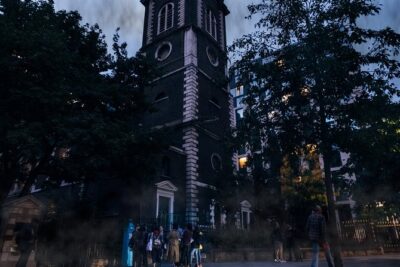
The tour’s final stretch centers on St Botolph’s without Aldgate, where you’ll hear about Elizabeth Stride. She’s described as originally from Sweden, and you’ll learn about her beginnings in Gothenburg and her later life in London.
This is one of the tour’s strengths: it doesn’t treat the victims like symbols. It treats them like migrants, workers, and people shaped by movement and limited opportunity.
From there, you finish near Mitre Square, where Catherine Eddowes’ body was discovered. The guide highlights her Wolverhampton background and character—describing her as a feisty lass. It’s respectful, and it helps you remember that these were women with identities, not just cases.
About 25 minutes here gives you time to absorb the closing stories and the surrounding streets. Then you end at Spitalfields Market, which is a convenient place to wrap up your night.
The guide makes or breaks it: Cecily and Ellie’s tone and pacing
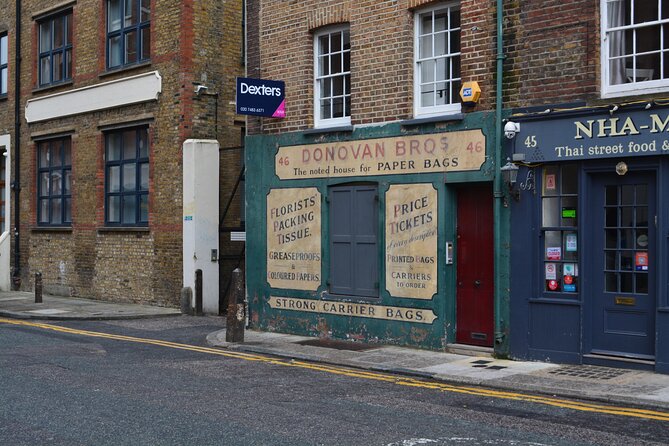
The standout common thread across the experience is the guide’s delivery. You might have Cecily or Ellie—and both come through as friendly, clear, and grounded in real context.
What I appreciate most is their focus on fact-based storytelling and the respectful pacing. The tour avoids the worst habits of true crime tours: sensationalizing the murders or turning victims into footnotes.
It also helps that the group is capped at 20, so questions stay possible and the guide can adjust if someone needs the slower pace. Some guides speed through these streets like they’re racing the clock. Here, the structure includes frequent stops and places to sit if needed.
And yes, this is one of the rare crime-related tours where children can attend without being forced into graphic detail. The tone is appropriate because there are no grisly pictures and no explicit description of how the women were murdered.
Price and value: what $34.28 buys you in London
Let’s talk value plainly. $34.28 for about two hours in central London is not cheap, but it’s also not absurd when you get:
- An experienced guide
- A structured route across major East London landmarks
- A women-first narrative that replaces rumor-heavy storytelling
- No mention of paid attractions along the way
You’re not paying for entry fees because the tour’s stops don’t require ticketed museum access. You’re paying for informed interpretation, built around specific addresses and real places you can revisit later on your own.
The best value part is also the most intangible: the tour changes how you think about the case. Instead of asking who the killer was, it makes you ask what conditions made so many women vulnerable.
Best way to enjoy it: who should book and what to expect
This tour is for you if:
- You’ve done a true-crime tour before and wanted something less sensational
- You care about social history and how neighborhoods shape people’s lives
- You want a route that connects Whitechapel, Brick Lane, and Spitalfields without messy planning
- You prefer facts and respect over shock and myth
It’s also a good pick if you’re traveling with family and want an age-appropriate approach. The tour avoids graphic presentation, which makes it easier to bring along teens and older kids who can handle serious topics without needing gore.
Bring a curious mindset. Expect to walk, listen, and look at street-level details with intent. If you show up expecting a horror story, you may find the emotional focus heavier than the gore-free approach suggests.
Should you book Jack the Ripper – What About the Women?
Yes, if you want a more human, less sensational London experience. I’d book it because it gives you:
- A coherent evening walk with real place-based storytelling
- A women-first narrative that restores dignity and identity
- A guide who keeps the tone factual and respectful (Cecily and Ellie get praised for this)
Skip it only if you’re chasing the killer’s mythology and want nonstop crime drama. This isn’t built for that mood. It’s built for understanding.
One last practical note: it requires good weather. London evenings can change fast, so check conditions before you go, and don’t assume it will run in heavy rain.
FAQ
FAQ
How long is the tour?
It runs for about 2 hours.
Where does the tour start and end?
The tour starts outside Aldgate station at Aldgate High St (EC3N 1AH) and ends at Spitalfields Market, 65 Brushfield St (E1 6AA).
What time does it begin?
The start time is 6:30 pm.
Is the tour offered in English?
Yes, it’s offered in English.
Is it a good choice for children since it’s Jack the Ripper themed?
The tour is described as not showing grisly pictures and not telling graphic details about how the women were murdered, which makes it easier for children to attend. Still, use your own judgment based on your child’s maturity.
Do they allow service animals?
Yes, service animals are allowed.
More Tour Reviews in London
- From London: Harry Potter Warner Bros Studio Tour
★ 4.7 · 26,588 reviews - London: Westminster to Greenwich River Thames Cruise
★ 4.5 · 22,836 reviews - Magical London: Harry Potter Guided Walking Tour
★ 4.7 · 22,044 reviews - London: Madame Tussauds London
★ 4.6 · 20,915 reviews - London: Warner Bros. Studio Harry Potter Tour & Branded Bus
★ 4.7 · 19,194 reviews
More Ripper Walks After Dark
- London: The Original Jack the Ripper Walking Tour
★ 4.7 · 7,833 reviews - London Jack the Ripper Guided Tour with Ripper-Vision
★ 4.5 · 4,840 reviews - London: Jack the Ripper Small Group Tour
★ 4.7 · 3,159 reviews - London Jack The Ripper Guided Walking Tour
★ 5.0 · 3,131 reviews - London: Jack the Ripper Tour with Immersive Ripper Vision
★ 4.5 · 1,840 reviews
Just reviewed around London





Jack the Ripper Tours, compared.
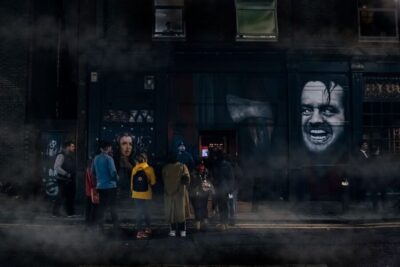 ★ 4.7The Original Jack the Ripper Walking TourFrom $257,833 reviews
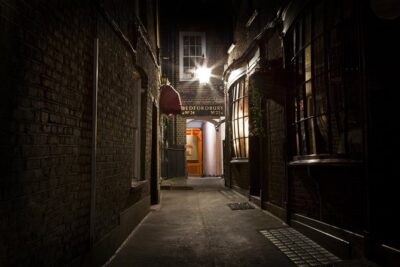 ★ 4.5London Jack the Ripper Guided Tour with Ripper-VisionFrom $274,840 reviews
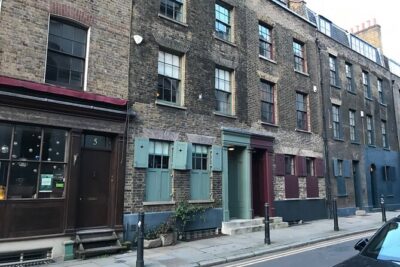 ★ 4.7Jack the Ripper Small Group TourFrom $263,159 reviews
 ★ 5.0London Jack The Ripper Guided Walking TourFrom $03,131 reviews
 ★ 4.5Jack the Ripper Tour with Immersive Ripper VisionFrom $241,840 reviews
 ★ 4.6German Language : Original Jack the Ripper TourFrom $241,805 reviews
 ★ 5.0Ultimate Jack the Ripper : Guided Tour of LondonFrom $271,495 reviews
 ★ 4.9Jack the Ripper Evening Walking TourFrom $331,449 reviews
Browse the lists this tour appears in