
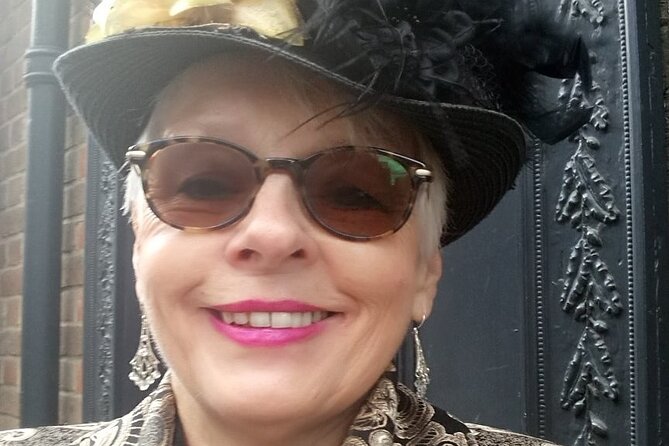
Reviewed · JACK THE RIPPER TOURS
Jack the Ripper Walking Tour with Expert Ripperologist
London’s Jack the Ripper story hits the street corners. I love that the tour stays grounded in 1888 Whitechapel life while still tracking the key names and places people associate with the case. You’ll also get 14-inch backlit visuals so you can actually see what the guide is describing, even when you’re outside in the dark.
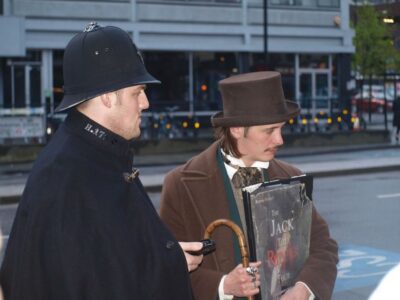
I like the way the guide role-plays with a light theatrical touch, without turning it into a loud show. You’ll be walking, but you’re not wrestling a map, since the route and turns are handled for you. One consideration: there’s very limited toilet access on the route, so plan ahead.
In This Review
- Key things that make this tour worth your time
- Why the Whitechapel setting matters more than the myths
- Price and timing: a $23.61 tour that fills a big chunk of London
- Where you start and end (and why that’s convenient)
- The route starts at St Botolph’s Aldgate and heads straight into “why here”
- Mitre Street to Goulston Street: boundaries, police, and a few critical names
- Gunthorpe Street and Thrawl Street: Martha Tabram to Mary Ann Nichols
- Hanbury, Wilkes, and Puma Court: Annie Chapman and the Dear Boss letter
- Ten Bells, Itchy Park, and the London Fruit & Wool Exchange ending
- The 14-inch backlit tablet: the practical tech that makes this story readable
- Group size, hearing the guide, and walking comfort
- Who this tour is best for (and who should skip it)
- Should you book Jack the Ripper Walks?
- FAQ
- Where does the tour start and end?
- How long is the Jack the Ripper walking tour?
- What language is the tour offered in?
- Is there a mobile ticket?
- How many people are on the tour at once?
- Is the tour okay for kids?
- Is it suitable if I have limited walking ability?
- Can I cancel, and how much notice is needed?
Key things that make this tour worth your time

- Costumed storytelling that adds atmosphere while keeping the focus on facts and locations
- 14-inch backlit tablet visuals that make victim and scene details easier to follow outdoors
- Designed navigation so you’re not stopping to read street signs or pull out maps
- Real London boundaries covered, including the City of London vs. Metropolitan police distinction
- A tight 2.5-hour loop ending near Liverpool Street, handy for getting back to your hotel fast
More of the East End after dark
- London: The Original Jack the Ripper Walking Tour
★ 4.7 · 7,833 reviews - London Jack the Ripper Guided Tour with Ripper-Vision
★ 4.5 · 4,840 reviews - London: Jack the Ripper Small Group Tour
★ 4.7 · 3,159 reviews - London Jack The Ripper Guided Walking Tour
★ 5.0 · 3,131 reviews
Why the Whitechapel setting matters more than the myths
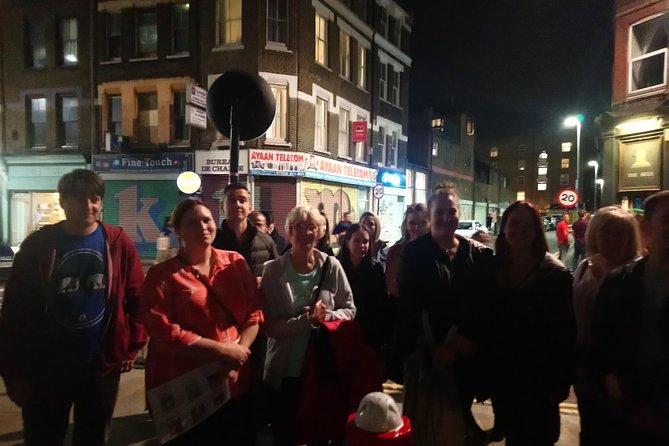
Jack the Ripper can feel like a film script: fog, shadows, and anonymous alleys. This tour keeps pulling you back to the real driver behind the terror of 1888: poverty, overcrowding, and the street-level chaos of daily life.
That’s why the earliest stops are outside churches, squares, and market streets. You’re not just collecting spooky points on a map. You’re learning how Whitechapel worked as a place where many people struggled to stay fed, safe, and visible.
It also helps that the guide uses a costumed style. It adds a hint of theatrics, but the payoff is practical: you pay attention because the story is delivered with rhythm, not monotone lecture.
Price and timing: a $23.61 tour that fills a big chunk of London
This experience runs about 2 hours 30 minutes, which is a very workable length for a focused theme tour. At $23.61 per person, it’s priced like a mid-market walking activity—reasonable for a guided route plus the tablet-based visuals.
What makes the value feel solid is the mix of time spent on:
- major locations tied to multiple victims
- street conditions and crime context
- built-in explanation that saves you time later
It’s also typically booked well in advance (about 40 days). If you’re traveling in peak season or on a weekend, I’d treat that as a hint to lock in a spot early rather than waiting.
Where you start and end (and why that’s convenient)
You begin at Aldgate Station (Aldgate High St, London EC3N 1AH). Getting there is simple on public transport, and the meeting point is close enough that you can regroup quickly if your group splits up.
The tour ends at 66–68 Bell Ln near the London Fruit & Wool Exchange area (London E1 7LA). From there, it’s about a 5-minute walk to Liverpool Street Station, which is a big win if you want an easy tube train or rail connection afterward.
You’ll also get a mobile ticket, which reduces stress on travel days. Less searching for paper tickets means more time for the walk.
London on foot, a few more ways
The route starts at St Botolph’s Aldgate and heads straight into “why here”
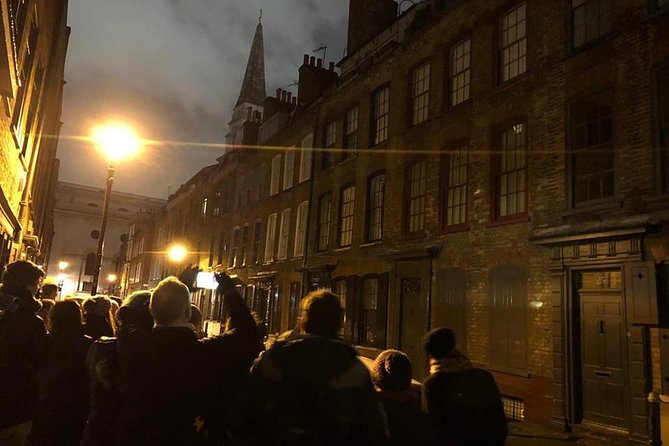
Stop 1: St Botolph’s Aldgate
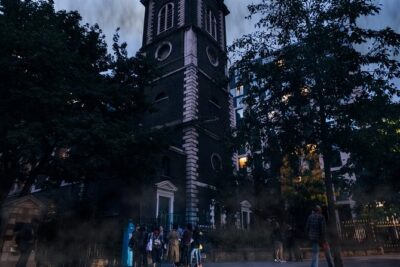
You’ll start outside the church known as the Prostitutes Church. The guide links the reputation to the way girls once solicited on the island where the church stood. It’s a blunt opening, but it sets the tone for how the neighborhood was viewed—and why public order was such a problem.
Stop 2: Aldgate Square
From there, the walk moves into the story of daily life in overcrowded Whitechapel in 1888. Expect talk about the squalor, crime, and degradation tied to survival on the breadline. This part matters because it reframes the case from “isolated murders” to a brutal system of conditions that enabled violence.
One small drawback here: because the tour is story-heavy and outdoors, it can be hard to take everything in if it’s raining hard or visibility is poor. If weather is rough, wear a hooded jacket and keep your group together.
Mitre Street to Goulston Street: boundaries, police, and a few critical names
Stop 3: Mitre Street
You’re at the City boundary area for discussion of Elizabeth Stride (Long Liz) and then the very rapid sequence that followed with Catherine Eddowes, killed about 45 minutes later. The guide also uses the geography to help you picture timing and movement, rather than treating the deaths like separate stories.
Stop 4: Petticoat Lane Market (Middlesex St boundary)
This stop is short, but it’s smart: you learn about the boundary between the City of London and the Metropolitan area. The key point is that police systems were separate, and that shaped what patrols did—and what response could look like.
Stop 5: Goulston Street
Here the tour shifts from “who” to “what evidence might have meant.” You’ll stop at a doorway connected to the only clue found on the route the police took that night, hot on the trail of Jack. It’s one of the more hands-on segments in terms of turning street locations into investigative logic.
Gunthorpe Street and Thrawl Street: Martha Tabram to Mary Ann Nichols
Stop 6: Gunthorpe Street (viewed from Wentworth St)
This is where the tour expands beyond the names people already know. You’ll look toward where Martha Tabram was found murdered on 7 August 1888 at George Yard Buildings, a location now thought to be the most likely first victim in some interpretations. Even if you’ve heard the Hollywood version, this stop adds a layer of “wait, there’s more here.”
Stop 7: Thrawl Street by the Frying Pan Pub
The tour stops opposite the Frying Pan Pub, tied to Mary Ann Nichols. The guide places you with the idea of her last drink, then points you toward the direction she staggered before being murdered in Bucks Row behind Whitechapel Station.
This is also the kind of stop where a costumed guide can help you visualize the scene quickly. You don’t need to imagine the whole street from scratch; the guide points and frames it.
Hanbury, Wilkes, and Puma Court: Annie Chapman and the Dear Boss letter
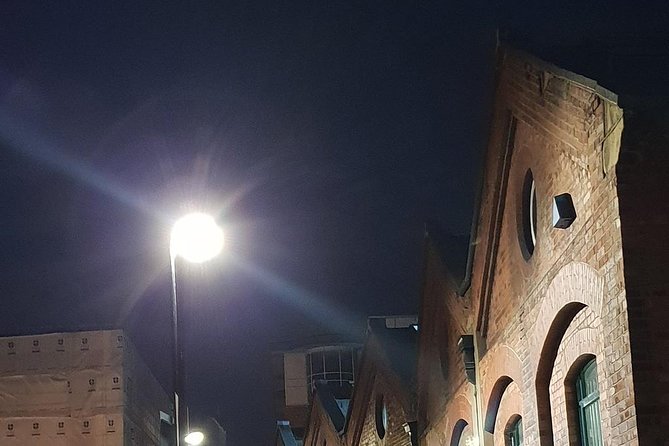
Stop 8: Hanbury Street
You’ll turn left into Hanbury Street for Annie Chapman, murdered in the back yard of 29 Hanbury St. This is the moment the tour starts to feel less like a walking tour and more like a map of consequences—how one event connects to the next block over.
Stop 9: Wilkes Street and Puma Court
This segment leans into one of the case’s most famous written elements: the Dear Boss letter. You’ll make your way toward Puma Court, where the guide explains what that letter did in the story—why it mattered and how it fed the notoriety around the murders.
If you like when a tour gives you both the location and the reason people talk about it, this stop is one of the best sections. You’re not just learning a name; you’re learning how communication became part of the terror.
Ten Bells, Itchy Park, and the London Fruit & Wool Exchange ending
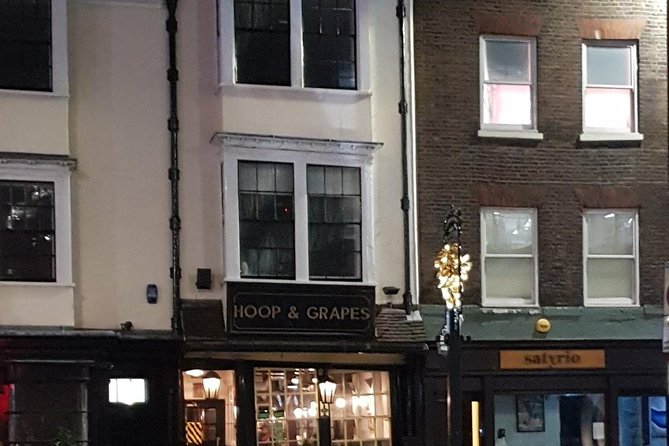
Stop 10: The Ten Bells
You stop opposite the Ten Bells, connected to Mary Kelly’s favorite pub. The tour also looks toward Christchurch Graveyard, often called Itchy Park, where homeless people would sleep during the day. That pairing is effective: it reminds you the victims were part of a neighborhood ecosystem, not isolated characters.
Stop 11: Old Spitalfields Market (near the London Fruit & Wool Exchange)
You’ll stand opposite the market and stop in/near the entrance area for the story of a letter sent to George Lusk, head of the Whitechapel Vigilance Group. This is another “how information traveled” moment, not just a murder-location moment.
Stop 12: London Fruit Exchange (final stop)
The tour ends in the square behind the exchange with discussion of Mary Kelly’s death, identified here as Jack’s last victim, killed on 9 November 1888. After the walk, you get that practical finish: a 5-minute walk to Liverpool Street for onward travel.
The 14-inch backlit tablet: the practical tech that makes this story readable
One of my favorite design choices is the included 14-inch backlit tablet. Outdoors, you often can’t see small details, and street corners don’t come with explanatory plaques. The tablet bridges that gap by showing photos of murder victims, sites, and the surrounding area.
It also keeps the pacing moving. Instead of taking time to point at distant landmarks while everyone strains their eyes, the guide can show the related scene and name, then connect it back to where you’re standing.
A plus noted in the guide style you’ll likely encounter: the delivery tends to be upbeat and sometimes witty, while still staying respectful. The overall tone is important on a subject like this. The tour is about the victims and the reality of what happened, not just shock value.
Group size, hearing the guide, and walking comfort
This tour is capped at a maximum of 30 travelers. That’s small enough to keep it human, but large enough that you should expect some crowding at each stop.
The operator also indicates a microphone is used to ensure everyone can hear. In practice, that matters most at indoor-adjacent points like doorways and when it’s windy outside.
You should have moderate physical fitness, because it includes walking and standing for 2+ hours. The route is not recommended if you can’t handle standing, and it’s not the best fit if you rely on step-free routes without flexibility.
Toilets are limited, so plan for that before you start.
Who this tour is best for (and who should skip it)
This is a strong match if you want a dark-history walking experience with a guide who connects streets to events. It’s also a good choice if you know the broad myths already but want the street-level logic behind why events happened when they did.
It’s also a good fit for people who prefer structure. The tour keeps moving from stop to stop, and the guide handles the turning and navigation so you can focus on the story.
Avoid it if you want a kid-friendly outing. The tour does not allow children under 15, and 16–17-year-olds must be accompanied by an adult. Also, if you’re sensitive to crime stories, be aware the content is focused on the murders and victims, and the guide aims to be respectful rather than sensational.
Should you book Jack the Ripper Walks?
Yes, I think you should book it if you want a focused Whitechapel walk that makes you see the streets as part of the case. The 14-inch visuals, the costumed storytelling, and the way the route explains both people and place give you more than just “stand here, hear a name.”
Book early if your dates are firm, since it’s commonly reserved about 40 days ahead. And if you’re going, come with comfortable shoes and a plan for the limited bathroom stops.
If you’re the type who only wants the most famous “top three” names, you might feel the tour spends more time on context and lesser-known victims. But if you’re open to a fuller picture of 1888, this is the kind of tour that sticks with you after the walk ends.
FAQ
Where does the tour start and end?
It starts at Aldgate Station on Aldgate High St, London EC3N 1AH, and ends at 66–68 Bell Ln, London E1 7LA.
How long is the Jack the Ripper walking tour?
The duration is about 2 hours 30 minutes.
What language is the tour offered in?
The tour is offered in English.
Is there a mobile ticket?
Yes. You’ll receive a mobile ticket.
How many people are on the tour at once?
The tour has a maximum group size of 30 travelers.
Is the tour okay for kids?
No children under 15 are allowed. 16–17-year-olds must be accompanied by an adult.
Is it suitable if I have limited walking ability?
It’s not recommended if you cannot walk and stand for 2+ hours.
Can I cancel, and how much notice is needed?
You can cancel for a full refund up to 24 hours in advance. Changes made less than 24 hours before the start time are not accepted, and cancellations within 24 hours are not refunded.
More Tour Reviews in London
- From London: Harry Potter Warner Bros Studio Tour
★ 4.7 · 26,588 reviews - London: Westminster to Greenwich River Thames Cruise
★ 4.5 · 22,836 reviews - Magical London: Harry Potter Guided Walking Tour
★ 4.7 · 22,044 reviews - London: Madame Tussauds London
★ 4.6 · 20,915 reviews - London: Warner Bros. Studio Harry Potter Tour & Branded Bus
★ 4.7 · 19,194 reviews
More London Walks Worth the Shoe Leather
- Magical London: Harry Potter Guided Walking Tour
★ 4.7 · 22,044 reviews - London: The Original Jack the Ripper Walking Tour
★ 4.7 · 7,833 reviews - Tour for Muggles The Ultimate Harry Potter Walking Tour in London
★ 5.0 · 4,684 reviews - London Jack The Ripper Guided Walking Tour
★ 5.0 · 3,131 reviews - London: Harry Potter Movies Walking Tour (Kids Go Free)
★ 4.7 · 3,071 reviews
More Ripper Walks After Dark
- London: The Original Jack the Ripper Walking Tour
★ 4.7 · 7,833 reviews - London Jack the Ripper Guided Tour with Ripper-Vision
★ 4.5 · 4,840 reviews - London: Jack the Ripper Small Group Tour
★ 4.7 · 3,159 reviews - London Jack The Ripper Guided Walking Tour
★ 5.0 · 3,131 reviews - London: Jack the Ripper Tour with Immersive Ripper Vision
★ 4.5 · 1,840 reviews
Just reviewed around London




Jack the Ripper Tours, compared.
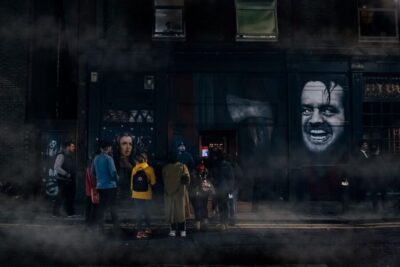 ★ 4.7The Original Jack the Ripper Walking TourFrom $257,833 reviews
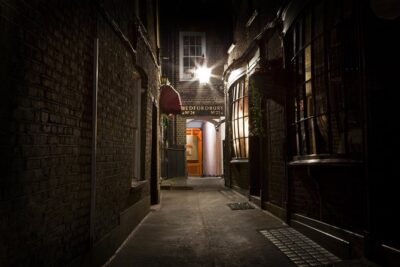 ★ 4.5London Jack the Ripper Guided Tour with Ripper-VisionFrom $274,840 reviews
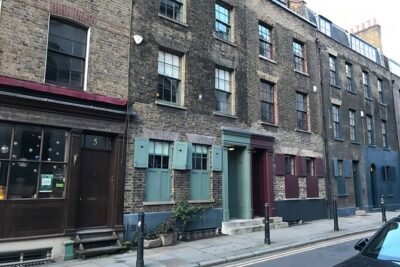 ★ 4.7Jack the Ripper Small Group TourFrom $263,159 reviews
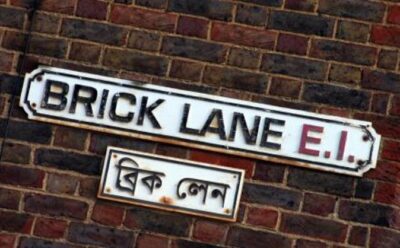 ★ 5.0London Jack The Ripper Guided Walking TourFrom $03,131 reviews
 ★ 4.5Jack the Ripper Tour with Immersive Ripper VisionFrom $241,840 reviews
 ★ 4.6German Language : Original Jack the Ripper TourFrom $241,805 reviews
 ★ 5.0Ultimate Jack the Ripper : Guided Tour of LondonFrom $271,495 reviews
 ★ 4.9Jack the Ripper Evening Walking TourFrom $331,449 reviews
Browse the lists this tour appears in