
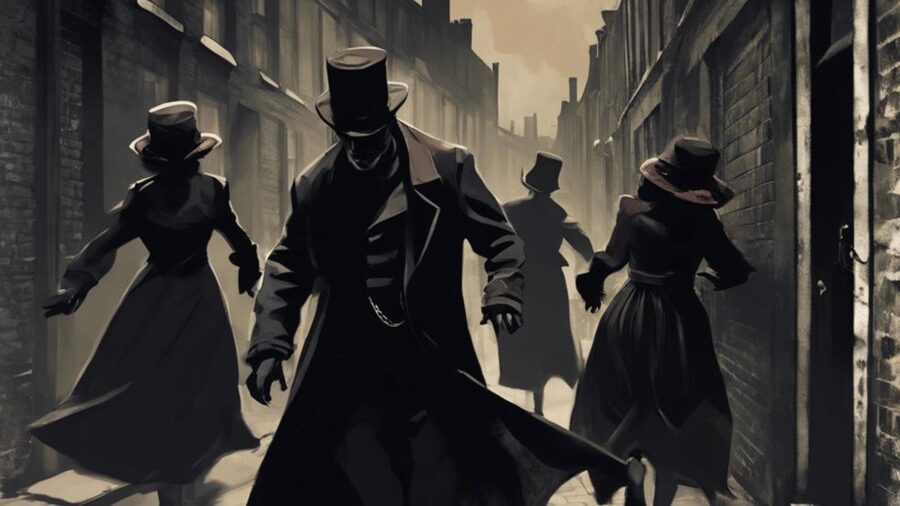
Reviewed · JACK THE RIPPER TOURS
Jack the Ripper. Walking tour in London in Spanish
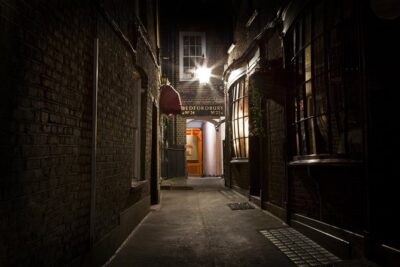
There’s something about Whitechapel at night. This Jack the Ripper walking tour in Spanish turns the 1888 murders into a street-by-street story, guided by the spirit of Jack himself with theatrical sarcasm and a focus on truth over invention.
Two things I really like: the route is built around specific stops you can actually see in the neighborhood, and the guide performance keeps you engaged without just reading names from a plaque. If your guide happens to be Javier, as seen in recent Spanish departures, you’ll also get that extra spark from an interactive, character-driven style that can include practical advice after the walk too.
One consideration: the topic is frightening and brutally heavy, and it’s not meant for kids—it’s listed as not suitable for children under 14—so come prepared for terror rather than comfort.
In This Review
- Key highlights you should actually care about
- Jack the Ripper guides you through Whitechapel in Spanish
- Starting at Tower Hill Station: medieval sights before the grim route
- Goulston Street and Mitre Square: the route goes straight to the heart
- Chamberlain and Algate Church: places the guide treats as character, not trivia
- Roman Wall of Londinium and Artillery Passage: London layers, then a darker turn
- Spitalfields Market and Lilian’s Building: day commerce, night shelter, and what that implies
- Ten Bells: the walk ends where mystery feels social
- Price and pace: is $20 worth two hours?
- Who should book this Jack the Ripper tour in Spanish?
- Should you book it?
- FAQ
- FAQ
- How long is the tour?
- Where does the tour start?
- Where does the tour end?
- What language is the tour in?
- Is the tour suitable for children?
- What is included in the price?
- What kind of guide will you meet?
Key highlights you should actually care about

- Jack-in-character guidance with a red umbrella and a mask, keeping the mood theatrical for the full 2 hours
- Truth-first framing: the experience emphasizes real information and says there’s no fiction
- Iconic Whitechapel stops like Goulston St, Spitalfields Market, and the Ten Bells pub finish
- Big mystery energy around the five femicides in Whitechapel in 1888
- More than one kind of London: medieval Tower Hill views, a Roman wall, market streets, and a night shelter stop
More of the East End after dark
- London: The Original Jack the Ripper Walking Tour
★ 4.7 · 7,833 reviews - London Jack the Ripper Guided Tour with Ripper-Vision
★ 4.5 · 4,840 reviews - London: Jack the Ripper Small Group Tour
★ 4.7 · 3,159 reviews - London Jack The Ripper Guided Walking Tour
★ 5.0 · 3,131 reviews
Jack the Ripper guides you through Whitechapel in Spanish
This isn’t a dry history walk. The whole point is that you’re led as if Jack’s presence is with you, with the guide acting as a spirit and speaking in Spanish. You’re told ahead of time that the content is meant to be truthful and not fictional, so the tone is more like a guided investigation than a ghost story.
The vibe is described as theatrical, with sarcasm and terror. That matters, because it shapes how you’ll experience each street: you’ll be pushed to notice the corners, the atmosphere, and the links between places. If you like your London with a bit of bite—plus a strong dose of “wait, how do these streets connect?”—this format fits.
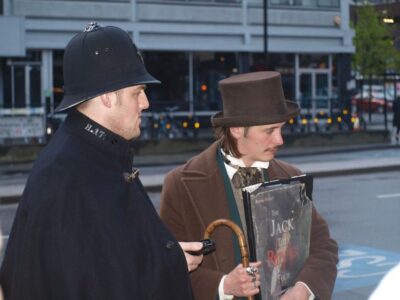
And yes, the guide is set up visually. You meet at Tower Hill where the guide waits with an umbrella and a mask, which helps you slip into the role quickly. It’s small staging, but it makes a difference when you’re walking on real streets that still feel very much like a working neighborhood.
Starting at Tower Hill Station: medieval sights before the grim route
Your tour begins outside Tower Hill Station, at the sundial. The meeting spot is just a few meters from the station exit, on the right-hand side by the sundial, so you don’t waste time hunting for the group.
Tower Hill is a strong opener because it gives you a sense of London layering. The tour says you can see the medieval castle from the sundial area, which does two useful things for you:
- It anchors the walk in older London before you get pulled into 1888 Whitechapel.
- It helps you understand why the city feels continuous, even when the story is about specific crimes.
It also sets up the “walking witness” feeling. You start with a clear orientation point, not in the middle of chaos. That’s helpful if you’re pairing this with other sightseeing that day, because you can plan around a clean start time and a defined ending at a pub.
Goulston Street and Mitre Square: the route goes straight to the heart
Early on, you move to Goulston St. It’s described as the heart of Whitechapel, and that phrase is doing work. This is where the tour’s energy is aimed: instead of wandering vaguely through the area, you’re directed to the places the guide treats as essential to understanding what happened in 1888.
Then comes Mitre Square, called the double event spot. That wording signals the kind of storytelling you’ll get: not just one moment, but a sense of repeated tragedy clustered in the same geography. Even if you don’t already know the broad outline of the Jack the Ripper mystery, the tour keeps you connected to why these particular streets matter to the legend.
Here’s what I think you’ll find most satisfying at this stage: the tour doesn’t just point at locations—it tells you why they’re central. That makes the neighborhood feel like a puzzle board. You start to see the route as something purposeful rather than random street selection.
London on foot, a few more ways
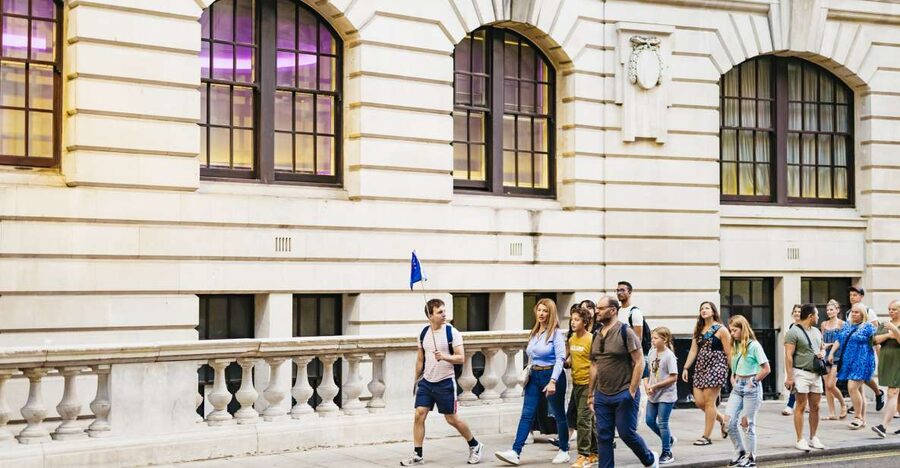
Chamberlain and Algate Church: places the guide treats as character, not trivia
Between the big obvious stops, the experience highlights smaller but loaded points, and this is where the tour tends to feel more original.
First is Chamberlain, described as a favorite spot for ripperologists. That’s a useful label because it tells you what to pay attention to while you’re there: you’re not only being shown a street junction; you’re being shown a location with a reputation among people obsessed with the case.
Then there’s Algate Church, noted as a favorite spot for prostitutes in the 19th century. This is heavier material, but it can also be clarifying. It puts the story back into everyday street life—who used these spaces, how they were seen, and why the area mattered to the victims’ lives as the tour frames them.
Important note: the tour’s emphasis is on the victims’ lives from Jack’s spirit perspective, with a stated promise to keep the story truthful. That means you’re not only getting “where the murders happened.” You’re being pushed to think about the people and the lived reality around those places, at least as the experience presents it.
Roman Wall of Londinium and Artillery Passage: London layers, then a darker turn
After you’ve focused on Whitechapel’s 1888 connections, the route includes the Roman Wall of Londinium. That stop is valuable because it interrupts the timeline on purpose. You’re reminded that London has been built, rebuilt, and repurposed over centuries—while the neighborhood’s streets still serve as stage sets for later stories.
This isn’t just an educational detour. It changes how you experience the walk. When you see a Roman remnant in the flow of modern streets, the city feels like a continuous physical presence. It makes the “mystery” framing feel more grounded, because you’re not floating in legend—you’re moving through real structure.
Then you head to Artillery Passage, described as a lively street with a dark corner. I like this stop because it matches the tour’s tone: it offers contrast in one small stretch. A lively passage with a darker corner gives you something practical to watch for. You’ll likely notice how small the distances can be between ordinary and unsettling, which is exactly the kind of street logic that keeps a mystery feeling plausible.
If you’re sensitive to terror and macabre mood, this is one of the points where you might feel the performance turn up. That’s not a warning to skip it—it’s just good to know where the darker energy concentrates.
Spitalfields Market and Lilian’s Building: day commerce, night shelter, and what that implies
The next big stop is Spitalfields Market, described as an old 17th-century silk market. Even if you don’t know anything about London markets, this works as a story device. Markets are places of movement, bargaining, and routine. They also bring a sense of crowds, work, and the kind of ordinary life that makes the 1888 events feel more tragic rather than abstract.
From there, the tour highlights Lilian’s Building, described as an old night shelter. This is where the walk can hit emotionally, because a night shelter implies vulnerability, need, and people passing through on survival schedules. Since the tour frames the victims’ lives and the spirit perspective, this kind of stop ties the case to lived conditions—not just to crime headlines.
What I think you’ll get from these two contrasts—market and night shelter—is perspective. The tour isn’t only about “a killer and a mystery.” It’s also about the social geography around the crimes. You see how people moved through the area in different ways, and how some spaces served commerce while others served desperation.
And if you enjoy storytelling that uses environment as evidence, these stops will likely feel like the strongest anchors.
Ten Bells: the walk ends where mystery feels social
Every good walking tour needs a finish that makes sense. This one ends at the Ten Bells, described as the pub of the last night. Ending here matters because it shifts the mood from streets to human gathering.
A pub finish is practical, too. You’ll have a place to regroup, process what you heard, and decide whether you want to keep exploring on your own or just call it a night. For a tour built around terror, sarcasm, and a heavy mystery, having a social endpoint helps you land the experience.
It also keeps the theme consistent: the story is rooted in specific places in Whitechapel, not a generic route. When you finish at a named local spot tied to the tour’s narrative framing, the whole walk feels intentional.
Price and pace: is $20 worth two hours?
At $20 per person for 2 hours, the price feels fair if you want a character-driven, story-forward walk rather than a standard sightseeing lecture. You’re paying for two things: a defined route through Whitechapel and a guide who performs the Jack spirit role.
The value improves if you care about entertainment and clarity. The tour is described as well designed and interactive, with guides who stay in character—sometimes so strongly that they guide you with Jack energy rather than neutral narration. That kind of delivery can make the time feel shorter, even when the subject matter is intense.
The main reason $20 might not fit is if you prefer light, family-friendly history. This tour leans into terror and sarcasm, with a topic you can’t ignore. If you’re not in the mood for that, pick a different walk.
Who should book this Jack the Ripper tour in Spanish?
Book it if:
- You want a Spanish guided experience through Whitechapel’s key locations.
- You like mystery storytelling that is framed as truth-only, not fan-fiction.
- You want a tour with theatrical energy—mask, umbrella, and a guide playing Jack’s spirit.
Skip it or think twice if:
- You need a kid-friendly outing. It’s explicitly not suitable for children under 14.
- You don’t want fear-factor atmosphere mixed into the history.
It also helps if you’re the type who likes asking questions while you walk. The tour’s big draw is the unresolved mystery around the five femicides in Whitechapel in 1888, and the guide is positioned to encourage that “wait, but why here?” mindset.
Should you book it?
I’d book this tour if you’re planning a London trip and you specifically want a Jack the Ripper walking experience in Spanish with a strong sense of place. The combination of clear stops—Goulston St, Mitre Square, Spitalfields Market, Ten Bells—and the guide’s in-character delivery is exactly the kind of format that turns a map into a story you remember.
I wouldn’t book it if you’re seeking gentle, comfortable sightseeing. The tour’s own tone is terror-heavy, and the material is serious. But if you’re ready for a dark walk with theatrical storytelling and a route that stays focused on the neighborhood’s most important points, this is a strong choice for a two-hour evening activity.
FAQ
FAQ
How long is the tour?
The tour lasts 2 hours.
Where does the tour start?
It starts outside Tower Hill Station, by the sundial on the right-hand side near the exit.
Where does the tour end?
The tour ends at the Ten Bells.
What language is the tour in?
The tour is guided in Spanish (live tour guide).
Is the tour suitable for children?
No. It is not suitable for children under 14.
What is included in the price?
You get a 2-hour guided walking tour of Whitechapel.
What kind of guide will you meet?
The guide will be the spirit of Jack the Ripper, and will appear with an umbrella and a mask.
More Tour Reviews in London
- From London: Harry Potter Warner Bros Studio Tour
★ 4.7 · 26,588 reviews - London: Westminster to Greenwich River Thames Cruise
★ 4.5 · 22,836 reviews - Magical London: Harry Potter Guided Walking Tour
★ 4.7 · 22,044 reviews - London: Madame Tussauds London
★ 4.6 · 20,915 reviews - London: Warner Bros. Studio Harry Potter Tour & Branded Bus
★ 4.7 · 19,194 reviews
More London Walks Worth the Shoe Leather
- Magical London: Harry Potter Guided Walking Tour
★ 4.7 · 22,044 reviews - London: The Original Jack the Ripper Walking Tour
★ 4.7 · 7,833 reviews - Tour for Muggles The Ultimate Harry Potter Walking Tour in London
★ 5.0 · 4,684 reviews - London Jack The Ripper Guided Walking Tour
★ 5.0 · 3,131 reviews - London: Harry Potter Movies Walking Tour (Kids Go Free)
★ 4.7 · 3,071 reviews
More Ripper Walks After Dark
- London: The Original Jack the Ripper Walking Tour
★ 4.7 · 7,833 reviews - London Jack the Ripper Guided Tour with Ripper-Vision
★ 4.5 · 4,840 reviews - London: Jack the Ripper Small Group Tour
★ 4.7 · 3,159 reviews - London Jack The Ripper Guided Walking Tour
★ 5.0 · 3,131 reviews - London: Jack the Ripper Tour with Immersive Ripper Vision
★ 4.5 · 1,840 reviews
Just reviewed around London





Jack the Ripper Tours, compared.
 ★ 4.7The Original Jack the Ripper Walking TourFrom $257,833 reviews
 ★ 4.5London Jack the Ripper Guided Tour with Ripper-VisionFrom $274,840 reviews
 ★ 4.7Jack the Ripper Small Group TourFrom $263,159 reviews
 ★ 5.0London Jack The Ripper Guided Walking TourFrom $03,131 reviews
 ★ 4.5Jack the Ripper Tour with Immersive Ripper VisionFrom $241,840 reviews
 ★ 4.6German Language : Original Jack the Ripper TourFrom $241,805 reviews
 ★ 5.0Ultimate Jack the Ripper : Guided Tour of LondonFrom $271,495 reviews
 ★ 4.9Jack the Ripper Evening Walking TourFrom $331,449 reviews
Browse the lists this tour appears in