
Reviewed · JACK THE RIPPER TOURS
Jack the Ripper Private Day Time Walking Tour
Jack’s London still feels close. This private daytime walk through Whitechapel turns 1888 from book pages into street corners, with a guide who keeps the story grounded in what you can actually see. You get a private route at walking speed, plus a stop-by-stop plan that includes markets, churches, and the places tied to the murders.
What I like most is the focus on the real locations: you’re not just hearing a plot summary, you’re moving through East London blocks where key scenes happened. I also like how your guide sets context for Victorian life, then walks you through the cases, the unanswered questions, and why the killer’s identity was never confirmed.
One thing to consider: you’re walking for about 3 hours on busy streets and a few uneven lanes, so comfortable shoes matter. Also, some stops have admissions not included, so it’s smart to budget a little extra if you want to go in where applicable.
In This Review
- Key highlights worth planning for
- From Whitechapel Gallery to Aldgate: what makes this tour work
- Meeting at 277 Whitechapel Road (near Whitechapel Underground) and setting the tone
- Following the East End murder trail: Whitechapel, Spitalfields, Aldgate, and the Nichols/Strides
- Stop 1: East End (Whitechapel, Spitalfields, Aldgate streets)
- Stop 2: Durward Street and Mary Ann Nichols
- Stop 3: The Royal London Hospital area, inquests, and the Elephant Man
- Stop 4: Henriques Street for Elizabeth Stride
- Stop 5: Whitechapel Bell Foundry and nearby suspect residences
- Stop 6: Gunthorpe Street for Martha Tabram, then Emma Smith
- Pubs, Brick Lane, and the key sites tied to the night-by-night story
- Stop 7: Brick Lane Hotel and a last-night anchor
- Stop 8: The White Hart pub (tour start pub association)
- Stop 9: Brick Lane
- Stop 10: 29 Hanbury Street and Annie Chapman
- Stop 11: The Ten Bells pub
- Stop 12: London Fruit and Wool Exchange and Mary Kelly
- Stop 13: Brick Lane Mosque (Brick Lane Synagogue legacy)
- Stop 14: Christ Church Spitalfields
- Markets and street evidence: where everyday London meets the case
- Stop 15: Old Spitalfields Market
- Stop 16: Petticoat Lane Market and the Maybrick connection
- Stop 17: Goulston Street Food Court and only real evidence
- Stop 18: Soup Kitchen for the Jewish Poor
- Stop 19: Mitre Square Garden and the most exact location claim
- Stop 20: Aldgate Pump of Death (optional leg-burner)
- Price and tickets: is $240.86 per person good value?
- Should you book this Jack the Ripper private daytime walk?
- FAQ
- How long is the Jack the Ripper private daytime walking tour?
- Where does the tour start and end?
- Is pickup available?
- Is the tour private?
- Are admissions included for the stops?
- Can I cancel for a full refund?
Key highlights worth planning for
- Private walking pace: just you and your guide, so you can pause for questions and photos without a crowd rush.
- Whitechapel’s crime-route landmarks: from murder-site streets to major East End institutions like the hospital area and major market spaces.
- “Two clues” storytelling: you’ll be guided to the specific spot connected to the only two clues left on the night.
- Durward Street access is special: the tour includes Durward Street, described as open for the first time in almost a decade.
- Markets and everyday East End: Old Spitalfields Market, Petticoat Lane, and other trading areas help you picture the neighborhood as it was.
- A satisfying finish point: ending near Aldgate gives you an easy way to roll into the rest of your day.
More of the East End after dark
- London: The Original Jack the Ripper Walking Tour
★ 4.7 · 7,833 reviews - London Jack the Ripper Guided Tour with Ripper-Vision
★ 4.5 · 4,840 reviews - London: Jack the Ripper Small Group Tour
★ 4.7 · 3,159 reviews - London Jack The Ripper Guided Walking Tour
★ 5.0 · 3,131 reviews
From Whitechapel Gallery to Aldgate: what makes this tour work
This is not a quick “taster” ghost-story version of the Jack the Ripper. It’s a structured East End walk where the guide uses what’s still there—streets, churches, market areas, and nearby landmarks—to make sense of the 1888 murders. The tone stays practical and historical rather than sensational. You’re shown where events happened, what the investigations discussed, and why many theories can’t be proven.
The private format is the real value. With a typical group tour, you’re stuck matching someone else’s pace. Here, you can slow down for the street details, ask why a particular theory keeps coming up, or stop when a question lands. That flexibility matters because the story is layered. Life in Victorian Whitechapel wasn’t one thing—it was poverty, crowded streets, working neighborhoods, and institutions that ended up tied to the case.
The route also balances “famous” spots with local texture. You’ll pass through areas shaped by immigration and trade, then connect those everyday scenes to the specific nights and victims the guide covers. That mix helps the information stick, because you’re always anchoring the story to real geography.
Meeting at 277 Whitechapel Road (near Whitechapel Underground) and setting the tone
Your tour starts at 277 Whitechapel Rd, London E1 1BY, with the meeting point described as just outside Whitechapel Underground. The tour ends at Aldgate Station (Aldgate High St side, EC3N 1AH), with a short walk back to Aldgate afterward.
If you want this to feel smooth on day one, aim to arrive a few minutes early and get your bearings. The East End streets can feel like a maze until you see the route laid out in front of you. Once the guide has you moving, it clicks. You’ll also get a quick scene-setter for Victorian-era Whitechapel—how daily life worked, what the neighborhood looked like, and why the murders were so shocking at the time.
This tour is offered in English, and it’s designed for most travelers. Service animals are allowed, and it’s near public transport, which helps if you’re fitting it between other London plans. You also have pickup options: you can meet at your Central London hotel or at the starting point.
A practical tip: there’s a safety-minded suggestion to start a bit later than the usual 10:00am, around 10:30am–11:00am, to help you dodge rush-hour crowds. Since this is private anyway, the later start can make the first leg feel calmer.
Following the East End murder trail: Whitechapel, Spitalfields, Aldgate, and the Nichols/Strides
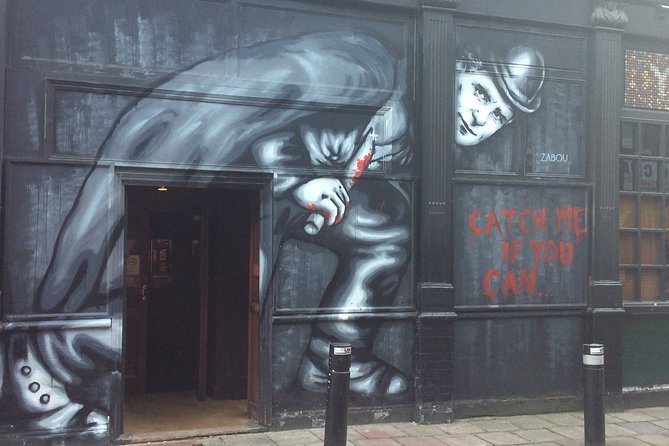
After the welcome and orientation, the walking route focuses on the streets tied to the murders across Whitechapel and nearby areas like Spitalfields and Aldgate. Stop-by-stop, you trace the geography of 1888 rather than just hearing names and dates.
London on foot, a few more ways
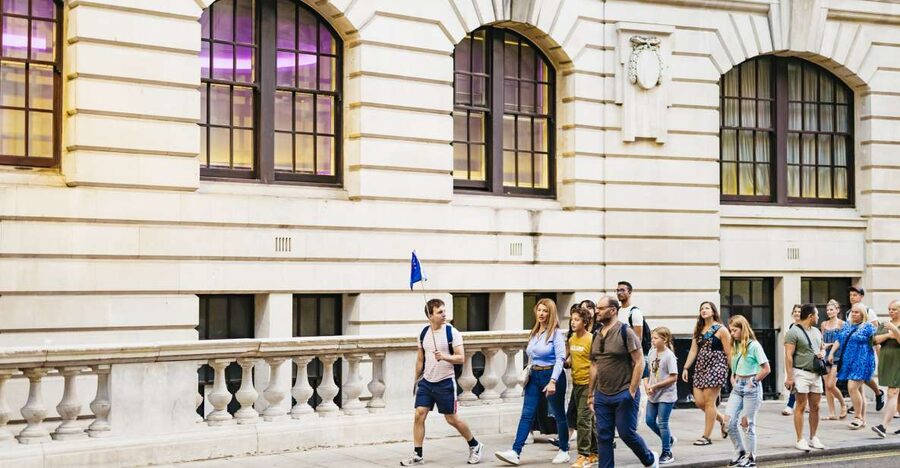
Stop 1: East End (Whitechapel, Spitalfields, Aldgate streets)
The tour begins by exploring the area where the murders were concentrated, with a focus on sites connected to Jack and the victims. You’re told the case facts—what’s known, what’s disputed, and why the identity question never settles. This is the moment where your guide explains how the story fits into the neighborhood, not just into crime history.
Admission is included here, with a ticket described as included for this first stop.
Stop 2: Durward Street and Mary Ann Nichols
Next is Durward Street, listed as opening for the first time in almost a decade, plus the murder location of Mary Ann Nichols. The “open for the first time” detail matters. When you stand where something happened and that location is rarely accessible, it changes the feel of the stop. It’s no longer just a marker on a map.
Admission here is free.
Stop 3: The Royal London Hospital area, inquests, and the Elephant Man
You then move to the Royal London Hospital area, where the first victim in the Whitechapel murders died. The tour also references an investigation into a body part and shows nearby places where inquests took place. You’ll also hear that the Elephant Man lived here during these years, and that decades later the area became home to the Krays.
A key practical note: admission at the hospital is listed as not included, so you’ll likely want to decide in advance whether you’ll pay to go in if the stop includes entry time.
Stop 4: Henriques Street for Elizabeth Stride
Henriques Street is described as still atmospheric, and it’s where Elizabeth Stride met her end as part of the infamous Double-Event night. This stop is short, but it’s important because it shifts the story from one isolated tragedy to a darker pattern across the same time window.
Admission is free here.
Stop 5: Whitechapel Bell Foundry and nearby suspect residences
At the Whitechapel Bell Foundry, you get one of the East End icons. Nearby, the tour also points you toward two locations where a chief suspect lived. This is one of those moments where the tour earns its keep: it doesn’t just say who people suspect, it shows you why certain theories stick by linking people to place.
Admission here is not included.
Stop 6: Gunthorpe Street for Martha Tabram, then Emma Smith
You’ll follow Martha Tabram along Gunthorpe Street, described as an eerie cobbled lane. The route then connects around the corner to where Emma Smith was fatally attacked.
This is a stop where footwear matters. Cobblestones and uneven edges are real walking obstacles, not just atmosphere.
Admission is free.
Pubs, Brick Lane, and the key sites tied to the night-by-night story
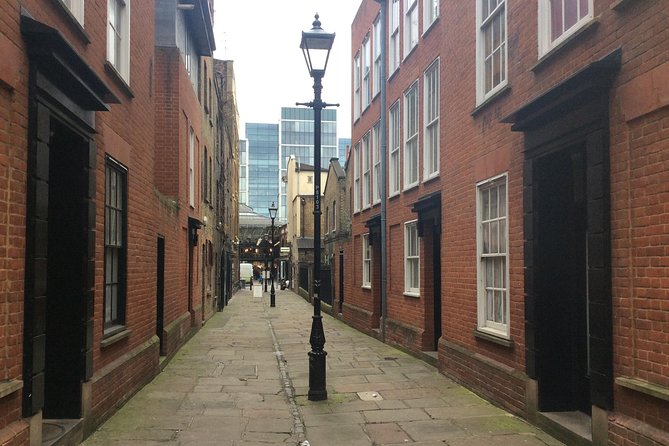
After the core murder-area trail, the walk starts widening out into places that make the case feel like it happened in a living neighborhood, not in a sealed-off crime scene. You’re moving through pubs, streets tied to victim movements, and landmarks tied to investigation and rumor.
Stop 7: Brick Lane Hotel and a last-night anchor
The Brick Lane Hotel stop is described as a key spot connected to the last night of Mary Ann Nichols. Even when entry isn’t part of the plan, a named building helps you picture movements across the neighborhood rather than freezing the story in one street.
Admission isn’t included here.
Stop 8: The White Hart pub (tour start pub association)
You’ll see The White Hart, presented as a pub closely associated with Jack and where the tour begins within the broader route. Pubs are where you can feel social life—where people meet, trade news, and pass time. In a story like this, that social backdrop is crucial because victims and suspects didn’t exist in a bubble.
Admission isn’t included here.
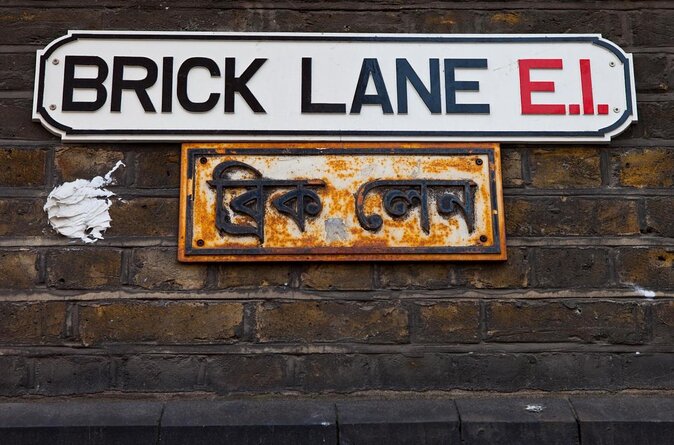
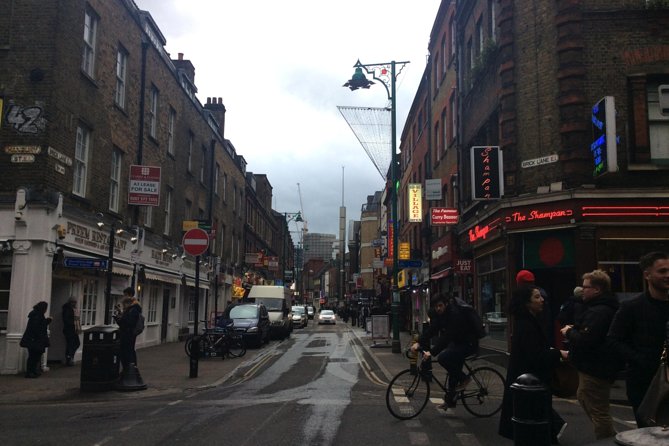
Stop 9: Brick Lane
Then you pass down Brick Lane, noted as once being in the heart of Jack the Ripper territory and now shaped by a long-running immigrant community. This stop is more than a transfer between locations. It helps you see how the East End changes while staying recognizable at street level.
Admission is free.
Stop 10: 29 Hanbury Street and Annie Chapman
At 29 Hanbury St, you’re at the site connected to Annie Chapman. The tour also adds nearby context about two more deaths Jack the Ripper was indirectly responsible for. This helps you connect the main murders to the broader timeline and uncertainty that still surrounds the case.
Admission is free.
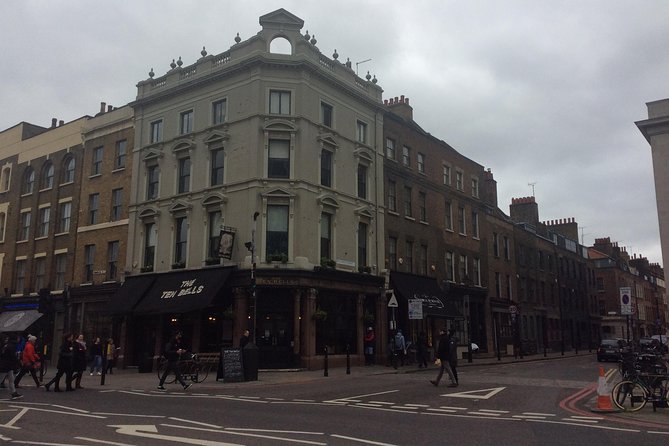
Stop 11: The Ten Bells pub
The Ten Bells is one of the pubs most closely linked with Jack and his victims. This kind of stop can feel repetitive if it’s only about names. Here, it’s valuable because the guide uses pubs as map anchors—showing where people likely went, not just where you can take a dramatic photo.
Admission isn’t included.
Stop 12: London Fruit and Wool Exchange and Mary Kelly
Next is London Fruit & Wool Exchange, described as the site of the murder of Mary Kelly and also tied to a larger legacy for police around the world. This is where the tour shifts slightly from the local tragedy to what the case influenced in policing and investigations.
Admission is listed as free here.
Stop 13: Brick Lane Mosque (Brick Lane Synagogue legacy)
You’ll visit Brick Lane Mosque, with the note that in 1888 it was Brick Lane Synagogue. The point of this stop isn’t just architecture. It’s about the neighborhood’s Jewish community and how multiple communities lived side by side in Whitechapel.
Admission isn’t included.
Stop 14: Christ Church Spitalfields
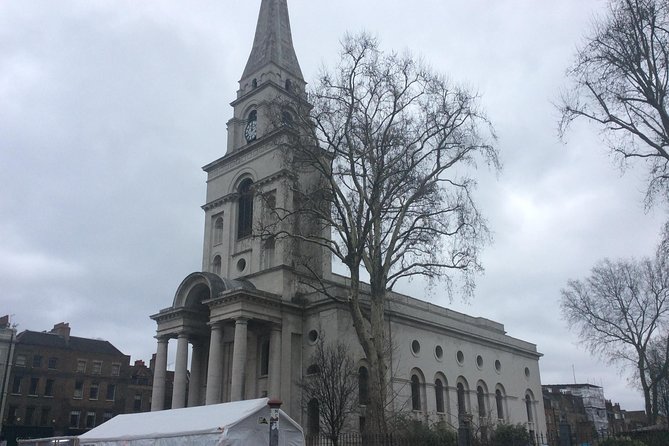
At Christ Church Spitalfields, the tour ties the church to the lives of 19th-century residents and to the poverty around them. When a tour can connect victims to community conditions without turning the subject into shock value, it stays respectful and informative.
Admission isn’t included.
Markets and street evidence: where everyday London meets the case
This part of the walk leans hard into the East End’s identity as a working neighborhood. Markets and food areas aren’t just background here. They’re how you build a believable picture of how a person could move through the area.
Stop 15: Old Spitalfields Market
You pass through Old Spitalfields Market, described as the market that was here in 1888 and sitting amid the middle of some murder locations you’ll visit. That’s powerful for your brain. Instead of thinking about a crime scene as a static pin, you’re seeing how daily movement and commerce overlap with the historic geography.
Admission is included here.
Stop 16: Petticoat Lane Market and the Maybrick connection
At Petticoat Lane Market, the tour references the idea that James Maybrick stayed in connection with the Diary of Jack the Ripper. Even if you don’t buy every theory, a tour like this is useful for separating what’s suggested from what’s verified by pointing to where people placed these claims.
Admission is included here.
Stop 17: Goulston Street Food Court and only real evidence
At Goulston Street Food Court, you visit the spot described as the only real evidence left by Jack the Ripper on the night of the Double-Event murders. This is one of the tour’s most important informational stops because it focuses on what can be pointed to, not just guessed.
Admission is included here.
Stop 18: Soup Kitchen for the Jewish Poor
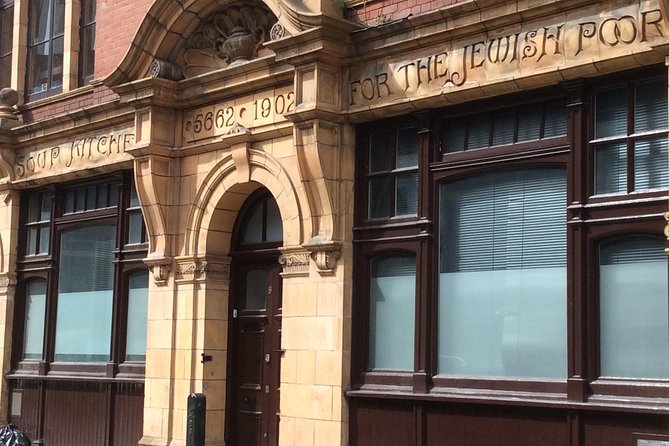
Next is the Soup Kitchen for the Jewish Poor, described as the first Jewish soup kitchen. This is where the neighborhood’s hardships become concrete. It also helps you understand why “who had access to food, shelter, and community services” mattered for daily survival.
Admission isn’t included.
Stop 19: Mitre Square Garden and the most exact location claim
You finish near Mitre Square Garden, close to what’s described as the oldest synagogue in Mitre Square and the only place you can be certain you are standing exactly where Jack stood when he murdered. This stop is short but memorable because it emphasizes certainty and location accuracy, not just storytelling.
Admission is included here.
Stop 20: Aldgate Pump of Death (optional leg-burner)
Finally, there’s Aldgate Pump, described as the Pump of Death, offered as a small diversion if your legs don’t mind. This is the kind of optional-feeling closer that can make the tour feel longer or shorter depending on your stamina. If you’re comfortable with walking, it’s a good last stop to tie the story back to the broader Aldgate area.
Admission is free.
Price and tickets: is $240.86 per person good value?
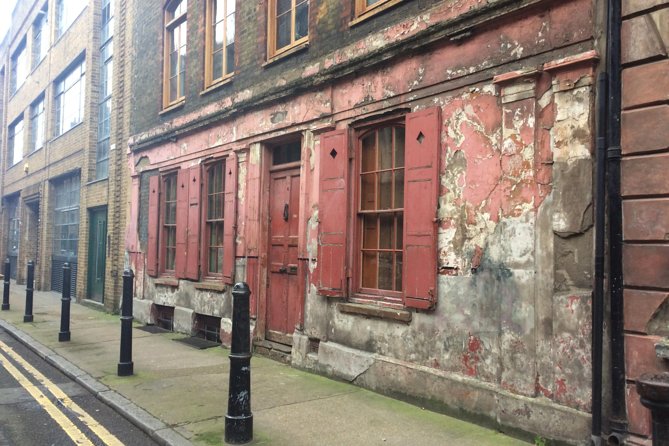
At $240.86 per person for an approximately 3-hour private walk, this is priced as a premium experience. The private format explains most of it: you’re paying for a dedicated guide and a flexible route rather than being fitted into a larger group schedule.
Value also comes from how admissions are handled. Some stops include admission tickets (for example, the first East End stop, Old Spitalfields Market, Petticoat Lane Market, Goulston Street Food Court, Mitre Square Garden), and several stops are explicitly listed as free. Others are marked as not included, including the Royal London Hospital stop and several landmark-adjacent stops like the Whitechapel Bell Foundry area. So you’ll want a small buffer budget in case you decide to go inside at the not-included locations.
I like this pricing for two types of travelers:
- You’re a serious Jack the Ripper fan and you care about exact sites, not just names.
- You want a calmer, less crowded walk where you can ask questions as you go.
If you’re only casually interested and you’re hoping for a low-cost highlights tour, you might feel the price more than the story. But if you value time with a guide and your feet will get you through the route, it’s a strong match.
Should you book this Jack the Ripper private daytime walk?
Yes, if you want an East End route that treats 1888 like geography, not just mythology. This tour’s structure helps you connect streets, markets, pubs, churches, and institutions into one readable narrative, and the private pacing makes it easier to think and ask questions as you walk.
I’d especially book it if you like walking city history at your own speed, and if you’re the type who likes facts with the unanswered parts clearly labeled. You’ll still get the famous names and victims, but you’ll spend most of your time where the story becomes tangible.
If you prefer indoor museums over outdoor walking, or if you strongly dislike paying for optional admissions at stops that are marked not included, you may want to consider your priorities first. Otherwise, bring good shoes, come ready to walk, and enjoy the East End with a guide who knows how to connect the case to the streets you’re standing on.
FAQ
How long is the Jack the Ripper private daytime walking tour?
The tour lasts about 3 hours.
Where does the tour start and end?
It starts at 277 Whitechapel Rd, London E1 1BY, and it ends at Aldgate Station, Aldgate High St, London EC3N 1AH.
Is pickup available?
Yes. You can meet at a Central London hotel or at the tour starting point just outside Whitechapel Underground.
Is the tour private?
Yes. It’s described as a private tour/activity, with only your group participating.
Are admissions included for the stops?
Some stops include admission tickets, some are free, and some are not included. For example, the first East End stop includes admission, while the Royal London Hospital stop is not included.
Can I cancel for a full refund?
Yes. You can cancel up to 24 hours in advance for a full refund. If you cancel less than 24 hours before the start time, the amount paid is not refunded.
More Tour Reviews in London
- From London: Harry Potter Warner Bros Studio Tour
★ 4.7 · 26,588 reviews - London: Westminster to Greenwich River Thames Cruise
★ 4.5 · 22,836 reviews - Magical London: Harry Potter Guided Walking Tour
★ 4.7 · 22,044 reviews - London: Madame Tussauds London
★ 4.6 · 20,915 reviews - London: Warner Bros. Studio Harry Potter Tour & Branded Bus
★ 4.7 · 19,194 reviews
More London Walks Worth the Shoe Leather
- Magical London: Harry Potter Guided Walking Tour
★ 4.7 · 22,044 reviews - London: The Original Jack the Ripper Walking Tour
★ 4.7 · 7,833 reviews - Tour for Muggles The Ultimate Harry Potter Walking Tour in London
★ 5.0 · 4,684 reviews - London Jack The Ripper Guided Walking Tour
★ 5.0 · 3,131 reviews - London: Harry Potter Movies Walking Tour (Kids Go Free)
★ 4.7 · 3,071 reviews
More Ripper Walks After Dark
- London: The Original Jack the Ripper Walking Tour
★ 4.7 · 7,833 reviews - London Jack the Ripper Guided Tour with Ripper-Vision
★ 4.5 · 4,840 reviews - London: Jack the Ripper Small Group Tour
★ 4.7 · 3,159 reviews - London Jack The Ripper Guided Walking Tour
★ 5.0 · 3,131 reviews - London: Jack the Ripper Tour with Immersive Ripper Vision
★ 4.5 · 1,840 reviews
Just reviewed around London





Jack the Ripper Tours, compared.
 ★ 4.7The Original Jack the Ripper Walking TourFrom $257,833 reviews
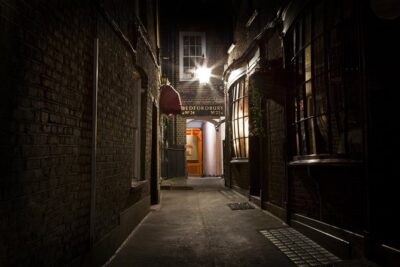 ★ 4.5London Jack the Ripper Guided Tour with Ripper-VisionFrom $274,840 reviews
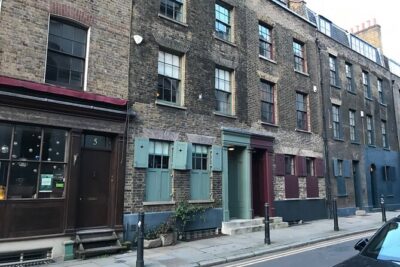 ★ 4.7Jack the Ripper Small Group TourFrom $263,159 reviews
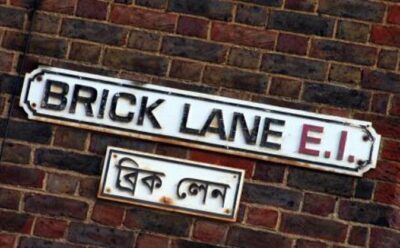 ★ 5.0London Jack The Ripper Guided Walking TourFrom $03,131 reviews
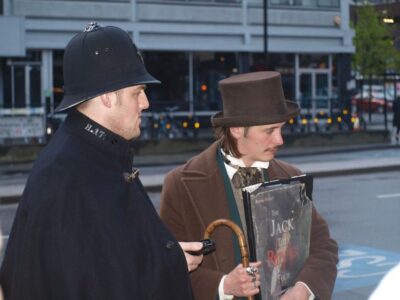 ★ 4.5Jack the Ripper Tour with Immersive Ripper VisionFrom $241,840 reviews
 ★ 4.6German Language : Original Jack the Ripper TourFrom $241,805 reviews
 ★ 5.0Ultimate Jack the Ripper : Guided Tour of LondonFrom $271,495 reviews
 ★ 4.9Jack the Ripper Evening Walking TourFrom $331,449 reviews
Browse the lists this tour appears in