
Reviewed · LONDON PUB & BAR TOURS
Historic walk of East Londons Wapping Docks and its famous Pubs
Wapping’s riverfront story moves at walking speed. This private guided walk stitches together Docklands viewpoints and old Wapping pubs, with a human guide who can steer the pace and answer questions on the fly. I especially love the private format and the fact you’re walking past working docks and real pub landmarks, not just reading plaques.
The main drawback is simple: with a ~3-hour run and many stops, you’ll often see places from the outside or hear about them on the street. A couple of sites on the route are not included for entry, so if you’re hoping for lots of inside time, you’ll want to adjust expectations.
In This Review
- Key highlights at a glance
- Wapping’s Docklands-to-pubs circuit: the vibe you’re buying
- Price and timing: is $267.48 per person good value?
- Stop-by-stop: your walk from Docklands to St Katharine Docks
- Docklands: first look at the modern waterfront
- Canary Wharf: the trade route behind the skyline
- Museum of London Docklands (passed): old wharves and warehouse walls
- Wapping and the Grapes Pub: where stories start
- Limehouse waterside and marina: trading dock to luxury water
- The Grapes again: river-edge pub and tide timing
- Narrow Street stairs and Martin Frobisher’s departure
- Thames River Police Museum: river patrols, crime, and the oldest force
- Metropolitan Police Marine Policing Unit: courts, murders, and navigation
- Turner’s Old Star: painter origins and witchcraft before that
- St Peter’s Church: Roman Catholic history near the docks
- Raine’s House: brewer wealth turned into school support
- Bistro Bardot (The Turk’s Head): pirates’ last drink
- Town of Ramsgate: Captain Bligh, the Crown Jewels, and Jeffers
- St Katharine Docks: the finish near Tower Bridge and the Tower
- The pub factor: why these stops are more than pit stops
- What you’ll learn: navigation, river policing, and how London moved by water
- Safety and pacing: make it comfortable, not rushed
- Should you book this Wapping Docks and Pubs walk?
- FAQ
- How long is the Wapping Docks and famous pubs walk?
- Is this a private tour?
- Where does the tour start and where does it end?
- What time does it start?
- What language is the tour offered in?
- Is there a mobile ticket?
- What is included in the price?
- Are tube tickets included to and from my hotel?
- Are admission tickets for places like London Museum Docklands included?
- Is free cancellation available?
Key highlights at a glance
- Private guided pacing: You set the rhythm and can linger for questions.
- Pub landmarks by the Thames: Stops like The Grapes and Turner’s Old Star bring history to street level.
- Trade to transformation: Docklands and marinas show how shipping-era Wapping changed.
- River law and navigation stories: Police and maritime routes get attention, not just architecture.
- Short route, big names: Raleigh, Dickens, Wilde, Frobisher, Captain Bligh, and others come up along the walk.
One more round: other London crawls
- London Small Group Tour of Historical Pubs
★ 5.0 · 10,422 reviews - Soho Music & Historic Pubs Tour
★ 5.0 · 1,993 reviews - London: Historic Pubs of Central London Walking Tour
★ 4.9 · 1,065 reviews - Pub Crawl of Central London
★ 5.0 · 1,022 reviews
Wapping’s Docklands-to-pubs circuit: the vibe you’re buying
This tour works because it’s not just a single straight walk. It’s a chain of river-edge moments that move you from modern Docklands to the older dock world, then into Wapping’s pub culture. If London ever feels like it’s all museums and monuments, this gives you something different: street corners, river stairs, warehouses, and the kind of local landmarks that shaped daily life.
It’s also built for conversations. The group is only your party, so the guide can slow down when you want detail, or speed up when you just want to keep moving. That matters on a route like this, where the best parts are often the stories tied to a specific building or pub corner.
Price and timing: is $267.48 per person good value?
At $267.48 per person for about three hours, this is not a budget “hop-on, hop-off” activity. What makes it feel fair is the private guiding and the number of major stops packed into the time: dock areas, multiple historic pubs, and several themed moments about maritime trade, crime, and navigation.
To judge value the right way, think about what you’d otherwise pay for:
- A guided walk plus transport time between far-apart riverside areas
- Multiple paid entries that can add up quickly (even though several stops here are free, a couple have included admissions)
- The convenience of a single route that ends near Tower Bridge and the Tower of London area
Timing is part of the value too. The default start is 9:30am, but the operator suggests shifting to around 10.30–11am to avoid rush-hour and keep things calmer. If you’re traveling with jet lag or you hate early-morning crowds, that tweak can change the whole experience.
Stop-by-stop: your walk from Docklands to St Katharine Docks
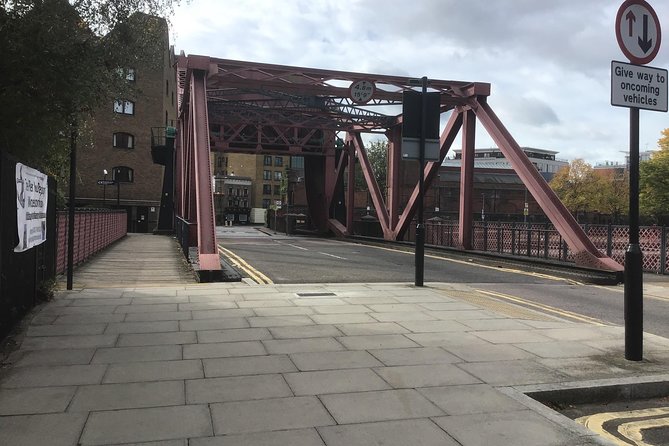
The route is designed like a slow rewind. You start in the modern Docklands, then work back toward the dock stairs and Wapping streets where so many maritime stories took place. The guide also connects themes across stops, so the places start feeling linked instead of random.
Still deciding? A handful more London outings we rated

Docklands: first look at the modern waterfront
You begin in Docklands, where the scenery is futuristic compared with what comes later. It’s a good opener because it sets up the contrast: shipping and dock work built this part of London, and today it’s reimagined with new developments and river-facing views.
Canary Wharf: the trade route behind the skyline
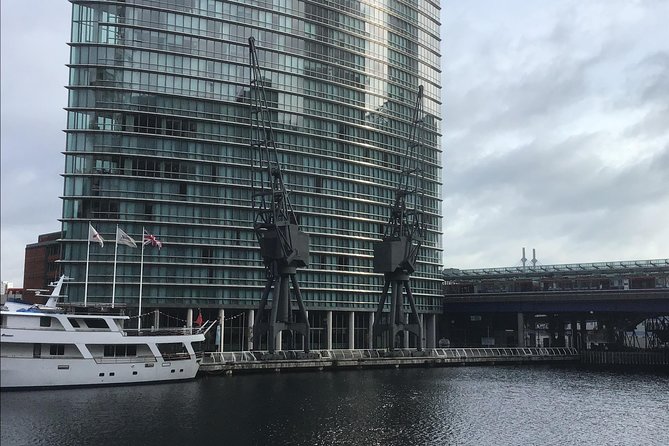
Next is Canary Wharf, once tied to ships trading from the Canary Islands. This is one of those stops where you look at a skyline and realize it sits on top of old commercial life. The guide’s job here is to make that connection feel real instead of abstract.
Museum of London Docklands (passed): old wharves and warehouse walls
You pass by the Museum of London Docklands and learn about the history of the buildings and wharves around it. Entry isn’t included, so you’re mostly in “see and hear” mode. Still, it helps you understand what you’re walking through, especially if you’re the type who likes to know what used to stand where you’re standing now.
Wapping and the Grapes Pub: where stories start
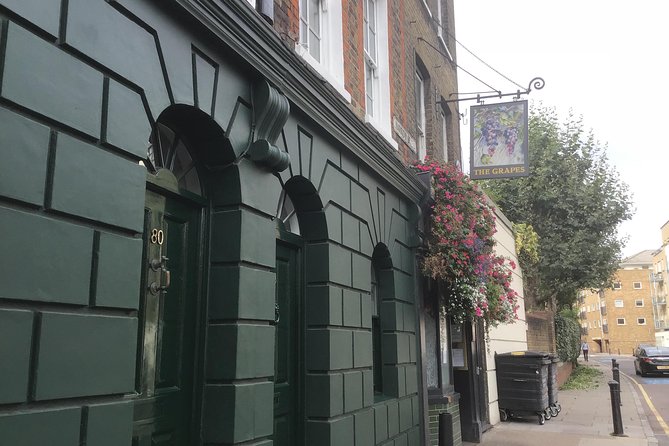
Before you reach the main Wapping stretch, you visit the Grapes Pub, famous for ties to Sir Walter Raleigh and known for connections to major writers and characters linked with London lore, including Charles Dickens, Oscar Wilde, and Sherlock Holmes.
This stop matters because it turns the tour from general history into a place you can picture. Pubs like this weren’t just drinking rooms; they were meeting points for news, departures, arrivals, and arguments.
Limehouse waterside and marina: trading dock to luxury water
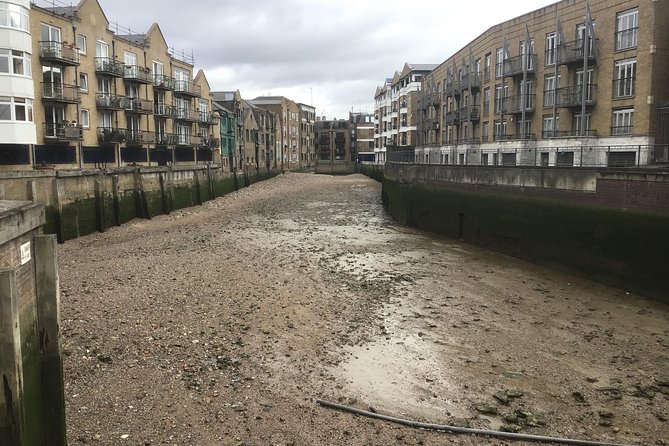
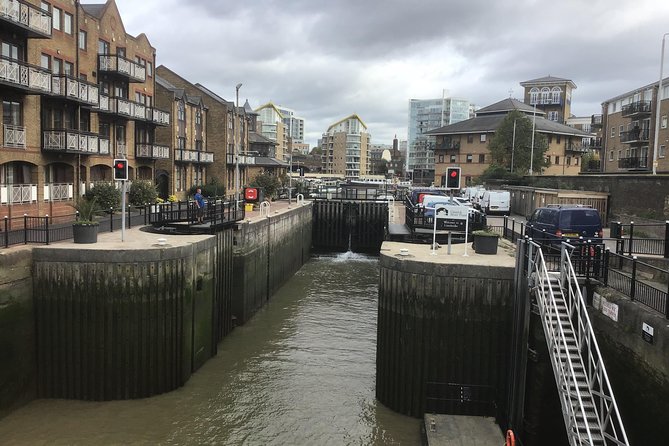
You move through Limehouse Waterside & Marina, where an old trading dock now functions as a luxury marina. The contrast is the lesson: the waterfront keeps changing, but the river location and movement of goods never really disappear.
The Grapes again: river-edge pub and tide timing
You spend time at The Grapes itself. Here you’ll hear about the pub’s stronger creative and royal links, with ties to famous painters and writers, and local details about how the river edge mattered.
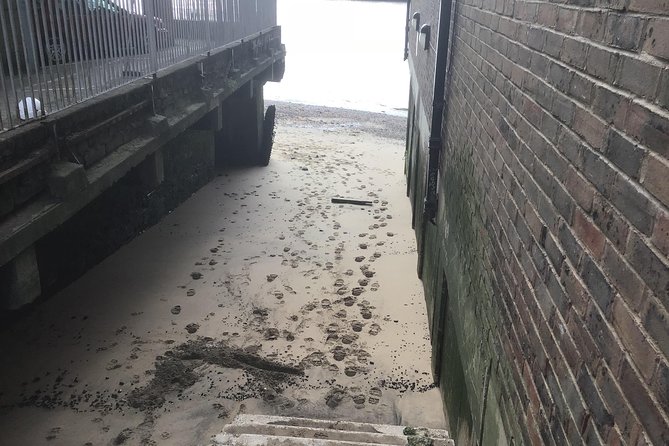
One practical detail: the pub sits by the river, and you can go down onto the shore if the tide is out. Even if you’re not sure when that will be, it’s the kind of “only in a riverside city” moment that makes the stop more than a quick photo.
Narrow Street stairs and Martin Frobisher’s departure
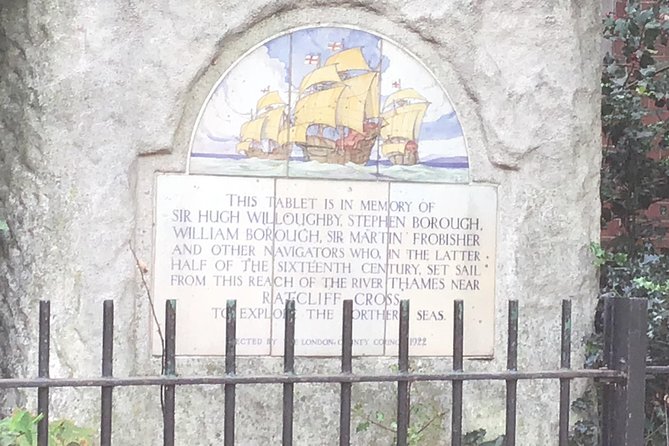
You return into Wapping’s street-and-stairs world, including a viewpoint from the old stairs near Narrow Street. From there, the guide points out the direction where Martin Frobisher set off searching for the Northwest Passage.
This is a great moment if you enjoy exploration-era navigation stories, because it puts the idea of “departure” into a real physical setting.
Thames River Police Museum: river patrols, crime, and the oldest force
A short stop follows at the Thames River Police Museum. The big hook here is that the Thames River Police is described as the oldest police force in the world, and the unit still patrols the rivers. The guide also connects river policing to specific kinds of crimes mentioned on the route, like murder and suicide.
Entry isn’t included, so you’ll likely get orientation from the street and the surrounding context. But if you’ve ever wondered how London handled crime on water, this stop helps.
Metropolitan Police Marine Policing Unit: courts, murders, and navigation
Next you see the area around the Metropolitan Police Marine Policing Unit, including an old court connected to murders and suicides. The guide then tells a navigation-focused story involving William Peckover, described here as possibly performing one of the most incredible pieces of maritime navigation in history.
If your idea of London history is usually kings and buildings, this part changes the lens toward maritime skill and investigation.
Turner’s Old Star: painter origins and witchcraft before that
You stop at Turner’s Old Star, described as the birthplace of what may be Britain’s greatest painter. Before that, the site is said to have been connected to witchcraft. The lesson isn’t to pick a single explanation; it’s that locations can be used, reused, and re-labeled as London’s priorities changed.
St Peter’s Church: Roman Catholic history near the docks
A quieter stop comes with St Peter’s Church, a beautiful old Roman Catholic church. This pause gives you a break from the pub-and-warehouse intensity and lets the guide connect the area’s community side to all the commerce and crime themes happening around it.
Raine’s House: brewer wealth turned into school support
You also visit Raine’s House, linked to Henry Raine, described as a wealthy brewer and philanthropist who set up a school for poor girls and boys in Wapping. That kind of local social investment is easy to miss when you focus only on the loud maritime legends.
Bistro Bardot (The Turk’s Head): pirates’ last drink
Next is Bistro Bardot (The Turk’s Head), where you’ll hear about convicted pirates and their last drink before being hanged on the Thames. The story also points you toward nearby steps you’ll visit shortly, making the execution narrative feel less like a book excerpt and more like a map you can walk.
Admission here is included, so this is one of the stops where the tour is more than just storytelling from outside.
Town of Ramsgate: Captain Bligh, the Crown Jewels, and Jeffers
You then move to Town of Ramsgate, dating from 1460. This is a stop loaded with dramatic names: Captain Bligh (connected to boarding HMS Bounty), a crook who stole the Crown Jewels caught here, and the Hanging Judge Jeffers. You’ll also hear that pirates and criminals met grisly ends here too.
Like Bistro Bardot, admission is included. If you like history that feels like real crime-scene gossip, this is one of the anchors of the whole walk.
St Katharine Docks: the finish near Tower Bridge and the Tower
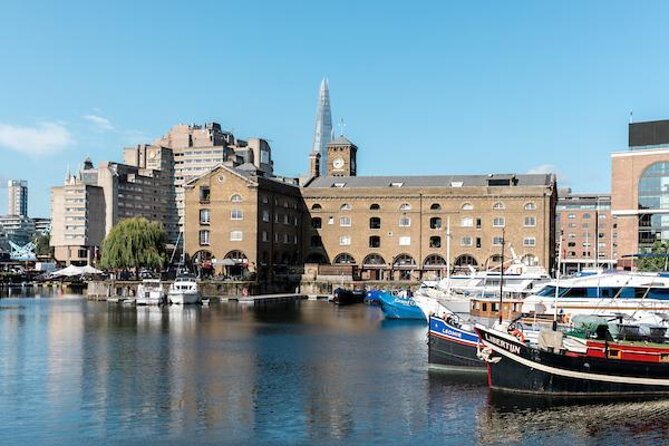
You end at St Katharine Docks, finishing in the shadow of Tower Bridge and the Tower of London. The docks here are now home to luxury yachts and boats belonging to the rich and famous, which creates a final contrast: old dock work has been repackaged into prestige waterfront.
It’s a smart finish point. It keeps you close to the biggest tourist draw areas, while still giving you a route that feels far more local than the typical “most famous landmarks only” approach.
The pub factor: why these stops are more than pit stops
On paper, this is a dock walk with some pubs along the way. In practice, the pubs do the heavy lifting. Each one acts like a chapter title, pointing to a different slice of London life:
- The Grapes brings exploration departures and famous literary associations into view.
- Turner’s Old Star ties art origins and local lore to a specific street.
- The Turk’s Head and Town of Ramsgate swing toward crime and punishment along the river.
Even if you don’t plan to order anything, you’re still getting a sense of how pubs functioned as social infrastructure: people gathered there because it was useful, not because it was trendy.
What you’ll learn: navigation, river policing, and how London moved by water
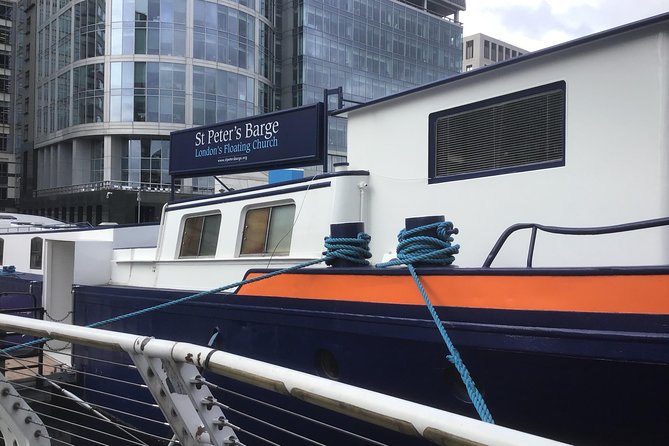
The education here isn’t a spreadsheet of dates. It’s a set of themes connected to where you’re standing. A good private guide helps you see the logic underneath the stories.
On this route, the recurring topics include:
- Maritime exploration (like the Northwest Passage and departure points tied to local stairs)
- Navigation skill and the people who understood routes (including William Peckover)
- River policing and how law worked at the water’s edge
- Trade shifts from working docks to modern developments and marinas
If you enjoy architecture and military history, the guide can fold those angles in too. One guide noted for this kind of approach is Kevin, who (based on his experience with the area) is described as having deep local familiarity, even tied to family work there and time spent in the neighborhood as a child. That kind of background tends to produce stories with texture, not just names and dates.
Safety and pacing: make it comfortable, not rushed
This is a private tour, and that helps with practical comfort. The operator also notes that social distancing is generally easier on quieter routes and that the group is just you/your family and your guide. If you want a calmer start, consider the suggested shift to 10.30–11am.
Bring the basics: comfortable shoes for walking, and a layer for river air. If you like using a mask, you can wear one anytime; the guide also brings one. Service animals are allowed too, and the tour is marked as suitable for most travelers who can walk through an outdoor route.
Should you book this Wapping Docks and Pubs walk?
Book it if you want London history that feels human: dock stairs you can stand near, pub landmarks with named connections, and a guide who can slow down when a story matters. It’s also a good fit if you like maritime themes—exploration, river crime, and navigation—or if you simply want a side of London that’s less “postcard central.”
Skip it (or pair it with something else) if you need lots of indoor museum time, because several notable sites are mainly passed by or discussed from outside. Also consider the start time and transit needs since tube tickets are not included.
If you like guided walking tours that mix real places with good storytelling, this one is a strong choice, especially in a private format where your pace matters.
FAQ
How long is the Wapping Docks and famous pubs walk?
It runs for about 3 hours.
Is this a private tour?
Yes. It’s private, with only your group and your guide.
Where does the tour start and where does it end?
It starts at Underground Ltd, Heron Quays Rd, Canary Wharf Estate, London E14 4HJ. It ends at St Katharine Docks, 50 St Katharine’s Way, London E1W 1LA.
What time does it start?
The listed start time is 9:30am, with an option to start later (around 10.30–11am) to help avoid rush-hour.
What language is the tour offered in?
The tour is offered in English.
Is there a mobile ticket?
Yes, a mobile ticket is included.
What is included in the price?
The private guided tour is included, and the tour includes admission for some stops as listed.
Are tube tickets included to and from my hotel?
No. Tube tickets to and from your hotel are not included.
Are admission tickets for places like London Museum Docklands included?
No. Some sites are noted as admission not included, such as London Museum Docklands, and several museum-like stops later on the route.
Is free cancellation available?
Yes. You can cancel up to 24 hours in advance for a full refund.
More Walking Tours in London
- Magical London: Harry Potter Guided Walking Tour
★ 4.7 · 22,044 reviews - London: The Original Jack the Ripper Walking Tour
★ 4.7 · 7,833 reviews - Tour for Muggles The Ultimate Harry Potter Walking Tour in London
★ 5.0 · 4,684 reviews - London Jack The Ripper Guided Walking Tour
★ 5.0 · 3,131 reviews - London: Harry Potter Movies Walking Tour (Kids Go Free)
★ 4.7 · 3,071 reviews
More Tour Reviews in London
- From London: Harry Potter Warner Bros Studio Tour
★ 4.7 · 26,588 reviews - London: Westminster to Greenwich River Thames Cruise
★ 4.5 · 22,836 reviews - Magical London: Harry Potter Guided Walking Tour
★ 4.7 · 22,044 reviews - London: Madame Tussauds London
★ 4.6 · 20,915 reviews - London: Warner Bros. Studio Harry Potter Tour & Branded Bus
★ 4.7 · 19,194 reviews
One for the Road: More London Crawls
- London Small Group Tour of Historical Pubs
★ 5.0 · 10,422 reviews - Soho Music & Historic Pubs Tour
★ 5.0 · 1,993 reviews - London: Bar and Club Crawl to 5 Central London Venues
★ 4.5 · 1,241 reviews - London: Historic Pubs of Central London Walking Tour
★ 4.9 · 1,065 reviews - Pub Crawl of Central London
★ 5.0 · 1,022 reviews
Just reviewed around London





London Pub & Bar Tours, compared.
 ★ 5.0London Small Group Tour of Historical PubsFrom $4010,422 reviews
 ★ 5.0Soho Music & Historic Pubs TourFrom $441,993 reviews
 ★ 4.5Bar and Club Crawl to 5 Central London VenuesFrom $341,241 reviews
 ★ 4.9Historic Pubs of Central London Walking TourFrom $391,065 reviews
 ★ 5.0Pub Crawl of Central LondonFrom $351,022 reviews
 ★ 4.9Soho Music and Historic Pubs Walking TourFrom $39836 reviews
 ★ 5.0Royal Historic Pubs Walking Guided Tour in LondonFrom $44803 reviews
 ★ 5.0Royal Historic Pubs Walking TourFrom $39536 reviews
Browse the lists this tour appears in