
Reviewed · GUIDED
Clapham South: Subterranean Shelter Guided Tour
A tube station hides a wartime maze. This guided tour takes you 30 metres underground to explore a secret shelter and how it shaped life during air raids.
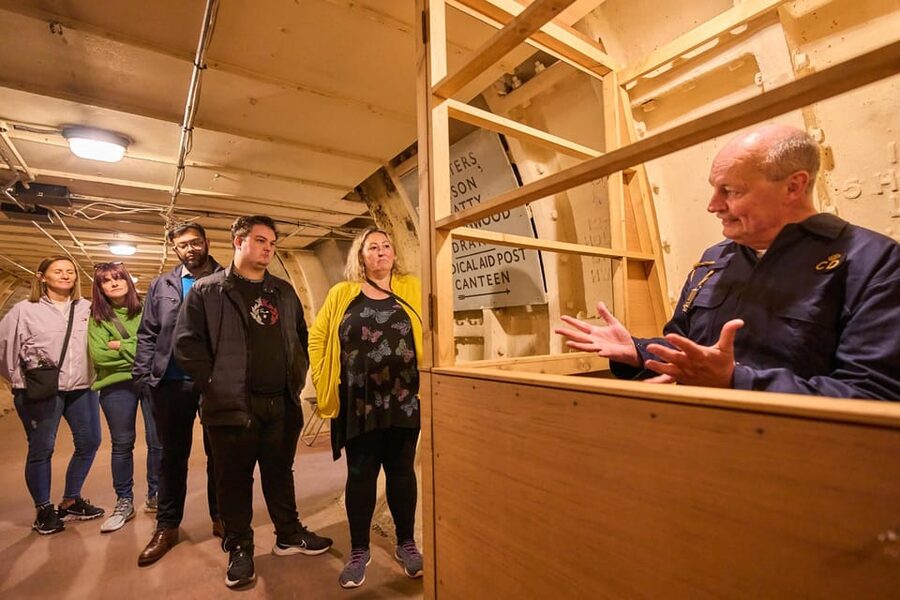
I really like the way the story is told, especially when one guide steps into the role of a 1940s ARP Warden to make you picture what the nights felt like.
The other standout for me is the tangible stuff: original bunk beds and even wartime graffiti that help the past feel real, not museum-flat. The big consideration is practical and physical: the route includes low lighting, uneven ground, static escalators, and it’s not suitable for claustrophobia or step-free access.
In This Review
- Key Highlights You’ll Want to Know Before You Go
- Where This Shelter Lives: Clapham South’s Mile-Long Underground World
- The Descent: Getting Ready for 11 Stories Down
- First Stop on the Story Path: Guides, Roleplay, and Getting Oriented Fast
- Wartime Life in Practice: Bunks, Canteen, and the Built-in Routine
- Original Objects and Surviving Voices: Graffiti, Torches, and Anderson Shelter Details
- From Air Raids to Windrush Stories: The Post-War Turning Point
- Price and Time: Is $51 Worth 75 Minutes Underground?
- Who This Tour Fits Best (And Who Should Skip It)
- Should You Book the Clapham South Subterranean Shelter Tour?
- FAQ
- How long is the Clapham South shelter guided tour?
- Where do I meet for the tour?
- What should I wear or bring?
- Is the tour suitable for people with claustrophobia or mobility impairments?
- Are children allowed?
- Are food and drinks allowed during the tour?
- Is the tour guided in English?
Key Highlights You’ll Want to Know Before You Go
- 30 metres underground inside a disused deep-level air raid shelter below Clapham South
- A mile of tunnels to walk through in a single guided circuit
- Roleplay meets history with a guide portraying a 1940s ARP Warden
- Original bunks, recreated spaces, and visible history like shelter graffiti
- Hands-on moments with genuine WWII torches and a look at an Anderson shelter
- WWII to post-war links, including stories tied to the Windrush period
Still deciding? A handful more London outings we rated
- Magical London: Harry Potter Guided Walking Tour
★ 4.7 · 22,044 reviews - London: Emirates Stadium Entry Ticket and Audio Guide
★ 4.7 · 5,513 reviews - London: Christmas Lights Bus Tour With Live Guide
★ 4.0 · 5,410 reviews - Stonehenge, Windsor Castle and Bath Full Day Guided Tour
★ 4.5 · 5,346 reviews
Where This Shelter Lives: Clapham South’s Mile-Long Underground World
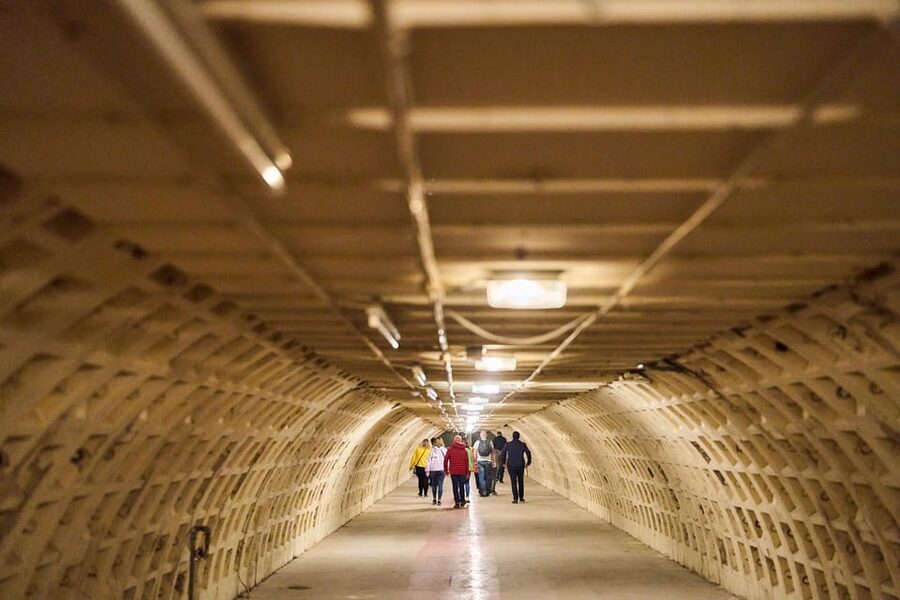
Deep-level shelters under London weren’t meant to be seen. That’s exactly what makes the Clapham South tour so effective: you’re walking through a place that was built to stay secret, not to entertain. You descend below the everyday noise of the Northern line and end up in a warren of tunnels that stretches over a mile long.
This site was opened in 1944 and planned to shelter more than 8,000 people during air raids. On the tour, the guide connects those facts to real-world pressure: when bombs fell, there wasn’t time for comfort, and the shelter system had to function fast—sleeping quarters, medical stations, and a canteen that kept people moving through long nights.
I also like that the tour doesn’t treat the shelter as a one-time wartime object. It follows what happened after: it was repurposed in the post-war years, including housing some of the first Caribbean migrants to Britain associated with the HMT Empire Windrush. That thread gives the place a longer life than you might expect from a WWII site.
The Descent: Getting Ready for 11 Stories Down
You’ll start at street level near Clapham South. The meeting point is in front of the Marks & Spencer Food Hall on Balham HIII, SW12 9EA, about a two-minute walk from Clapham South station. The key practical move is to arrive early—15 minutes before your tour time—so you’re not rushing while you’re already wearing the right shoes.
Before you go, think about your feet and your body first. You’ll be walking for the full 75 minutes, and the underground route includes uneven ground, low lighting, and walking up and down static escalators. There’s no cloakroom, so you’ll want to travel light—no large bags, no luggage.
What to wear is simple:
- Comfortable, closed shoes with solid grip
- Weather-appropriate layers (you’re underground, but you still travel through London’s changeable conditions)
Also plan around the restrictions: no open-toed shoes, no food and drinks, and leave any large bags at home. It’s a tight, guided environment where the staff need everyone moving together.
If you hate enclosed spaces or you get anxious in tight quarters, take the warning seriously. These tours are not suitable for claustrophobia, and they’re not step free.
First Stop on the Story Path: Guides, Roleplay, and Getting Oriented Fast
The tour is guided by two expert guides. One takes on a major part: a guide portraying a 1940s ARP Warden. That role matters more than you might think. It’s not only acting; it’s a way to pace the information so you understand who was doing what during the crisis—who controlled the flow, who kept order, and how instructions would land when people were scared and tired.
You’ll follow the shelter as if you’re stepping through a night in South London. The tour includes a path for imagining a family spending their first night in the shelter—how they arrive, what they see, and how the space is organized around survival rather than convenience.
This part also helps you get your bearings. Underground, everything can start looking similar. The guides keep you oriented by pointing out what’s ahead and what you’re meant to notice: sleeping areas, common spaces, and the tone of the rooms. By the time you reach the deeper tunnel sections, you’re not just walking; you’re tracking a system.
If you like history that moves like a story instead of a slideshow, this is where you’ll feel it most.

Wartime Life in Practice: Bunks, Canteen, and the Built-in Routine
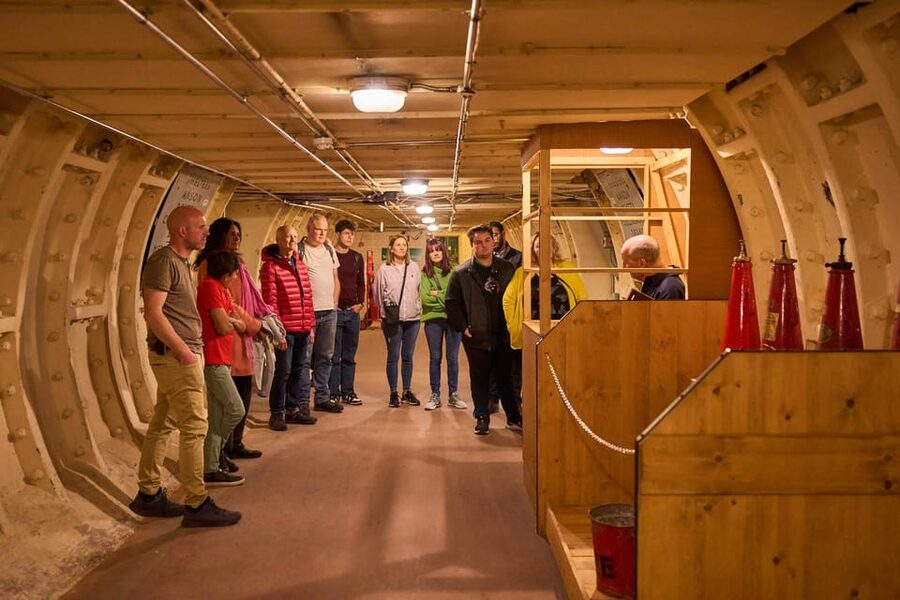
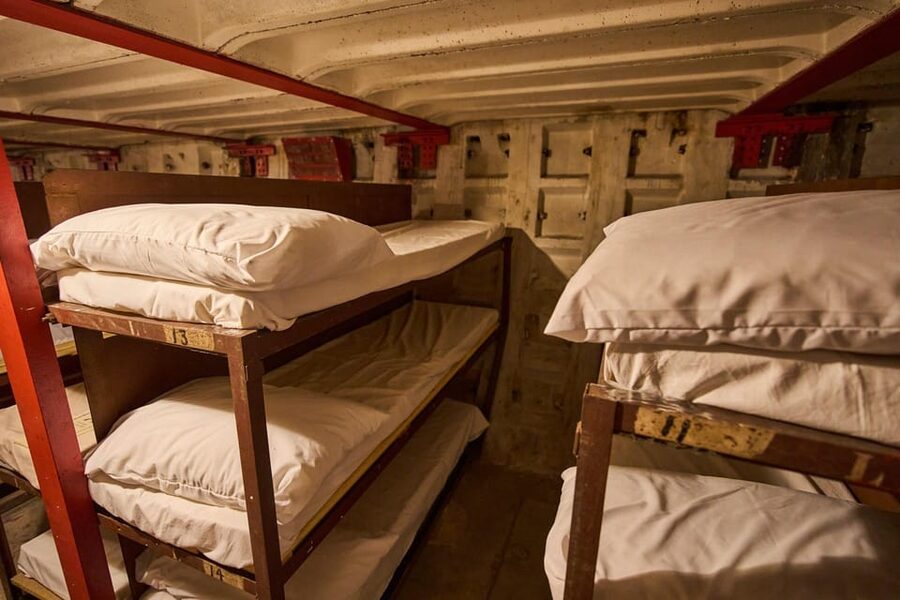
When the tour reaches the interior spaces, the biggest payoff is scale and realism. This shelter wasn’t built for a handful of people. It was built for mass sheltering, and you can feel that when you see the cramped arrangements for sleeping.
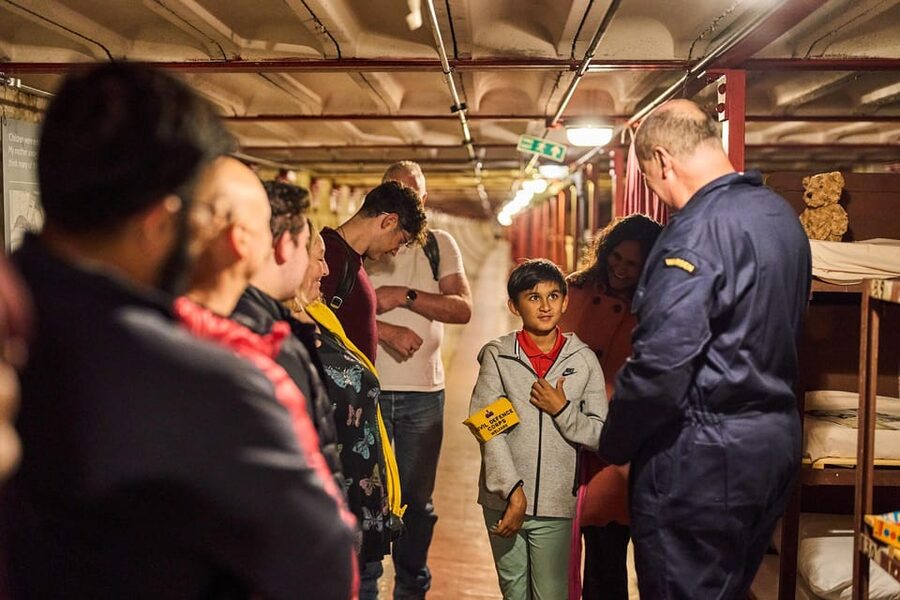
One of the most striking sights is the original bunk beds, which have been turned into benches. That choice is smart from a visitor standpoint: you can sit and look without damaging what’s on display. But it still delivers the emotional weight. You’re not seeing a comfortable recreation; you’re seeing the forms that thousands used during air raids.
The tour also takes you through recreated wartime rooms, including:
- the warden’s cabin
- the canteen, recreated to match a 1940s state
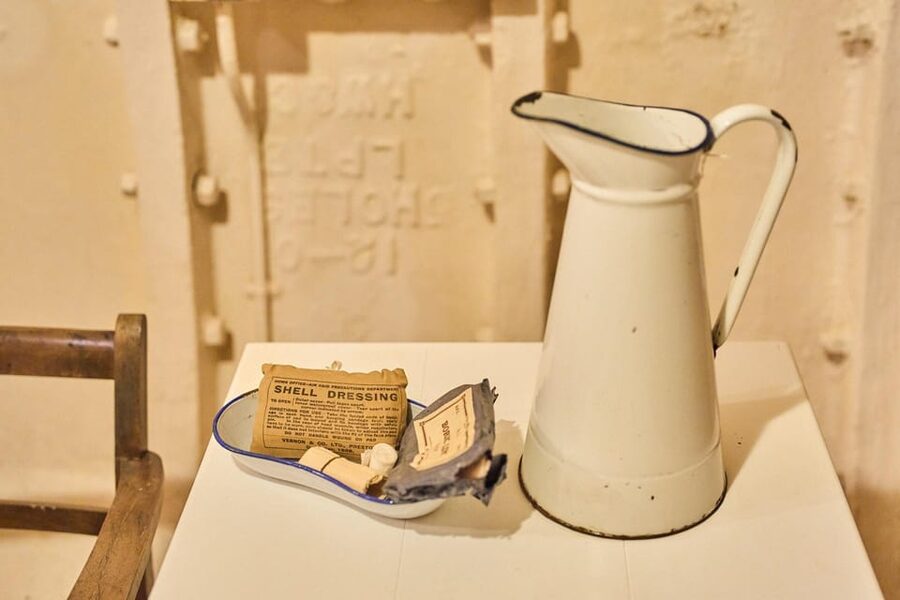
These recreations are meant to help you visualize daily rhythm. A shelter like this wasn’t just a place to collapse into. People needed space to eat, manage health issues, and rest enough to keep functioning. And the guide explains why design details mattered: tight quarters, clear movement, and facilities placed so people didn’t get lost during emergencies.
There are also medical stations described as part of what the shelter contained. Even if you don’t think about medical care during wartime sheltering until you’re told, once you hear it, you notice how the space anticipates real needs.
The overall effect is that you stop thinking of it as a tunnel with “beds,” and start thinking of it as a temporary city built underground.
Original Objects and Surviving Voices: Graffiti, Torches, and Anderson Shelter Details
A big reason this tour works is that you don’t only hear about the past. You get contact with objects and clues that lived there.
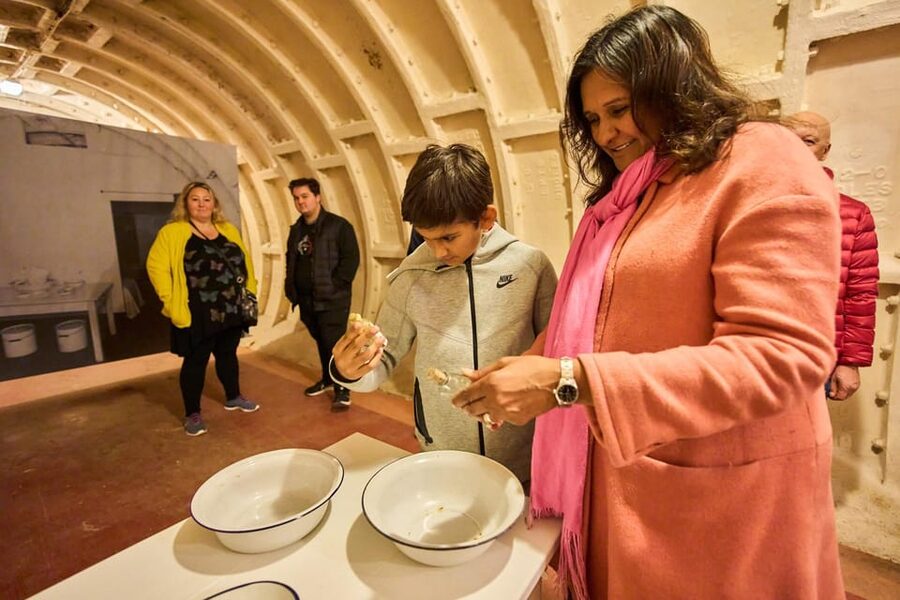
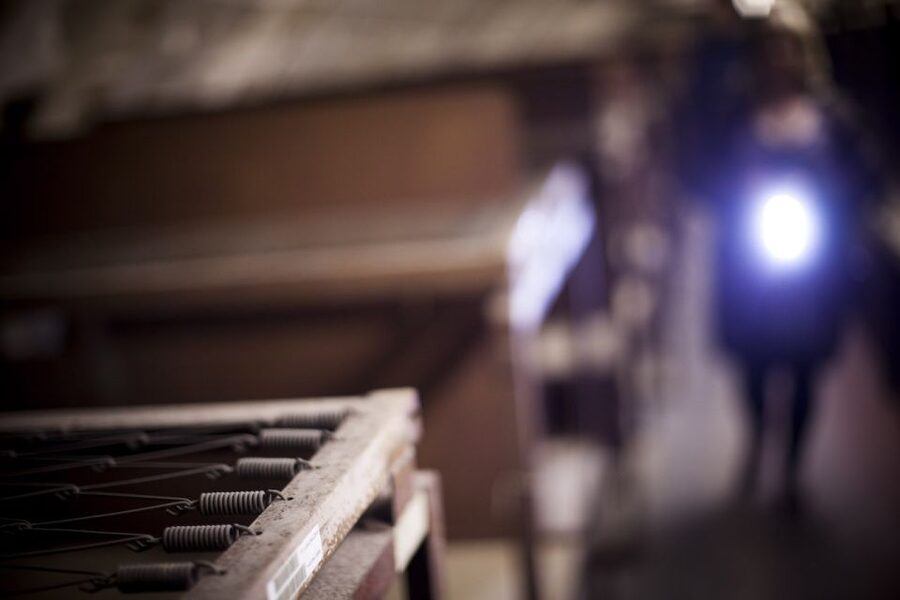
You’ll be shown genuine Second World War torches, for example. That’s a small detail with big impact. A flashlight in a museum case is one thing; a wartime tool helps you picture the lighting conditions people actually faced.
You’ll also learn about what an Anderson shelter looked like. The tour doesn’t treat it like trivia. It connects the idea of sheltering beyond just one type of refuge, which helps you understand the larger wartime shelter culture.
And then there’s the evidence that the past wasn’t quiet. You’ll read historical graffiti left by shelter occupants. That’s one of the most human elements of the experience. You’re looking at writing and marks created under stress, between alarms, in a place where privacy was limited. It’s history you can almost hear: short messages, names, reminders, and the need to leave something behind.
If you care about how ordinary people experienced major events, the graffiti section is the moment the tour turns from informational to personal.
From Air Raids to Windrush Stories: The Post-War Turning Point
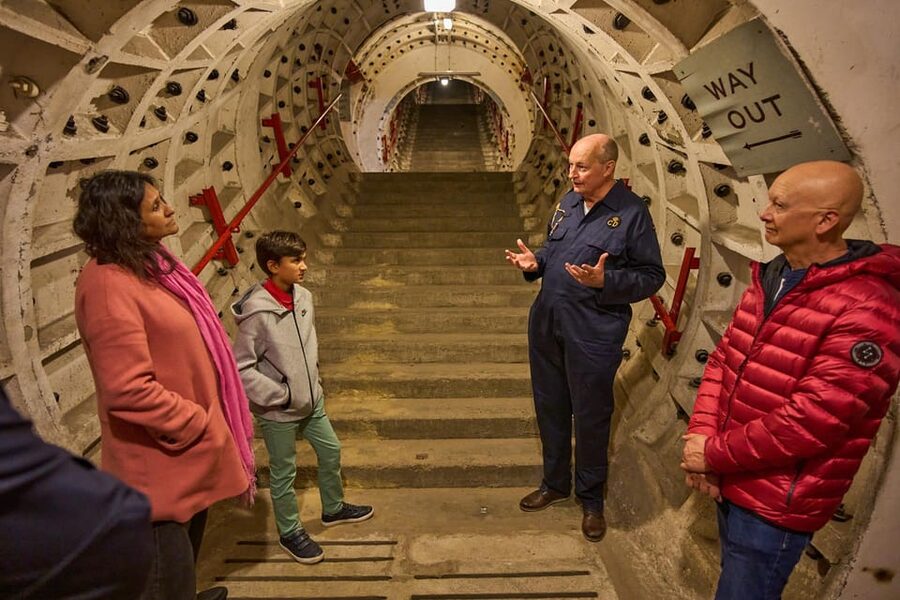
This is where the Clapham South site earns its extra weight. WWII shelters are often treated as sealed-in-time spaces: bombs stop, history freezes. Here, the story keeps moving.
After the war, the shelter was repurposed, and the tour includes stories about it being used to house the first Caribbean migrants to Britain connected to the HMT Empire Windrush. That connection is handled in a way that feels like part of the site’s real life—not an afterthought.
The tour also mentions visitors tied to the Festival of Britain. Put those together and you see why the site’s history matters. It wasn’t only about survival during bombardment; it was also about rebuilding, migration, and community forming in the aftermath.
I like that this part shifts your perspective. You may start the tour thinking about wartime fear, but you end it thinking about how people find ways to live together in hard spaces—and how those spaces carry layers of stories forward.
Price and Time: Is $51 Worth 75 Minutes Underground?
At $51 per person for a 75-minute guided tour, you’re paying for something more specific than a typical museum visit. You’re paying for:
- access to a disused deep-level shelter
- an underground route that’s hard to replicate on your own
- storytelling built around two guides, including ARP warden roleplay
- hands-on moments and original elements like bunks and graffiti
- a strong historical thread from WWII into the Windrush period
In London, $51 is in the “not cheap, but reasonable for access” category. The reason it feels worth it here is that you can’t casually wander into this space. Also, the time is tight enough that the tour stays focused, with no long gaps waiting around.
If you’re the type who enjoys historical sites with direct physical details—objects you can see, rooms you can stand in, marks people left behind—this is a good use of one evening or afternoon.
Who This Tour Fits Best (And Who Should Skip It)
This is a tour for people who like history that’s grounded in space and objects. You’ll enjoy it if you want to understand how shelters worked, who ran them, and what daily life might have looked like when the world went quiet above you.
You should also go in with the right expectations about walking:
- low lighting
- uneven ground
- static escalators
- no step-free access
- no cloakroom
- not suitable for claustrophobia
- children under 10 aren’t suitable
If you have mobility impairments, this probably won’t be a comfortable fit. If you’re comfortable with confined spaces and you wear sturdy footwear, you’re set up for success.
Should You Book the Clapham South Subterranean Shelter Tour?
Book it if you want a London experience that’s rare and specific: a mile of tunnels, original shelter details, and a guided story that links WWII shelter life to the post-war era, including the Windrush connection. It’s the kind of tour that makes the city feel larger than the surface you usually see.
Skip it if you know you’ll struggle with confined environments, low light, and lots of walking on uneven ground. This isn’t a gentle stroll. It’s an underground mission with rules designed to keep everyone safe and moving.
If you’re in the middle—curious but careful—do this: wear supportive shoes, pack light, and arrive early so you can focus on the story instead of the logistics. That’s the easiest way to get the most out of a place that was built for survival and still feels urgent today.
FAQ
How long is the Clapham South shelter guided tour?
The tour lasts 75 minutes.
Where do I meet for the tour?
Meet in front of the Marks & Spencer Food Hall on Balham HIII, SW12 9EA. It’s about a 2-minute walk from Clapham South station—turn right when you exit.
What should I wear or bring?
Wear comfortable, closed shoes and dress for the weather. Bring a passport or ID card.
Is the tour suitable for people with claustrophobia or mobility impairments?
No. The tour is not suitable for claustrophobia, and it is not step free. It’s also not suitable for people with mobility impairments.
Are children allowed?
Children under 10 years old are not suitable for this tour.
Are food and drinks allowed during the tour?
No. Food and drinks are not allowed.
Is the tour guided in English?
Yes, the live tour guide is in English.
More Guided in London
- Magical London: Harry Potter Guided Walking Tour
★ 4.7 · 22,044 reviews - London: Emirates Stadium Entry Ticket and Audio Guide
★ 4.7 · 5,513 reviews - London: Christmas Lights Bus Tour With Live Guide
★ 4.0 · 5,410 reviews - Stonehenge, Windsor Castle and Bath Full Day Guided Tour
★ 4.5 · 5,346 reviews - London Jack the Ripper Guided Tour with Ripper-Vision
★ 4.5 · 4,840 reviews
More Tours in London
- From London: Harry Potter Warner Bros Studio Tour
★ 4.7 · 26,588 reviews - Magical London: Harry Potter Guided Walking Tour
★ 4.7 · 22,044 reviews - London: Warner Bros. Studio Harry Potter Tour & Branded Bus
★ 4.7 · 19,194 reviews - London Big Bus Hop-On Hop-Off Tour with Optional River Cruise
★ 3.5 · 10,803 reviews - London Small Group Tour of Historical Pubs
★ 5.0 · 10,422 reviews
More Tour Reviews in London
- From London: Harry Potter Warner Bros Studio Tour
★ 4.7 · 26,588 reviews - London: Westminster to Greenwich River Thames Cruise
★ 4.5 · 22,836 reviews - Magical London: Harry Potter Guided Walking Tour
★ 4.7 · 22,044 reviews - London: Madame Tussauds London
★ 4.6 · 20,915 reviews - London: Warner Bros. Studio Harry Potter Tour & Branded Bus
★ 4.7 · 19,194 reviews
Just reviewed around London





Guided, compared.
 ★ 4.7Magical London: Harry Potter Guided Walking TourFrom $2022,044 reviews
 ★ 4.7Emirates Stadium Entry Ticket and Audio GuideFrom $475,513 reviews
 ★ 4.0Christmas Lights Bus Tour With Live GuideFrom $335,410 reviews
 ★ 4.5Stonehenge, Windsor Castle and Bath Full Day Guided TourFrom $1235,346 reviews
 ★ 4.5London Jack the Ripper Guided Tour with Ripper-VisionFrom $274,840 reviews
 ★ 5.0Original Harry Potter Locations Tour – Guided Tour of LondonFrom $164,117 reviews
 ★ 4.7From London: Cotswolds and Oxford Guided Day-TripFrom $1063,720 reviews
 ★ 4.7Wembley Stadium Guided TourFrom $333,629 reviews