
Reviewed · HISTORICAL TOURS
City of London History Tour: The Square Mile that Rose to Empire
London’s power hides in plain walkways. This Square Mile tour follows how the City grew from Roman defenses to Norman-era London, then ties the stone to the institutions that still shape banking and trade today. I love the off-the-beaten-track feel, and I love how the route uses Roman-to-Norman layers to orient you fast.
You also get a smart, story-driven walk through places linked to livery companies and City governance, with an ending that points at finance landmarks like the Bank of England. If you want long time inside any one site, the schedule is built from quick garden and exterior moments—most stops are only 5 to 25 minutes—even though it is wheelchair and stroller accessible.
In This Review
- Key things I’d watch for on this Square Mile walk
- Why The Square Mile Rose from Roman Walls to Empire
- Price and Value for a $30.69, 2.5-Hour Power Walk
- Meeting at Barbican Green and Ending at Cornhill’s Dragon Circle
- St Alphage London Wall to St Giles Cripplegate: Roman defenses and older Saxon roots
- Salter’s Hall Garden, Brewers’ Hall, and the Livery Company world of trade and governance
- City of London and Guildhall: where civic power and older myths meet
- Guildhall Art Gallery and the Roman Amphitheatre link
- St Lawrence Jewry, St Margaret Lothbury, and how Wards shaped rules
- The Royal Exchange and the golden grasshopper moment
- From Aldermanbury Ruins to the Mansion House: governance at the top
- London Troops War Memorial and the dragon circle ending
- Bank of England: traditional institution, modern influence
- Accessibility, pacing, and practical tips that actually help
- Should You Book This Square Mile History Tour?
- FAQ
- How long is the City of London History Tour?
- How much does the tour cost?
- Is it offered in English, and is a mobile ticket provided?
- Where does the tour start and where does it end?
- Is the tour wheelchair and stroller accessible?
- Can I cancel for a full refund?
Key things I’d watch for on this Square Mile walk
- A Roman wall start that sets the tone immediately, right at St Alphage London Wall in the Salters garden
- Stitched-together church history, including St Giles Cripplegate on Norman foundations with older Saxon roots
- Livery company power in everyday places, with Salter’s Hall garden and Brewers’ Hall on the route
- Guildhall as a myth-and-history hub, with Greek through Norman influences tied to the town hall site
- Visual clues you can actually spot, like the golden grasshopper on the Royal Exchange
- A dramatic finish that brings the story full-circle, ending near the War Memorial dragon lamps and the Bank of England
Still deciding? A handful more London outings we rated
- City Sightseeing London Hop-On Hop-Off Bus & Bookable Extras
★ 4.4 · 7,374 reviews - City Sightseeing London Hop-On Hop-Off Bus Tour & Bookable Extras
★ 4.0 · 1,224 reviews - London: Go City Explorer Pass® – Tickets for 2-7 Attractions
★ 4.3 · 1,111 reviews - Private Windsor Castle, Stonehenge, The City of Bath Day Tour
★ 5.0 · 468 reviews
Why The Square Mile Rose from Roman Walls to Empire

The City of London didn’t grow just because of kings and palaces. It grew because of defense, trade, and rules—and that’s exactly the thread this walk follows. You start where the Roman story is physical: the wall-line and the forts that helped protect Londinium from outside pressure.
Then you move through layers of power that people often skip. Churches like St Giles Cripplegate help you see how older places got rebuilt over time, so London’s past feels less like a museum and more like a living, changing city.
Most importantly, this tour connects the stone-and-brick story to the institutions that still matter. When you reach places tied to the Lord Mayor and the Bank of England, you’re not just seeing landmarks—you’re seeing how governance and finance grew from the same ground-level civic culture.
Price and Value for a $30.69, 2.5-Hour Power Walk
At $30.69 per person for about 2 hours 30 minutes, this is priced like a budget-friendly guided walk that still gives you a clear narrative. The real value is that you’re paying for the order and the meaning—not for expensive admissions.
The route is built around locations where the tour plan lists free admission, including gardens, halls areas, churches, and key City sites. So you’re not constantly thinking about extra tickets while you walk. That matters in London, where the costs add up fast.
Also, the group is kept small, up to 8 travelers. That usually makes the pace easier to manage and helps you hear explanations without straining.
If you’re a London newcomer or a history fan who likes to connect dots, this is the kind of tour where the price feels fair for what you get: context, not just sightseeing.
Meeting at Barbican Green and Ending at Cornhill’s Dragon Circle
The start is at Barbie Green 2, London Wall Pl, Barbican (EC2Y 5AU), and the tour ends at the London Troops War Memorial, 1 Cornhill (EC3V 3LN). That matters because you’re basically doing a City-center arc, not a strict out-and-back route.
The tour also runs in English, and you get a mobile ticket. You don’t need to plan around printing or paperwork. It’s also described as near public transportation, which is helpful if you’re juggling other stops in central London.
One more practical note: since it’s about 2.5 hours, wear shoes that can handle a steady walk. The stops are short, so you’ll want comfort more than you’ll want breaks.
Still deciding? A handful more London outings we rated
St Alphage London Wall to St Giles Cripplegate: Roman defenses and older Saxon roots
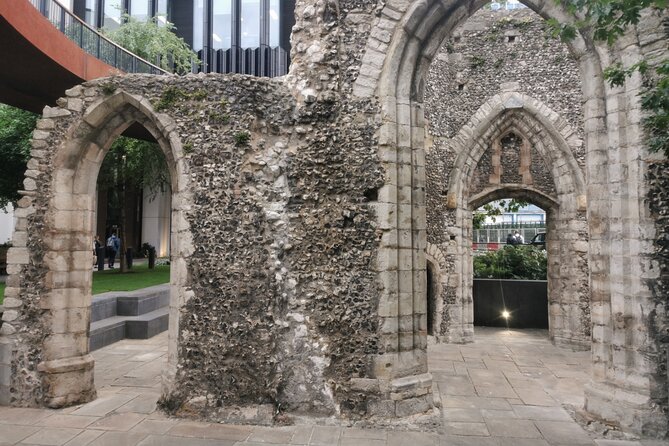
You begin in the Salters garden at St Alphage London Wall. This is a strong opening because it frames the whole City story as a meeting point of peoples and eras, moving from Roman to Norman. Instead of jumping straight to big-name buildings, you start with the idea of why this place mattered.
Next comes the Roman city wall, where the oldest part is described as a fort. Even if you don’t geek out on engineering, it clicks quickly: this isn’t just ancient stone. It’s the physical reason a protected center could grow and organize itself over time.
Then you reach St Giles Cripplegate, one of the oldest medieval churches in the City since Norman time, with the note that it replaced or sat on an older Saxon church site. That kind of layering is what makes London feel real. You’re not only seeing a building; you’re seeing time accumulate in the same spot.
A drawback to keep in mind here is how the tour’s structure works: these are brief windows. You get the essential story and what to look for, but you’re not settling in for a long visit at each stop.
Salter’s Hall Garden, Brewers’ Hall, and the Livery Company world of trade and governance
After the wall and church foundations, the tour shifts from defense to systems. The next stop is Salter’s Hall Garden, tied to the Roman wall as the structure that helped fortify the City from outside influence for centuries.
Then the guide connects it to the human story: the route mentions Celtic peoples and how their presence shaped why Romans strengthened Londinium with a wall. Even if you only catch part of the explanation, the big idea lands: London’s history is not one straight line. It’s a mix of local peoples, incoming powers, and practical choices.
From there you hit the world of the livery companies. Salter’s Hall is described as being ranked 9th among the 12 most important livery companies. That detail gives you a quick ladder for understanding how these groups functioned. They weren’t just clubs. They were part of how trade and civic life were managed.
Then it’s Brewers’ Hall, with a playful note that this livery company set the standard for booze. The point isn’t the joke—it’s that everyday businesses helped shape standards, rules, and reputation inside the City.
You finish this block at St Mary Aldermanbury Garden, where the ruins are tied to the name linked to the ancient court of aldermen now held at Guildhall. The garden also has memorials to a Shakespeare and to legends tied to two different livery companies. If you like seeing how literature and civic institutions get braided together, this is a memorable stop.
City of London and Guildhall: where civic power and older myths meet
Once you get to the City of London itself, the tour’s theme becomes obvious: this is the historic center, with municipal governance at its core. It’s easy to think of London as one big city. The City of London operates like its own historical unit, and walking through helps your brain adjust.
Then you arrive at Guildhall, the City’s town hall on its site since at least the 13th century. The tour points out mythology and influence, moving through Greek, Roman, Saxon, and Norman. Even if you’ve seen Guildhall from the outside before, the interpretation helps it feel less generic and more like a seat of long-running civic imagination.
Time-wise, Guildhall and the surrounding stops are some of the best places on the walk for slowing down your attention. The buildings feel familiar, but the City’s civic story is the real draw here.
Guildhall Art Gallery and the Roman Amphitheatre link
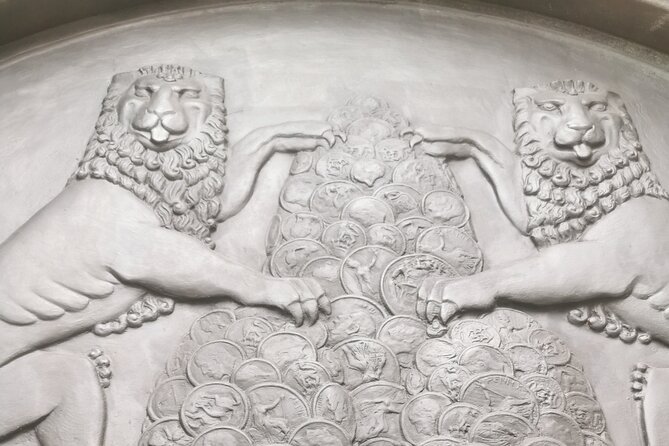
From Guildhall, you move to Guildhall Art Gallery, where the route notes the Roman Amphitheatre location. This is one of those details that makes the whole walk click, because it shows the City didn’t just train administrators and merchants. It also supported public culture and gatherings.
It’s also a good pause in the middle of a walk that keeps moving. The stop duration is listed at 25 minutes, so you get more time here than at several other points.
If you’re the type who likes to photograph signs, symbols, or building details, this is a good stop to do it. You’re not stuck in a hurry here.
St Lawrence Jewry, St Margaret Lothbury, and how Wards shaped rules
Next is St Lawrence Jewry, described as the official church of the City of London Corporation. The tour includes a reminder that the saint is remembered for helping Christianity flourish, with a legend tied to a cruel sacrifice. It’s not a gentle legend, but it’s part of how meaning got written into churches across the City.
Then you reach St Margaret Lothbury Church, described as representing two City wards. The explanation you get here is about why livery companies became known as Worshipful companies. That’s a useful thread because it turns names into history. You stop treating titles like fancy labels and start seeing them as civic status markers.
Stops like these are quick, but they’re valuable. They help you understand the City’s grammar: wards, companies, offices, and religious institutions all reinforced each other.
The Royal Exchange and the golden grasshopper moment
At the Royal Exchange, the tour tells you it was built by a legend for adventurers to meet, and that these men went on to shape the new world. Even if you take the story with a grain of salt, the takeaway is clear: the Exchange symbolizes commerce, risk, and reputation—core themes for this entire walk.
The stop also calls out the golden grasshopper on top. That’s the kind of detail you can’t unsee once someone points it out. It’s also a nice example of how London’s public art and architecture carry meaning, even when you’re just walking past.
This is a short stop on the plan, but it’s one of the most visually rewarding ones. If you want one photo that feels tied to the story, this is it.
From Aldermanbury Ruins to the Mansion House: governance at the top
Returning to Mansion House, you reach the official home of the Lord Mayor of the City of London. The tour explains the Lord Mayor’s role as a head of governance and also as an ambassador for the UK’s financial and professional services sector.
That connection matters. It’s not just ceremonial. It helps you see why the City still has influence. A lot of London’s power is about relationships and institutions, and the Mansion House sits at the center of that system.
Then the walk shifts gears again toward remembrance.
London Troops War Memorial and the dragon circle ending
The final storytelling stop on this plan is the London Troops War Memorial. It sits inside a circle of 12 dragon lamp posts representing the 12 great livery companies. That design choice turns the livery story into a visible map.
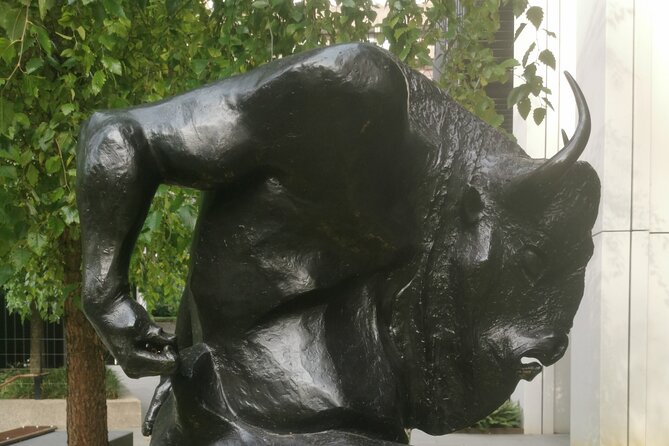
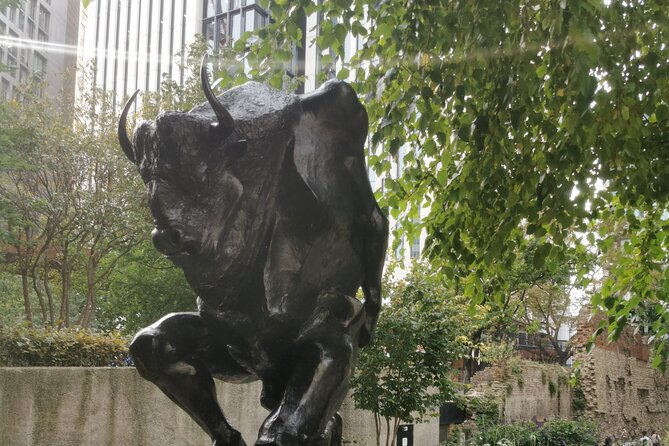
The route also points out notable figures remembered around this area and then concludes by returning to the Minotaur story. You don’t need to already know the myth to follow along; the guide ties it back into the wider City narrative.
This ending is satisfying because you’ve spent the whole walk learning how the City functioned—defense, trade, governance—and now you see how those identities were used in memorial design too.
Bank of England: traditional institution, modern influence
To wrap things up, you reach the Bank of England. The tour frames it as influential and still traditional while also looking forward, and it calls attention to a golden statue on top as part of the story.
This last stretch is short, but it lands your understanding. The Bank isn’t just a modern headquarters. In the tour’s logic, it’s a continuation of that long civic tradition: rules, money, and leadership in one place.
If you’re someone who likes a clean finish—one where you can summarize the whole trip in a single mental sentence—this ending helps.
Accessibility, pacing, and practical tips that actually help
The tour is described as wheelchair and stroller accessible, and it’s also said that most travelers can participate. That’s a good sign if you’re worried about uneven pavements or long inaccessible stretches.
Still, the pacing is built around quick visits. Many stops are 5 to 10 minutes, with a couple longer ones. Plan for photos and listening, not for lingering.
If you’re deciding what to wear, I’d go with layers. London weather loves to change its mind mid-walk, and you’ll be outside enough to feel it. Bring water, and keep your phone handy for the mobile ticket.
One small planning tip: since this tour is commonly booked about 39 days in advance, it’s smart to reserve early if your dates are firm.
Should You Book This Square Mile History Tour?
Book it if you want a short, guided route that connects Roman defenses, medieval churches, livery companies, and the institutions of finance. It’s especially good for London newcomers who feel overwhelmed by the number of sights and want a clear story.
Skip it only if you prefer deep time in a single museum or building. This walk is about pattern and context, not long interior visits. If you love brief, high-signal stops that keep moving while still staying understandable, you’ll like this format.
FAQ
How long is the City of London History Tour?
It’s about 2 hours 30 minutes.
How much does the tour cost?
The price is $30.69 per person.
Is it offered in English, and is a mobile ticket provided?
Yes, it’s offered in English, and you receive a mobile ticket.
Where does the tour start and where does it end?
It starts at Barbie Green 2 London Wall Pl, Barbican (EC2Y 5AU) and ends at the London Troops War Memorial, 1 Cornhill (EC3V 3LN).
Is the tour wheelchair and stroller accessible?
Yes, the tour is listed as wheelchair and stroller accessible.
Can I cancel for a full refund?
Yes, you can cancel for a full refund if you cancel at least 24 hours before the experience’s start time. Free cancellation is available up to that cutoff, based on local time.
More City Tours in London
- City Sightseeing London Hop-On Hop-Off Bus & Bookable Extras
★ 4.4 · 7,374 reviews - City Sightseeing London Hop-On Hop-Off Bus Tour & Bookable Extras
★ 4.0 · 1,224 reviews - London: Go City Explorer Pass® – Tickets for 2-7 Attractions
★ 4.3 · 1,111 reviews - Private Windsor Castle, Stonehenge, The City of Bath Day Tour
★ 5.0 · 468 reviews - London: Speedboat Tour Through Heart of the City
★ 5.0 · 387 reviews
More Tours in London
- From London: Harry Potter Warner Bros Studio Tour
★ 4.7 · 26,588 reviews - Magical London: Harry Potter Guided Walking Tour
★ 4.7 · 22,044 reviews - London: Warner Bros. Studio Harry Potter Tour & Branded Bus
★ 4.7 · 19,194 reviews - London Big Bus Hop-On Hop-Off Tour with Optional River Cruise
★ 3.5 · 10,803 reviews - London Small Group Tour of Historical Pubs
★ 5.0 · 10,422 reviews
More Tour Reviews in London
- From London: Harry Potter Warner Bros Studio Tour
★ 4.7 · 26,588 reviews - London: Westminster to Greenwich River Thames Cruise
★ 4.5 · 22,836 reviews - Magical London: Harry Potter Guided Walking Tour
★ 4.7 · 22,044 reviews - London: Madame Tussauds London
★ 4.6 · 20,915 reviews - London: Warner Bros. Studio Harry Potter Tour & Branded Bus
★ 4.7 · 19,194 reviews
Just reviewed around London





Historical Tours, compared.
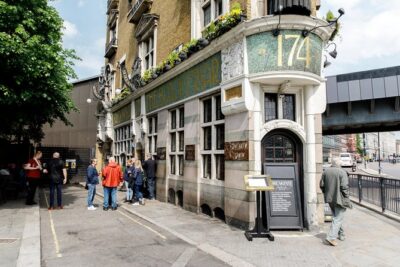 ★ 5.0London Small Group Tour of Historical PubsFrom $4010,422 reviews
 ★ 5.0Soho Music & Historic Pubs TourFrom $441,993 reviews
 ★ 4.9Historic Pubs of Central London Walking TourFrom $391,065 reviews
 ★ 4.9Soho Music and Historic Pubs Walking TourFrom $39836 reviews
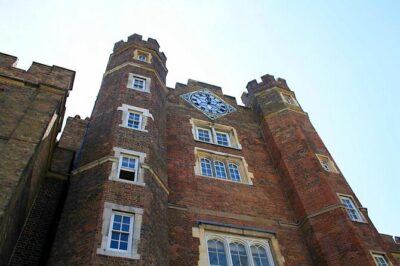 ★ 5.0Royal Historic Pubs Walking Guided Tour in LondonFrom $44803 reviews
 ★ 5.0Private Group: Historical Pub Walking Tour of LondonFrom $173660 reviews
 ★ 4.6Rock ‘n’ Roll History TourFrom $74645 reviews
 ★ 4.7Westminster Abbey Tour with a Royal Heritage GuideFrom $93614 reviews
Browse the lists this tour appears in