
Reviewed · BRITISH MUSEUM TOURS
British Museum Private Tour: Ancient Daemons and Timeless Beauty
Gods, empires, and mummies under one roof. This private British Museum tour is built around a clear theme, led by an art specialist storyteller, and it starts with fast track entry so you can spend your time looking, not queueing.
I love the small group feel and the way you can steer the pace with the guide. I also like how the tour connects famous objects across civilizations, turning big museum names like the Rosetta Stone and Parthenon Marbles into stories you can follow.
One consideration: the British Museum has more than 8 million artifacts, so a 2–3 hour visit only hits the best-known highlights. If you want extra time to roam beyond the guided stops, schedule a little buffer after your tour.
In This Review
- Key highlights you’ll care about
- Why a private British Museum tour beats wandering alone
- Montague Place meeting point and the easy start
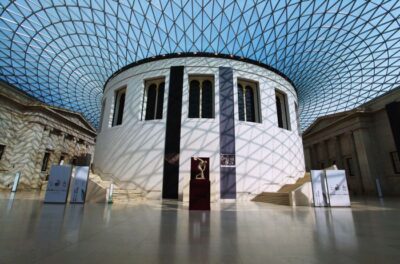
- The British Museum under Norman Foster’s glass canopy
- Rosetta Stone and Parthenon Marbles: language and empire
- Egyptian mummies and the rules of life and death
- Sutton Hoo and the Lewis chessmen: strategy in real life
- Shiva Nataraja and ancient beauty standards
- How pacing and flexibility make the experience worth paying for
- Who should book this themed private tour
- Price and value: what $203.65 per group really buys
- Should you book this Ancient Daemons and Timeless Beauty tour?
- FAQ
- How long is the British Museum private tour?
- Is this a private tour or a shared group?
- What language is the tour offered in?
- Where is the meeting point?
- Is admission to the British Museum included?
- Do I get a ticket on my phone?
- Are snacks and drinks provided?
- What is the cancellation policy?
Key highlights you’ll care about
- Small private group (up to 6 mentioned for the tour, priced per group up to 8) for a more personal pace
- Fast track entry + mobile ticket, which helps when you’re visiting a major London museum
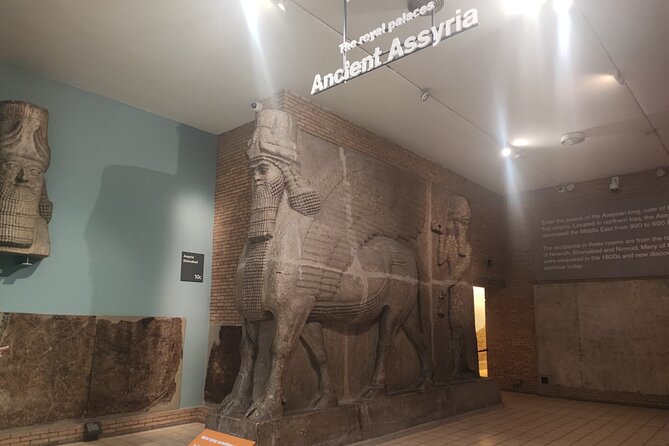
- A themed route that links myths, languages, empires, and everyday objects
- Expert art storytelling, designed to make hard topics feel simple
- Iconic anchors for your visit, like the Rosetta Stone, Parthenon Marbles, and Sutton Hoo
- Designed to solve the biggest problem at the British Museum: where to start
More among the marbles and mummies
- London: British Museum Guided Tour
★ 4.3 · 1,182 reviews - British Museum London Guided Tour Semi-Private 8ppl Max
★ 5.0 · 984 reviews - London: British Museum Guided Tour with Entrance Tickets
★ 4.9 · 748 reviews - London: Tour of the British Museum
★ 4.1 · 678 reviews
Why a private British Museum tour beats wandering alone
The British Museum is one of those places that looks friendly from the street and then suddenly turns into a maze once you’re inside. Hallways multiply. Signage helps, but your brain still has to pick a direction. This private tour is valuable because it gives you that direction fast.
Instead of trying to “see everything,” you follow a theme built to connect objects that normally sit far apart. That matters because the museum’s size can swallow your attention. With a guide, you get a story thread that makes each stop feel like part of a larger picture—languages, power, belief, and how people defined beauty.
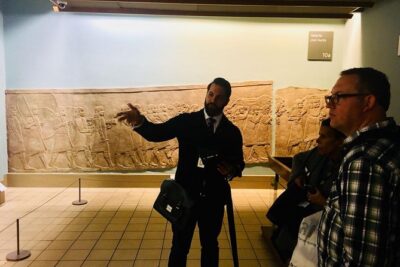
You also get the calm advantage of a smaller group. That means you can ask questions while you’re standing in front of the object, not later when you’re halfway out the door. In a museum this big, that’s not a luxury—it’s how you turn seeing into understanding.
Montague Place meeting point and the easy start
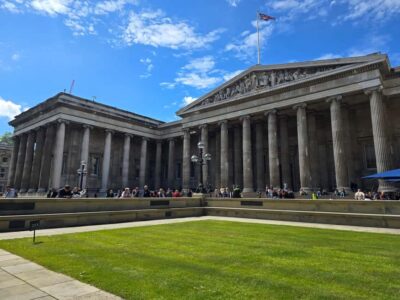
Your tour meets at Montague Place, Montague Pl, London. It ends back at the meeting point, so you don’t have to solve a second logistics puzzle at the end of your visit.
A key practical plus is that you get a mobile ticket, and the tour includes fast track entry to the British Museum. That’s the difference between arriving energized and arriving already tired. When you’re paying for a guided experience, you want the time to go toward the art and artifacts—not waiting.
One more detail that helps: the tour is offered in English, and confirmation is provided at booking. Also, it’s described as near public transportation, which is a smart match for London—show up on foot or with a quick transit hop, then get inside.
The British Museum under Norman Foster’s glass canopy
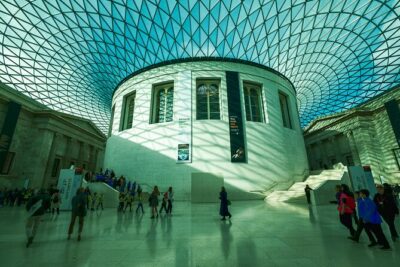
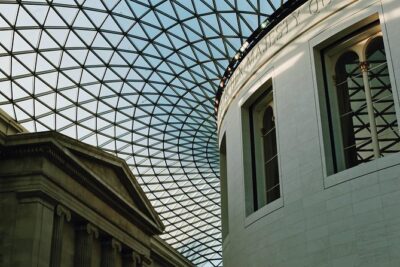
The tour begins with the British Museum itself, including a walk-through moment that sets the tone. It’s not just a building full of rooms; it’s a kind of time portal. The text highlights the light-and-glass canopy designed by Norman Foster, and that’s a useful mental anchor.
Here’s why that opening matters: the British Museum can feel like a pile of artifacts unless you understand the idea behind the place. You’re stepping into a space meant to hold many civilizations under one roof, which is exactly what your guided theme will do—turn separate cultures into a connected, human story.
You’ll also get a quick orientation around the objects you’ll actually see. That matters for two reasons:
1) you know what to look for while you’re there
2) you don’t waste your energy trying to guess what’s worth your time
Even if you’ve visited London before, this is one of the best museums for first-timers and returners alike, because the guide’s route helps you avoid the most common mistake: drifting.
Still deciding? A handful more London outings we rated



Rosetta Stone and Parthenon Marbles: language and empire
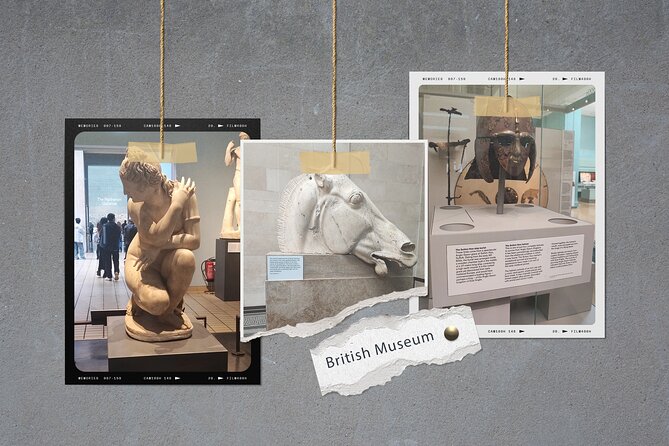
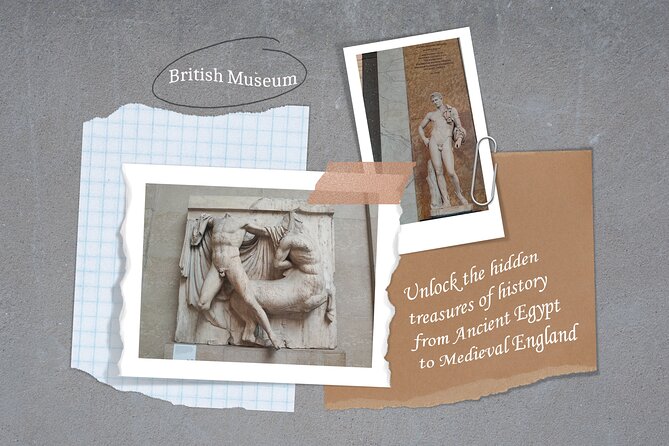
The first set of stops includes objects tied to communication and power, which is a strong way to start. The Rosetta Stone is specifically called out as a way to discover forgotten languages. That’s a win for your brain right away: it’s not just a stone with writing, it’s a key that connects cultures through translation.
Then you shift into the Parthenon Marbles, framed around the glory of past empires. Even if you’ve seen photos before, standing near the originals is different. A guide can point out the kinds of details your eyes might skip, and the context helps you understand why these pieces mattered then—and why they still matter now.
There are two big benefits to this pairing:
- You learn what people used art and writing to do. Not just what it looked like.
- You stop treating the museum like a checklist. Each object answers a question: Who had influence? How did they communicate? What did they want to preserve?
If you like museums that explain relationships—between time periods, civilizations, and ideas—this portion delivers.
Egyptian mummies and the rules of life and death
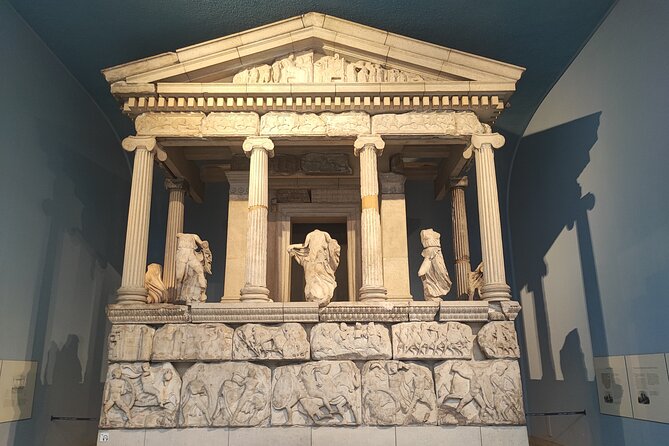
Next comes the Egyptian mummies, described around the dance of life and death. That phrasing isn’t just poetic. It signals what you’re meant to think about as you look: burial practices weren’t random. They were shaped by beliefs about what a person’s body meant, and what continued life might require.
This stop is often a turning point for people. At the British Museum, it’s easy to get stuck in the art-only mindset. Egyptian funerary pieces pull you into the human side of history: fear, hope, family, ritual, and the desire to last.
The practical takeaway for you: give yourself permission to slow down here. Even with a timed tour, this is the kind of subject where the guide’s explanation changes how you look at the object. You’re not just staring at something old. You’re reading the intention.
If you have a topic you love—religion, art technique, or ancient daily life—Egyptian material is one of the best places to connect those interests.
Sutton Hoo and the Lewis chessmen: strategy in real life
The tour also spotlights Sutton Hoo, tied to the last voyage of an Anglo-Saxon warrior. That’s a strong choice because it turns archaeology into a story about a person, not just a site.
Sutton Hoo is exactly the kind of exhibit that becomes more meaningful when someone helps you picture the broader world it belonged to. What did journeys mean at that time? Who had power? What choices reflected status? A guide can help you see the details that support the bigger story.
Then you get the Lewis chessmen, framed around strategy and wit. This stop works for a simple reason: chess is familiar. You may not know the ancient context, but you understand the concept instantly. That makes it easier to absorb the cultural layer the guide adds.
In a museum like the British Museum, these two objects together are great because they cover two different angles:
- Sutton Hoo brings you into politics and identity through a historical event
- Lewis chessmen brings you into culture through play and thinking
If you want a tour that doesn’t feel one-note, this is where it starts feeling like a conversation.
Shiva Nataraja and ancient beauty standards
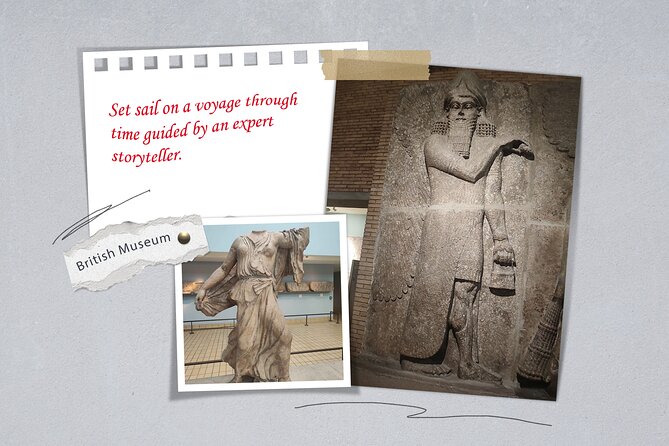
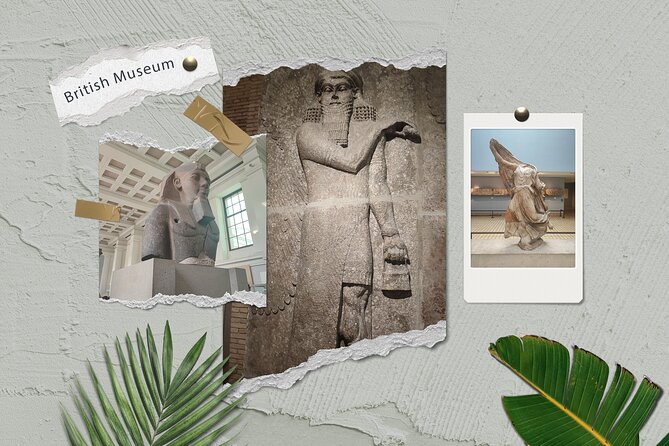
The tour then shifts from history and power into myth and creation. You stand before Shiva Nataraja, described as the cosmic dance of creation and destruction. Even if you don’t know the religion in depth, the guide’s job is to give you the keys to read what you see. That’s how a mythological figure becomes understandable rather than intimidating.
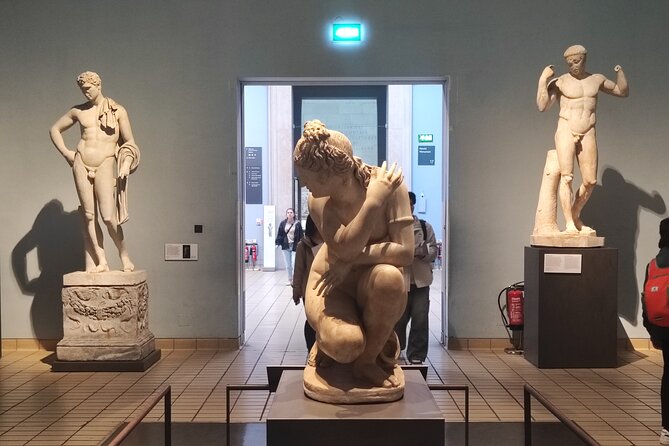
After that, you admire ancient sculptures connected to the evolution of beauty standards. This is one of those things people don’t expect from a “high-profile objects” tour, but it’s one of the most useful ideas for your time.
Why? Because it gives you a lens you can reuse. Once you learn how different cultures expressed ideals—proportion, gesture, posture—you start noticing similar thinking in other art across the museum.
This part of the route is also where the theme title makes sense. Whether you interpret the “daemons” angle literally or as a way to group mythic forces, you’re seeing how ancient people explained the world through figures and art.
How pacing and flexibility make the experience worth paying for
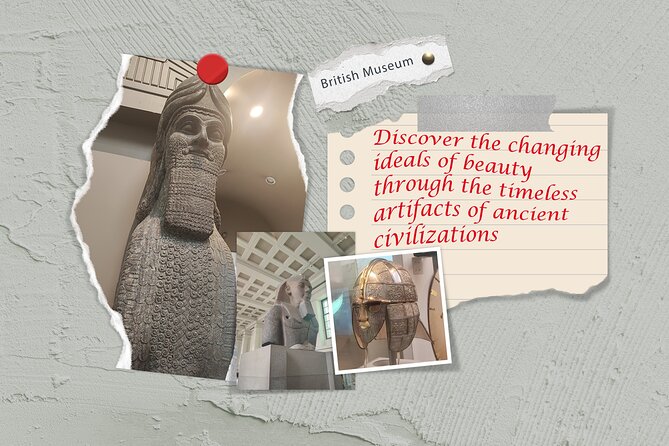
A private tour isn’t only about access—it’s about pacing. The best guides adjust to your interests without turning the day into chaos. Here, there’s clear emphasis on being flexible: you can tailor the experience toward the areas that matter most to your group.
That can look like:
- spending extra time on a single exhibit you care about
- moving faster past objects that don’t grab you
- asking more questions while you’re still in the same room
I also like that the tour is structured around about 2 hours of guided time, with a total length listed as roughly 2 to 3 hours. That’s a workable window. It’s long enough to feel meaningful, but short enough that you can still add your own museum wandering afterward.
Some guides named in past experiences include Richard, Yulia, and Yulywa (spelled slightly differently across bookings, but clearly the same person). If you get Richard, Yulia, or Yulywa, you’re in good company based on how they’ve handled tailoring and timing—one booking even described an extra half hour added at no cost.
That kind of flexibility is rare in a huge museum. It’s one of the reasons a private themed tour can feel like better value than a generic guided ticket.
Who should book this themed private tour
This works especially well if you:
- feel overwhelmed inside the British Museum and want a starting point
- like story-driven art and objects, not just facts read off a wall
- want a cross-civilization route that connects language, empires, belief, and everyday life
- travel with a small circle and want room for questions
- prefer a guide’s direction over self-guided wandering
It may be less ideal if you’re the kind of person who wants to spend long stretches in one gallery without structure. Since the museum is massive, this tour is designed for highlights and meaning, not a complete crawl.
Also, if you’re visiting with mixed ages, the theme can help keep attention because it links big questions—life and death, creation, strategy—rather than only listing art styles.
Price and value: what $203.65 per group really buys
The price is listed as $203.65 per group, with a cap described as up to 8 in the pricing, while the tour description also notes groups up to 6 guests. In practice, either way, you’re paying for a small private experience inside a top-tier museum.
Here’s how to judge value fairly:
- The British Museum admission ticket is included as free for this experience.
- You also get fast track entry.
- You get about 2 hours of guided time with an art specialist storyteller.
For many people, the math is strongest when you’re splitting the cost across more than one person. But even for solo couples, a private guide can be worth it because the museum is so large that “time lost” is the real cost. Fast track entry helps reduce that time loss, and the themed route helps you avoid walking past the good stuff.
If you’re the type who reads everything and stays longer than planned, the guide’s flexibility can also add value. One key detail from past experiences: the tour was extended by an additional half hour without extra charge.
Bottom line: this isn’t a cheap add-on. It’s a time-saver plus a meaning-maker. If you want both, the price starts to make sense quickly.
Should you book this Ancient Daemons and Timeless Beauty tour?
If you want the British Museum to feel like more than a crowd of masterpieces, I’d book it. The tour’s biggest strength is the way it turns famous objects into a connected story—from the Rosetta Stone to Parthenon Marbles, Egyptian mummies, Sutton Hoo, Lewis chessmen, Shiva Nataraja, and ancient sculpture and beauty ideals.
Book it if you:
- like guided meaning over solo navigation
- want a private, small-group pace with room for questions
- care about understanding how cultures expressed power, belief, and beauty
Skip it only if you strongly prefer total freedom to wander without a route, because this experience is designed around curated highlights in a set time window.
One simple tip: wear comfy shoes and plan at least a little extra time after the tour to enjoy what caught your eye. A good guide route often makes you want to come back for seconds.
FAQ
How long is the British Museum private tour?
The tour is listed at about 2 hours of guided time, with a total duration of roughly 2 to 3 hours.
Is this a private tour or a shared group?
This is a private tour. Only your group will participate.
What language is the tour offered in?
The tour is offered in English.
Where is the meeting point?
The tour starts at Montague Place, Montague Pl, London, UK, and ends back at the meeting point.
Is admission to the British Museum included?
Yes. The experience notes admission ticket free for the British Museum.
Do I get a ticket on my phone?
Yes. A mobile ticket is included.
Are snacks and drinks provided?
No. Snacks, food, and drinks are not included.
What is the cancellation policy?
You can cancel for a full refund up to 24 hours before the experience starts. Changes made less than 24 hours before start time are not accepted, and refunds aren’t available within 24 hours of the start time.
More Tours in London
- From London: Harry Potter Warner Bros Studio Tour
★ 4.7 · 26,588 reviews - Magical London: Harry Potter Guided Walking Tour
★ 4.7 · 22,044 reviews - London: Warner Bros. Studio Harry Potter Tour & Branded Bus
★ 4.7 · 19,194 reviews - London Big Bus Hop-On Hop-Off Tour with Optional River Cruise
★ 3.5 · 10,803 reviews - London Small Group Tour of Historical Pubs
★ 5.0 · 10,422 reviews
More Tour Reviews in London
- From London: Harry Potter Warner Bros Studio Tour
★ 4.7 · 26,588 reviews - London: Westminster to Greenwich River Thames Cruise
★ 4.5 · 22,836 reviews - Magical London: Harry Potter Guided Walking Tour
★ 4.7 · 22,044 reviews - London: Madame Tussauds London
★ 4.6 · 20,915 reviews - London: Warner Bros. Studio Harry Potter Tour & Branded Bus
★ 4.7 · 19,194 reviews
The British Museum, Continued
- London: British Museum Guided Tour
★ 4.3 · 1,182 reviews - British Museum London Guided Tour Semi-Private 8ppl Max
★ 5.0 · 984 reviews - London: British Museum Guided Tour with Entrance Tickets
★ 4.9 · 748 reviews - London: Tour of the British Museum
★ 4.1 · 678 reviews - London: British Museum Audio Tour & Priority Entrance Ticket
★ 4.5 · 631 reviews
Just reviewed around London





British Museum Tours, compared.
 ★ 4.3British Museum Guided TourFrom $231,182 reviews
 ★ 5.0British Museum London Guided Tour Semi-Private 8ppl MaxFrom $108984 reviews
 ★ 4.9British Museum Guided Tour with Entrance TicketsFrom $39748 reviews
 ★ 4.1Tour of the British MuseumFrom $14678 reviews
 ★ 4.5British Museum Audio Tour & Priority Entrance TicketFrom $9631 reviews
 ★ 5.0The British Museum London – Exclusive Guided Museum TourFrom $108555 reviews
 ★ 4.2Afternoon Tea at the British MuseumFrom $58511 reviews
 ★ 4.0British Museum Guided TourFrom $18470 reviews
Browse the lists this tour appears in