
Reviewed · BRITISH MUSEUM TOURS
British Museum Highlights Private Tour in London including the Rosetta Stone
Ancient wonders, timed for real life.
This private British Museum highlights tour is designed to cut through the maze fast, so you can spend your energy on the big stories, not on wandering. I like the private guide format because you can ask questions on the spot, and the itinerary zooms in on the sights people actually travel for, including the Rosetta Stone and the Egyptian Rooms. One thing to keep in mind is the price, which can feel steep unless you’re short on time or traveling in a small group that can share the cost.
What really sells it for me is the way it connects objects to meaning. You’re not just seeing highlights as items behind glass; you get the why behind the Rosetta Stone, the role of death and the afterlife in ancient Egypt, and the bigger picture that makes the galleries feel like one timeline. The tour also mixes in surprises beyond Egypt, like the Anglo-Saxon material tied to Sutton Hoo, and the scale of the Parthenon Frieze that many visitors only catch in fragments if they’re on their own.
If you’re the type who wants a museum day of slow looking, this probably won’t be the right fit. But if you want a smart hit list in about 2.5 hours, with a guide who can steer you around the crowds and explain what you’re seeing, this is a practical way to do the British Museum without burning the whole day.
In This Review
- Key things to know before you go
- Entering The British Museum: why a guide saves your energy
- Meeting at Montague Place: how to avoid the first-stumble moment
- Rosetta Stone and the Egyptian Rooms: the “why” behind the wow
- Parthenon Frieze at the British Museum: scale you can feel
- Anglo-Saxon Britain and Sutton Hoo: the museum’s left turn
- The real itinerary: a highlights route you can extend after
- Pacing, walking, and what you may miss in 2.5 hours
- Price and value: when $141.56 per person makes sense
- Who this tour suits best
- Should you book this British Museum Highlights Private Tour?
- FAQ
- FAQ
- How long is the British Museum Highlights private tour?
- Is this tour private?
- What language is the guide?
- Where do we meet the guide?
- Is the admission ticket included?
- What’s included in the price?
- Are strollers allowed?
- Can I get a full refund if I cancel?
- Is hotel pickup included?
Key things to know before you go
- A private route through 70 galleries: it’s built to prevent museum overwhelm.
- Rosetta Stone context, not just a sighting: you’ll understand what it helped unlock.
- Egyptian Rooms as the main thread: mummies and afterlife ideas come with explanation.
- Parthenon Frieze in one stop: you’ll see one of the museum’s most striking Greek pieces.
- Anglo-Saxon Britain shows up too: Sutton Hoo and ship-burial storytelling add variety.
- Questions are part of the deal: you can steer the conversation toward your interests.
More among the marbles and mummies
- London: British Museum Guided Tour
★ 4.3 · 1,182 reviews - British Museum London Guided Tour Semi-Private 8ppl Max
★ 5.0 · 984 reviews - London: British Museum Guided Tour with Entrance Tickets
★ 4.9 · 748 reviews - London: Tour of the British Museum
★ 4.1 · 678 reviews
Entering The British Museum: why a guide saves your energy
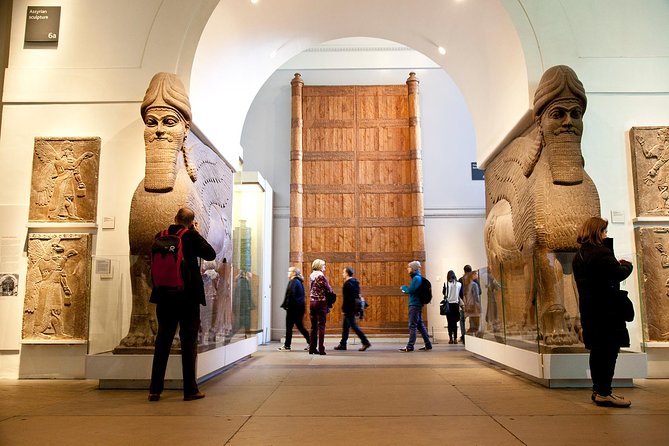
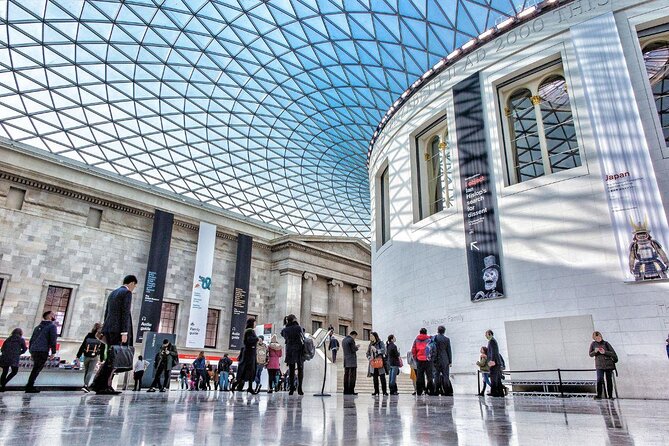
The British Museum is famous for being huge, and that size can work against you. You’re walking into a place with over eight million pieces and around 70 galleries, spanning roughly two million years of human history. Even with good signage, it can feel like trying to read a whole library with no map.
That’s where a private highlights tour earns its keep. The point isn’t to see everything. It’s to get you oriented fast, then get you to the objects that anchor the museum’s story. With a guide, you also avoid a common problem: you may find the “name” artifacts, but miss the context that makes them click. A good guide turns a quick photo stop into real understanding.
This tour is also structured to work for time-pressed visitors. You’re looking at about 2 hours 30 minutes total, and the museum admission part is included (the tour notes an admission ticket included for 1 hour 30 minutes). Practically, that means you’ll spend the focused part with your guide and then have time to keep exploring on your own after.
Meeting at Montague Place: how to avoid the first-stumble moment
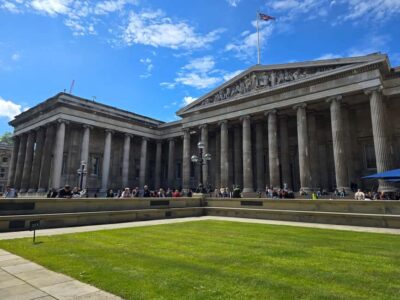
You meet at Montague Place, by the museum’s north entrance, near the stone lions at the doorway. Your guide is meant to be holding a sign, and you’ll use a meeting point that’s easy to find once you’re there—yet crowds and street noise can still make the first 5 minutes feel like a scavenger hunt.
A small practical move: arrive a few minutes early and scan the entrance area deliberately, starting with the lions and the spot where groups naturally gather. If you don’t see a sign right away, don’t panic-walk. Take a moment to confirm you’re at the correct entrance. The tour is designed to get you moving quickly, but the meeting point is outdoors, and weather and foot traffic can make it confusing.
Other logistical notes that matter:
- It’s a private experience for your group only.
- It’s in English with a professional guide.
- Mobile ticket is used.
- Strollers aren’t permitted, so plan for that if you’re traveling with little ones.
- There’s no hotel pickup or drop-off, so you’ll want to factor in London public transit time.
Rosetta Stone and the Egyptian Rooms: the “why” behind the wow
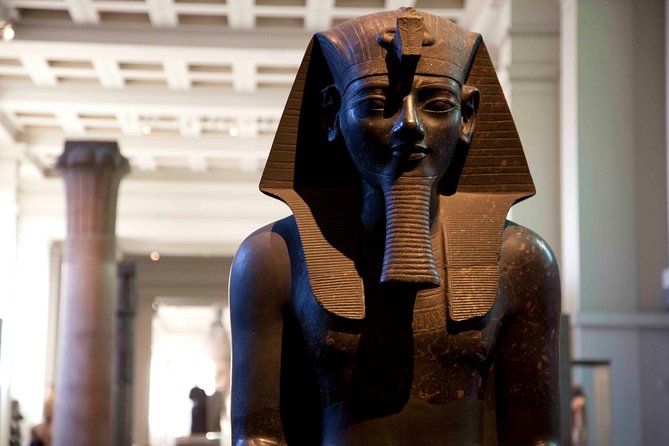
The Rosetta Stone is the kind of object you’ve probably heard about since school. The difference here is that the tour treats it as a key to a larger story. You’ll learn why it mattered for deciphering Egyptian hieroglyphs, and you’ll see it as more than a famous rock.
From there, the tour leans hard into Ancient Egypt, especially through the Egyptian Rooms and their mummies. Egypt is one of the best parts of the British Museum for a guided visit because the displays connect strongly to ideas: what people believed, how they prepared for the afterlife, and why certain objects were made with death in mind.
If you’re wondering what you’ll actually take away, think less about memorizing dates and more about understanding the logic of the culture. When the guide explains the significance of the afterlife, the mummies stop being just spooky visuals and become evidence of how Egyptians planned for what came next.
One more practical benefit: the Egyptian Rooms are popular, and they can be crowded. A guide helps you keep the pace without feeling rushed, so you get real time with the objects without getting stuck behind a slow-moving knot of tourists.
Still deciding? A handful more London outings we rated



Parthenon Frieze at the British Museum: scale you can feel
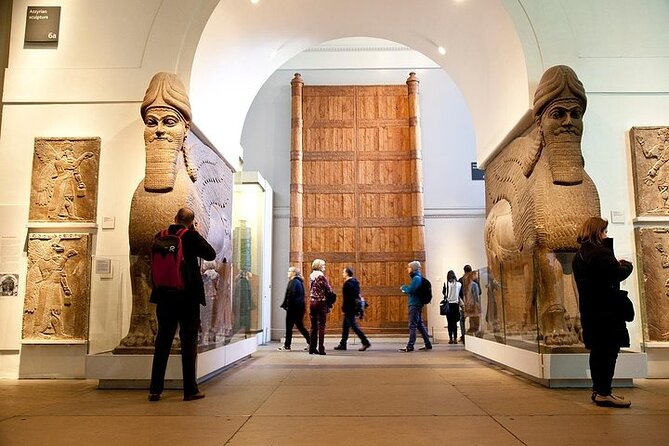
Another highlight is the Parthenon Frieze, a major classical Greek sculpture housed at the British Museum. This isn’t a small detail for a quick glance. It’s enormous—just over three feet high and about 525 feet long—and it carries the weight of classical Athens across time and distance.
The tour frames this frieze with its origin: it once stood in the Acropolis in Athens. That matters because it changes how you see the piece. Without context, a long decorative band can feel like a pattern. With context, it becomes architecture, politics, and belief, all wrapped in sculpture.
If you care about Greek art, Roman copies, or how Western culture borrowed from older worlds, this stop helps you connect museum objects to the cities they came from. And even if Greek art isn’t your thing, the size and craftsmanship usually hit people fast in person.
Anglo-Saxon Britain and Sutton Hoo: the museum’s left turn
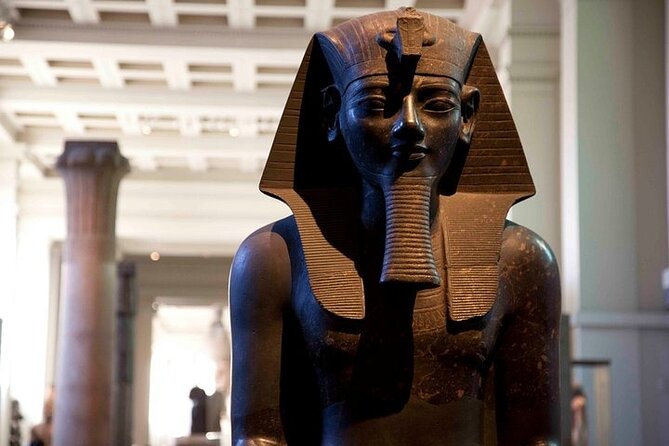
One reason I like this tour is that it doesn’t treat the British Museum like a one-country show. Yes, you spend a lot of time on Egypt and Greece, but you also get a meaningful look at Anglo-Saxon Britain.
A standout example is the story tied to Sutton Hoo, often associated with ship-burial finds. You’ll see artifacts connected to that era and hear the survival story: how these objects made it through centuries, and even through the attention of grave robbers. That angle helps you understand why the British Museum holds what it holds, and why history is sometimes a matter of luck, conflict, and what people managed to preserve—or steal—along the way.
This “British Isles” portion is a smart reset after Egypt. It gives you a different kind of feeling: less about empires reaching outward, more about how communities in Britain expressed status, belief, and power.
The real itinerary: a highlights route you can extend after
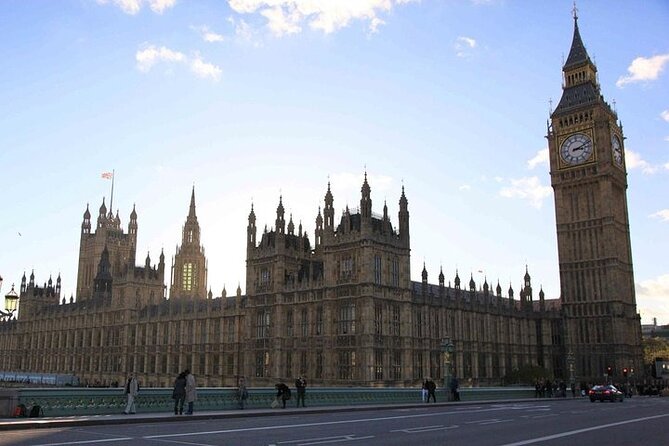
While the tour is compact, it’s still paced like a real visit, not a sprint. You start with the British Museum, move through major zones featuring Athenian marbles, Egyptian mummies, and Anglo-Saxon treasures, and keep returning to themes your guide explains as you go. The tour is built to point you toward must-see objects without making you guess where to start.
One thing I appreciate is that the guided portion isn’t meant to be the whole day. After you finish with your guide, you’re free to explore. That’s a big deal at the British Museum because once you know where the highlights are, you can go back and look longer at what grabbed you.
A practical way to use that post-tour time:
- Pick one gallery you enjoyed most and slow down there.
- If you’re torn between two areas, start with the one your guide made easiest to understand first.
- Bring your curiosity, because the museum is stuffed with related pieces once you learn what to look for.
Also, you should expect crowds. The museum is open to the public and can get packed, so your experience will be smoother if you’re mentally prepared for busy walkways and waiting for people to shift.
Pacing, walking, and what you may miss in 2.5 hours
This is a highlights tour, so you’re trading depth for momentum. That’s not a flaw; it’s the point. In about 2.5 hours, you can’t do justice to all 70 galleries. What you can do is get the anchors: the objects that give the rest of the museum its meaning.
Still, plan for movement. You’ll be walking through multiple sections and you may encounter stairs depending on where the guide takes you. If your day is already tight, this tour can actually help because it prevents decision fatigue: you won’t spend 90 minutes standing still trying to choose what to see.
What you might miss? Many things, probably. The British Museum is one of those places where even a “highlights” visit can only skim the surface of the collection. But once the guide has shown you the key stops, you’ll be in a much better position to choose what to explore next.
Price and value: when $141.56 per person makes sense
At $141.56 per person, this is not a budget add-on. You’re paying for a professional guide, the structured route, and the time savings. The tour includes an English guide plus all fees and taxes, which matters because private tours can feel more expensive when you add those extras later.
So when is it worth it?
- If you only have a half day or a day and want the museum’s biggest hits without losing time.
- If you prefer a conversation-style visit where you can ask questions and get clarification.
- If you like the idea of leaving with a mental map of where everything is, then going back later.
It’s less ideal if you’re happy wandering and you don’t mind using a guidebook and your own curiosity for navigation. The British Museum is free to enter, so the financial comparison often comes down to one question: do you want to pay to skip the guesswork and get a guided explanation on the spot?
Also look at group dynamics. The tour notes group discounts, and private pricing can feel more reasonable when shared.
Who this tour suits best
This experience fits best if you:
- Have limited time in London and want the British Museum’s headline artifacts in one go.
- Prefer structure inside a huge museum.
- Like your history with context, not just captions.
- Want to ask questions and get straight answers while you’re standing in front of the objects.
It’s probably not the best match if you:
- Want a slow, quiet museum day where you read every label.
- Need stroller-friendly logistics, since strollers aren’t permitted on this tour.
- Have very limited mobility, because the tour involves real movement inside the museum.
Should you book this British Museum Highlights Private Tour?
If your goal is efficiency with real explanation, I think this tour is a strong choice. The British Museum can be intimidating, and this format solves the main problem: you get to the right places, then you understand what you’re seeing. The Rosetta Stone stop, the focus on Egyptian belief around death and the afterlife, and the scale of the Parthenon Frieze are the kind of highlights that land better with a guide than by luck.
Book it when you’re short on time or you want a “starter pack” that helps you explore the rest afterward. If you’re traveling solo on a strict budget and you have plenty of time, you might choose to go in on your own and use museum materials for free. But if you’re ready to pay for clarity and momentum, this is one of the more practical ways to do the British Museum well.
FAQ
FAQ
How long is the British Museum Highlights private tour?
It’s approximately 2 hours 30 minutes.
Is this tour private?
Yes. It’s a private tour, and only your group participates.
What language is the guide?
The tour is offered in English.
Where do we meet the guide?
The meeting point is Montague Place by the British Museum’s north entrance, near the stone lions.
Is the admission ticket included?
Yes. Admission ticket is included (the tour notes a 1 hour 30 minute admission component).
What’s included in the price?
A professional English guide is included, along with all fees and taxes.
Are strollers allowed?
No. Baby strollers are not permitted on the tour.
Can I get a full refund if I cancel?
Yes. You can cancel for a full refund if you cancel at least 24 hours in advance of the experience start time.
Is hotel pickup included?
No. Hotel pickup and drop-off are not included.
More Tours in London
- From London: Harry Potter Warner Bros Studio Tour
★ 4.7 · 26,588 reviews - Magical London: Harry Potter Guided Walking Tour
★ 4.7 · 22,044 reviews - London: Warner Bros. Studio Harry Potter Tour & Branded Bus
★ 4.7 · 19,194 reviews - London Big Bus Hop-On Hop-Off Tour with Optional River Cruise
★ 3.5 · 10,803 reviews - London Small Group Tour of Historical Pubs
★ 5.0 · 10,422 reviews
More Tour Reviews in London
- From London: Harry Potter Warner Bros Studio Tour
★ 4.7 · 26,588 reviews - London: Westminster to Greenwich River Thames Cruise
★ 4.5 · 22,836 reviews - Magical London: Harry Potter Guided Walking Tour
★ 4.7 · 22,044 reviews - London: Madame Tussauds London
★ 4.6 · 20,915 reviews - London: Warner Bros. Studio Harry Potter Tour & Branded Bus
★ 4.7 · 19,194 reviews
The British Museum, Continued
- London: British Museum Guided Tour
★ 4.3 · 1,182 reviews - British Museum London Guided Tour Semi-Private 8ppl Max
★ 5.0 · 984 reviews - London: British Museum Guided Tour with Entrance Tickets
★ 4.9 · 748 reviews - London: Tour of the British Museum
★ 4.1 · 678 reviews - London: British Museum Audio Tour & Priority Entrance Ticket
★ 4.5 · 631 reviews
Just reviewed around London





British Museum Tours, compared.
 ★ 4.3British Museum Guided TourFrom $231,182 reviews
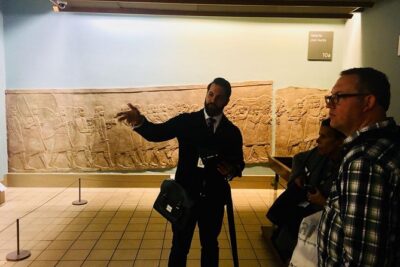 ★ 5.0British Museum London Guided Tour Semi-Private 8ppl MaxFrom $108984 reviews
 ★ 4.9British Museum Guided Tour with Entrance TicketsFrom $39748 reviews
 ★ 4.1Tour of the British MuseumFrom $14678 reviews
 ★ 4.5British Museum Audio Tour & Priority Entrance TicketFrom $9631 reviews
 ★ 5.0The British Museum London – Exclusive Guided Museum TourFrom $108555 reviews
 ★ 4.2Afternoon Tea at the British MuseumFrom $58511 reviews
 ★ 4.0British Museum Guided TourFrom $18470 reviews
Browse the lists this tour appears in