
Reviewed · WORKSHOPS
Beginners Photography Course – Small Group Workshop
London looks better when you know your camera. This beginner workshop takes you through some of London’s best photo backdrops while teaching you how to run your digital camera instead of letting Auto mode decide everything. The small size, plus hands-on settings practice on location, makes it a lot more useful than a generic walk-and-shoot.
I especially like the camera-specific teaching—the tutor works with the exact model you bring. I also love the structured practice: quick assignments that connect ISO, shutter speed, and aperture to what you’re seeing through your lens in real time.
One consideration: this is built for people who want to learn their controls, so if you only want postcard photos with zero settings talk, you might find it a bit more technical than you expected.
In This Review
- Key things you’ll notice right away
- A small-group camera reset in central London
- Who this beginners course is for (and who should skip it)
- City Hall: learning ISO, shutter speed, and aperture where the photos look good
- Tower Bridge: composition, depth of field, and focusing you can actually repeat
- Tower of London: lens choices and shutter speed for real-world light
- What you practice so Auto mode stops winning
- Price and value: what $336.07 buys you in a city full of photos
- Practical expectations: timing, meeting point, and what to bring
- Should you book this beginners photography course?
- FAQ
- FAQ
- How long is the beginners photography course?
- What’s the group size limit?
- Do I need to bring my own camera?
- What locations do you photograph?
- Are admission tickets included for the stops?
- What’s included in the price?
- Is food or lunch included?
- Can I cancel for a full refund?
- Is the course offered in English?
Key things you’ll notice right away
- Max 6 people, so questions don’t get lost
- Teaching geared to your exact camera model
- On-location lessons tied to ISO, shutter speed, aperture, and focus
- Tower Bridge + Tower of London viewpoints for composition practice
- Short assignments that turn theory into real muscle memory
Still deciding? A handful more London outings we rated
- London: Private Photoshoot with Video Clip Option
★ 4.8 · 182 reviews - Professional Photoshoot in London Photographer
★ 5.0 · 102 reviews - Private landmarks photoshoot for families and couples
★ 5.0 · 92 reviews - London: Private Landmark Tour with Professional Photographer
★ 4.7 · 91 reviews
A small-group camera reset in central London
This course is designed to fix the most common beginner problem: you know your camera exists, but you don’t really know what it’s doing. Instead of a classroom lecture, you get short instruction blocks, then you immediately test settings on real London scenes.
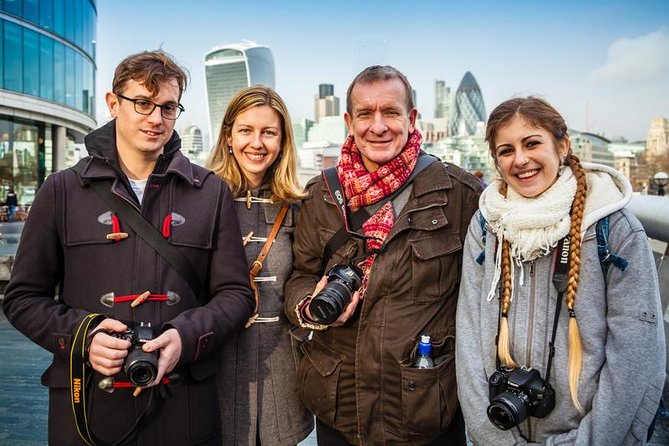
The small group size (up to six) changes the whole vibe. You can ask a question, get an answer, and then try again before moving on. That matters when you’re learning basics like focus behavior or why changing shutter speed changes the mood of an image.
And yes, you’ll be walking between iconic spots—so comfortable shoes help. But the route is not about exhausting you. It’s about giving you enough variety to practice photography fundamentals without losing the plot.
Who this beginners course is for (and who should skip it)
This one fits best if you’re stuck on Auto or scene modes, or if your camera manual has become decorative. If you can press buttons but don’t understand how ISO, aperture, and shutter speed work together, this format is exactly the right kind of instruction.
It also suits people who have a camera they inherited or bought used. In the course feedback, one learner described having a camera that needed a factory reset, and the tutor took the time to troubleshoot until everything was working correctly.
You should consider skipping if you already shoot comfortably in manual or aperture priority and you’re not interested in learning the why behind the settings. The workshop is built for getting you self-sufficient, not for advanced technique.
The minimum age is 16, and service animals are allowed. Most people can participate, but you’ll still want to be ready for outdoor learning in London’s weather—bring layers.
City Hall: learning ISO, shutter speed, and aperture where the photos look good
Your first stop is More London and City Hall, and it’s a smart choice for beginners. The area gives you a clean, scenic environment where you can see how your camera settings change results.
This is where the course focuses on control. You learn how to manage the main functions and settings, and the tutor teaches directly using the camera you brought. That one detail matters more than it sounds. A tip like set ISO to 400 can be confusing if you’re holding a different model than the one the instructor used in a demo.
Short assignments are part of the lesson style, aimed at the core triangle:
- ISO and noise/grain
- Shutter speed and motion blur or sharpness
- Aperture and depth of field
You practice these ideas on location instead of memorizing them like homework. And if something isn’t clicking, you’re not stuck. The workshop structure includes time for personal, one-to-one tuition so everyone can catch up.
A name you’ll hear in the feedback is Lou. Multiple learners praised Lou for making those setting relationships feel simple and memorable—so you don’t just know what to turn, you understand what turning it does to your photos.
Practical tip before you go: make sure your camera battery is fully charged and you have enough memory cards. If you’re missing a card or battery, you lose the chance to practice when instruction is happening.
Still deciding? A handful more London outings we rated
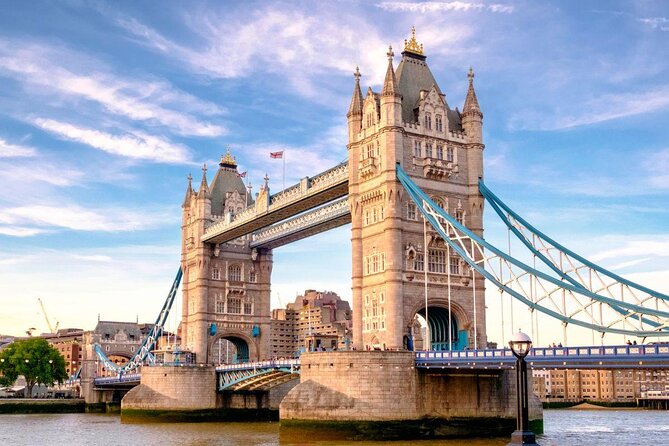
Tower Bridge: composition, depth of field, and focusing you can actually repeat
Next up is Tower Bridge, viewed from across the river. This spot is ideal for composition practice because you’ve got strong lines, a dramatic subject, and lots of light to work with.
Here the lesson shifts from basic settings into how to build an image. You work on composition and framing, including how to create depth—that feeling that your photo has layers, not just one flat subject.
Light is a big theme in this section. The course teaches how light affects your images, which is crucial at golden-hour tones or in mixed lighting. You’ll also learn how focusing techniques change what looks sharp and what doesn’t.
If you’ve ever taken a bridge photo that looks technically “fine” but somehow flat, this stop is how you fix that. You’re not just changing settings—you’re learning how to look. You’ll start noticing how background distance affects depth of field and how focusing choices influence your final frame.
The Tower Bridge session is shorter, so it’s best used for trying specific ideas the tutor gives you rather than wandering off on your own. Treat it like a guided photo lab: shoot, adjust, and repeat.
Tower of London: lens choices and shutter speed for real-world light
Then you move to the Tower of London area for another river-crossing viewpoint. The teaching here is practical and direct: you’ll work on lens choices, shutter speed, composition, and using light effectively.
This stop builds on what you learned earlier at City Hall. By now you’re hopefully starting to connect settings to outcomes, like:
- slower shutter speeds can create motion blur (and you’ll control whether that looks artistic or sloppy)
- shutter speed choices can also affect sharpness in moving scenes
- composition decisions determine how your eye travels through the frame
Lens choice is mentioned specifically, which is great for beginners because it’s easy to forget that the lens is part of the photography toolset. Even if you only have a kit lens, you’ll likely start thinking differently about focal length and framing.
The course keeps instruction oriented toward your camera model. So if your camera has different menu wording than a “standard” tutorial, you still get guidance tailored to what’s in front of you.
What you practice so Auto mode stops winning
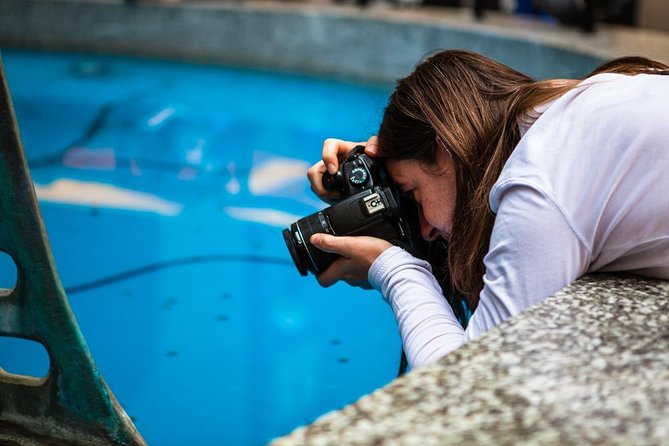
One thing that pops up repeatedly in the feedback is confidence. People describe going from confusion to clarity, especially around the relationship between settings. That’s exactly what this course is built to do: turn abstract terms into actions you can repeat anywhere.
Here’s how the structure helps you learn:
- You start with core settings (ISO, shutter speed, aperture).
- You get short assignments so you practice instead of just listening.
- You test changes immediately on real subjects in London.
- You get hands-on help when your camera doesn’t behave the way a beginner guide implies.
A lot of beginner frustration comes from taking notes and then freezing at the camera later. This workshop fights that problem by keeping the learning attached to what you’re shooting that same moment.
Also, it’s not only about settings. The teaching includes guidance on how to approach different subjects, so you learn how to decide what to do next when you see a scene you want to photograph.
Price and value: what $336.07 buys you in a city full of photos
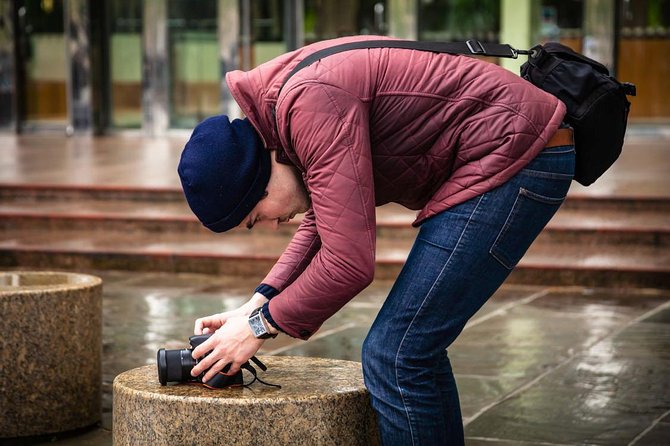
At $336.07 per person, you’re paying for more than a walk with a camera. You’re paying for guided instruction focused on the controls you can use every day—plus the benefit of a small group and personalized help.
For value, look at these parts:
- One tutor teaching multiple camera types without making you feel lost.
- Time for one-to-one tuition, not just a group talk.
- On-location practice at major London photo spots, so learning has immediate payoff.
- A clear beginner focus that aims to make your camera manual feel usable.
Food and drinks aren’t included, so you’ll likely want water and a snack for the breaks. But you’re not paying extra for entry fees during the sessions either—admission ticket listings for the stops are shown as free.
If you’re the kind of person who wants photography skills you can carry into future trips, this format is a strong use of your time. You’re not just collecting images; you’re collecting control.
Practical expectations: timing, meeting point, and what to bring
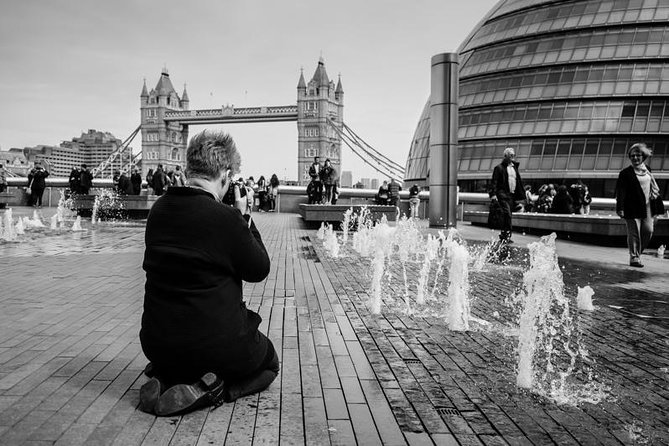
The workshop runs about four hours, with the longest teaching block at the City Hall area and shorter sessions at Tower Bridge and the Tower of London viewpoints. Expect time for explanation, shooting practice, and getting feedback so you can adjust in the moment.
You meet at London Bridge Station Approach Rd, SE1 9SP, and the experience ends back at the meeting point.
Bring:
- your own camera
- a fully charged battery (spare if you have one)
- memory cards
The course is offered in English, and confirmation is received at booking time. Plan for weather; you’re learning outdoors and shooting in open areas.
Should you book this beginners photography course?
I’d book it if you want to stop guessing and start understanding what your camera is doing. The strongest reasons are the small group limit and the camera-specific coaching, especially the emphasis on ISO, shutter speed, and aperture tied to hands-on practice.
I’d think twice if you’re looking for a casual sightseeing tour where you never touch settings. This workshop is built for people who want control, and the benefit only shows up if you actively try the assignments.
If you’re on the fence, a good self-check is simple: if terms like ISO and aperture make you feel vague, you’ll likely get real value here.
FAQ
FAQ
How long is the beginners photography course?
It runs for about 4 hours.
What’s the group size limit?
The workshop has a maximum of 6 travelers.
Do I need to bring my own camera?
Yes. Bring your own camera, fully charged battery (spare if you have one), and memory cards.
What locations do you photograph?
You’ll learn and shoot at City Hall (More London area), Tower Bridge, and the Tower of London viewpoint across the river.
Are admission tickets included for the stops?
Admission tickets are listed as free for the stops included in the course.
What’s included in the price?
You get a professional photographer with teaching experience, expert tuition geared to your camera, and a photography walking tour.
Is food or lunch included?
No. Food and drinks, including lunch, are not included.
Can I cancel for a full refund?
Free cancellation is available up to 24 hours in advance for a full refund. If it’s canceled because the minimum number of travelers isn’t met, you’ll be offered a different date or a full refund.
Is the course offered in English?
Yes, it’s offered in English.
More Workshops in London
- London: Traditional English Scone Making and Tea Workshop
★ 5.0 · 702 reviews - London: East End Street Art Tour and Spray Painting Workshop
★ 4.8 · 297 reviews - London Traditional English Scone Making and Tea Workshop
★ 5.0 · 271 reviews - London: Half-Day Street Art Tour and Workshop
★ 4.9 · 172 reviews - London: Traditional Scone Making Workshop
★ 4.7 · 129 reviews
More Photography Sessions in London
- London: Private Photoshoot with Video Clip Option
★ 4.8 · 182 reviews - Professional Photoshoot in London Photographer
★ 5.0 · 102 reviews - Private landmarks photoshoot for families and couples
★ 5.0 · 92 reviews - London: Private Landmark Tour with Professional Photographer
★ 4.7 · 91 reviews - Professional Private Photoshoot in London
★ 5.0 · 63 reviews
More Tour Reviews in London
- From London: Harry Potter Warner Bros Studio Tour
★ 4.7 · 26,588 reviews - London: Westminster to Greenwich River Thames Cruise
★ 4.5 · 22,836 reviews - Magical London: Harry Potter Guided Walking Tour
★ 4.7 · 22,044 reviews - London: Madame Tussauds London
★ 4.6 · 20,915 reviews - London: Warner Bros. Studio Harry Potter Tour & Branded Bus
★ 4.7 · 19,194 reviews
Just reviewed around London





Workshops, compared.
 ★ 5.0Traditional English Scone Making and Tea WorkshopFrom $45702 reviews
 ★ 4.8East End Street Art Tour and Spray Painting WorkshopFrom $50297 reviews
★ 5.0London Traditional English Scone Making and Tea WorkshopFrom $48271 reviews
 ★ 4.9Half-Day Street Art Tour and WorkshopFrom $60172 reviews
 ★ 4.7Traditional Scone Making WorkshopFrom $80129 reviews
 ★ 5.0Street Art Tour and Spray Painting Workshop in LondonFrom $5398 reviews
 ★ 5.0Street Art Walking Tour and Workshop in LondonFrom $7258 reviews
3 Hour Chinese Dumpling Cooking Class for 2-6 people in LondonFrom $11744 reviews
Browse the lists this tour appears in