
Reviewed · LONDON WALKING TOURS
2 Hours Rock and Roll Historical Walking Tour in London
Rock history lives in London alleys. This 2-hour-to-2.5-hour walking tour links the Swinging 60s and later music shocks to real places you can still see, with stories delivered by guides like Matt and Wesley. You get two things I especially like: the chance to focus on small, meaningful stops (Carnaby Street, Soho lanes, Denmark Street) and the guide energy that keeps the whole walk moving without info-dumps. One consideration: the route involves streets and short alleyways, so you’ll want a moderate walking level to enjoy it comfortably.
You start at Boots on Regent Street and finish around Denmark Street, so it feels like a tight West End loop instead of an all-day slog. It’s private for your group, uses a mobile ticket, and runs near public transport.
If rock music is part of how you think, this is an easy way to turn a normal London walk into a soundtrack you can point at on a map.
In This Review
- Key things I’d watch for
- Carnaby Street to Denmark Street: The West End Rock Walk That Makes Time Fly
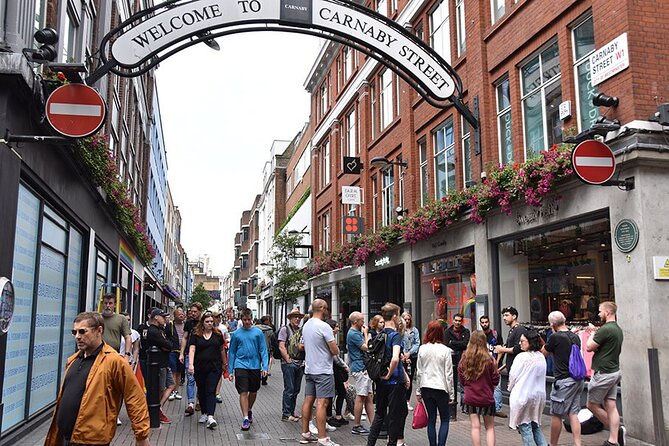
- Carnaby Street: Swinging 60s Fashion and the Band-Driven Buzz
- Soho: Where Side Streets Carry the Stories
- The Arcade Stop: A Beatles-Linked Detail You Can Actually See
- Passing the Iconic Jazz Club: From Prince to Jimi Hendrix
- A Street Where the Police Shut Down a 60s Band
- Denmark Street: The Rock-and-Song Supply Line of London
- Price and Value: Is $67.82 a Smart Deal for a 2-Hour Walk?
- Who This Tour Suits Best (and Who Might Want Something Else)
- Getting the Most Out of Your Walk: Simple Tips That Help
- Should You Book This Rock and Roll Walking Tour?
- FAQ
- How long is the Rock and Roll Historical Walking Tour in London?
- Where does the tour start and end?
- Is the tour private?
- Do I need to print tickets?
- What areas are included during the walk?
- Is there any admission fee at the stops?
- What’s the walking level like?
- What’s the cancellation policy?
Key things I’d watch for
- Tight timing, strong payoff: plan on about 2 to 2.5 hours, so you can fit it between museum stops.
- Real-place storytelling: Carnaby Street, Soho side streets, and Denmark Street are the backbone of the walk.
- Guide delivery matters: guides like Matt and Wesley stood out for being funny, witty, and easy to follow.
- Soho’s narrow lanes: expect an atmospheric feel as the route threads through less-obvious corners.
- Music across eras: Beatles to Rolling Stones to David Bowie, plus Sex Pistols-style punk energy.
- Easy-to-use ticket: a mobile ticket keeps the start simple.
London on foot, a few more ways
- Magical London: Harry Potter Guided Walking Tour
★ 4.7 · 22,044 reviews - London: The Original Jack the Ripper Walking Tour
★ 4.7 · 7,833 reviews - Tour for Muggles The Ultimate Harry Potter Walking Tour in London
★ 5.0 · 4,684 reviews - London Jack The Ripper Guided Walking Tour
★ 5.0 · 3,131 reviews
Carnaby Street to Denmark Street: The West End Rock Walk That Makes Time Fly
This tour is built for a very specific kind of traveler: the one who wants London sights, but also wants the context that explains why certain places matter. The trick here is that the route stays compact. You’re not crisscrossing the city for hours. Instead, you move through the parts of central London that shaped rock and pop culture, one memorable stop at a time.
I like that the pace matches how people actually travel. Two hours is long enough for real stories and a sense of place, but short enough that you’re not exhausted by the time you reach your next plan. It also helps that the tour ends at Denmark Street, which is a natural follow-on if you want to keep exploring music-related streets after the guided portion.
Because the experience is private, it also feels less like a factory tour. Your group only, so you’re not competing with lots of other people for attention when you have a question.
Carnaby Street: Swinging 60s Fashion and the Band-Driven Buzz
Carnaby Street is famous for style, but this stop treats it like more than a photo opportunity. You’ll hear how that Swinging 60s world didn’t just change clothes. It helped power the whole shift in what popular music was allowed to be.
What makes this stop work is the way it ties culture together. Fashion, venues, and bands are usually discussed separately on timelines, but here you get the street-level version. Even if you only know the era in broad strokes, the stories help the neighborhood feel like a living backstage area where trends and songs fed each other.
A practical note: Carnaby Street is busy, and that’s part of the point. But it means you’ll want to stay aware of foot traffic around you while your guide is talking. Use that moment to watch how the street still carries the energy of its reputation, even if the shops have changed.
Soho: Where Side Streets Carry the Stories
Soho is where London turns more theatrical. This part of the walk leans into that: you’ll move through the area’s reputation for music, nightlife, and odd little corners. The big value is that your guide doesn’t just namecheck artists. They connect the music to places people actually walked into—then, and now.
In particular, Soho works well on a walking tour because it rewards slow attention. You’ll get a feel for why this neighborhood became a magnet for performers and music fans. And if your interests run beyond mainstream rock—into the edges where rock, pop, jazz, and punk-like energy collide—Soho is the zone where that blend makes sense.
One consideration: Soho’s charm comes partly from its narrow, less-obvious alleyways. That can be great for atmosphere, but it also means the walk can feel a bit tight. If you’re planning to wear shoes that are only okay, upgrade them before you come. You’ll thank yourself.
More nights out in the stalls


The Arcade Stop: A Beatles-Linked Detail You Can Actually See
One of the most interesting moments in the walk is the stop at an early arcade in London, described as having a mysterious connection to the Beatles. Even without extra stage lights, arcades have a natural pull: they feel like preserved shortcuts through the city, made for wandering and discovering.
Why this matters: Beatles-era London is often explained through records and headlines. This stop grounds it in a physical space you can stand in. It turns the story into something you can point at later: I saw the place where the guide linked it to the Beatles.
If you’re a fan of small details—places that aren’t just “famous,” but specific—this stop is a highlight. It’s the kind of information that sticks because it’s attached to an address you can remember.
Passing the Iconic Jazz Club: From Prince to Jimi Hendrix
The tour also includes a pass by one of London’s most iconic jazz clubs, with stories about musicians who have played there, from Prince to Jimi Hendrix. Even if jazz isn’t your everyday listening, this is still a valuable stop because it shows how rock grew in conversation with other music worlds.
Here’s the useful angle: rock history isn’t a straight line from one genre to another. It’s a mix of borrowing, cross-pollination, and different scenes sharing audiences and stages. A jazz club that attracted major names is a reminder that creativity was rarely confined to one style.
This stop is also a good “reset” in the middle of the walk. You’re not only hearing about one band era. You’re hearing about performance spaces where different kinds of groundbreaking artists turned up.
A Street Where the Police Shut Down a 60s Band
Some London stories are famous because they’re dramatic, and this tour includes exactly that kind of moment: you’ll pass through an iconic 60s street where a band was shut down by the police for performing there.
You don’t need to know every band name to appreciate why this detail matters. It highlights a core theme of early popular music history: performances weren’t always welcomed with open arms. People fought for creative space. Authorities pushed back. And the public curiosity kept growing.
This is also a reminder of why walking tours are better than screen-based history for this topic. Standing near the same kind of street makes the conflict feel less abstract. You can picture the moment more easily than if you’re only reading about it.
Denmark Street: The Rock-and-Song Supply Line of London
The walk ends around Denmark Street, and that ending is a smart move for music fans. Denmark Street is long associated with music publishing, instruments, and the sort of practical scene that helps bands become real.
Even if you don’t go inside shops (you may have time or you may not), just arriving at Denmark Street at the end gives you a chance to keep the theme going. It’s a place where the story shifts from legend to craft.
From a planning standpoint, it’s also handy. Finishing near a music-focused area makes it easier to decide what to do next. You can linger for a bit, browse, or pivot to a nearby dinner without feeling like you’re stranded.
Price and Value: Is $67.82 a Smart Deal for a 2-Hour Walk?
The tour costs $67.82 per person and typically gets booked about 19 days in advance. The price is in the “guided-experience” range for London, but it can still feel like good value if you care about how stories get told.
Here’s what you’re buying, beyond the word tour:
- A local guide who can connect multiple music eras to specific London locations.
- A tight route that fits in real travel schedules.
- A focus on major artists and music movements spanning from the swinging 60s through later rock eras.
It’s not the cheapest thing you can do in central London, but you’re not just paying for walking. You’re paying for someone to make the places click. And the reviews’ emphasis on guides like Matt and Wesley as funny, witty, and easy to understand matters here. Clear delivery is part of the value, not a bonus.
If you’re the type who wants to see London and learn the “why,” you’ll likely feel the price was fair.
Who This Tour Suits Best (and Who Might Want Something Else)
This experience is best for you if:
- Rock music is a core part of how you enjoy travel.
- You like short, guided walks that don’t swallow half a day.
- You want the West End through the lens of musicians and music scenes, not just theater and shopping.
It may be less ideal if:
- You hate crowds and tight alleyways.
- You want a deep, museum-style format with lots of time sitting down.
- You’re only interested in one narrow artist era. This walk covers multiple music moments and scenes, so it’s built for variety.
The tour also lists a moderate physical fitness level. So if stairs and uneven pavement slow you down, plan for breaks and wear comfortable shoes.
Getting the Most Out of Your Walk: Simple Tips That Help
You’ll have the best time if you do two things: pay attention early, and stay ready to move.
First, arrive with at least a small baseline of rock history in your head. You don’t need to memorize discographies. Just knowing the broad periods makes the connections land faster.
Second, bring travel basics that make a guided walk easier:
- Good walking shoes for narrow Soho lanes.
- A phone with enough battery for the mobile ticket at the start.
- A light layer. London weather loves surprises.
And since the guide is the show, give them the space to talk. In busy areas, stepping aside slightly while your guide finishes a key story can make everything smoother for you and the rest of the group.
Should You Book This Rock and Roll Walking Tour?
I think you should book it if you want a memorable, efficient way to understand how rock and pop culture shaped central London. The route hits key names and locations, but the real strength is the storytelling style. Guides like Matt and Wesley are singled out for being entertaining and easy to follow, and that makes the whole experience feel light and fun instead of like homework.
Skip it if you’re after a long sit-down deep dive or you prefer neighborhoods outside the West End. This is a compact city-walk. It shines when you’re ready to move with purpose and listen closely.
FAQ
How long is the Rock and Roll Historical Walking Tour in London?
It runs for about 2 hours to 2 hours 30 minutes.
Where does the tour start and end?
It starts at Boots 44–46 Regent St, London W1B 5RA, UK. It ends at Denmark Street, Denmark St, London WC2H, UK.
Is the tour private?
Yes. Only your group will participate.
Do I need to print tickets?
No. You’ll use a mobile ticket.
What areas are included during the walk?
You’ll visit places such as Carnaby Street and Soho, and the tour also includes passes related to an early arcade connected to the Beatles, an iconic jazz club, and a famous 60s street connected to a band being shut down by police. It ends near Denmark Street.
Is there any admission fee at the stops?
The tour information lists admission tickets as free for the stops shown.
What’s the walking level like?
It’s best suited for travelers with a moderate physical fitness level.
What’s the cancellation policy?
You can cancel for a full refund up to 24 hours in advance of the experience start time. If you cancel less than 24 hours before, the amount paid will not be refunded.
If you want, tell me what artists you love most (Beatles, Stones, Bowie, punk, Hendrix-style stuff), and I’ll help you map how much you’ll likely get out of each part of the route.
More Tour Reviews in London
- From London: Harry Potter Warner Bros Studio Tour
★ 4.7 · 26,588 reviews - London: Westminster to Greenwich River Thames Cruise
★ 4.5 · 22,836 reviews - Magical London: Harry Potter Guided Walking Tour
★ 4.7 · 22,044 reviews - London: Madame Tussauds London
★ 4.6 · 20,915 reviews - London: Warner Bros. Studio Harry Potter Tour & Branded Bus
★ 4.7 · 19,194 reviews
More Shows and Live Music
- London: The Great British Rock and Roll Music Walking Tour
★ 4.9 · 1,783 reviews - The Great British Rock and Roll Walking Tour
★ 5.0 · 1,371 reviews - London West End Musical Silent Disco Walking Tour Top 1% Rated
★ 5.0 · 1,057 reviews - London Rock and Roll Music Tour
★ 4.5 · 943 reviews - London: Shakespeare’s Globe Theatre Guided Tour
★ 4.6 · 486 reviews
More London Walks Worth the Shoe Leather
- Magical London: Harry Potter Guided Walking Tour
★ 4.7 · 22,044 reviews - London: The Original Jack the Ripper Walking Tour
★ 4.7 · 7,833 reviews - Tour for Muggles The Ultimate Harry Potter Walking Tour in London
★ 5.0 · 4,684 reviews - London Jack The Ripper Guided Walking Tour
★ 5.0 · 3,131 reviews - London: Harry Potter Movies Walking Tour (Kids Go Free)
★ 4.7 · 3,071 reviews
Just reviewed around London





London Walking Tours, compared.
 ★ 4.7Magical London: Harry Potter Guided Walking TourFrom $2022,044 reviews
 ★ 4.7The Original Jack the Ripper Walking TourFrom $257,833 reviews
 ★ 5.0Tour for Muggles The Ultimate Harry Potter Walking Tour in LondonFrom $234,684 reviews
 ★ 5.0London Jack The Ripper Guided Walking TourFrom $03,131 reviews
 ★ 4.7Harry Potter Movies Walking Tour (Kids Go Free)From $203,071 reviews
 ★ 5.0Changing of the Guard Guided Walking Tour in LondonFrom $251,793 reviews
 ★ 4.9The Great British Rock and Roll Music Walking TourFrom $361,783 reviews
 ★ 4.8Harry Potter Walking Tour in GermanFrom $201,505 reviews
Browse the lists this tour appears in