
Reviewed · MUSEUMS
Women in art – National Gallery
A walk through the National Gallery gets way more interesting here. This 1.5-hour Women in Art tour puts a clear focus on how women are shown, shaped, and remembered in major artworks across centuries. I love the way the guide turns famous paintings into real stories, and I especially like the women-centered angle that makes even well-known works feel fresh.
There is one catch to plan for: you’re covering big hitters in a short slot, so the pace can feel brisk if you want to linger long over details.
In This Review
- Key takeaways before you go
- Women in Art at the National Gallery: what makes this tour different
- The 90-minute flow: how the route keeps you moving (on purpose)
- Stop by stop: the women-centered stories behind the masterpieces
- Leonardo’s Madonna of the Rocks: divine femininity and symbolism
- Michelangelo’s The Entombment: grief, presence, and how women are seen
- Raphael’s St Catherine: strength in grace
- Rubens’ The Judgement of Paris: women as power, prize, and narrative choice
- Van Gogh’s Sunflowers: the modern spark behind a familiar subject
- Price and value: what you’re really paying for
- Who should book this Women in Art tour
- Meeting the guide and staying on time (so you don’t miss anything)
- What the best guides do for this tour
- Should you book Women in Art at the National Gallery?
- FAQ
- Where do we meet for the Women in Art tour?
- How long is the tour?
- What artworks are included?
- Is this a private tour?
- How many people are in a group?
- What languages are offered for the live guide?
- Is the tour wheelchair accessible?
- What is the age suitability?
- Is there free cancellation?
- Do I need to choose a specific time in advance?
Key takeaways before you go
- Women-focused lens: You’ll look at masterpieces through the roles women play in the image and in the era.
- Major-name art in 90 minutes: Da Vinci, Michelangelo, Raphael, Rubens, and Van Gogh are all part of the route.
- Guide quality is the main event: Feedback highlights guides who keep attention high and answers solid.
- Private group format: Smaller groups make questions and pace easier to manage.
- English or Russian live guide: Choose the language you’ll follow best.
Still deciding? A handful more London outings we rated
- Tower of London and Crown Jewels Exhibition Ticket
★ 4.5 · 6,677 reviews - London: Chelsea Football Club Stadium and Museum Tour
★ 4.8 · 4,576 reviews - Chelsea FC Stadium Tours and Museum
★ 5.0 · 1,908 reviews - London: British Museum Guided Tour
★ 4.3 · 1,182 reviews
Women in Art at the National Gallery: what makes this tour different
The National Gallery can be a lot. One room blurs into the next, and without a thread, famous paintings start to feel like postcards. This tour gives you that missing thread fast: a guided look at women in art—how they’re portrayed, what they symbolize, and why their presence matters.
What I like is that the topic isn’t stuck in a lecture style. It’s built around specific paintings, including works you’ve likely heard of: Da Vinci’s Madonna of the Rocks, Michelangelo’s The Entombment, Raphael’s St Catherine, Rubens’ The Judgement of Paris, and Van Gogh’s Sunflowers. You don’t just hear facts; you’re guided to notice what’s happening in the image and why it was painted the way it was.
Also, the tour has a strong “ask questions” feel. In the feedback, one guide named Katya gets singled out for keeping people engaged and answering questions with thorough, clear explanations. That matters, because the best way to learn art is to ask why something was done—not just what it is.
The 90-minute flow: how the route keeps you moving (on purpose)
This is a 1.5-hour guided experience. That timing is actually part of the value. You get a structured route through a few cornerstone works rather than spending your day wandering and hoping the right rooms find you.
Here’s how to think about the pace:
- You’ll see several masterpieces, so you won’t have museum-tempo time to study every brushstroke for an hour.
- The guide is expected to adjust if your group is enjoying a location or moving slowly, but the tour is still designed to finish on time.
So, if you’re the type who likes to stare at one painting until your coffee gets cold, you might want to plan extra time on your own after the tour. If you want an efficient, story-led introduction that gives you directions for the rest of your visit, this format fits well.
Stop by stop: the women-centered stories behind the masterpieces




Leonardo’s Madonna of the Rocks: divine femininity and symbolism
Leonardo’s Madonna of the Rocks is famous, but the women-focused framing changes what you notice first. Instead of treating the figures as a background, you’re guided to see how the female presence carries meaning—religious, emotional, and visual.
In a tour like this, you’ll pay attention to the composition and expressions. You’ll also start thinking about how artists used women as carriers of ideas: purity, protection, motherhood, and spirituality. It’s one of those moments where you realize the painting isn’t only about a scene. It’s about communicating values through the way a woman is portrayed.
Tip for you: when the guide points things out, look for changes in posture and facial expression. Those small signals are often doing big symbolic work.
Michelangelo’s The Entombment: grief, presence, and how women are seen
Michelangelo’s The Entombment is heavy in tone, and the women in the scene matter in that weight. This stop is where the tour’s theme feels real. Women aren’t just part of the crowd; they help shape the emotional temperature of the image.
You’ll likely be guided to notice gestures—hands, faces, the way figures lean in or pull back. Those choices are where artists communicate grief and devotion without needing modern captions. The tour’s women-focused angle encourages you to ask: what role does the female figure play in the narrative of loss?
If you’re unsure how to read dramatic religious art, this is a great place to start. The theme gives you an entry point.
Raphael’s St Catherine: strength in grace
Raphael’s St Catherine brings a different flavor. This isn’t only about sorrow or sacred motherhood. It’s about representation—how a woman saint can be painted to communicate intellect, courage, and spiritual authority.
This is the kind of stop where you’ll benefit from the guide’s explanation. The tour helps you connect what you see—pose, costume cues, symbols—to what it meant when the painting was made. Women in art often get reduced to stereotypes in modern conversation, but paintings like this push back by showing women as figures with agency and meaning.
I like that this tour doesn’t treat women as an add-on. It treats them as the story.
Rubens’ The Judgement of Paris: women as power, prize, and narrative choice
Rubens’ The Judgement of Paris is the moment where the tour expands from religious symbolism into mythology and storytelling. The women here aren’t passive. They’re part of the decision-making drama, and they also act as visual proof of the stakes.
Rubens is known for energetic composition, and this is where you’ll probably be encouraged to look at how the women are arranged and how their presentation supports the mythic scene. The women in this painting become a language for desire, competition, and the consequences of choice.
This stop can feel a bit less solemn than the earlier ones, but it’s equally useful. It shows how women in art were used to drive narrative tension.
Van Gogh’s Sunflowers: the modern spark behind a familiar subject
Van Gogh’s Sunflowers might seem like a simpler topic at first glance. But viewed through the women-in-art theme, you’re encouraged to think beyond the flowers as decoration.
Here’s what tends to work for readers: the tour framing asks you to consider who gets centered in a work of art and why. Even when the subject isn’t a literal portrait of a woman, the tour’s lens helps you notice the cultural “who” behind the image—who the artwork is speaking to, and how it participates in broader ideas of representation.
In feedback, guides are praised for making the paintings feel alive and tying historical ideas to modern thinking. That kind of framing can make Sunflowers more than just a recognizable style exercise.
Price and value: what you’re really paying for
The price is listed as $404.10 per group, up to 6 people. That can sound steep until you break it down the right way: you’re paying for a live, guided experience with a private group structure, built around major artworks and a tight narrative theme.
For practical value, here’s what you’re getting:
- A guide who stays with you for 1.5 hours, not a self-guided “good luck” approach.
- Focused looking at five standout works instead of aimless wandering.
- A format that supports questions, especially when the guide is strong at explaining and answering.
If you’re coming as a pair, you’re often paying roughly “two tickets plus” for the chance to ask questions and keep the experience on track. If you’re coming in a small group (up to 6), it becomes a very reasonable way to turn the National Gallery into something more personal.
Who should book this Women in Art tour
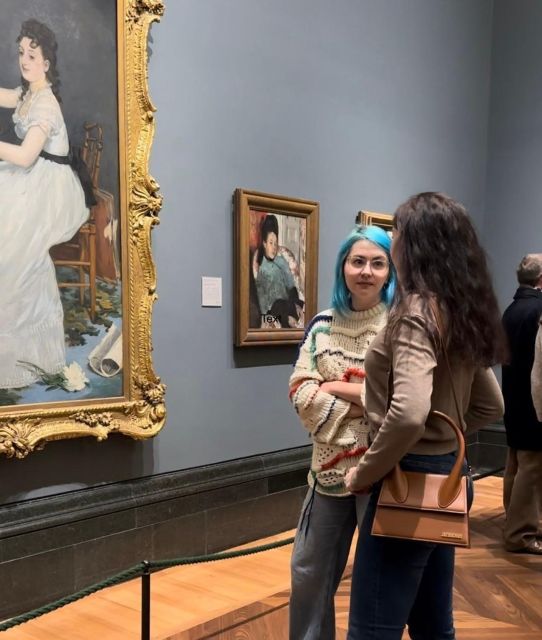
This tour is a smart choice if:
- You want a guided story rather than a museum free-for-all.
- You care about women’s representation in art history, not just art facts.
- You like asking questions and hearing clear explanations.
- You want a compact experience that fits into a day already packed with London sights.
It’s less ideal if:
- You need a long, slow museum pace.
- You’re visiting with very young kids. The tour notes it is not suitable for children under 6.
- You prefer reading every painting detail on your own before anyone talks.
Meeting the guide and staying on time (so you don’t miss anything)
You start in front of the National Gallery and the tour ends back at the meeting point. Punctuality matters here because the tour is designed to finish on time, and the guide can adjust if you’re moving slowly or loving a particular stop.
Do this to make your day smooth:
- Arrive a bit early so you’re not rushing at the doorway.
- Have a working contact phone number available if the guide needs to reach you.
- Wear comfortable shoes. A 1.5-hour tour in a museum still means standing and walking.
What the best guides do for this tour
One reason this experience earns top marks is the guide ability to keep attention and explain without turning the tour into a dry slideshow. In the feedback, Katya is specifically praised for captivating listeners, giving in-depth explanations, and answering questions thoroughly. The strongest part of that kind of guiding is how it connects historical context to the way you think now.
You can expect the tour to work like this:
- The guide points out what matters visually.
- You’re encouraged to consider the role of women in the scene and in the culture behind it.
- You get room for questions, which helps the art click faster.
That combination is why the tour feels fun as well as educational.
Should you book Women in Art at the National Gallery?
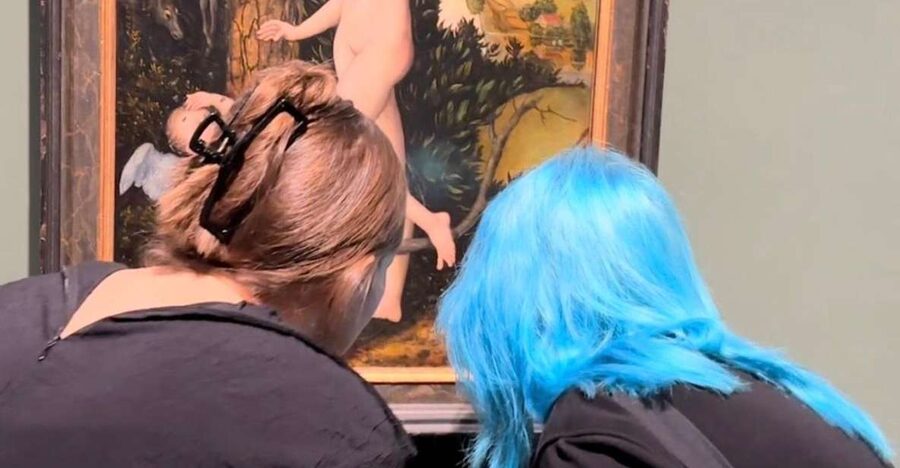
If you want an efficient, high-impact introduction to the National Gallery with a clear theme—this is a strong yes. The price makes more sense when you treat it as private, guided story time for up to 6 people, not as a generic museum ticket.
Book it especially if women’s representation in art is your interest, and if you value a guide who can answer questions and keep the tone engaging. If you’re the type who needs lots of solo time in front of paintings, plan extra self-guided hours before or after, so you can slow down once the tour has given you your bearings.
FAQ
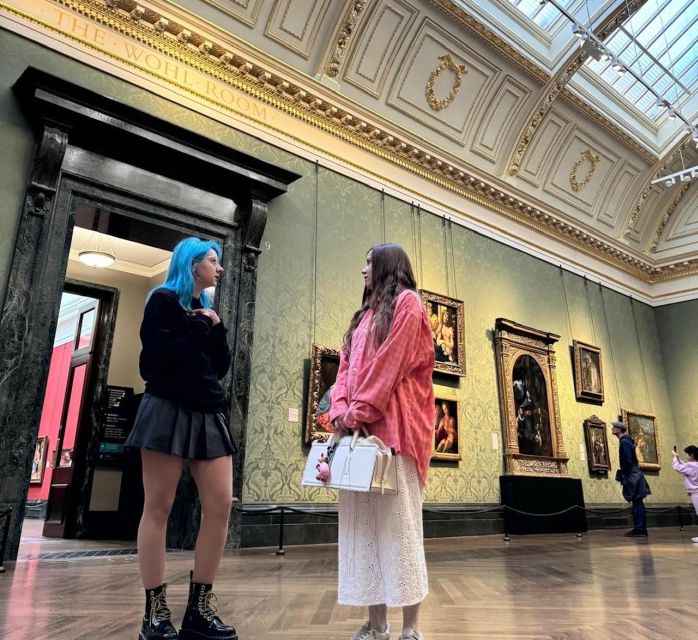
Where do we meet for the Women in Art tour?
You meet in front of the National Gallery, and the tour ends back at the same meeting point.
How long is the tour?
The duration is 1.5 hours.
What artworks are included?
The tour highlights Leonardo da Vinci’s Madonna of the Rocks, Michelangelo’s The Entombment, Raphael’s St Catherine, Rubens’ The Judgement of Paris, and Van Gogh’s Sunflowers.
Is this a private tour?
Yes, it’s listed as a private group.
How many people are in a group?
The price is per group up to 6 people.
What languages are offered for the live guide?
The live guide is available in English and Russian.
Is the tour wheelchair accessible?
Yes, the activity is wheelchair accessible.
What is the age suitability?
It is not suitable for children under 6 years.
Is there free cancellation?
Yes. You can cancel up to 24 hours in advance for a full refund.
Do I need to choose a specific time in advance?
Starting times are based on availability, so you’ll need to check what’s offered for the day you plan to go.
More Museums in London
- Tower of London and Crown Jewels Exhibition Ticket
★ 4.5 · 6,677 reviews - London: Chelsea Football Club Stadium and Museum Tour
★ 4.8 · 4,576 reviews - Chelsea FC Stadium Tours and Museum
★ 5.0 · 1,908 reviews - London: British Museum Guided Tour
★ 4.3 · 1,182 reviews - Official tickets: Moco Modern & Contemporary Art Museum
★ 4.5 · 1,157 reviews
More Tour Reviews in London
- From London: Harry Potter Warner Bros Studio Tour
★ 4.7 · 26,588 reviews - London: Westminster to Greenwich River Thames Cruise
★ 4.5 · 22,836 reviews - Magical London: Harry Potter Guided Walking Tour
★ 4.7 · 22,044 reviews - London: Madame Tussauds London
★ 4.6 · 20,915 reviews - London: Warner Bros. Studio Harry Potter Tour & Branded Bus
★ 4.7 · 19,194 reviews
Just reviewed around London





Museums, compared.
 ★ 4.5Tower of London and Crown Jewels Exhibition TicketFrom $496,677 reviews
 ★ 4.8Chelsea Football Club Stadium and Museum TourFrom $434,576 reviews
 ★ 5.0Chelsea FC Stadium Tours and MuseumFrom $441,908 reviews
 ★ 4.3British Museum Guided TourFrom $231,182 reviews
 ★ 4.5Official tickets: Moco Modern & Contemporary Art MuseumFrom $361,157 reviews
 ★ 5.0British Museum London Guided Tour Semi-Private 8ppl MaxFrom $108984 reviews
 ★ 4.2Jack the Ripper Museum TicketsFrom $18894 reviews
 ★ 4.9British Museum Guided Tour with Entrance TicketsFrom $39748 reviews
Browse the lists this tour appears in