
Reviewed · 2-HOUR EXPERIENCES
Twinings 2-Hour Tea Tasting Masterclass in London
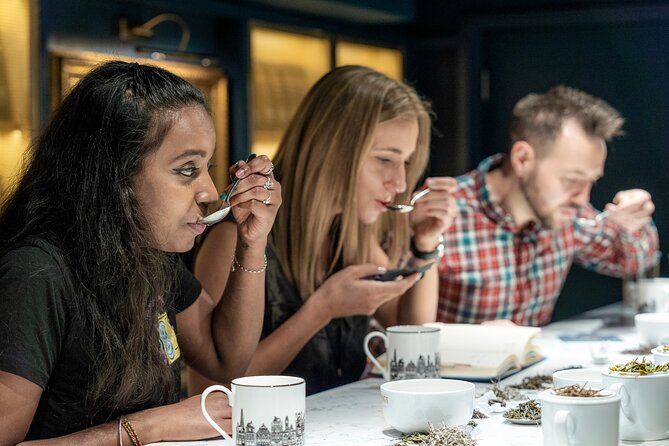
Tea secrets, in two hours? At the Twinings Tea Tasting Masterclass on London’s Strand, you’ll learn where tea comes from, how it arrived in Britain, and what separates decent tea from truly good tea. You’ll also taste your way through multiple tea styles and practice the pro habit of slurping to better notice aroma and flavor.
I especially love the small-group setup (max 5 travelers). It feels like a real class, not a loud demo, so you can ask questions and actually compare the teas with others close by. I also love the hands-on tasting format: six categories (White, Yellow, Green, Oolong, Black, and Pu’erh) plus guidance on how to evaluate them.
One consideration: this is an active tasting and discussion session, so if you want a quiet, slow, formal sit-down with zero participation, you may find the pacing a bit lively.
In This Review
- Key highlights you will actually notice
- Where it starts: Twinings on the Strand (and what to expect inside)
- The 2-hour flow: from tea plant to your cup
- Tea production and quality: the part that makes you smarter fast
- Taste six tea styles: your mini flight from White to Pu’erh
- White, Yellow, Green
- Oolong
- Black
- Pu’erh
- The history lesson that actually connects to your cup
- What you do with your senses: tasting words, smelling, and rating
- The price question: is $69.45 value for London?
- Who this masterclass is for (and who might skip it)
- Should you book this Twinings tea tasting masterclass?
- FAQ
- How long is the Twinings 2-hour tea tasting masterclass?
- Where does the masterclass meet in London?
- What teas will I sample during the class?
- How big is the group?
- What language is the class offered in?
- Is it easy to get in with a ticket on your phone?
- Are service animals allowed?
- Can I cancel for free?
- How far in advance should I book?
- Is it suitable for someone who doesn’t drink tea much?
Key highlights you will actually notice
- Six tea categories in one session: White, Yellow, Green, Oolong, Black, and Pu’erh
- Tea quality taught with real methods: learn how pros assess leaves and brew cues
- History with practical pay-off: tea’s route into Britain and how culture shaped what you drink
- Tasting in a small group: capped at 5 travelers, so the instructor can guide you closely
- Action-based sensory training: you taste, smell, and practice describing what you notice
Still deciding? A handful more London outings we rated
- London Bridge & Borough Market Food Tour with 7 Authentic Dishes
★ 5.0 · 1,972 reviews - Eating London East End Food Tour
★ 5.0 · 1,509 reviews - London Foodie Adventure:More than 10 dishes with Sherpa Food Tour
★ 5.0 · 932 reviews - Eating London: Twilight Soho VIP Food & Drinks Tour
★ 5.0 · 590 reviews
Where it starts: Twinings on the Strand (and what to expect inside)
Your session begins at 216 Strand, Temple, London WC2R 1AP. It’s in a central, easy-to-reach spot, near public transportation, which matters in London. You don’t want a great experience derailed by an hour-long commute to nowhere.
The masterclass is run by R Twinings Ltd., and it’s offered in English with a mobile ticket. That combo is practical: you can keep it simple on the day, show up, and focus on the tea instead of paperwork.
Inside, the vibe is described as a clean, stylish basement setting in at least some sessions. Even better, one review specifically noted it felt air-conditioned during hot weather. In other words, you get a controlled tasting environment—exactly what you want when your goal is to compare aroma, flavor, and mouthfeel without London heat throwing you off.
The 2-hour flow: from tea plant to your cup
This is a true “teach + taste” format, not just shopping and sips. In about two hours, you’ll cover:
- Where tea comes from and how the tea plant journey connects to what’s in your mug
- A history walkthrough that connects tea to Britain’s tea-drinking culture
- A tasting sequence built around multiple tea categories
- Guidance on how professionals evaluate tea, including the famous slurp technique
The big value here is the logic. Tea can feel mysterious—leaf grades, processing, origins, brew methods—but this class helps you line it up into a story you can remember. The instructor’s focus is on the journey from bud to cup, so you see why two teas that both look brown can behave totally differently in aroma and finish.
If you’re the kind of traveler who loves “how things work,” you’ll probably enjoy the way the course ties production choices to flavor outcomes. And if you’re a tea fan already, you’ll likely like how it turns that fandom into a repeatable evaluation method.
Tea production and quality: the part that makes you smarter fast
Here’s the practical magic: you don’t just taste tea. You learn what to pay attention to.
You’ll be guided through how tea is produced and what makes quality tea quality. That includes the idea that tea isn’t one thing. It’s a set of categories and processing paths that lead to different sensory results. The course structure pushes you to compare instead of guessing.
Also, this class doesn’t treat you like a blank slate. Past sessions with instructors such as Alessandra, Liam, Rachel, Rosie, and Angelo received strong praise for being interactive and engaging—so expect questions, explanations you can follow, and prompts that help you practice describing what you’re tasting.
One review highlighted that after the history and production overview, you could try samples and then describe them with help—sometimes using examples of tasting words. Another mentioned rating the teas in five different categories. Even if your session uses a slightly different checklist, the goal is the same: turn vague impressions into clearer observations.
Still deciding? A handful more London outings we rated
Taste six tea styles: your mini flight from White to Pu’erh
This is the heart of the experience: you’ll sample six categories—
White, Yellow, Green, Oolong, Black, and Pu’erh.
If you’ve ever looked at a tea menu and thought, they all taste the same, this is where that assumption gets tested. Each category has its own typical aroma and flavor direction, so you start building a mental map.
White, Yellow, Green
These tend to feel more delicate and aromatic compared with black and some darker styles. In this class, you’ll learn what to notice first—often aroma and how the flavor develops as it cools slightly. You’ll also get coached on how to evaluate without overpowering your senses.
Oolong
Oolong is a great “bridge” tea. You’ll likely find it more complex than the green-side categories, with flavor that can shift as you re-taste. This is also where the instructor’s guidance on professional evaluation helps—because oolong can be subtle, and subtlety is where most people stop paying attention.
Black
Black tea tends to be more robust and often more familiar if you drink British-style tea. Here, the class helps you focus on quality markers—how the taste lands, the strength without harshness, and the after-notes that linger.
Pu’erh
Pu’erh can surprise people, especially if you think of tea as just leaf + water. It’s often a bit earthier, with a deeper character. In a tasting class like this, it becomes a useful comparison point: it shows you how processing and category change the whole experience.
Across all six, you’ll practice the instructor’s guidance on how pros taste—including slurping. It sounds odd until you do it. The point is aeration and sensory focus, so you pick up aroma and texture more clearly.
The history lesson that actually connects to your cup
Tea history can be either a boring lecture or a story that explains why you drink what you drink. This masterclass aims for the second one.
You’ll cover how tea arrived in Britain and how it became part of daily culture. That’s not trivia for trivia’s sake. It helps you understand why British tea traditions matter—why certain blends and styles became common, why the ritual sticks, and why Twinings itself is tied to a long tea lineage.
One reason this part gets such strong praise from prior guests is that it’s paired with tasting. You’re not stuck with names and dates. Instead, you learn a little context, taste, and then notice the style differences right away.
And if you end up with an instructor like Alessandra or Liam (both called out by name for storytelling and engagement in past sessions), the history portion tends to feel like you’re following a thread, not sitting through facts.
What you do with your senses: tasting words, smelling, and rating
Many tea tasting experiences stay at the level of sip and smile. This class pushes you to use your senses in a structured way.
You’ll smell the teas. You’ll taste them. You’ll be asked to describe what you notice—often with helpful word examples—and you may rate them across multiple categories. One review described the experience as interactive and noted the session helped with noticing appearance, aroma, flavor, mouthfeel, and aftertaste. That’s the difference between drinking tea and learning tea.
You’ll also learn a simple way to stop guessing. When you can name what you’re experiencing—light, floral, roasted, earthy; smooth, crisp, drying; short finish or lingering—you buy fewer “mystery” teas and choose better blends.
If you’re buying tea back home, this section is especially useful. It tells you what to look for on the shelf: teas that fit your tastes rather than what sounds nice.
The price question: is $69.45 value for London?
Let’s be honest. $69.45 per person for about two hours isn’t pocket change, especially in London.
So here’s how I’d judge the value:
- You’re paying for instruction, not just tea. The session teaches production, history, and evaluation method. That’s hard to replicate on your own unless you buy a lot of tea and then still lack a framework.
- You get multiple tastings in one go: six categories, guided comparison, and tasting prompts. That’s more substantial than a quick sample in a shop.
- Small group size (max 5) matters. With fewer people, you get more time and better feedback.
- There may be a product discount after the class. One review specifically mentioned getting a discount on products afterward, which can help offset the cost if you plan to buy tea.
You also don’t need special gear. If you’ve got normal curiosity and basic manners, you can show up and learn. And the rating is very strong (4.9 overall from 105 reviews), with people calling it a must-do and saying the time felt well measured.
If you’re a tea lover, it’s likely an easy yes. If you’re not, it can still work—one review said it was enjoyable even for someone who wasn’t sure they’d like tea, because the structure makes it fun and not intimidating.
Who this masterclass is for (and who might skip it)
Book this if you:
- Want a high-signal experience in a short window while in London
- Enjoy sensory learning—smell, taste, compare
- Like British food-and-culture themes (tea fits perfectly)
- Want a way to evaluate tea quality beyond marketing labels
Skip it if you:
- Prefer a self-guided tasting where you can move at your own pace
- Need long, quiet downtime with no group interaction
- Are looking for a full-day food tour instead of a focused 2-hour session
Should you book this Twinings tea tasting masterclass?
I think it’s worth booking if you want tea to make more sense. The class mixes tea production and British history with real tasting practice, and it does that in a small-group setting where questions actually matter. At $69.45, it’s not the cheapest thing on the Strand—but it is the kind of experience that changes how you choose tea afterward.
If you love tea, you’ll probably feel like you leveled up. If you’re unsure you’ll care, come anyway. The tasting flow, the guided sensory language, and the idea of tasting like a pro (yes, slurping included) make it fun even when you start with zero knowledge.
FAQ
How long is the Twinings 2-hour tea tasting masterclass?
The experience lasts about 2 hours.
Where does the masterclass meet in London?
It meets at 216 Strand, Temple, London WC2R 1AP, UK and ends back at the meeting point.
What teas will I sample during the class?
You’ll taste six categories: White, Yellow, Green, Oolong, Black, and Pu’erh.
How big is the group?
The masterclass has a maximum of 5 travelers, which keeps it small and interactive.
What language is the class offered in?
The masterclass is offered in English.
Is it easy to get in with a ticket on your phone?
Yes. You’ll have a mobile ticket.
Are service animals allowed?
Yes, service animals are allowed.
Can I cancel for free?
Yes. You can cancel for a full refund if you cancel up to 24 hours in advance.
How far in advance should I book?
On average, this experience is booked about 28 days in advance.
Is it suitable for someone who doesn’t drink tea much?
The format is built around learning and tasting, and it’s been described as memorable even for people who aren’t tea drinkers.
More 2-Hour Experiences in London
- London: Ghastly Ghosts 2-Hour Walking Tour
★ 4.9 · 794 reviews - James Bond Shooting Locations 2-Hour Walking Tour of London
★ 4.7 · 332 reviews - 2-Hour Jack the Ripper Small Group Walking Tour in London
★ 4.5 · 160 reviews - London: 2-Hour Historic Pub Tour
★ 4.9 · 133 reviews - London Essential 2 hour introductory Walking Tour With a Londoner
★ 5.0 · 125 reviews
More Food & Drink in London
- London Bridge & Borough Market Food Tour with 7 Authentic Dishes
★ 5.0 · 1,972 reviews - Eating London East End Food Tour
★ 5.0 · 1,509 reviews - London Foodie Adventure:More than 10 dishes with Sherpa Food Tour
★ 5.0 · 932 reviews - Eating London: Twilight Soho VIP Food & Drinks Tour
★ 5.0 · 590 reviews - East London Indian Food Tour with 8+ Authentic Food Tastings
★ 5.0 · 585 reviews
More Tour Reviews in London
- From London: Harry Potter Warner Bros Studio Tour
★ 4.7 · 26,588 reviews - London: Westminster to Greenwich River Thames Cruise
★ 4.5 · 22,836 reviews - Magical London: Harry Potter Guided Walking Tour
★ 4.7 · 22,044 reviews - London: Madame Tussauds London
★ 4.6 · 20,915 reviews - London: Warner Bros. Studio Harry Potter Tour & Branded Bus
★ 4.7 · 19,194 reviews
Just reviewed around London





2-Hour Experiences, compared.
 ★ 4.9Ghastly Ghosts 2-Hour Walking TourFrom $33794 reviews
 ★ 4.7James Bond Shooting Locations 2-Hour Walking Tour of LondonFrom $22332 reviews
 ★ 4.52-Hour Jack the Ripper Small Group Walking Tour in LondonFrom $23160 reviews
 ★ 4.92-Hour Historic Pub TourFrom $53133 reviews
 ★ 5.0London Essential 2 hour introductory Walking Tour With a LondonerFrom $22125 reviews
 ★ 5.02-Hour Breathtaking London PhotoshootFrom $12338 reviews
 ★ 5.02 Hour Walking Tour from Buckingham Palace to Big BenFrom $4132 reviews
 ★ 5.0Private 2-Hour Night Tour of London in an Iconic Black CabFrom $35525 reviews
Browse the lists this tour appears in