
Reviewed · LONDON
The Sweet Spots of Covent Garden
Sweet stops in theatre country. In Covent Garden, you’ll stitch together covered markets, churches, and famous stages in about two hours, with stories about the creatives who shaped show business over the centuries.
I really liked two things most: Paul’s local, funny storytelling, and the sugary payoff—Godiva-style hot chocolate, pastries, and standout macarons during the walk.
One thing to think about first: not every landmark is entered, and admission can vary (like at Theatre Royal Drury Lane), so you’re here for guided sightlines and context, not nonstop interior tours.
In This Review
- Key Sweet Spots and What Makes Them Worth Your Time
- Walking Covent Garden’s Theatre Belt the Tasty Way
- Meeting at St Martin-in-the-Fields and Getting Your Bearings Fast
- Theatre Royal Drury Lane: Two Royal Boxes and the Actor’s Side of London
- Covent Garden Proper: Covered Market, Street Theatre, and Food Stops
- St. Paul’s Church: A Calm Pocket the Acting Fraternity Favours
- Royal Ballet and Opera Area: Reading the Buildings Like Clues
- Seven Dials: From Once-Dangerous to Art-and-Food Fashion
- The Novello Theatre Side View (and a Quick Salad Myth Joke)
- Cambridge Theatre: Art Nouveau Style and Matilda’s Home Turf
- Trafalgar Square to the National Gallery: The Big Icons, Without the Detour
- The Route’s Best Move: How It Keeps You From Getting Lost
- Price and Value: What You’re Paying for at $107.26
- Who This Tour Fits Best (and Who Might Want to Skip It)
- Should You Book The Sweet Spots of Covent Garden?
- FAQ
- Where does the tour start and end?
- How long is the Covent Garden tour?
- What does it cost?
- What language is the tour offered in?
- Do I get a ticket on my phone?
- Are there group size limits?
- Is admission included for every stop?
- Is the tour suitable for most people?
- Are service animals allowed?
- What is the cancellation policy?
Key Sweet Spots and What Makes Them Worth Your Time
- Paul’s local stories connect theatre buildings to real people and workplace life in the area
- Sweet treats with purpose, not an afterthought, built into the pacing of the walk
- Drury Lane’s royal-box history, explained on the spot even when interiors aren’t available
- Seven Dials’ transformation, from once-dangerous streets to a trendy mix of art and food
- Seven stages, one route feel, with churches and squares that give you breathers
- Small group size (max 20) keeps it friendly and easy to ask questions
Not sure yet? See how a few of London's most-booked trips stack up:
- From London: Harry Potter Warner Bros Studio Tour
★ 4.7 · 26,588 reviews - London: Westminster to Greenwich River Thames Cruise
★ 4.5 · 22,836 reviews - Magical London: Harry Potter Guided Walking Tour
★ 4.7 · 22,044 reviews - London: Madame Tussauds London
★ 4.6 · 20,915 reviews
Walking Covent Garden’s Theatre Belt the Tasty Way
If you think Covent Garden is only street performers and tourist shops, this tour nudges you in a better direction: the theatre buildings, the churches nearby, and the side streets between them. It moves at a human pace, so you get the feeling of one continuous neighborhood story instead of a checklist.
What really sells it is the mix. You’re not just looking at sights—you’re learning why the area mattered to actors, writers, and performers, then getting a sweet stop to keep you smiling. It’s also a smart length: about 2 hours is long enough to feel like you explored, but short enough that you’re not dragging yourself across London.
Meeting at St Martin-in-the-Fields and Getting Your Bearings Fast
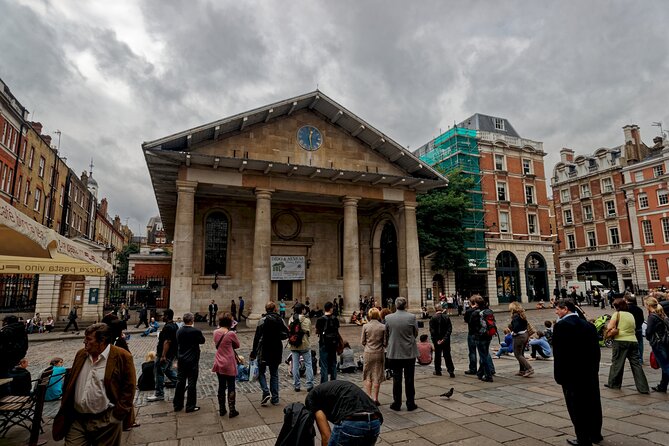
You start outside St Martin-in-the-Fields on the covered patio area, up the stairs. That location matters. It gives you a calm landmark to anchor the route before you push into the louder theatre streets.
It also helps that the tour keeps things simple for your day. You’ll have a mobile ticket, and the walking route is designed for most people. Plus, service animals are allowed, and the route is close to public transportation, so you’re not stuck planning a complicated arrival.
Theatre Royal Drury Lane: Two Royal Boxes and the Actor’s Side of London
The first stop is Theatre Royal Drury Lane, the kind of place you’ve heard of even if you don’t follow theatre closely. Here, the guide focuses on the building’s theatre identity—especially the detail that it has two royal boxes. That’s the sort of architectural tidbit you’d miss if you were simply passing by.
Important practical note: admission depends on the time of day and whether the building is in use. That means you should treat this stop as history you learn through context, with the possibility of entry depending on conditions. For many people, that’s still a win, because the key payoff is how the guide connects the theatre world to the neighborhood around it.




Covent Garden Proper: Covered Market, Street Theatre, and Food Stops
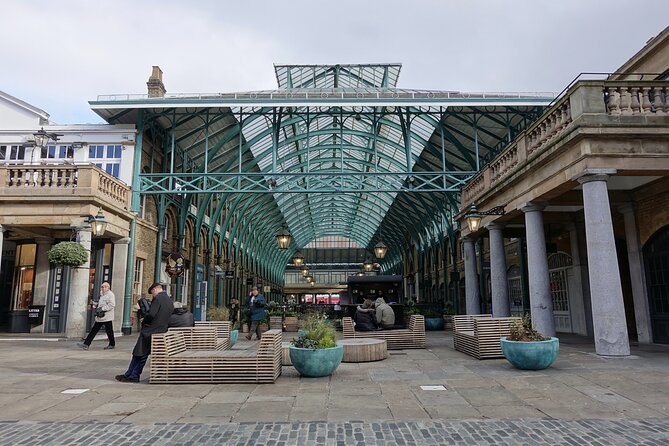
Next you move into the Covent Garden area itself—where the streets and market vibe do most of the work for you. This is the part that feels most like the “main” Covent Garden, but you’re not doing it alone. You’ll get guided pointers for what to notice in the square and the covered market area.
The tour also leans into the best kind of food sightseeing: small bites and sweet treats that match the theme. You’ll experience the food market atmosphere and the kind of stop-and-look energy that makes Covent Garden fun even when you’re not buying anything.
If you have a sweet tooth, this is a good match. If you don’t, you can still enjoy it as a pacing tool—food breaks keep the walk comfortable and make the stories feel less like a lecture.
St. Paul’s Church: A Calm Pocket the Acting Fraternity Favours
Then you get a breather at St. Paul’s Church, described as a quiet haven in the middle of the action. The acting community connection is the hook here: it’s a place the theatre crowd has long favored, and the guide uses that to explain why spiritual, social, and work life in London often overlapped.
This is the stop where the tour slows your brain down a little. You’re not only seeing a church—you’re seeing how the theatre district found space for reflection and community. It also gives you a chance to reset after market-and-street energy.
Royal Ballet and Opera Area: Reading the Buildings Like Clues

From there, you head toward the Royal Ballet and Opera area. The guide shares details about the history of the buildings here, turning architecture into a kind of theatre “notes page.”
You’re not trying to tour every interior. The value is in what you learn while walking—how the area grew into a destination and why these venues became part of the local identity. You get the feel of the grand institutions without needing a complicated ticket plan for each one.
Also, at this stop, admission isn’t included, so you should plan on viewing from outside. If you’re okay with that, you’ll get a lot more out of the guided storytelling.
Seven Dials: From Once-Dangerous to Art-and-Food Fashion
Seven Dials is one of the most interesting turns on the route because it’s a quick lesson in how neighborhoods change. The guide frames it as a place that was once dangerous, now transformed into a fashionable eclectic mix of art and food.
This is exactly the kind of place where your brain usually says, I’ve seen something like this before. The tour changes that by giving you the reason behind the look. You can spot the artsy energy, then understand how the street’s past ties into what it is now.
And yes, this part keeps the sweet-tooth theme close. The stop is short, but it helps you feel the shift from old theatre streets to modern creative spaces.
The Novello Theatre Side View (and a Quick Salad Myth Joke)
At Novello Theatre, you’ll get a fascinating bit of context: it was originally the Waldorf, and the guide makes a point of the confusion people make about a famous salad invention. The tour doesn’t send you inside here—you admire the architecture from the outside.
That approach is smart if you want theatre culture without spending time on ticketed interiors. It also keeps the route moving. You’re getting story and design details while still having time for the sweeter moments later.
Cambridge Theatre: Art Nouveau Style and Matilda’s Home Turf
Next up is the Cambridge Theatre area. Here the architecture gets attention: it was designed in a 20’s Art Nouveau style, and credited to Wimperis, Simpson and Guthrie. The guide also connects the space to modern theatre life—like the fact that Matilda played there.
One more fun planning detail: during periods when it’s not running show schedules, the theatre is used as a trade location. That’s the kind of operational detail you might never think to ask, and it makes the area feel more like a working district than a museum.
Just like Novello, you don’t enter the building. You’re meant to take in the look and the context, so come ready to be a good observer.
Trafalgar Square to the National Gallery: The Big Icons, Without the Detour
After the theatre-focused streets, you shift into wide-open London. You’ll meet on Trafalgar Square, then look over the square toward Nelson’s Column.
From this meeting point, you also get a walking pass by two of the area’s heavyweight art stops: you’ll walk past the National Gallery and the National Portrait Gallery. The tour doesn’t try to turn this into a museum afternoon. Instead, it uses these landmarks to anchor you in the wider city map.
That matters because Covent Garden can feel like its own bubble. Getting these famous sights in the background helps you connect the theatre world to central London geography.
The Route’s Best Move: How It Keeps You From Getting Lost
A lot of walking tours fail when they don’t handle wayfinding well. This one does better by bouncing you between three types of places: theatres, churches, and major squares. The theatres give you the theme. The churches give quiet resets. The squares give orientation.
Even the timing works in your favor. The walk is short enough that you keep energy, and each stop is brief. That makes it easier to keep your attention, especially if you’re sightseeing with kids or if you just want a fun afternoon rather than a long project.
Price and Value: What You’re Paying for at $107.26
At $107.26 per person for roughly 2 hours, the price can feel high if you imagine a casual stroll. But this isn’t just walking. You’re paying for three things that add up fast:
- a guided route tying together multiple theatres and surrounding institutions
- a small group experience (max 20 people)
- sweet stops included in the pacing, with highlights like macarons plus hot chocolate and pastries
If you’re coming to London specifically to see theatre history—or you just want an enjoyable way to understand why West End buildings sit where they do—the cost starts to make sense. You’re not just buying convenience; you’re buying context and food breaks that would take time to plan on your own.
Who This Tour Fits Best (and Who Might Want to Skip It)
I think this tour is ideal if you:
- love theatre and want the area’s story told through the buildings
- have a sweet tooth and enjoy small food stops as part of sightseeing
- want a guided route that doesn’t drag you into long indoor museum hours
It may be less ideal if you:
- want a heavy interior sightseeing day with lots of paid entry tickets
- prefer quiet, no-food walking tours
The best way to judge it is simple: if you like the idea of theatreland mixed with a few sugary rewards and quick history stops, you’ll probably enjoy it.
Should You Book The Sweet Spots of Covent Garden?
I’d book it if you want an easy, guided Covent Garden afternoon that connects the theatre district to real places—Drury Lane, churches, Seven Dials, and then out toward Trafalgar Square. It’s also a strong option for families, since the route is short and the guide keeps the stories light and fun.
Skip it only if you’re seeking a deep architecture-and-museum day with lots of entrances. This tour is more about street-level learning, smart photo opportunities, and sweet breaks than about getting ticketed into every building.
If you’re flexible about which interiors you’ll access, and you’re excited to mix sightseeing with a sweet tooth payoff, this is an enjoyable way to see a side of Covent Garden that many people miss.
FAQ
Where does the tour start and end?
The tour starts at 6 St Martin-in-the-Fields Church Path, St. Martin’s Pl, London WC2N 4JH, UK, and it ends at 90 St Martin’s Ln, London WC2N 4AP, UK.
How long is the Covent Garden tour?
It runs for approximately 2 hours.
What does it cost?
The price is $107.26 per person.
What language is the tour offered in?
The tour is offered in English.
Do I get a ticket on my phone?
Yes. The tour uses a mobile ticket.
Are there group size limits?
Yes. The maximum group size is 20 travelers.
Is admission included for every stop?
Not always. Some stops are listed as free admission, while others note admission is not included. Theatre Royal Drury Lane admission also depends on the time of day and whether the building is in use.
Is the tour suitable for most people?
Most people can participate.
Are service animals allowed?
Yes, service animals are allowed.
What is the cancellation policy?
You can cancel for free up to 24 hours in advance for a full refund. If you cancel less than 24 hours before the experience starts, the amount paid is not refunded.
More Tour Reviews in London
- From London: Harry Potter Warner Bros Studio Tour
★ 4.7 · 26,588 reviews - London: Westminster to Greenwich River Thames Cruise
★ 4.5 · 22,836 reviews - Magical London: Harry Potter Guided Walking Tour
★ 4.7 · 22,044 reviews - London: Madame Tussauds London
★ 4.6 · 20,915 reviews - London: Warner Bros. Studio Harry Potter Tour & Branded Bus
★ 4.7 · 19,194 reviews




