
Reviewed · LONDON
Shakespeare Promenade
London changes when you hear Shakespeare on the move. The Shakespeare Promenade is a 2-hour, actor-led walk that starts at Dowgate Hill and traces the story of London theatre from the Globe’s world back toward Shoreditch’s roots. You get performance, walking views, and a route that mixes old stone, dramatic storytelling, and modern streets in one continuous evening.
What I like most is the theatrical storytelling. Guides have reportedly used Shakespeare speeches and quotes as you pass key sites, and named guides like Dee and Darrie have shown real acting chops—turning ordinary corners into stage moments.
I also love the scenery and variety: skyline and river sightlines along the Thames Path, then a cut through the Barbican complex, and finally Shoreditch street art at the finish. One thing to consider: it’s a walking tour designed for a 16+ crowd, and walking pace can affect timing—so you’ll want comfortable shoes and a steady stride.
In This Review
- Quick hit: what makes this walk special?
- Start at Tallow Chandlers Hall and think like London’s working theatre
- Walking the Thames north bank: the skyline moment that sets the mood
- Blackfriars to St Paul’s: how the City streets sharpen the Shakespeare lens
- The Barbican break: 20 minutes that actually help
- Bunhill Fields and the walk into Shoreditch’s theatre beginnings
- What the actor guide does (and why it works)
- Timing and pace: plan for a real two hours on foot
- Value check: how $22 adds up for a theatre-focused London walk
- Who should book this Shakespeare Promenade?
- Should you book Shakespeare Promenade? My take
- FAQ
- FAQ
- How long is the Shakespeare Promenade?
- Where do I meet the tour guide?
- Is there a break during the walk?
- Is the Globe Theatre visit included?
- What’s the group size?
- What Shakespeare-related content will I see?
- What should I bring?
- Is the tour suitable for children or accessibility needs?
Quick hit: what makes this walk special?
- Actor-led Shakespeare scenes that match what you’re seeing on the street
- Thames Path north-bank views with a look toward the Globe area (without a visit)
- City landmarks in a theatre context, not just photo stops
- A 20-minute break at the Barbican Arts Centre
- A finish in Shoreditch, where the art feels like part of the story
Not sure yet? See how a few of London's most-booked trips stack up:
- From London: Harry Potter Warner Bros Studio Tour
★ 4.7 · 26,588 reviews - London: Westminster to Greenwich River Thames Cruise
★ 4.5 · 22,836 reviews - Magical London: Harry Potter Guided Walking Tour
★ 4.7 · 22,044 reviews - London: Madame Tussauds London
★ 4.6 · 20,915 reviews
Start at Tallow Chandlers Hall and think like London’s working theatre
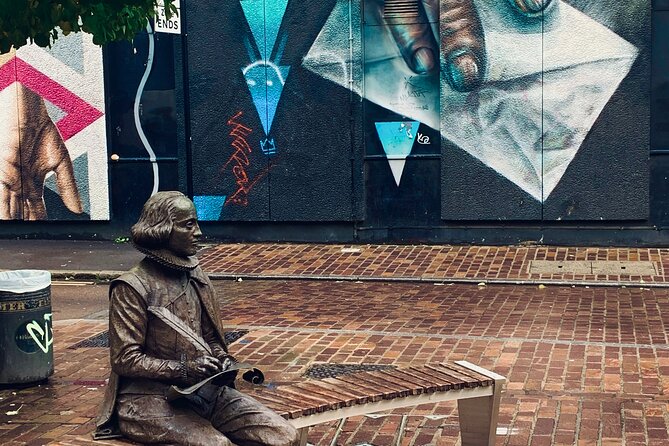
The tour meets outside Tallow Chandlers Hall on Dowgate Hill, right by Cannon Street Station. That matters. You’re starting in the City, not at some theme-park version of the past. And the first minutes set the tone: this is Shakespeare’s London as a lived-in place—busy, practical, and full of people heading somewhere.
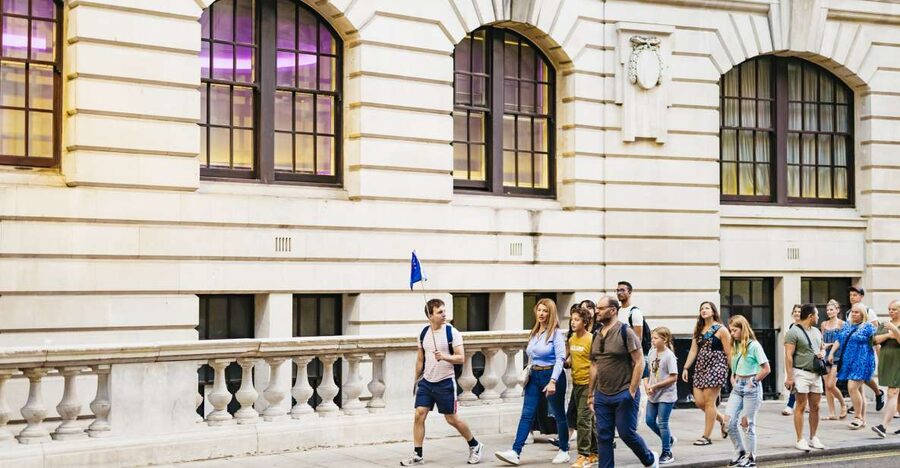
Right away, the guide frames Shakespeare not as distant genius, but as someone shaped by the theatre business around him. You’re walking along routes that echo how performance culture moved through London—linking streets, guild spaces, river edges, and later the Elizabethan theatre wave.
Also, this is a small-group experience, capped at six people. That keeps the pacing human and makes the performance feel aimed at your group, not at a loud microphone far away.
Walking the Thames north bank: the skyline moment that sets the mood
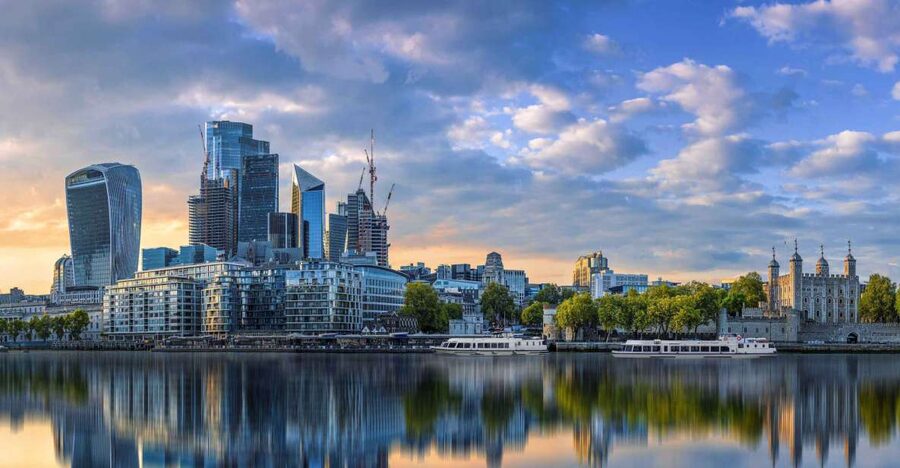
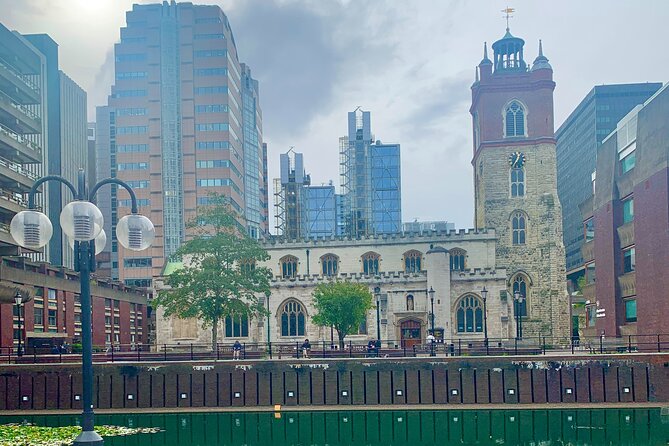
A big draw here is how the route uses the Thames as a stage curtain. You start with a riverside walk segment that quickly gives you the London skyline in full view. It’s not just pretty; it gives you scale. Shakespeare’s London wasn’t a closed bubble. It was connected to trade, travel, and the river’s constant motion.
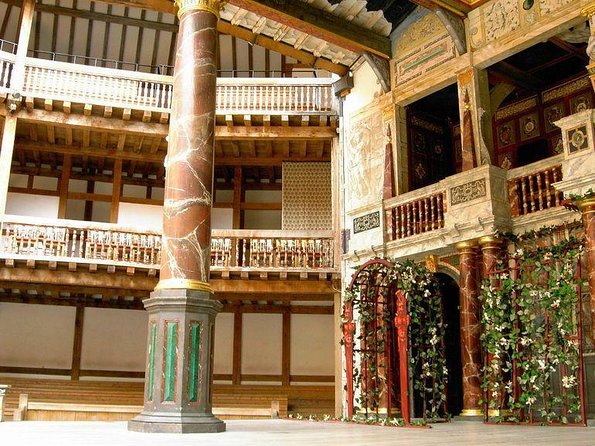
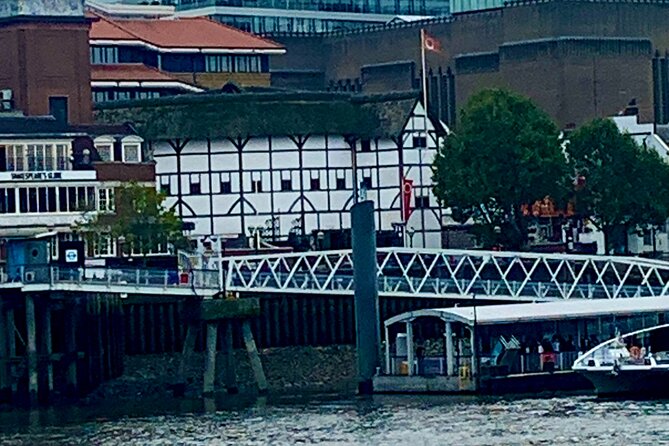
From the north bank, the guide points you toward the world-renowned Globe Theatre area from outside the theatre bubble. Important detail: the Globe Theatre visit is not included. You’re seeing it as a landmark you can track from the street, not entering it. For many people, that’s actually a smart trade. The tour buys you context and movement, instead of time spent waiting, paying extra, or rushing inside.
And because the guide layers stories as you walk, the river doesn’t feel like a gap between sights. It becomes an idea: how theatre was tied to the city’s rhythms.
Blackfriars to St Paul’s: how the City streets sharpen the Shakespeare lens
After the Thames segment, the route continues through the City’s theatre neighborhood logic. You’ll pass through Blackfriars area (a short walk). Then you hit the St Paul’s Cathedral stop for sightseeing.
St Paul’s is one of those landmarks that can feel like a postcard. Here, it works better. The guide connects it to London’s built form and its role as a backdrop for public life. Even when you’re not hearing theatre history in every sentence, the angle makes it easier to picture how people would have moved through these places.
Next comes Guildhall for sightseeing. This is a fitting kind of stop because Guildhall sits in the civic heart of London. The tour uses that energy—government, public business, public assembly—to help you understand theatre as part of a city’s daily infrastructure. Not separate. Not just entertainment.
Then you reach London Wall for another sightseeing segment. London Wall is one of those places where you can see the city’s layers and feel the long timeline. In a Shakespeare walk, that’s key. The point isn’t to memorize dates. It’s to see how the built environment can carry forward the “stage” concept even as London changes.

The Barbican break: 20 minutes that actually help
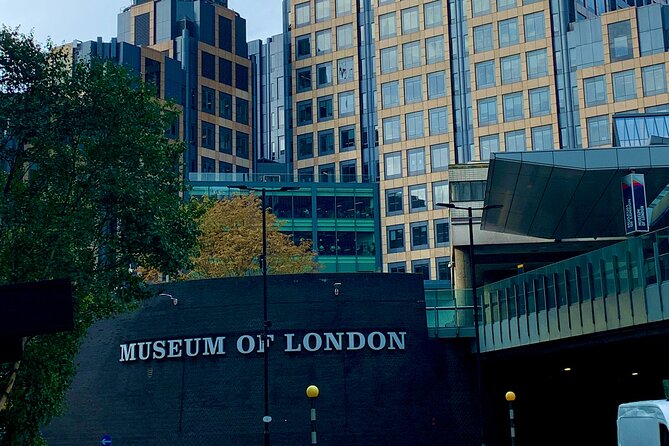
At the Barbican Centre, you get a 20-minute rest and refreshment break. That’s long enough to reset without losing the thread of the evening. And it’s not a random pit stop. The Barbican is home to the Royal Shakespeare Company, so the break fits the theme.
The tour also includes a cut through the Barbican estate, which can feel like a change in genre. Traditional streets give way to an architectural maze—concrete forms, sheltered walkways, and sudden sightlines. It’s the kind of environment where a performer’s stories land well, because it already feels theatrical in its design.
Practical tip: use the break to refill water if you need it. Food and drink aren’t included, so plan on buying what you want during that window.
Bunhill Fields and the walk into Shoreditch’s theatre beginnings
After the Barbican area, you head toward Bunhill Fields for a short walk. It’s a quick stop, but the tour doesn’t treat it like dead time. You’re moving toward Shoreditch, and that shift matters.
Then you arrive in Shoreditch for the final walk segment. This is where the tour changes from “the City as backdrop” into “the theatre birthplaces and their afterlife.” The tour ends at New Inn Yard in Shoreditch, on a path that traces the Globe Playhouse story backward toward the foundational sites often linked with the early Elizabethan renaissance theatre era—especially The Curtain and The Theatre.
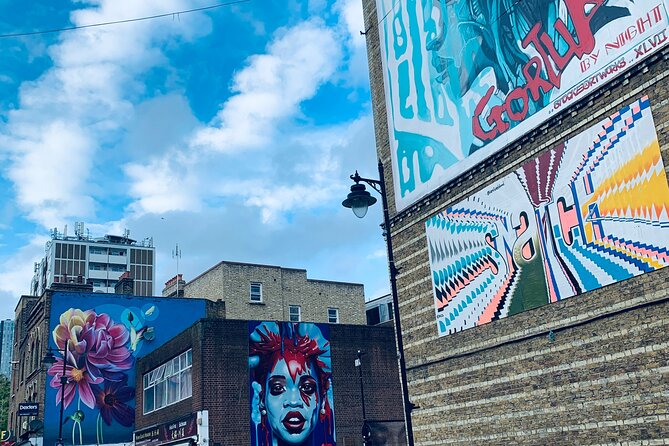
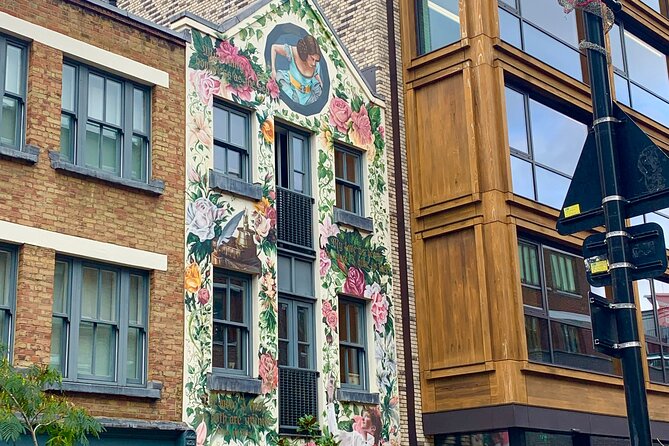
You also get the modern punchline: stunning street art in Shoreditch. That street art doesn’t compete with the Elizabethan story. It underlines a theme the guide keeps returning to—London still treats performance and storytelling as part of the street’s identity.
If you’re a Shakespeare fan, you’ll likely feel the connection between public performance then and public expression now. If you’re not, you still get a satisfying ending: the route finishes with color, noise, and energy in the streets rather than in a museum room.
What the actor guide does (and why it works)
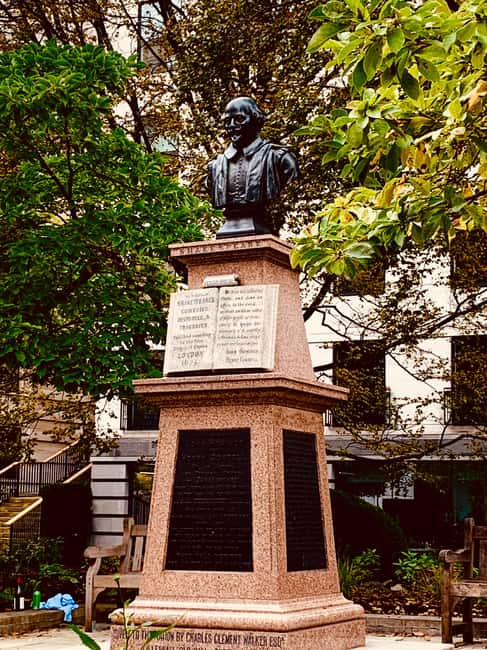
This tour’s engine is the experienced actor tour guide. The guide doesn’t just narrate dates. They perform—using storytelling, movement, and Shakespearean speeches and quotes timed to the route’s landmarks.
In the reviews connected to this experience, guides named Dee and Darrie get called out for acting skill and for bringing medieval London and the theatre world to life through quotes. That’s exactly what you want from a walk like this: the theatre part should feel like theatre, not like a lecture you can’t pause.
Also, the guide is leading you through history in a “trace it backward” way. That’s a smart structure for learning, because it lets you start from a familiar idea (the Globe) and then step into lesser-known theatre origins and influences as you move.
Timing and pace: plan for a real two hours on foot
The tour duration is listed as 2 hours, with a 20-minute break included. The walking part is approximately two hours, “depending on walking pace,” so treat it as a flexible, human-paced stroll—not a sprint.
What to do with that information:
- If you’re the kind of person who stops often for photos, bring patience.
- If you like to walk steadily and listen carefully, you’ll probably feel like you’re “just keeping up,” not rushing.
This is also age-suitable for 16+. That doesn’t mean it’s a wild party. It means the content and pacing fit older teens and adults better.
Value check: how $22 adds up for a theatre-focused London walk
At about $22 per person, this isn’t trying to replace a theatre ticket or a museum day. It’s priced like something designed for access: a small group, an actor guide, and a route with several major landmarks.
Here’s where the value comes from:
- You get professional performance and Shakespeare quotes, not just sightseeing commentary.
- The route ties together multiple famous (and semi-famous) London layers—river, City landmarks, theatre sites, and Shoreditch street art.
- The group size (up to six) keeps it personal enough that you’re not swallowed by a crowd.
The main “not included” you should notice is that food and drink are not included, and there’s no Globe Theatre visit. That’s normal for a walking tour. You just need to bring spending money for the Barbican break if you want snacks or drinks there.
Who should book this Shakespeare Promenade?
This tour is a strong fit if you:
- Like Shakespeare, and you want the words paired with actual London places
- Enjoy walking tours that tell a story instead of listing facts
- Want a Shakespeare-focused experience that doesn’t require extra theatre tickets
- Prefer small-group energy over large-group bus vibes
It’s likely less ideal if you:
- Want a full indoor attraction day (Globe entry isn’t part of this)
- Need mobility support—this tour is not suitable for wheelchair users or people with mobility impairments, and it’s also listed as not suitable for visually impaired and hearing-impaired people, plus people over 80.
If you’re unsure, think about whether you can comfortably do a couple of hours walking in London, plus a short cut through architectural areas.
Should you book Shakespeare Promenade? My take
If you want Shakespeare London with performance, not just sightseeing, this is a great bet. The pairing of actor-led storytelling, Thames views, City landmarks, a Barbican break at the Royal Shakespeare Company base, and a Shoreditch finish with street art makes it feel like you’re following a thread through the city—not just collecting stops.
I’d book it if you’re a fan (or curious) and you like learning through scenes and quotes, guided by someone who knows how to act the story. Skip it if you’re hoping for a Globe Theatre ticket included, or if your situation makes walking difficult.
FAQ
FAQ
How long is the Shakespeare Promenade?
The tour lasts about 2 hours, including a 20-minute break. The walking portion can vary depending on walking pace.
Where do I meet the tour guide?
You meet the guide outside Tallow Chandlers Hall on Dowgate Hill, next to Cannon Street Station.
Is there a break during the walk?
Yes. There’s a 20-minute rest and refreshment break at the Barbican Arts Centre.
Is the Globe Theatre visit included?
No. You’ll view the Globe area from the north bank, but a Globe Theatre visit is not included.
What’s the group size?
This is a small group experience limited to up to six participants.
What Shakespeare-related content will I see?
You’ll get Shakespeare speeches and quotes at key points on the walk, along with storytelling and performance by the actor guide.
What should I bring?
Bring comfortable clothes, water, and rain gear or weather-appropriate clothing.
Is the tour suitable for children or accessibility needs?
It’s listed as not suitable for children under 16, and it’s also listed as not suitable for wheelchair users, people with mobility impairments, and people with visual or hearing impairments.
More Tour Reviews in London
- From London: Harry Potter Warner Bros Studio Tour
★ 4.7 · 26,588 reviews - London: Westminster to Greenwich River Thames Cruise
★ 4.5 · 22,836 reviews - Magical London: Harry Potter Guided Walking Tour
★ 4.7 · 22,044 reviews - London: Madame Tussauds London
★ 4.6 · 20,915 reviews - London: Warner Bros. Studio Harry Potter Tour & Branded Bus
★ 4.7 · 19,194 reviews




