
Reviewed · LONDON
Shakespeare Promenade
Follow Shakespeare from bridge to backstreet. This 2-hour walking tour threads you through Shakespeare-related landmarks with an actor guide narrator, and mine used the route like a living script, not a list of plaques. You’ll cross the Millennium Bridge for city views, then step through places tied to the early playhouses that shaped London’s theatre scene.
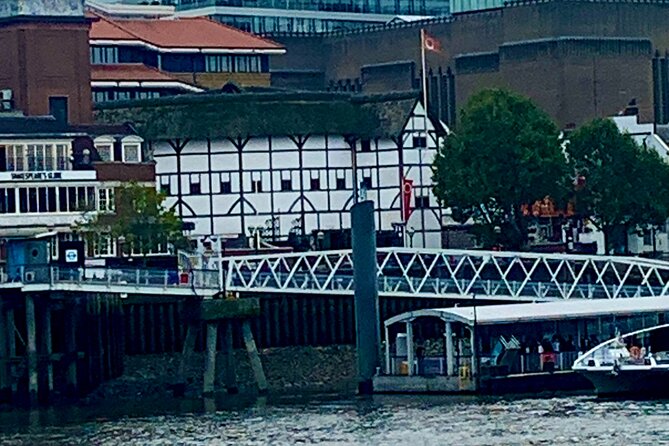
I especially loved how the guide worked in play quotes as you went, so the streets felt connected to the words. Second, the group stays small (up to 6 people), which means you get real time to ask questions while you’re still standing in the right spot—like at the riverfront when you’re viewing the Globe Theatre from across the Thames.
One thing to consider: the walk isn’t stroller-friendly. There are steps and stairs, road crossings, and you should have moderate walking fitness since this isn’t a sit-and-watch tour. It’s also not recommended for mobility issues, and it’s not suitable for children under 16.
In This Review
- Key Points You’ll Care About
- Starting at Dowgate Hill, Ending at New Inn Yard
- The Thames North Bank: Globe Views and the Blackfriars Connection
- Playhouse Yard: Where Monastery Ground Became Theatre Ground
- St. Paul’s Along Cheapside and Milk Street: Theatre Meets the City Center
- Guildhall: Shakespeare’s Folio, Heminges and Condell, and a Statue Moment
- Roman Wall of Londonium and Shakespeare’s Lodgings Plaque
- Barbican Highwalk: The Walkway With Views and Estate History
- Barbican Centre: Theatre Today, Not Just Theatre Then
- New Inn Yard: The Theatre Site Now Linked to the Shakespeare Museum
- Shoreditch Toward Curtain Road: Modern Streets With Theatre Footprints
- The Guide Factor: Actor Narration, Dee, and Quotes That Stick
- Price and Value: How $23.08 Fits a Two-Hour Shakespeare Walk
- Who This Tour Suits Best (and Who Should Skip It)
- Should You Book Shakespeare Promenade?
- FAQ
- How long is the Shakespeare Promenade?
- What does the tour cost?
- Is the tour in English?
- What kind of ticket do I get?
- Are there any entry fees?
- What’s included with the tour?
- Where does the tour start and end?
- Is it suitable for everyone physically?
Key Points You’ll Care About
- Millennium Bridge city views as a natural mid-tour photo break
- First playhouse sites you can actually see on the ground, like The Theatre and New Inn Yard
- Barbican Highwalk and Barbican Centre with a Royal Shakespeare Company connection
- Time for questions thanks to a small group size (max 6)
- No entry fees for the stops that don’t include museum entry
Not sure yet? See how a few of London's most-booked trips stack up:
- From London: Harry Potter Warner Bros Studio Tour
★ 4.7 · 26,588 reviews - London: Westminster to Greenwich River Thames Cruise
★ 4.5 · 22,836 reviews - Magical London: Harry Potter Guided Walking Tour
★ 4.7 · 22,044 reviews - London: Madame Tussauds London
★ 4.6 · 20,915 reviews
Starting at Dowgate Hill, Ending at New Inn Yard
The tour begins at the Tallow Chandlers Company, 4 Dowgate Hill (EC4R 2SH). You’ll meet near the start of the promenade, then finish at New Inn Yard, outside the Shakespeare Museum, about 10 minutes from Old Street Tube (Northern line) and 15 minutes from Liverpool Street (Central line). That ending spot matters because Shoreditch is right there, so you can keep your day going without a long commute.
This route is designed for walking—about 2 hours total. The pace feels purposeful, not rushed, but you still need to expect real city steps, including stairs. If you like tours that give you “where to stand” moments, this one fits your style.
Also note the practical stuff: you’ll want comfortable shoes, and it helps to have an umbrella or rain mac. You bring your own bottled water since there’s no refreshments provided. The tour does include rest rooms at Barbican, which is useful given the number of stops.
The Thames North Bank: Globe Views and the Blackfriars Connection
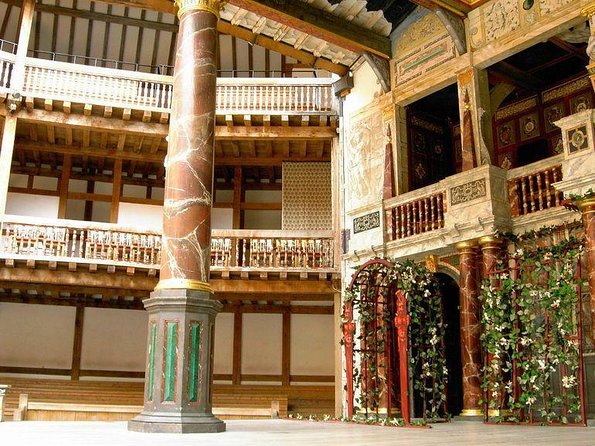
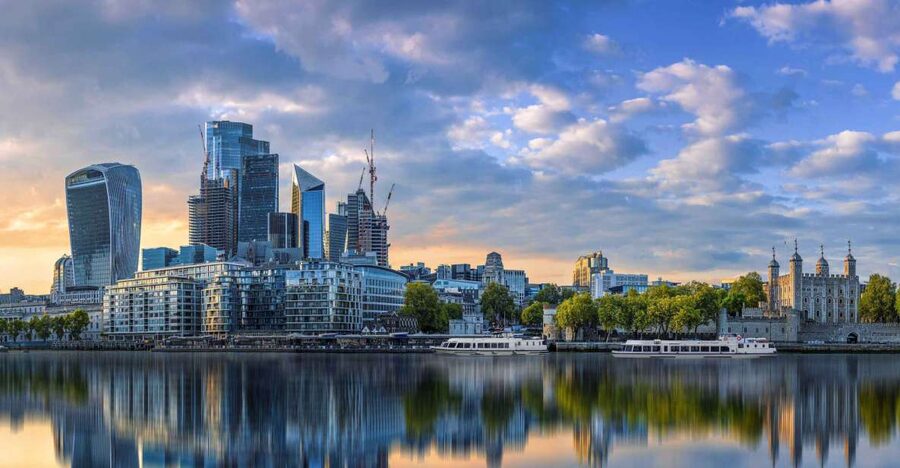
Stop one is on the Thames River, walking the north bank path and looking toward the Globe Theatre from across the river. This is a smart start. The Globe is easy to visualize from the water because you see how it relates to the city’s spine—then your guide can shift you from “pretty landmark” to “why this matters.”
From there, you continue toward Blackfriars. The vibe here is different from later stops because you’re watching the city unfold around water. And the tour doesn’t just point; it links locations to the theatre world you’re about to learn about. You even get a free admission ticket listed for this section—so you’re not paying extra just to keep moving.
What to watch for: take a minute to look at the river relationship. The Globe looks different from across the Thames than it does from nearby, and that perspective helps the guide’s stories land.
Possible drawback: river paths can be crowded and the lighting can be changeable. Plan for a photo moment, but don’t expect silence.
Playhouse Yard: Where Monastery Ground Became Theatre Ground
Next you’re at Playhouse Yard, where you learn about the Blackfriars Dominican Monastery site and the early 1st and 2nd Blackfriars Playhouses. This stop is short, but it’s a highlight for anyone who likes the layers under their feet.
The key idea isn’t just that a playhouse existed. It’s that London repurposed space over time. Your guide connects the religious past to the theatrical present, so the location feels like a timeline rather than a single snapshot. That’s the value of these “micro-stops”: you leave with a clearer sense of how theatre took root in the city.
Tip: don’t rush your photos here. Even with a brief stop, you’ll get the sense of place if you stand where your guide tells you.

St. Paul’s Along Cheapside and Milk Street: Theatre Meets the City Center
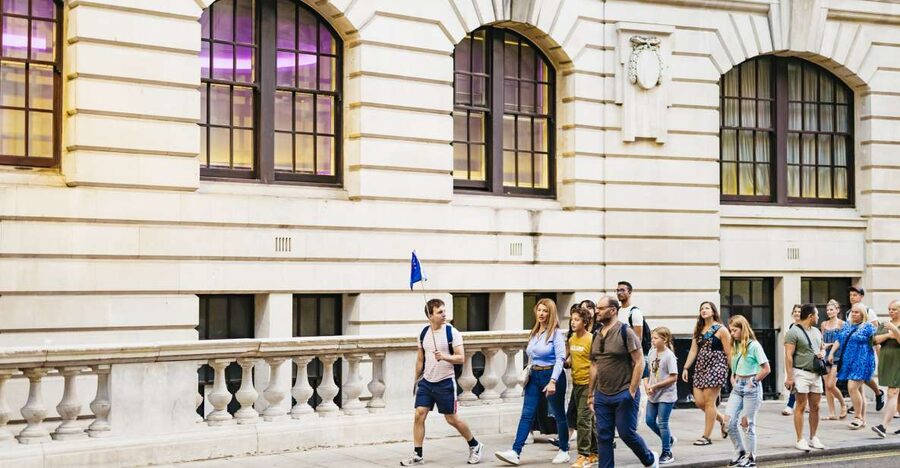
Stop three takes you into the St. Paul’s Cathedral area, walking around parts of the cathedral along Cheapside and up Milk Street. This is the part of the tour where Shakespeare’s London feels like real London—commerce, foot traffic, big buildings—rather than just surviving theatre ghosts.
It’s also useful pacing. After the Playhouse Yard storytelling, you get a visual reset: you’re moving through one of the city’s most iconic zones, and it gives context for how widely known theatre culture could be. Not everyone in Shakespeare’s era would have lived near the playhouses, but the city’s energy still shaped what got performed and discussed.
What I like about this stop: it’s not just sightseeing. Your guide uses the walk to keep the story moving forward, so the tour never feels like it’s stuck in one era-only neighborhood.
Guildhall: Shakespeare’s Folio, Heminges and Condell, and a Statue Moment
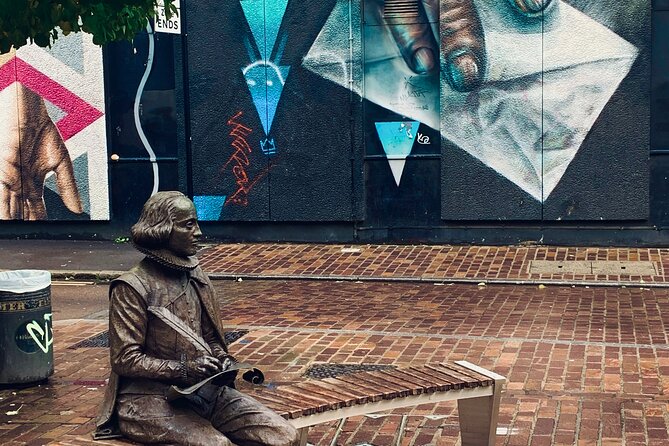
At Guildhall, you’ll see the Heminges and Condell Shakespeare statue on Love Lane and learn about Shakespeare’s folio housed in the Guildhall. This stop shifts from “where plays were staged” to “how plays were preserved.”
That matters. Performance is temporary. Print survives. The folio connection is one of those details that can make your whole visit click—suddenly the theatre you’re walking through isn’t just a past spectacle. It’s also a body of work people fought to keep.
You’ll also hear history and speech here, and the guide uses the moment to slow the group down. Take it in. This is one of the places where you’ll feel the tour change gears from location-based storytelling to author-and-text storytelling.
Roman Wall of Londonium and Shakespeare’s Lodgings Plaque
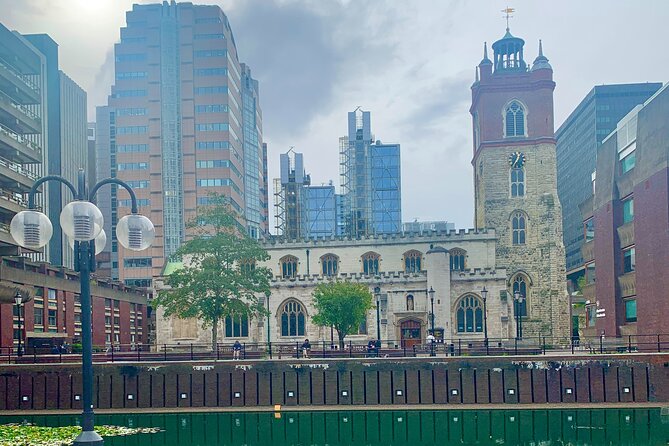
Stop five is a quick but fascinating one: you’ll spot the ruins of the Roman Wall of Londonium on Noble Street and a plaque showing Shakespeare’s Lodgings on Silver Street. This is where the tour gets extra satisfying for people who enjoy “wait, this city is older than you think.”
Your guide uses the Roman wall to remind you that you’re not just walking through the Shakespeare era—you’re walking through layers. Then the Shakespeare Lodgings plaque brings you back to the theatre world. You get the best of both: deep time and specific biography.
Because the stop is brief, keep your eyes open as you approach. If you’re half a step away, you might miss the plaque your guide is pointing out.
Barbican Highwalk: The Walkway With Views and Estate History
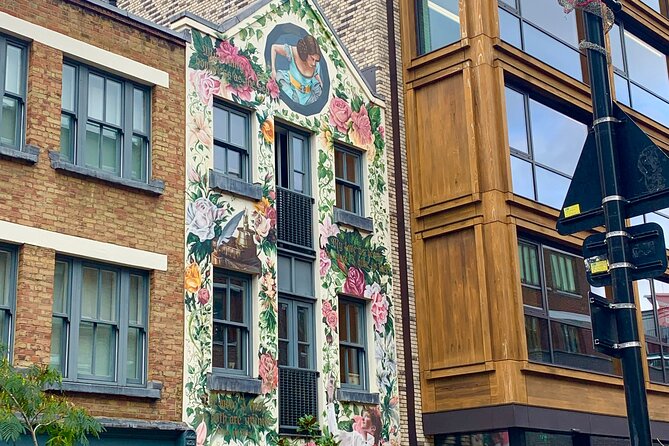
Now you get the more modern part of London: the Barbican Highwalk. You’ll move through a little-known walkway area with superb views and history of the Barbican estate and the Barbican Centre.
This is one of my favorite types of tour stops: the ones that show you something you might walk past on your own without ever thinking to look up. It also gives the tour a breathing space. From the Highwalk, London becomes a diagram—street, rooftop, estate geometry—and it’s easier for your guide to talk about how theatre culture keeps relocating and reinventing itself in a changing city.
Practical note: if it’s windy or rainy, the Highwalk can feel exposed. Go slow, watch your footing, and keep your umbrella under control.
Barbican Centre: Theatre Today, Not Just Theatre Then
You’ll enter the Barbican Centre via walkways and learn about the Barbican Centre as the London home of the Royal Shakespeare Company. The included entry matters because you get access to a space that connects Shakespeare’s name to modern theatrical production.
This stop turns your tour from “historic sightseeing” into “why Shakespeare is still performed.” It’s not only about what happened in the 1600s. It’s about how Shakespeare became part of today’s theatre ecosystem.
You also get a 20-minute interval at Barbican, plus rest rooms available. That interval is a gift. Use it to refill water and take a calm lap. If your feet are starting to feel it, this is where you reset.
New Inn Yard: The Theatre Site Now Linked to the Shakespeare Museum
Next is New Inn Yard, the site of the first playhouse The Theatre, and now the location for the Shakespeare Museum. This stop is short but emotionally satisfying because it lands you right at a place that connects directly to the early architecture of playhouse culture.
From the tour perspective, it’s a strong finale because it feels concrete: you can stand at the site and picture the early stage world your guide has been describing all along.
And it’s practical too. The tour ends outside the Shakespeare Museum, so you can decide on the spot whether you want to go in more deeply after the walk.
Shoreditch Toward Curtain Road: Modern Streets With Theatre Footprints
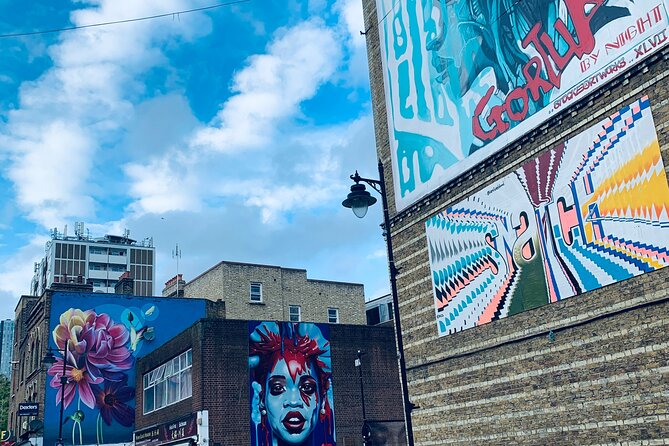
Finally, you walk through Shoreditch, moving toward Curtain Road. This is the part of the tour that feels like the present overlaying the past. The area is known for creative energy today, and the tour uses that setting to frame how theatre culture lives on in city neighborhoods.
Before Shoreditch, you also pass Bunhill Fields, including the site of the Fortune Playhouse and the story of the burial ground. That gives you a mix of performance and mortality—very Shakespearean in spirit, even when the details are strictly historical. Then you cross toward Shoreditch and transition into the modern district.
Why this ending works: the tour doesn’t just drop you at another monument. It walks you into an area where you can keep exploring theme-adjacent places on your own, from cafés to street life.
The Guide Factor: Actor Narration, Dee, and Quotes That Stick
A huge part of the experience is the actor guide narrator. In my mind, this is exactly how Shakespeare tours should work: the guide performs the material lightly, not like a lecture. In the tour I experienced, the guide named Dee had a clear love of Shakespeare and theatre, and she wove quotes into the route in a way that made the words feel like they belonged to the streets.
The best thing isn’t just that Dee knew the facts. It’s the way she linked each location to something you could hold onto—quote, plot idea, or a simple explanation of how playhouses fit into daily city life.
The small group size (up to 6) helps a lot here. You’re not stuck shouting over a crowd. You can ask a question and get an answer before the group moves on to the next street corner.
Price and Value: How $23.08 Fits a Two-Hour Shakespeare Walk
At about $23.08 per person for roughly 2 hours, this tour is strong value if you want guided storytelling plus access where it counts.
Here’s why the price feels fair:
- Many stops don’t require additional entry fees (the itinerary lists admission ticket free for several stops).
- The Barbican Centre entry is included, so you’re not paying out again for the most modern theatre connection on the route.
- You’re buying time with a guide who uses quotes and keeps the experience interactive, not a self-guided scavenger hunt.
You are paying for structure. Without that, you’d likely wander between plaques and playhouse sites without the “why” connecting them. With the guide, the route feels like a path through Shakespeare’s world, not a list of unrelated dots.
What you should budget for separately: food and drink. There’s no refreshments provided, so plan to bring water and handle snacks on your own (or use the restroom/interval at Barbican to reset).
Who This Tour Suits Best (and Who Should Skip It)
This is ideal if:
- You like walking tours that explain rather than just point.
- You want Shakespeare-related landmarks connected in a logical route across central and inner areas.
- You enjoy theatre talk and don’t mind learning details about playhouses and where they physically existed.
It’s less ideal if:
- You need step-free routes. Steps and stairs are part of the walk, and it’s not recommended for mobility issues.
- You’re traveling with kids under 16. This one is not for that age group.
- You have trouble keeping up with a group. Road crossings and steady walking are built in.
Should You Book Shakespeare Promenade?
If you want Shakespeare London in one focused walk—and you like a guide who turns streets into story—you should book. The combination of actor narration, small-group interaction, and the range of locations (Thames river viewpoints, early playhouse sites, Roman Wall details, Barbican’s theatre link, and the Museum area) gives you a lot for the time.
I’d especially recommend it if you’ve never done a Shakespeare-specific walking tour before and want a map in your head by the end. Bring good shoes, a bottle of water, and an umbrella just in case, and you’ll leave with both places to revisit and lines from the plays you’ll actually remember.
FAQ
How long is the Shakespeare Promenade?
The tour lasts about 2 hours, including walking time.
What does the tour cost?
The price is listed as $23.08 per person.
Is the tour in English?
Yes, the tour is offered in English.
What kind of ticket do I get?
You receive a mobile ticket.
Are there any entry fees?
The tour notes that there are no entry fees for stops where admission is marked as free. One part includes Barbican Centre entry.
What’s included with the tour?
An actor guide narrator is included.
Where does the tour start and end?
It starts at The Tallow Chandlers Company, 4 Dowgate Hill, London EC4R 2SH, and ends at New Inn Yard, outside the new Shakespeare Museum.
Is it suitable for everyone physically?
It requires moderate physical fitness, includes steps and stairs, and involves road crossings. It’s not recommended for people who have difficulty walking or keeping up with the group, and it’s not recommended for mobility issues. Service animals are allowed.
More Tour Reviews in London
- From London: Harry Potter Warner Bros Studio Tour
★ 4.7 · 26,588 reviews - London: Westminster to Greenwich River Thames Cruise
★ 4.5 · 22,836 reviews - Magical London: Harry Potter Guided Walking Tour
★ 4.7 · 22,044 reviews - London: Madame Tussauds London
★ 4.6 · 20,915 reviews - London: Warner Bros. Studio Harry Potter Tour & Branded Bus
★ 4.7 · 19,194 reviews




