
Reviewed · GREENWICH TOURS
Royal Observatory Greenwich & Prime Meridian Entry Ticket London
London has one spot that splits the globe in two. This Royal Observatory Greenwich entry ticket is all about time made physical: you’ll stand on the Prime Meridian (home of Greenwich Mean Time), then follow the story through historic rooms, famous clocks, and the observatory’s astronomy legacy with a free audio guide.
I love that the experience is built around one unforgettable photo moment: the Meridian Courtyard where you can place a foot in the east and a foot in the west. I also like how the visit ties together practical measurement—like public time signals—plus big ideas in astronomy, with stops that include Flamsteed House, Harrison’s clocks, and the Great Equatorial Telescope.
One consideration: the observatory sits on a hill, and some parts aren’t fully accessible, with limited lift access. If you have mobility concerns, you’ll want to plan around stairs and outdoor walking.
In This Review
- Key highlights to know before you go
- Royal Observatory Greenwich: what you’re buying for about 2 hours
- Meridian Courtyard: the Prime Meridian, GMT, and the instant wow
- Flamsteed House and the Octagon Room by Sir Christopher Wren
- Harrison’s clocks, longitude, and the public meaning of time
- The Time Ball and how the world learned to sync its clocks
- The Great Equatorial Telescope: old-school astronomy at full scale
- Greenwich Royal Park views: the part you shouldn’t underestimate
- Maritime Greenwich extras: build a full day without spending extra on tickets
- Price and value for $33.90: what makes it worth it
- Practical tips: crowds, audio, and what to do with your time
- Who this is best for (and who should think twice)
- Should you book Royal Observatory Greenwich?
- FAQ
- How long does the Royal Observatory Greenwich visit take?
- Is the audio guide included?
- How many languages are available for the audio guide?
- Can I stand on the Prime Meridian during the visit?
- Is the ticket for the Royal Observatory only, or does it include other museums?
- Is Cutty Sark included with this ticket?
- Is the experience offered in English?
- Are mobile tickets used?
- Are service animals allowed?
- Are children allowed for free?
- Is the observatory fully accessible?
Key highlights to know before you go
- Prime Meridian photo moment: stand astride the line that marks east and west and connect it to GMT
- Free audio guide download: learn at your own pace with multi-language support
- Harrison’s clocks and public time signals: see how accurate time changed the world
- Wren’s Octagon Room: step into one of the best-preserved Sir Christopher Wren interiors in London
- Great Equatorial Telescope in the onion dome: witness a major leap in how astronomers viewed the sky
- Greenwich views from Royal Park: expect wide sightlines over London and toward the Thames
Downriver to Greenwich, other ways
- London: Westminster to Greenwich River Thames Cruise
★ 4.5 · 22,836 reviews - Westminster to Greenwich Sightseeing Thames Cruise in London
★ 4.5 · 2,969 reviews - Leeds Castle, Canterbury, Dover & Greenwich Boat ride
★ 4.5 · 604 reviews - ‘Cutty Sark’ Entrance Ticket
★ 4.5 · 373 reviews
Royal Observatory Greenwich: what you’re buying for about 2 hours
For the price point, you’re not just paying for a “look at a line.” You’re paying for access to a working-style museum route inside an actual scientific site—complete with historic rooms, world-known timekeeping objects, and space-science context. At roughly 2 hours, it’s a tight visit that works well if you want something meaningful without committing to an all-day museum marathon.
The big idea is simple: timekeeping isn’t trivia. It’s what made navigation, trade, science, and global coordination possible. Once you make that connection, the clocks and instruments start to feel like they matter—not just old gadgets behind glass.
Meridian Courtyard: the Prime Meridian, GMT, and the instant wow
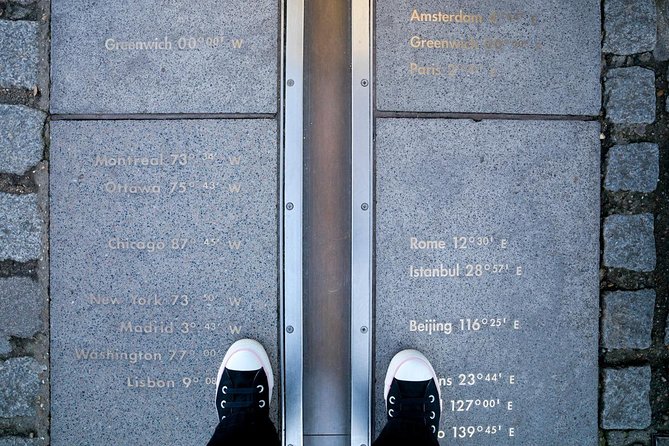
Your visit starts by winding up to the observatory grounds, then stepping into the Meridian Courtyard area where the Prime Meridian Line runs right there for you to stand on. The point is surprisingly emotional for such a technical subject: you get that sense of standing on a real decision point for how the world organizes time and direction.
The photo payoff is immediate. You can pose with one foot to the east and the other to the west at the home of Greenwich Mean Time (GMT)—a “this is real” moment that’s hard to replace with online photos.
Practical tip: go for the line photos early. The site can get crowded fast, and once the flow of people tightens up, it’s harder to get clean angles without rushing. Keep your camera ready and your route in mind.
Flamsteed House and the Octagon Room by Sir Christopher Wren
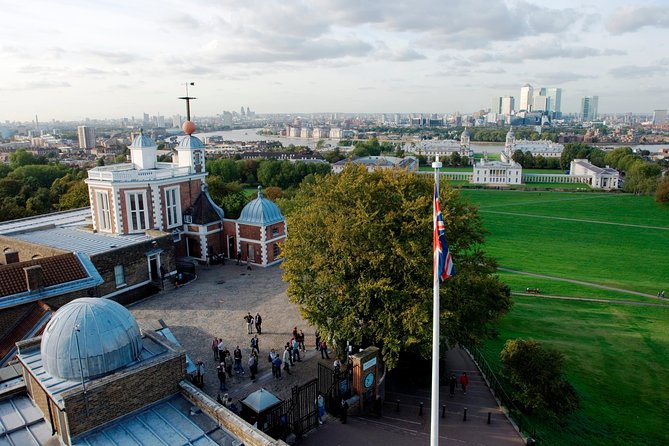
After the courtyard, you move through the historic core, including Flamsteed House. This is where the visit shifts from symbolism to story. You’ll walk through spaces tied to generations of astronomers, following the footsteps of the Astronomers Royal.
One standout stop is the Octagon Room, designed by Sir Christopher Wren. It’s one of the best-preserved Wren interiors in London, and you’ll feel the difference between “museum display space” and “historic building space.” Even if you’re not an architecture nerd, the room gives you scale—like you’re moving through the actual working environment of old science.
A useful mindset: don’t treat each room as a separate exhibit. Try to connect them: timekeeping tools, astronomy instruments, and the people who used them were part of the same world.
Still deciding? A handful more London outings we rated

Harrison’s clocks, longitude, and the public meaning of time

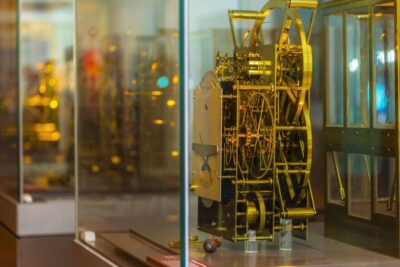
This is the heart of the Royal Observatory experience. You’ll see Harrison’s clocks and learn about inventions that changed the world—especially the link between accurate time and navigation. In plain terms: once you can measure time reliably, you can find your place on the planet more confidently.
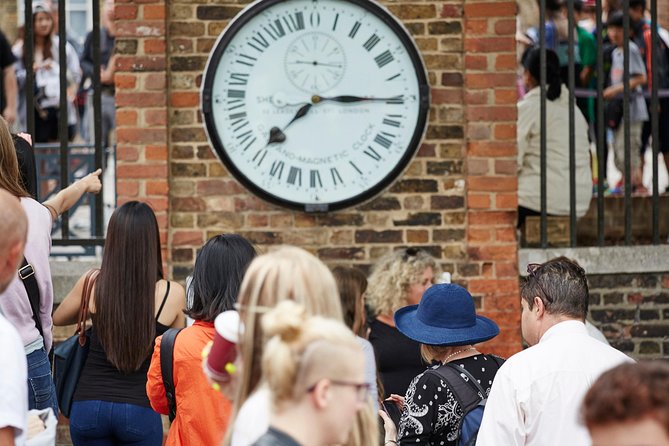
You’ll also run into the idea that time wasn’t only for scientists. One object highlights that shift: the Shepherd Gate Clock, mounted outside, described as the first clock to show Greenwich Mean Time to the public. It’s a reminder that the observatory wasn’t just watching stars—it was helping society run on a shared standard.
If you get the chance to hear a staff explanation during your visit, this is where it tends to click hardest. One review mentioned a guide named Ross, who shared Harrison’s clocks and the story around longitude—those connections are the kind of details that make the displays feel alive.
The Time Ball and how the world learned to sync its clocks
Look up at the red Time Ball on top of Flamsteed House. It’s one of the world’s earliest public time signals, first used in 1833, and it still operates today.
Why this matters for you: it turns the concept of time from abstract to practical. A time ball isn’t “cute history.” It’s a communications tool—an early way of telling a crowd that the world’s clocks should agree. That’s the same problem we still solve now, just with smartphones instead of signal towers.
This section works especially well if you like cause-and-effect history—how one technical breakthrough changes daily life, commerce, and exploration.
The Great Equatorial Telescope: old-school astronomy at full scale

Then you’ll get to the Great Equatorial Telescope, housed in the observatory’s iconic “onion dome.” This part is for anyone who’s ever wondered what astronomers actually do when they’re serious: you’re seeing the kind of instrument that helped them get new views of the universe over a century ago.
Even if you don’t know the difference between telescope types, you’ll get the gist. The telescope represents a leap in capability: better instruments lead to new observations, and new observations change what scientists think is possible.
A good way to experience this stop: slow down. Let the dome, size, and context do their work. This is where the visit feels most “real science,” not just a timed walk through facts.
Greenwich Royal Park views: the part you shouldn’t underestimate
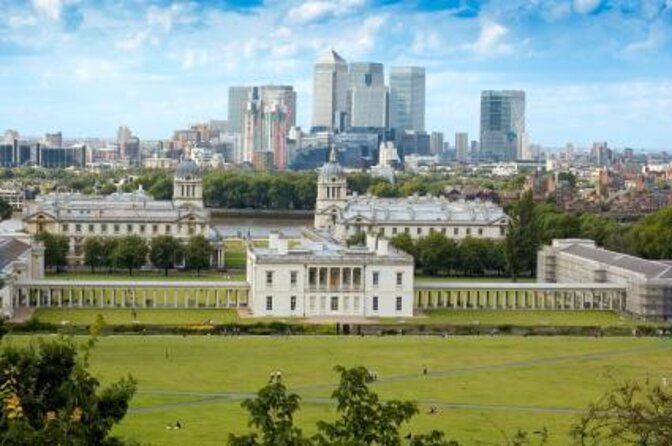
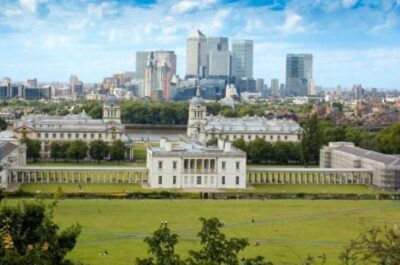
The observatory sits on a hill in Greenwich Royal Park, and getting up there is part of the experience. You’ll get dramatic views over London across the park, the City of London, and toward the River Thames.
That view payoff is worth it if you’re comfortable walking, but it’s also why the steep approach comes up as a common caution. In rain or after wet weather, the outdoor walking can feel less pleasant, so I’d plan for the conditions you’ll face on the day you go.
If you’re coming from farther down the Greenwich area, consider your route before you arrive. One review specifically suggested the Thames ferry approach as a nice way to travel, and it can turn “getting there” into part of your day rather than a chore.
Maritime Greenwich extras: build a full day without spending extra on tickets
One smart value angle here is that your entry ticket pairs naturally with other nearby attractions. The observatory is inside the UNESCO area of Maritime Greenwich, and two major sites are within short walking distance and listed as free to visit: the National Maritime Museum and the Queen’s House.
You also have Cutty Sark, the world’s sole-surviving tea clipper turned award-winning museum experience. It’s often described as a must-see when you’re in Greenwich, and it’s an easy add-on if you’re staying for more than the observatory’s 2-hour focus.
If you want a smooth itinerary, here’s a practical way to think about it:
- Do the observatory route first for the Prime Meridian photo and clocks
- Then use your energy to wander the free museums and pick one bigger add-on like Cutty Sark
Price and value for $33.90: what makes it worth it
At about $33.90 per person, the ticket is priced for a “do it once” destination. The value comes from the combination: you’re paying to access a famous world-location spot, plus the story of time and astronomy built into historic rooms and instruments.
The free audio guide download also sweetens the deal. It’s designed to keep you moving at your pace through the observatory highlights, and the language options are generous. Some on-site guidance is also part of the experience for those who want more than audio.
The best value happens when you match your expectations. If you come wanting only the Meridian photo, you’ll finish quickly and maybe wish you’d spent the day elsewhere. If you come wanting to understand how timekeeping and astronomy shaped exploration and global coordination, you’ll feel like the price tags along behind a real narrative.
Practical tips: crowds, audio, and what to do with your time
Royal Observatory Greenwich is popular, and it can get crowded quickly. That matters because the best photo moments and the most comfortable listening spots tend to disappear when foot traffic thickens. If you want photos without fighting for space, aim to get in early.
Use the audio guide even if you’re short on attention span. It helps you get your bearings fast and keep a steady rhythm through the rooms. One review mentioned that the audio system helped them hear past noisy groups, which is exactly what you want when crowds surge.
Plan your time realistically. Two hours is a solid visit length for the observatory route. If you want extra wandering in Greenwich or you plan to add nearby museums, give yourself more than a half-day.
Weather counts too. One review noted that rain can spoil the experience because there’s quite a bit of outdoor walking. If your schedule is flexible, go on a dry day. If not, wear grippy shoes and keep a light rain layer in your bag.
Who this is best for (and who should think twice)
This ticket is ideal if you’re:
- Curious about GMT, navigation, and the history of measuring time
- Interested in astronomy and want to see real historical instruments
- Visiting Greenwich anyway and want a signature site that connects science to everyday life
It may be less ideal if you:
- Need fully wheelchair-accessible routes, since some areas aren’t fully accessible and elevators aren’t available throughout
- Want a very low-walking experience, since the climb to the observatory hill is real
Also, note the “included or not” confusion that can happen with extra attractions. One review said they expected a planetarium to be included and were disappointed. If you care about specific add-ons like that, verify what your exact ticket covers before you go.
Should you book Royal Observatory Greenwich?
Yes—if you want one of London’s most meaningful “wow” moments with substance behind it. Standing on the Prime Meridian and then learning how accurate timekeeping and astronomy changed the world is a strong combination, and the free nearby museums make it easier to turn a ticket into a full Greenwich day.
I’d also book if you like self-paced learning. The free audio guide helps you control the pace, and the route includes major objects that are easy to appreciate even if you don’t know the technical details.
Skip (or adjust expectations) if mobility is a major issue, because the hill climb and limited access to some areas can be a deal-breaker. And if you care about extra attractions beyond the observatory, double-check what’s included so you don’t arrive hoping for something your ticket doesn’t cover.
FAQ
How long does the Royal Observatory Greenwich visit take?
The visit is listed as about 2 hours (approximately).
Is the audio guide included?
Yes. You can download a free audio guide.
How many languages are available for the audio guide?
The information provided lists seven languages in the on-site description and also says the audio guide is available in 10 different languages for download, depending on the version you use.
Can I stand on the Prime Meridian during the visit?
Yes. You’ll begin in the Meridian Courtyard and can stand astride the Prime Meridian Line.
Is the ticket for the Royal Observatory only, or does it include other museums?
The ticket includes attraction admission to the observatory. The National Maritime Museum and Queen’s House are free to visit and are within short walking distance.
Is Cutty Sark included with this ticket?
Cutty Sark is not stated as included. It’s described as a must-see nearby, so you’d likely visit separately.
Is the experience offered in English?
The experience is listed as English.
Are mobile tickets used?
Yes. The ticket is listed as mobile ticket.
Are service animals allowed?
Yes. Service animals are allowed.
Are children allowed for free?
Children under 4 are free to enter, but children must be accompanied by an adult.
Is the observatory fully accessible?
The information notes that certain parts are not fully accessible and advises contacting the attraction if you need assistance planning your visit.
More Tickets in London
- London: Tower Bridge Entry Ticket
★ 4.7 · 15,560 reviews - London: St Paul’s Cathedral Entry Ticket
★ 4.7 · 9,813 reviews - London: London Eye and Madame Tussauds Combo Ticket
★ 4.7 · 7,428 reviews - Buckingham Palace: The State Rooms Entrance Ticket
★ 4.6 · 7,395 reviews - Windsor Castle Admission Ticket
★ 4.7 · 7,032 reviews
More Tour Reviews in London
- From London: Harry Potter Warner Bros Studio Tour
★ 4.7 · 26,588 reviews - London: Westminster to Greenwich River Thames Cruise
★ 4.5 · 22,836 reviews - Magical London: Harry Potter Guided Walking Tour
★ 4.7 · 22,044 reviews - London: Madame Tussauds London
★ 4.6 · 20,915 reviews - London: Warner Bros. Studio Harry Potter Tour & Branded Bus
★ 4.7 · 19,194 reviews
More Downriver at Greenwich
- London: Westminster to Greenwich River Thames Cruise
★ 4.5 · 22,836 reviews - Westminster to Greenwich Sightseeing Thames Cruise in London
★ 4.5 · 2,969 reviews - Leeds Castle, Canterbury, Dover & Greenwich Boat ride
★ 4.5 · 604 reviews - ‘Cutty Sark’ Entrance Ticket
★ 4.5 · 373 reviews - Leeds Castle, Canterbury, Dover & Greenwich Cruise from London
★ 4.0 · 369 reviews
Just reviewed around London





Greenwich Tours, compared.
 ★ 4.5Westminster to Greenwich River Thames CruiseFrom $2222,836 reviews
 ★ 4.5Westminster to Greenwich Sightseeing Thames Cruise in LondonFrom $222,969 reviews
 ★ 4.5Leeds Castle, Canterbury, Dover & Greenwich Boat rideFrom $147604 reviews
 ★ 4.5‘Cutty Sark’ Entrance TicketFrom $32373 reviews
 ★ 4.0Leeds Castle, Canterbury, Dover & Greenwich Cruise from LondonFrom $143369 reviews
 ★ 4.7Entrance Ticket to the Cutty SarkFrom $26324 reviews
 ★ 4.5Royal Museums Greenwich Day PassFrom $40309 reviews
★ 4.4Leeds Castle, Canterbury, Dover & Greenwich Boat RideFrom $144304 reviews
★ 4.5Royal Museums Greenwich Day PassFrom $40309 reviews
★ 4.4Leeds Castle, Canterbury, Dover & Greenwich Boat RideFrom $144304 reviews
Browse the lists this tour appears in