
Reviewed · HISTORICAL TOURS
Roman Ruins to Blitz Bombings: London’s Fiery History
London’s history heats up fast on this walk. You trace Roman ruins to the City’s later fires and wars, with big stops like the Tower of London and stories tied to real characters from England’s past. I especially love how the guide keeps it clear and lively, mixing trivia with harder history, but you should plan for a brisk 2.5-mile walk.
Meeting is simple: head to Tower Hill Station, find your guide holding an Historic London Tours sign at the base of the steps by the sundial, and you’ll finish near Blackfriars Station at Ye Olde Cheshire Cheese. Ticket sales are limited to 15 people, so questions stay in the conversation.
The price is $26 per person for a 2-hour guided walk in English. You’ll get street-level storytelling and context, not museum entry, so think of this as the foundation that helps the big sights make sense when you see them up close.
In This Review
- Key highlights to watch for
- Where the tour starts at Tower Hill Station (and why it helps)
- Roman Londinium Wall: the moment you realize the city still has bones
- Tower of London: power, fear, and stories that stick in your head
- St Dunstan in the East Church Garden: where the tour changes tone
- Monument to the Great Fire and London Stone: how London keeps reminders in public
- Bank of England vaults: the tunnel story and how guides make history feel usable
- Guildhall and the Lord Mayor tradition: civic London in one short segment
- St Paul’s Cathedral stop: the timeline lands with a sense of continuity
- Ye Olde Cheshire Cheese: a fitting finish with a real place to reset
- Price and value: is $26 fair for a 2-hour City of London walk?
- What I’d consider before booking
- Who this tour is best for (and who might want something else)
- Should you book this Roman Ruins to Fire and War walking tour?
- FAQ
- How long is the tour?
- What’s the walking distance?
- Where do I meet the guide?
- Where does the tour end?
- Is museum entrance included?
- What language is the tour in, and how many people are on it?
Key highlights to watch for
- Roman Londinium wall remains you can spot right in the City of London
- Tower of London’s dark era stories, including Anne Boleyn’s ghost vibe
- Great Fire of London markers like the Monument and London Stone
- Bank of England vault tunnel talk (told as an easy-to-follow, street-level story)
- Civic power stops at the Guildhall and the Lord Mayor tradition
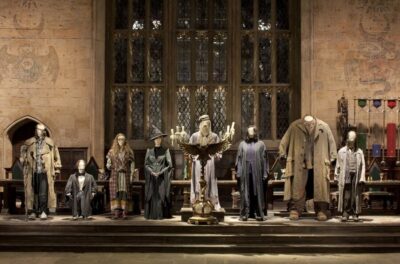
- A guided timeline that connects William the Conqueror, Christopher Wren, and Queen Boudica (with a playful Harry Potter connection)
Still deciding? A handful more London outings we rated
- London Small Group Tour of Historical Pubs
★ 5.0 · 10,422 reviews - Soho Music & Historic Pubs Tour
★ 5.0 · 1,993 reviews - London: Historic Pubs of Central London Walking Tour
★ 4.9 · 1,065 reviews - London: Soho Music and Historic Pubs Walking Tour
★ 4.9 · 836 reviews
Where the tour starts at Tower Hill Station (and why it helps)
The tour begins outside Tower Hill Station, and the directions are refreshingly specific. You’re looking for your guide holding an Historic London Tours sign at the base of the steps leading up to the sundial. This matters more than it sounds: when you show up ready, you start learning right away instead of spending the first ten minutes figuring out where to stand.
From there, you’re walking through the City of London—an area where small streets and alleyways keep pulling you into the past. The pace is designed for a 2-hour experience with a total distance of about 2.5 miles. I like that the plan is built around short stops rather than long museum-style pauses, because you keep moving and your brain keeps connecting eras.
One more practical detail: the group is capped at 15 people. That small size is a big deal in London. You can actually hear the guide, and you’re less likely to feel like you’re watching from the back.
Roman Londinium Wall: the moment you realize the city still has bones
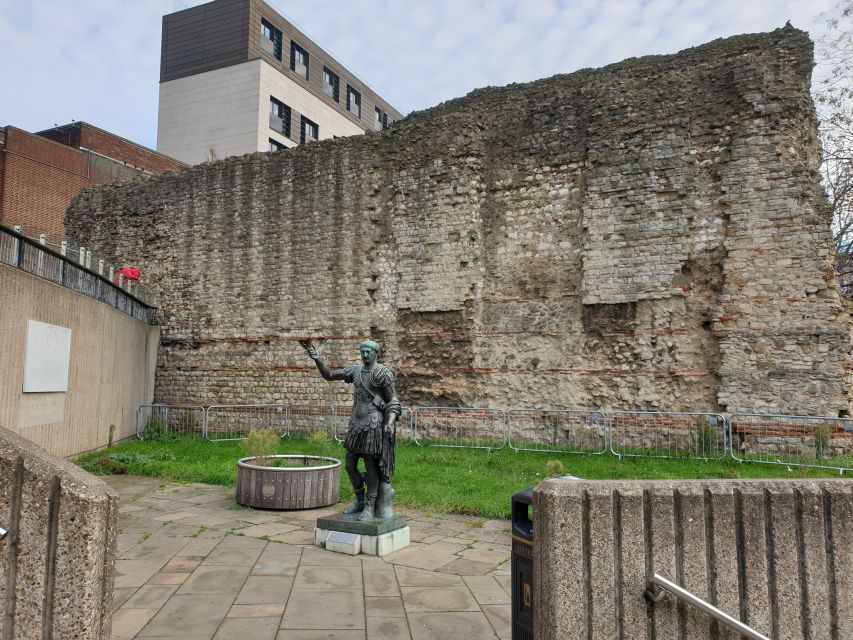
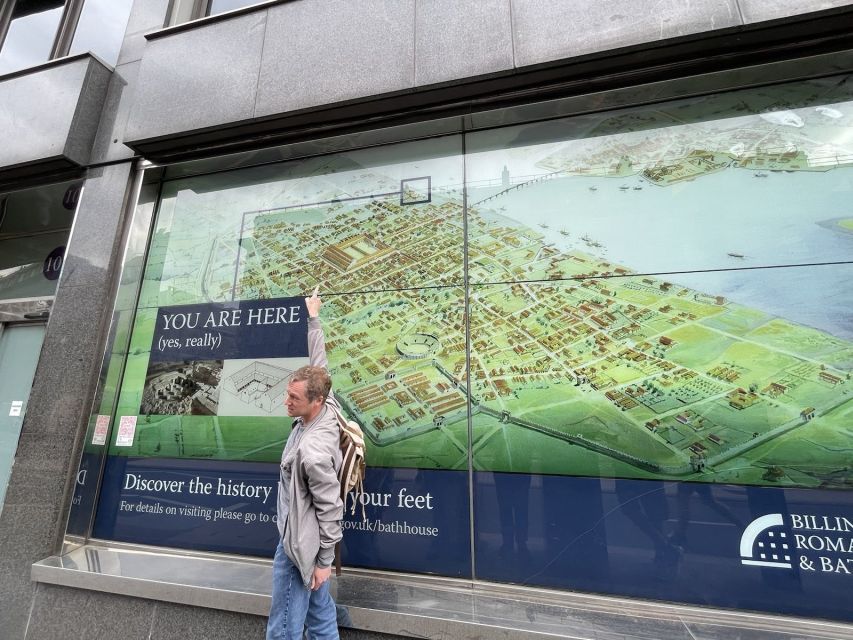
The first real “wait, that’s real” stop is the Roman Wall of Londinium. This is the kind of sight that changes how you look at a city. Instead of treating London as a sequence of eras you read about, you see the physical remnants right in the urban fabric.
On this tour, the Roman part isn’t just a quick photo stop. You get a guided walk through what the City was and how it became the ancient heart people still build around today. For me, the value is the way the guide links the Roman foundation to later survival—fire, war, and constant rebuilding—so the history feels like one long story rather than separate chapters.
Drawback to consider: Roman ruins can be easy to overlook if you’re only glancing. If you tend to move fast and look around after the fact, slow down for this stop. The guide points out what you can actually see, not what you wish was there.
Tower of London: power, fear, and stories that stick in your head
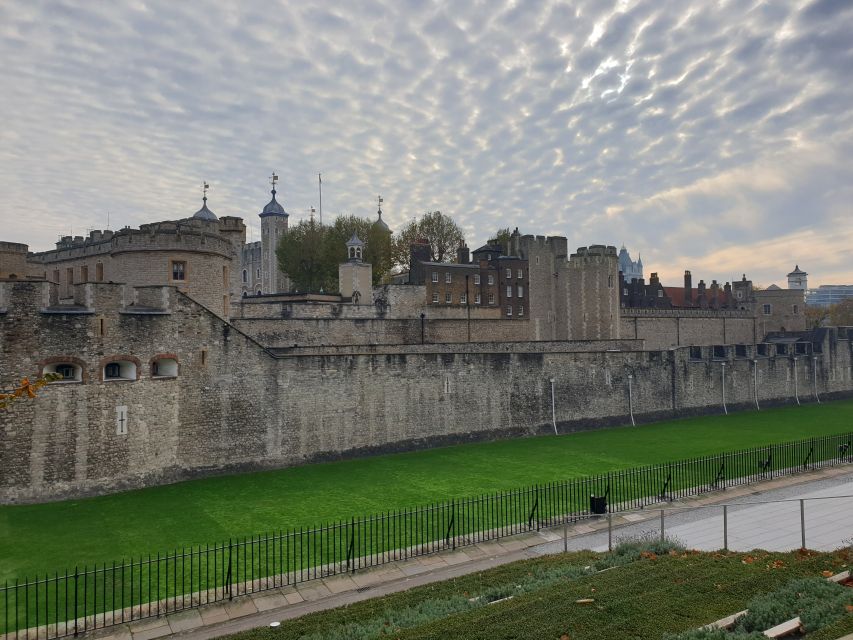
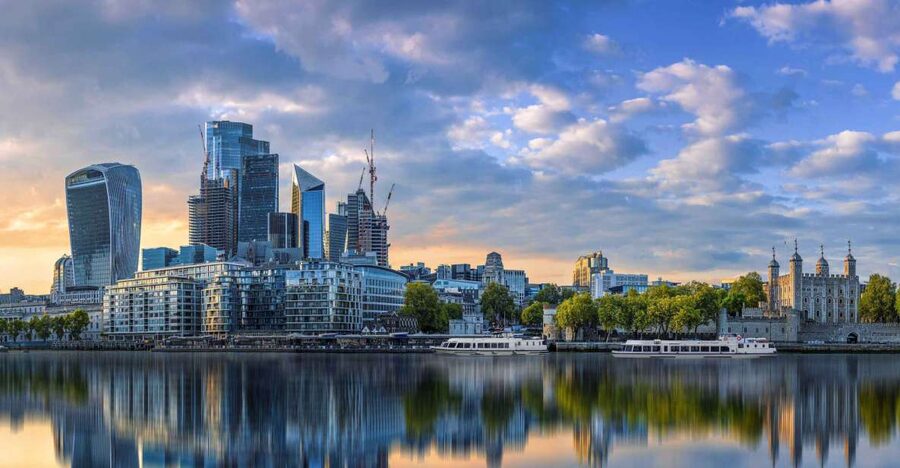
Then you hit the Tower of London area, where the tour leans into the sinister and bloody past. This isn’t a dry lecture. Expect short, focused commentary designed to match what you’re seeing around you—structures that were built for control, punishment, and politics.
What I like here is how the tour uses character-driven history. You hear about major figures that shaped England, and you get a special emphasis on Anne Boleyn’s ghost in the mix of telling. Whether you’re into supernatural lore or not, it works as a memory tool. You’re not just remembering dates—you’re remembering a story.
The guide also ties the Tower’s mood to later eras. That’s important, because the Tower isn’t frozen in time. It keeps showing up as a symbol, and the tour helps you understand why people still react to it today.
If you’re coming with kids or friends who get restless, this is one of the stops that can hold attention. The subject matter is dramatic, and the guide’s humor keeps it from feeling like a grim history class.


St Dunstan in the East Church Garden: where the tour changes tone
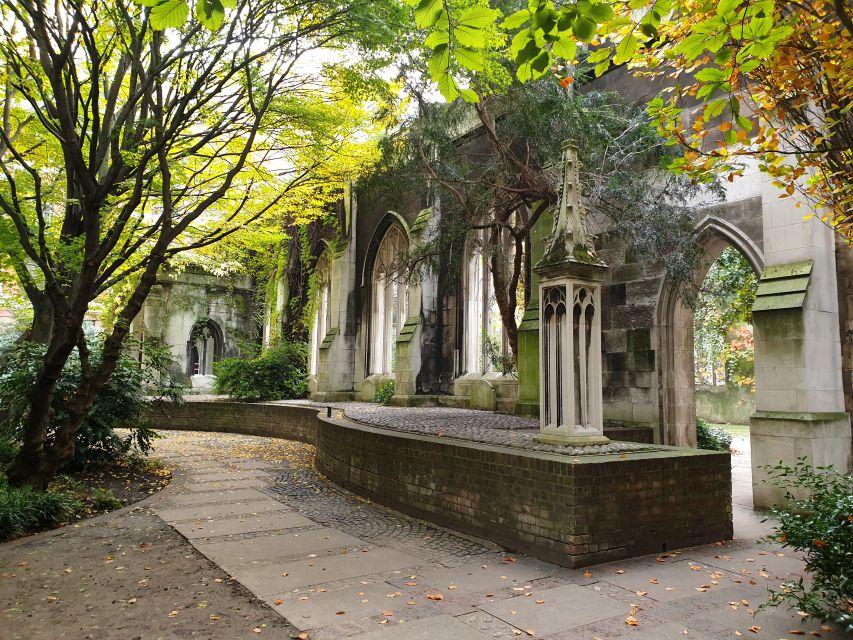
Next comes Saint Dunstan in the East Church Garden. This feels different from the grand, heavyweight landmarks. The setting gives you a breather—more human scale—while still staying in the same timeline.
I like this kind of stop because it makes the rest of the walk easier to process. When you go from the intensity of the Tower to a calmer garden setting, the story beats land better. You also get the sense that London’s past isn’t only about famous royal buildings. It’s also about how everyday places survive, change, and carry meaning forward.
There’s also a practical benefit: church gardens and quiet pockets give your eyes a chance to rest from dense streets. After a few minutes, you’re ready to take in the next big landmark without feeling overwhelmed.
Monument to the Great Fire and London Stone: how London keeps reminders in public
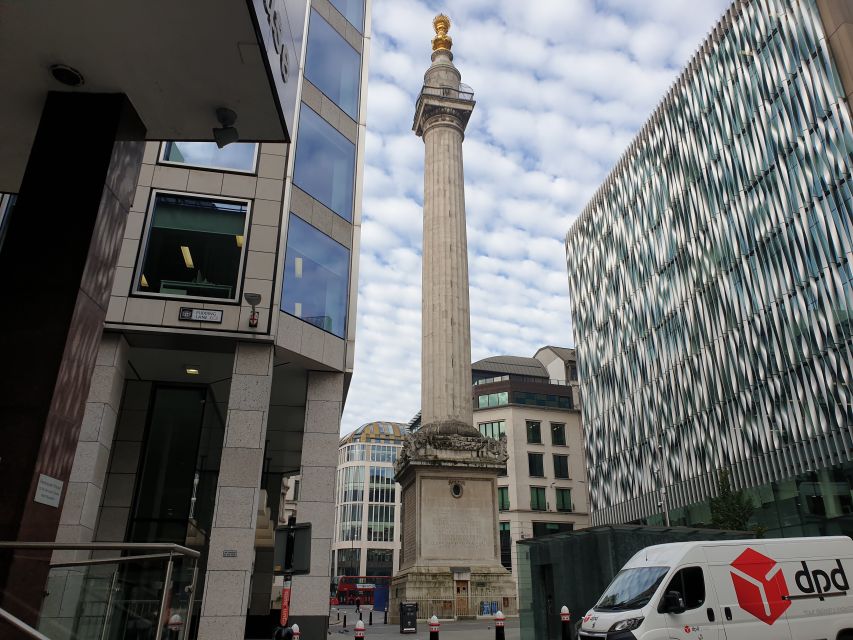
After the garden stop, the tour hits two of the most recognizable symbols of London’s endurance: the Monument to the Great Fire of London and London Stone (just the remaining part).
The Great Fire stop matters because it explains how disaster reshaped the city—and how London rebuilt instead of disappearing. When you’re walking, the scale of the monument can make it feel like a standalone event. The guide helps connect it to the broader theme of survival through fire and war, which is what ties the whole walk together.
Then you get London Stone, the remaining part. This is a “small thing with big meaning” moment. You can’t always tell why an object matters until someone explains the role it played in public life. On this tour, it becomes another piece in the puzzle of how authority and civic identity showed up in everyday spaces.
One caution: these stops can tempt you to take quick photos and move on. Try to pause longer than you think you need. The tour’s short stop length works, but it also means you’ll miss the point if you’re on autopilot.
Bank of England vaults: the tunnel story and how guides make history feel usable
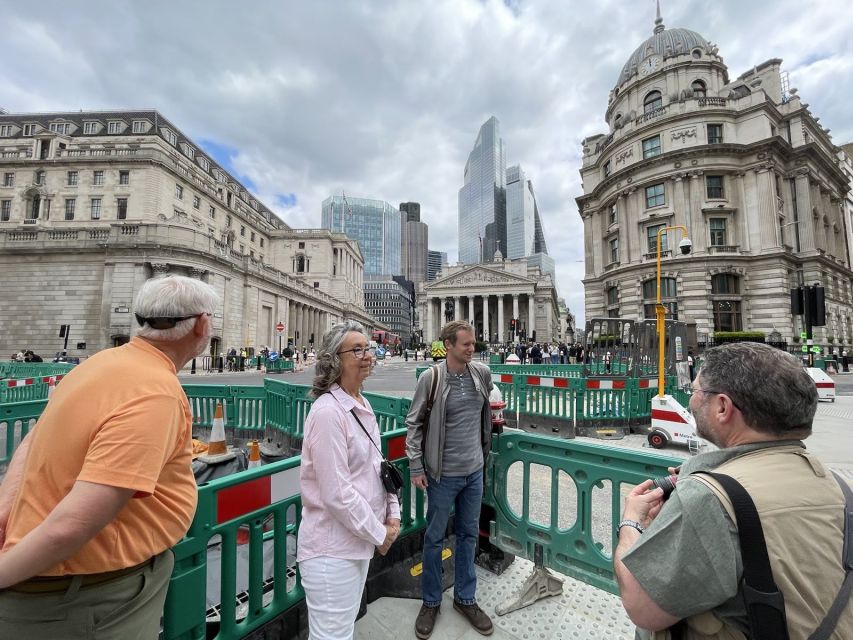
One of the most talked-about parts of the tour is the Bank of England segment, especially the way the guide covers the easiest way to tunnel into the Bank of England’s vaults. That line is clearly about storytelling style—urban legend energy, delivered like a practical guide.
Here’s what you should take from it: it’s a way to get you thinking about power, security, and the history of money in a physical place. Even when the “tunnel into the vaults” bit is played for effect, it still pulls you toward the real theme—how major institutions shape the City and how people imagine what happens behind locked doors.
I also like that the tour doesn’t treat the Bank of England like a closed-off office tower. You’re encouraged to look at it as part of a living timeline. It’s one of those moments where the tour feels like orientation for the rest of your trip: suddenly you see the street plan as something with layers, not just a route.
Guildhall and the Lord Mayor tradition: civic London in one short segment
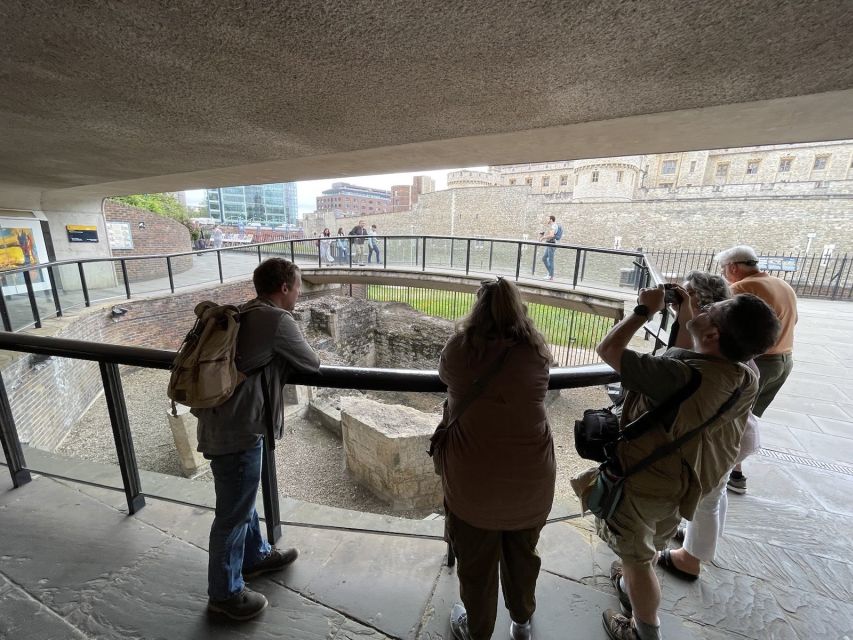
The next stop is Guildhall, London, and you also hear about the eight-century-old position of Lord Mayor. This is where the tour shifts from dramatic royal stories toward the machinery of civic life.
For readers who think history means kings and battles only, this part can be a pleasant surprise. London’s long-lasting institutions matter, and the Lord Mayor tradition is a good example. It shows you that England’s power isn’t just inherited through courts—it’s also administered through systems that keep going for centuries.
The guide’s approach helps you make sense of why these buildings show up where they do. When you later pass the same area on your own, you’ll have a clearer mental map of what role it played and why people kept returning to the same civic center.
St Paul’s Cathedral stop: the timeline lands with a sense of continuity
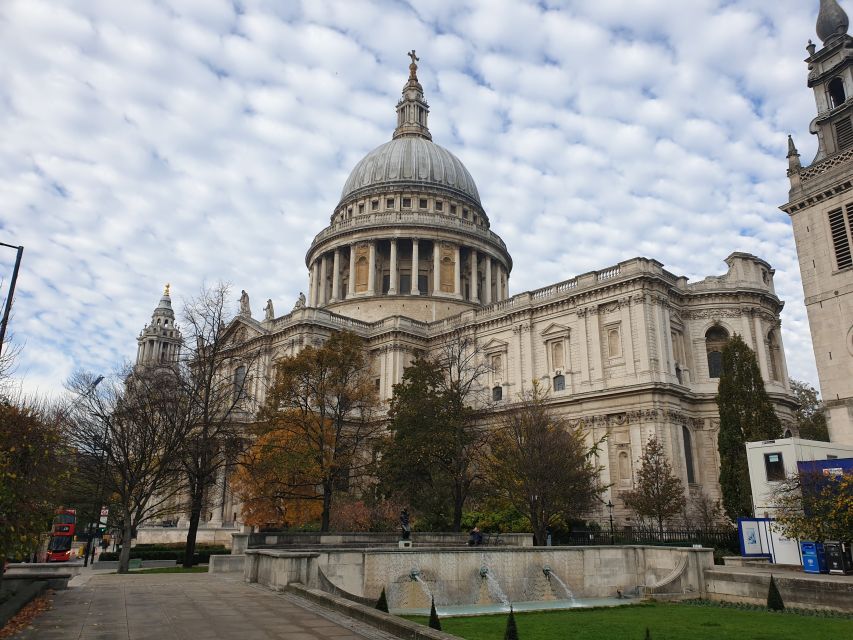
St Paul’s Cathedral appears later on the route, and it’s positioned as part of the story of how London rebuilt and redefined itself over time. The tour name-drops Christopher Wren, which matters because Wren connects directly to the city’s post-fire era in the tour’s narrative.
Even if you’ve seen St Paul’s from outside before, this stop can feel different because you approach it with context, not just visuals. You’re not only looking at architecture; you’re looking at a moment in the city’s long reaction to catastrophe and change.
Practical tip: St Paul’s is a magnet for crowds and distractions. Take a moment to listen before you start scanning for the best angle to photograph. The guide’s short explanation here is built to make you notice what you otherwise would gloss over.
Ye Olde Cheshire Cheese: a fitting finish with a real place to reset
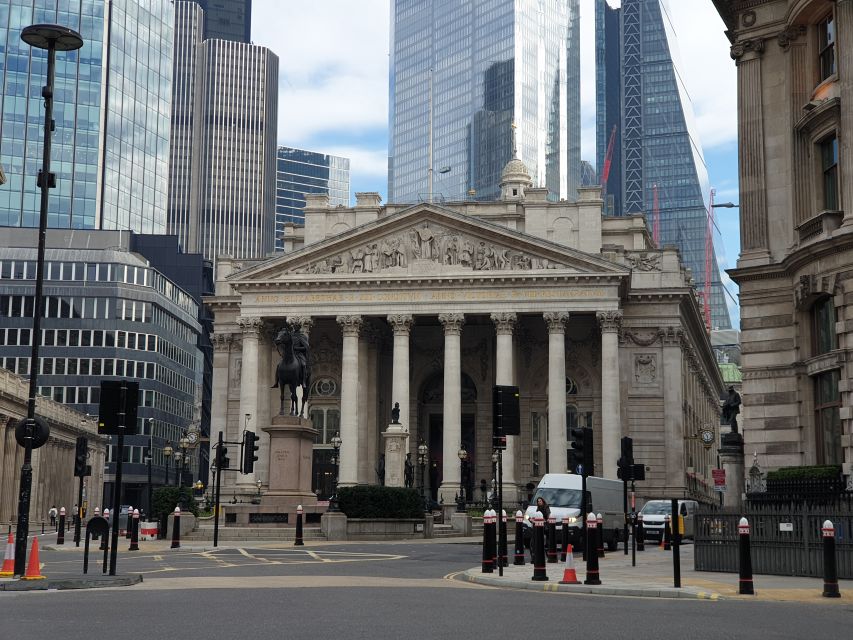
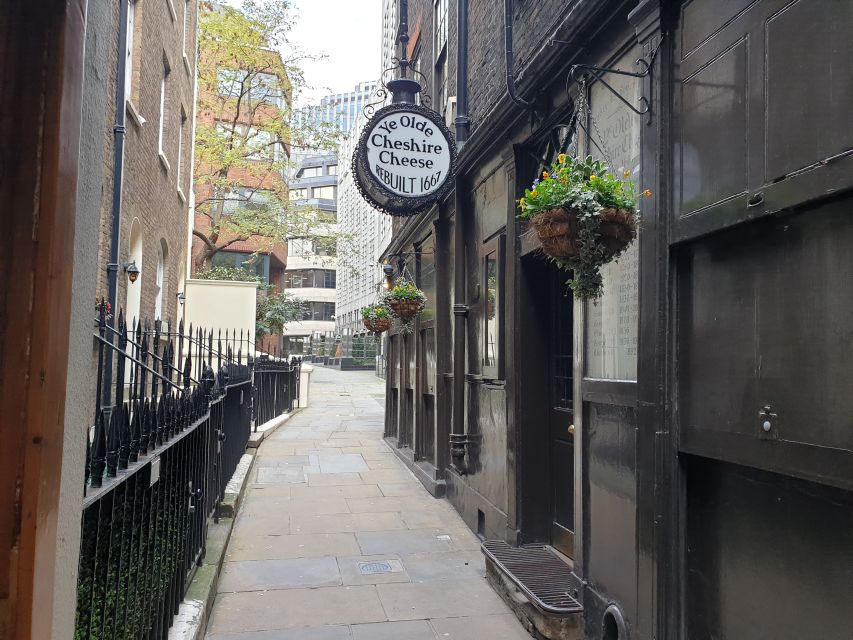
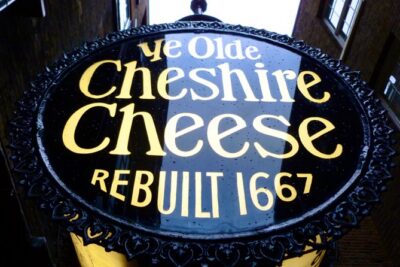
The tour ends at Ye Olde Cheshire Cheese. This is a good landing point for two reasons.
First, it gives you a chance to decompress after a 2-hour walk that includes everything from Roman ruins to grim tales at the Tower. Second, it’s a place where you can keep the conversation going while the timeline is still fresh in your head. If you want to ask follow-up questions, this is the right moment—once you stop moving, you can think.
Also, finishing at a pub means the tour doesn’t feel like a hard stop. You can treat it as a springboard: grab a drink or snack, then decide what you want to explore deeper afterward.
Price and value: is $26 fair for a 2-hour City of London walk?
At $26 per person for a 2-hour guided walk, this sits in the “good value” category for London, mostly because it’s not trying to sell you museum access. The included value is the walking tour and local guide, and the design is all about giving you context quickly—without paying separate entry tickets.
You’re also getting small-group attention. With sales limited to 15 attendees, the guide can answer questions clearly, and you’re less likely to feel like you’re crammed into a moving crowd.
The one cost-related thing to remember: entrance to museums isn’t included. If you want to go inside big attractions, you’ll have to plan that separately. For many people, that actually improves the experience, because you’ll know what you’re looking at when you buy those tickets.
What I’d consider before booking
This tour is built for walking. Total distance is about 2.5 miles, and each stop is timed to keep you moving. If you struggle with steady walking or you dislike structured routes, you might find it a bit intense.
Also, the schedule is tight enough that you’ll be grateful you brought comfortable shoes. London sidewalks can be uneven, and short stops mean you won’t spend long “lingering time” at each landmark.
If you’re the type who wants to fully tour interiors and take your time like a museum day, this won’t be that day. It’s better thought of as history orientation: a fast route through key landmarks with the stories explained clearly.
Who this tour is best for (and who might want something else)
I’d put this on your list if you like:
- Visible history, not only plaques and photos
- A guide who answers questions and keeps the tone friendly
- A timeline that connects eras, including Roman Londinium, William the Conqueror, Christopher Wren, Anne Boleyn’s ghost, and Queen Boudica with a playful Harry Potter link
- Short stops that make big sights easier to understand later
Based on the guide feedback style people mention, the experience also works well if you want clear diction and a sense of humor without the guide rambling. One thing that comes through strongly is that the guide doesn’t overload you even with lots of knowledge, which is exactly what you want on a concentrated walking tour.
If you want a slower, ticket-by-ticket museum day, you’ll probably be happier with a different kind of tour.
Should you book this Roman Ruins to Fire and War walking tour?
Book it if you want a smart, small-group route that helps you read London like a timeline. The best reason is the combination of street-level Roman ruins, dramatic Tower stories, and public landmarks tied to major disasters like the Great Fire—then wrapped up with civic London at the Guildhall and a finish at Ye Olde Cheshire Cheese.
Skip it only if walking 2.5 miles in two hours doesn’t suit you, or if you’re specifically seeking museum entrances as part of the deal. Otherwise, this is a great way to get your bearings fast, and it makes the City of London feel less like scenery and more like a story you can track with your feet.
FAQ
How long is the tour?
It takes around 2 hours.
What’s the walking distance?
The total walking distance is about 2.5 miles.
Where do I meet the guide?
Meet at the exit of Tower Hill Station. Look for your guide standing at the base of the steps leading up to the sundial, holding an Historic London Tours sign.
Where does the tour end?
The tour ends near Blackfriars Station, and it finishes at Ye Olde Cheshire Cheese.
Is museum entrance included?
No. Entrance to museums is not included.
What language is the tour in, and how many people are on it?
The tour is in English, and ticket sales are limited to fifteen attendees.
More Historical Tours in London
- London Small Group Tour of Historical Pubs
★ 5.0 · 10,422 reviews - Soho Music & Historic Pubs Tour
★ 5.0 · 1,993 reviews - London: Historic Pubs of Central London Walking Tour
★ 4.9 · 1,065 reviews - London: Soho Music and Historic Pubs Walking Tour
★ 4.9 · 836 reviews - Royal Historic Pubs Walking Guided Tour in London
★ 5.0 · 803 reviews
More Tour Reviews in London
- From London: Harry Potter Warner Bros Studio Tour
★ 4.7 · 26,588 reviews - London: Westminster to Greenwich River Thames Cruise
★ 4.5 · 22,836 reviews - Magical London: Harry Potter Guided Walking Tour
★ 4.7 · 22,044 reviews - London: Madame Tussauds London
★ 4.6 · 20,915 reviews - London: Warner Bros. Studio Harry Potter Tour & Branded Bus
★ 4.7 · 19,194 reviews
Just reviewed around London





Historical Tours, compared.
 ★ 5.0London Small Group Tour of Historical PubsFrom $4010,422 reviews
 ★ 5.0Soho Music & Historic Pubs TourFrom $441,993 reviews
 ★ 4.9Historic Pubs of Central London Walking TourFrom $391,065 reviews
 ★ 4.9Soho Music and Historic Pubs Walking TourFrom $39836 reviews
 ★ 5.0Royal Historic Pubs Walking Guided Tour in LondonFrom $44803 reviews
 ★ 5.0Private Group: Historical Pub Walking Tour of LondonFrom $173660 reviews
 ★ 4.6Rock ‘n’ Roll History TourFrom $74645 reviews
 ★ 4.7Westminster Abbey Tour with a Royal Heritage GuideFrom $93614 reviews
Browse the lists this tour appears in