

Reviewed · LONDON
Mission SUNSCREEN by Glitch Hunters
London turns into a spy puzzle today. Mission SUNSCREEN by Glitch Hunters is a phone-led clue hunt that gets you moving through City of London like a character in a storyline, not a tourist on autopilot. You solve puzzles, follow a trail of hints, and start noticing details you normally zoom past.
I especially like the self-paced format: you can pause, restart, and take the game at your own rhythm. It also has a real sense of momentum, with a mix of riddles and clues that keeps you focused while still feeling relaxed enough for family or mixed-age groups.
One thing to consider: you’ll spend a lot of time looking down at your phone while walking. Central London foot traffic and cyclists can make that a little tricky, so you’ll want to slow down and keep your head up at street crossings—especially around peak times like weekday lunch.
In This Review
- Key things to know before you play
- Mission SUNSCREEN in City of London: what the spy hunt really is
- Price and value: is $17.73 worth your time?
- Starting at Cannon Street Greater: easy start, no wandering required
- The Royal Exchange Building London stop: clues meet classic City architecture
- Leadenhall Market: solving puzzles in a real working market
- The Monument to the Great Fire of London: when a landmark becomes a story beat
- How long it takes, and why your group speed will vary
- Walking, phone time, bikes, and taking the built-in breaks
- Who Mission SUNSCREEN is best for (and who might not love it)
- Accessibility and group logistics that actually matter
- Should you book Mission SUNSCREEN by Glitch Hunters?
- FAQ
- How long does Mission SUNSCREEN take in London?
- About how much walking is involved?
- Where do we start, and does it end nearby?
- How many people can play together?
- Is it wheelchair accessible?
- What is the cancellation policy?
Key things to know before you play
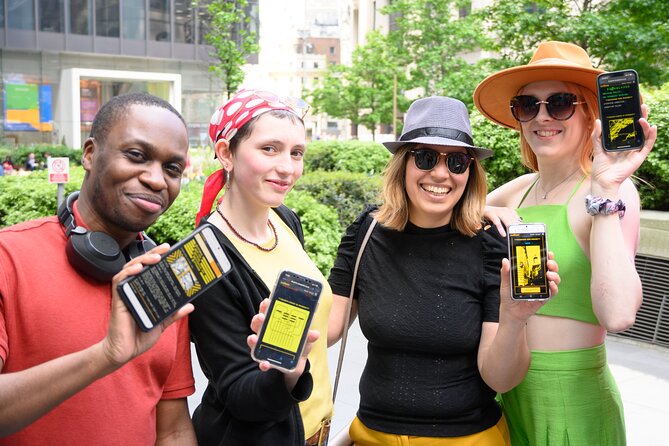
- Phone-guided spy storyline that turns iconic City sights into clue points instead of photo stops
- Self-paced, stop-and-start play, so you can go faster or take breaks without derailing the game
- Team-friendly format (2–6 people) with a head-to-head option if you split into multiple groups
- About 4,000 steps on foot, with built-in moments to grab food and drinks and regroup
- Designed to be easy to follow, and there’s a way to check the answer if you get really stuck
Not sure yet? See how a few of London's most-booked trips stack up:
- From London: Harry Potter Warner Bros Studio Tour
★ 4.7 · 26,588 reviews - London: Westminster to Greenwich River Thames Cruise
★ 4.5 · 22,836 reviews - Magical London: Harry Potter Guided Walking Tour
★ 4.7 · 22,044 reviews - London: Madame Tussauds London
★ 4.6 · 20,915 reviews
Mission SUNSCREEN in City of London: what the spy hunt really is
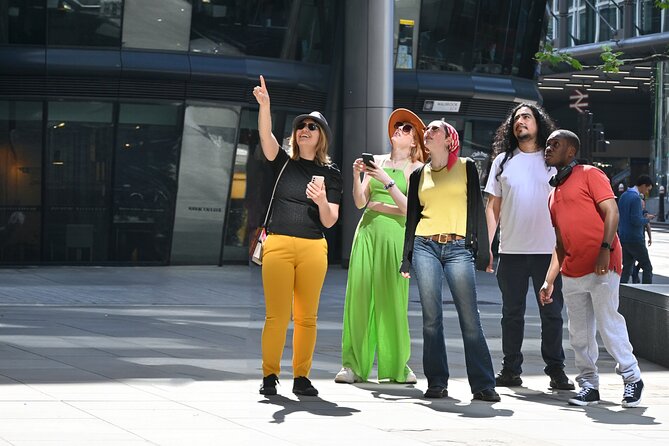
Mission SUNSCREEN by Glitch Hunters is a treasure hunt-style game you play on foot through central London. The core idea is simple: a web app on your phone guides you through a chain of clue locations, and each puzzle moves the story forward. You’re not just collecting sightseeing facts—you’re solving problems tied to places.
What makes it different from a lot of London activities is that it changes your relationship with the streets. Instead of walking from landmark to landmark, you’re walking between clue moments. That makes even familiar areas feel fresh, because you slow down and notice—faces of buildings, odd architectural details, and the little design choices that make London feel like it has layers.
I also like the pace the format supports. The game runs about 3 hours (often in the 2.5–3.5 hour range), but you’re not trapped in a rigid schedule. There are built-in breaks for food and drinks, which matters in London where “quick snack” plans can turn into a long detour. And because it’s team-based, you naturally take turns and discuss answers instead of rushing solo.
Price and value: is $17.73 worth your time?
At $17.73 per person, Mission SUNSCREEN lands in the “good value for what you get” category—especially if you’d otherwise pay for separate attractions or a private guide. You’re paying for a guided walking game across multiple well-known City sites, delivered through a web app instead of a live narration every step of the way.
Here’s the value logic: you’re getting (1) structured routing, (2) puzzle entertainment, and (3) time outside seeing real streets, not just an indoor museum circuit. If you enjoy scavenger-hunt style activities, this feels like getting a full afternoon experience for the price of a couple of coffees and a snack.
It’s also a decent pick for mixed groups. Because you play in teams of 2–6, you can split into roles naturally—one person reads clues, another spots details, another keeps an eye on crossing points and crowd flow. That teamwork can make the experience better than a generic walking tour.
Where the value can slip a bit is if you dislike phone-guided walking games or you hate puzzle formats. Then you’ll likely spend more energy on frustration than fun. If you enjoy figuring things out, it’s a very fair price.
Starting at Cannon Street Greater: easy start, no wandering required
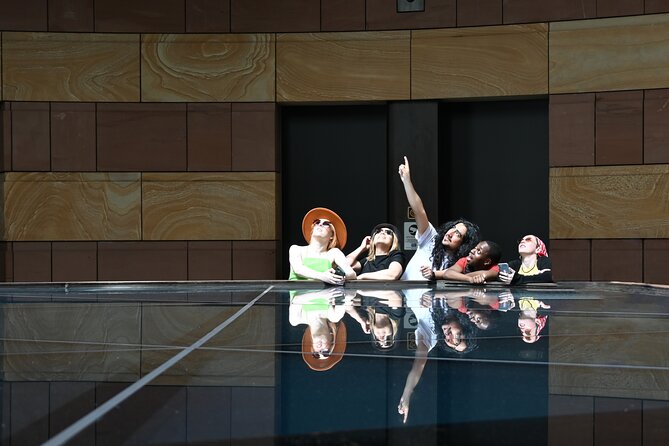
The game starts at Cannon Street Greater, Cannon St, London EC4N 6AP, UK. The activity ends back at the same meeting point, so you don’t have to plan a second pickup or deal with public transit logistics at the end.
The biggest practical win here is that the route is designed to be straightforward. Groups tend not to get lost because the phone guidance tells you where to go next and helps you confirm you’re headed the right way. That matters in the City, where streets can look similar and where you don’t want your afternoon turning into map detective work.
If you want to make your first 10 minutes smooth, do these small prep moves:
- Charge your phone fully (and bring a power bank if you tend to drain batteries)
- Use comfortable walking shoes since it’s around 4,000 steps
- Wear something weather-appropriate and be ready for you’ll be moving most of the time
- Tip for busy areas: if you’re playing at a crowded hour, expect more people around the clue points
Also, this is a private activity. That means you’re playing with your group, not a random crowd cycling in and out.



The Royal Exchange Building London stop: clues meet classic City architecture
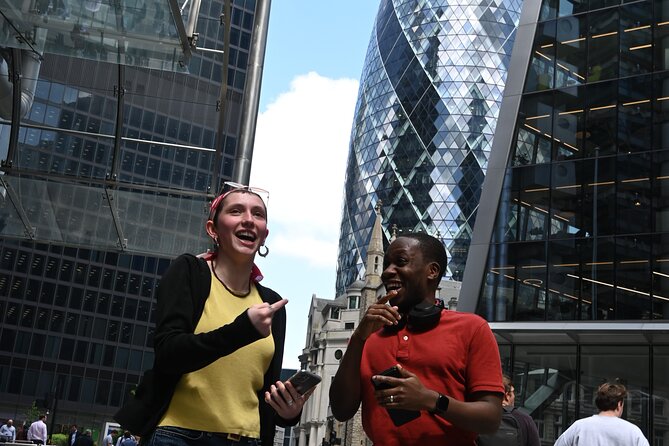
Your first big location is the Royal Exchange Building. This is one of those London spots where the setting feels important even before you start playing—granite and stone forms, the sense of place, and the kind of architecture that makes you slow down without trying.
In a typical sightseeing visit, you might stand, take a photo, and move on. In this game, you’re looking for clue connections: architectural hints, puzzle answers that relate to what you can actually see around you, and story moments tied to the physical location.
What’s great about this first stop is that it acts like your warm-up. The game gets you used to how the puzzles work while keeping you in a place that feels unmistakably “London.” It’s a smart way to help you get confident before the route continues deeper.
Potential drawback: if you’re expecting big open spaces where you can look around without thinking about foot traffic, you’ll want to stay alert. City streets around these landmarks can get busy, and because the game uses your phone, you’ll be scanning details while walking. Slow down and keep your eyes up when you’re around corners or near cyclist routes.
Leadenhall Market: solving puzzles in a real working market
Next up is Leadenhall Market. This is a different vibe than the Royal Exchange. You go from big-stone formality to a market environment where the space feels lived-in and more hands-on. That matters because it changes how puzzles feel: you’re thinking not just about buildings, but about surroundings and how people move through the area.
In the game flow, Leadenhall Market works well as a mid-adventure moment. By the time you reach it, you’ve already started thinking in clue terms. So you’re more likely to spot small architectural oddities and pay attention to patterns—things you might otherwise overlook because you’d be too busy hunting for where to stand for a good photo.
Built-in breaks also make sense here. If you want food or a drink during the adventure, this is the kind of place where your brain is already in snack mode. The game includes breaks for grabbing food and drinks, and that’s a lifesaver if you’re playing with kids or adults who get cranky when they’re hungry.
A small note to file away: if you prefer clues that rely heavily on text rather than photo-style navigation cues, you might find yourself concentrating more on your screen than you expected. One key tip from the way the game is described is to take your time with navigation and don’t rush past clue check points.
The Monument to the Great Fire of London: when a landmark becomes a story beat
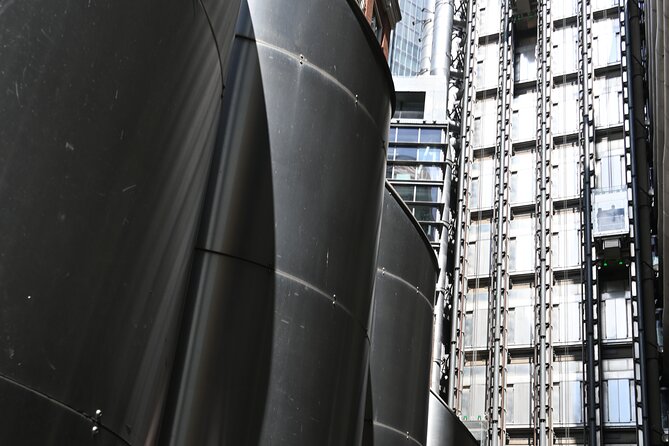
The final major sight on the route is the Monument to the Great Fire of London. Again, it’s the kind of landmark you’d normally treat as a quick stop. But in a spy game, a landmark becomes a piece of the puzzle. You’re reading your surroundings differently—asking what you can observe that connects to the story.
This stop is a strong closer because it has obvious “London signal.” The Monument is widely recognized, so even if you’re not a deep-knowledge history person, you understand you’re at something important. Then the game turns that into motivation: you’re not done just because you’ve arrived—you’re done when the clues fit and your team solves the next step.
If you like the moment when a game clicks and you feel like your team is really in control, this is where that energy often lands. Groups also tend to finish around the 3-hour mark, with some taking closer to 2.5 hours when everything goes smoothly early.
How long it takes, and why your group speed will vary
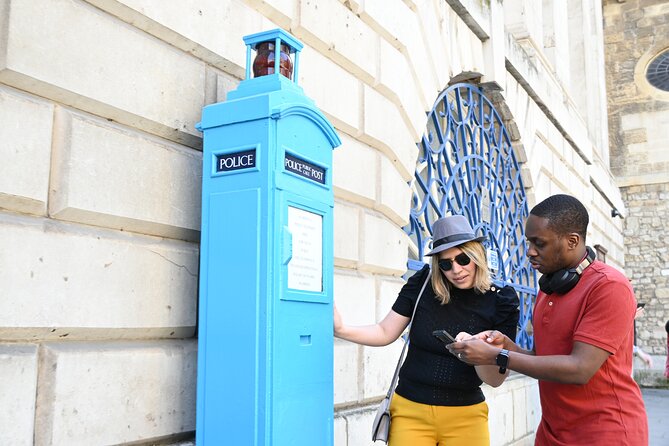
The game runs about 3 hours (roughly 3–4 hours depending on your pace). It’s designed so you can pause and restart as you please, which is handy if someone needs a restroom break or if you want to take a longer breather before the next puzzle.
In real terms, your timing comes down to three things:
- How quickly your team starts interpreting clues
- Whether you need a hint or decide to use the answer-check option
- How much time you spend at each location scanning for details
One practical advantage: there’s an option to see the answer if you get really stuck. That keeps the game from collapsing into a guessing marathon. It also prevents the kind of frustration spiral that makes walking tours feel like chores.
If your group likes competition, you can also split and run head-to-head, which naturally changes time pressure. That can speed things up for some teams and slow things down for others, depending on how comfortable people are with puzzles.
Walking, phone time, bikes, and taking the built-in breaks
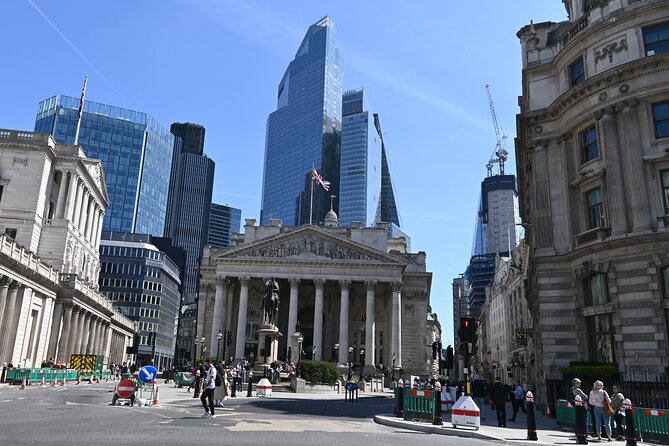
This is an outdoor walking game. Plan for around 4,000 steps, and expect you’ll be walking and thinking at the same time. Because you’ll look at your phone frequently, treat this less like a casual stroll and more like a focused walking experience.
A few practical tips to make it easier:
- Mind cyclists. Central London has them, and clue hunting means you’re less likely to scan far ahead.
- Choose the right time of day. Weekday lunch tends to be crowded; weekends can be quieter, which can make it easier to read your screen and compare clues without weaving through people.
- Use the breaks strategically. The game includes built-in breaks for food and drinks. If you plan to eat, don’t wait until you’re starving and then hunt for a place in the busiest hour.
- Keep a team rhythm. Put one person on phone navigation, one on clue reading, and one on “spot the detail” scanning. It reduces back-and-forth and makes you less likely to miss a clue.
Also, keep an eye on your comfort. You’ll be standing still at clue points, then moving again. Comfortable shoes are the difference between enjoying the architecture and feeling annoyed at the pavement.
Who Mission SUNSCREEN is best for (and who might not love it)
This is a great fit if your group enjoys games, problem-solving, and walking while staying curious. I think it’s especially well-suited for:
- Family groups with kids around middle-school age (the puzzle difficulty is described as a mix of easier and harder steps)
- Friend groups who like friendly competition and shared decision-making
- Work colleagues looking for something lighter than a formal meeting and more active than a museum day
- London first-timers who want “seeing the city” plus “doing something,” not just photos
It can also work for locals. The whole point is noticing new details in familiar streets. If you’ve lived in London for years and think you’ve seen everything at street level, a clue hunt forces you to look again.
The main “not ideal” scenario is if your group hates puzzles or hates phone-based directions. Also, if someone in your party is uncomfortable navigating while using a device, you’ll need to manage that carefully as you walk.
Accessibility and group logistics that actually matter
Mission SUNSCREEN is described as fully wheelchair accessible, and service animals are allowed. The game runs on foot with an estimated 4,000 steps, so accessibility planning should include your group’s comfort with continuous walking and stopping frequently at clue points.
It’s also designed for groups of 2–6 players. You can play as one team or create multiple groups for a head-to-head challenge. And because it’s private, your group stays together without being mixed into someone else’s storyline.
It’s near public transportation, which helps if you want to arrive early to settle in, or if you want an easy ride back after the game ends at the meeting point.
Should you book Mission SUNSCREEN by Glitch Hunters?
If you want a London activity that combines landmark walking with real engagement, I’d say this is a smart booking. For $17.73, you get a structured route across Royal Exchange, Leadenhall Market, and The Monument to the Great Fire of London, plus the kind of puzzle play that makes you look around instead of just moving through.
Book it if you like team games, don’t mind checking your phone often, and want to spend 3-ish hours outside in the City. I’d especially recommend it for mixed-age groups, because the format lets people contribute in different ways.
Skip it (or reconsider the time of day) if your group expects a classic guided tour with deep explanations and minimal screen use. In that case, the puzzle + phone rhythm may feel like too much.
FAQ
How long does Mission SUNSCREEN take in London?
It takes about 3 hours (approximately 3–4 hours depending on pace and breaks).
About how much walking is involved?
You’ll be walking around London on foot, with an estimated total of about 4,000 steps.
Where do we start, and does it end nearby?
You start at Cannon Street Greater, Cannon St, London EC4N 6AP, UK, and the activity ends back at the same meeting point.
How many people can play together?
You play in teams of 2–6 players, and you can also split into multiple groups for a head-to-head challenge.
Is it wheelchair accessible?
Yes. The experience is fully wheelchair accessible, and service animals are allowed.
What is the cancellation policy?
You can cancel for a full refund up to 24 hours in advance. If you cancel less than 24 hours before the experience starts, the amount you paid is not refunded.
More Tour Reviews in London
- From London: Harry Potter Warner Bros Studio Tour
★ 4.7 · 26,588 reviews - London: Westminster to Greenwich River Thames Cruise
★ 4.5 · 22,836 reviews - Magical London: Harry Potter Guided Walking Tour
★ 4.7 · 22,044 reviews - London: Madame Tussauds London
★ 4.6 · 20,915 reviews - London: Warner Bros. Studio Harry Potter Tour & Branded Bus
★ 4.7 · 19,194 reviews




