
Reviewed · WESTMINSTER TOURS
Imperial War Museum and Churchill War Rooms
War rooms in London hit different. This guided pairing links the British experience since 1914 with the command decisions made between 1940 and 1945. I like that it keeps a tight storyline across two major sites, instead of sending you off to figure things out alone.
Two highlights really matter for your time: you get guided coverage at the Imperial War Museum, and then a focused walkthrough of the Churchill (Cabinet) War Rooms. The guides also help you steer the visit—Andy starts with quick topic questions to use your limited time well, and Sheldon adds layers that make Churchill’s world feel clear, not just displayed.
One thing to consider: this is a short, intense format—about 3 hours total—so it’s not the best choice if you want slow browsing and long stops to read everything on every wall. Also, the tour info calls for a strong physical fitness level, so plan for standing and moving through museum spaces.
In This Review
- Key things to know before you go
- Why this two-site tour is such good value
- Your 3-hour plan: what the pacing feels like
- Stop 1: Imperial War Museum London in 90 minutes
- Transition to the Cabinet War Rooms: why the jump matters
- Stop 2: Churchill War Rooms and the 1940–1945 decision world
- The small-group factor: questions, control, and less chaos
- Price check: what $180.30 buys you (and why it’s fair)
- Where you meet, where you end, and how to prep
- Tips to get more out of both stops
- Who should book this and who might skip it
- Should you book Imperial War Museum and Churchill War Rooms?
- FAQ
- How long is the Imperial War Museum and Churchill War Rooms tour?
- What stops are included?
- Is admission included?
- What is the price per person?
- What language is the tour offered in?
- How many people are in the group?
- Where do I meet the tour?
- Where does the tour end?
- Is it near public transportation?
- Is there free cancellation?
Key things to know before you go
- Small group size (max 8) makes it easier to ask questions and keep pace.
- Admissions included at both the Imperial War Museum and Churchill War Rooms save hassle and money.
- Topic-focused guidance helps you prioritize what you care about most.
- Churchill War Rooms context covers key figures like Hastings Ismay and the Chiefs of Staff.
- Mobile ticket keeps things simple at check-in.
- You’ll have time for browsing at the souvenir shop at the War Rooms at the end.
Big Ben and the Abbey: a few more routes
- London: Westminster to Greenwich River Thames Cruise
★ 4.5 · 22,836 reviews - London: Westminster to Tower Bridge River Thames Cruise
★ 4.5 · 6,127 reviews - London: Westminster Abbey, Big Ben & Buckingham Guided Tour
★ 4.8 · 3,240 reviews - Westminster to Greenwich Sightseeing Thames Cruise in London
★ 4.5 · 2,969 reviews
Why this two-site tour is such good value
This is one of those London combinations that makes practical sense. You’re not just seeing artifacts—you’re getting the bridge between the big-picture war story (Imperial War Museum) and the decision-making room where it all tightened up (Churchill War Rooms).
For the price point, what makes it feel fair is the structure. You get guided time at both locations and admission tickets are included. In a city where guided museum time can quickly turn into a pricey add-on, this pairing keeps your spend aligned with what you actually use.
Your 3-hour plan: what the pacing feels like
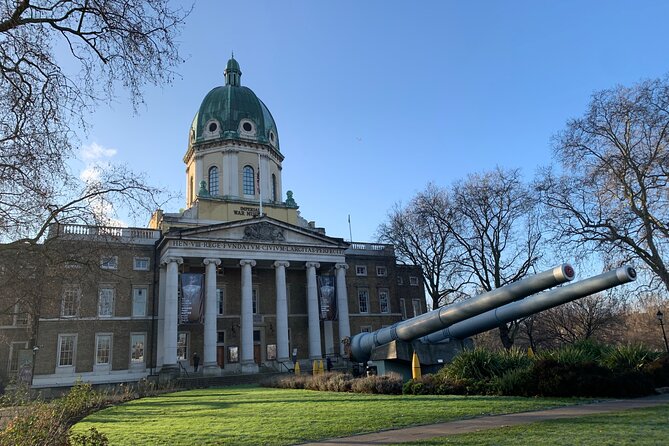
The tour runs about 3 hours and is split into two guided blocks. You start at the Imperial War Museum in Lambeth (Imperial War Museum, Lambeth Rd, London SE1 6HZ), then continue to the Churchill War Rooms at King Charles St (London SW1A 2AQ).
The schedule is tight by design: 1 hour 30 minutes for the Imperial War Museum and 1 hour 15 minutes for the War Rooms. That means the guide has to choose what to emphasize, and your best results come from going in with a few topic ideas—like air power, daily life, leadership, or strategy—so you can catch the most relevant threads.
This is offered in English, and it’s capped at 8 travelers, which helps the guides keep control of timing without feeling rushed. It also matters for questions, because you’re not fighting a crowd to ask something simple like what a specific role meant.
Stop 1: Imperial War Museum London in 90 minutes
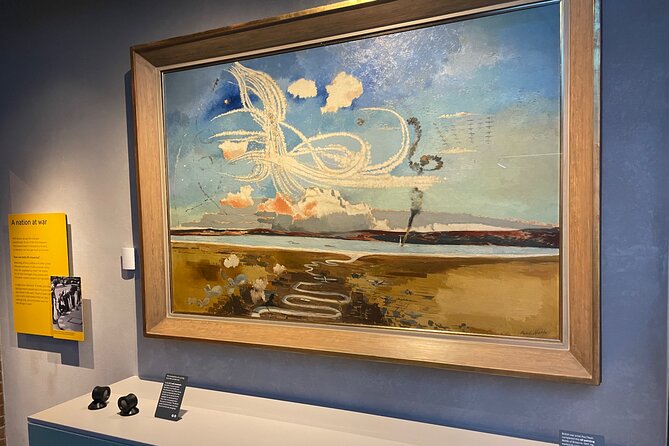
The Imperial War Museum London can feel huge at first. Your guided block is built for that problem. The visit focuses on the British experience in conflict since 1914, with a particular emphasis on the two World Wars.
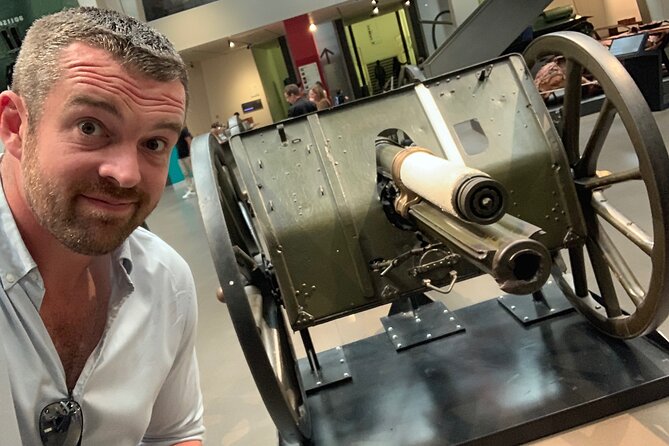
In practical terms, the guide steers you around the main site rather than trying to make you “cover everything.” One detail I really like is that Andy uses a quick upfront check-in to ask what topics you want most. That’s smart, because the museum has so much material that “trying to see it all” usually turns into seeing nothing clearly.
What you’ll likely appreciate here is the sense of progression. The whole point of starting at the museum is to give you context before you walk into the cramped, tense machinery of the Churchill War Rooms. Even if you already know the broad history, the guided selection helps you connect the human costs, the planning pressures, and the shifting priorities across the wars.
A drawback to keep in mind: this is not a slow walk with long reading time. With only 90 minutes, you’ll get focused highlights rather than full deep-dive coverage of every display. If you’re the type who reads every caption, plan to come back another day—because the tour is designed to fit the story, not to replace self-guided museum time.
Still deciding? A handful more London outings we rated



Transition to the Cabinet War Rooms: why the jump matters
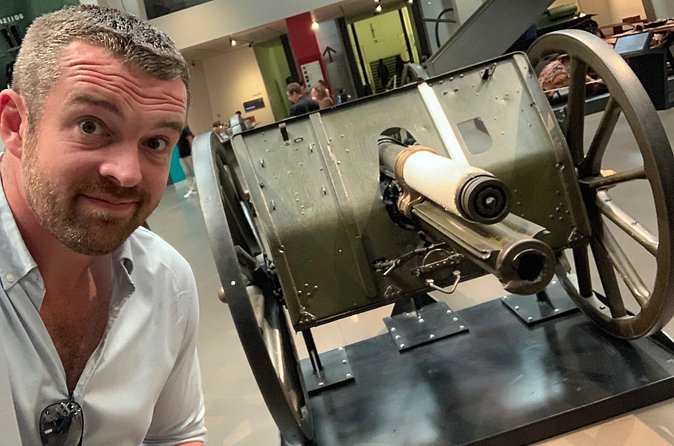
Moving from the Imperial War Museum to the War Rooms is more than a change of venue. It’s the shift from “what happened” to “how leadership organized and reacted.”
That transition is where the guided structure pays off. The War Rooms are about systems: personnel, communication, and planning under extreme pressure. Coming from the museum first gives you the background to understand why those rooms mattered, instead of treating them like a set dressing of famous names.
Even if you’re not a strict history nerd, this kind of jump works because it changes your mental model. You stop thinking only in terms of battles and start thinking in terms of decisions—who needed what, when information arrived, and how leaders tried to steer outcomes with incomplete knowledge.
Stop 2: Churchill War Rooms and the 1940–1945 decision world
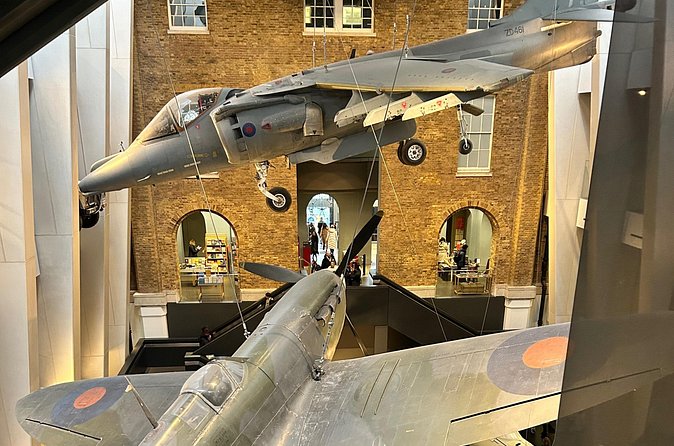
The Churchill (Cabinet) War Rooms housed key tools and personnel of the British war administration between 1940 and 1945. In other words, this is where the day-to-day machinery of wartime leadership happened, not just where history happened later.
The guided visit is built around Churchill’s life and history, then expands to other essential figures involved in the administration. You’ll hear about the Chiefs of Staff and Churchill’s principal military advisor, Hastings Ismay—the kind of detail that turns “Churchill the man” into “Churchill the operating system.”
This is also where the guide’s style really matters. Sheldon’s approach, as reflected in feedback, adds layers: not just what was in the building, but the historical nuances and background that help you understand how leaders thought and operated in that confined space. That matters, because the War Rooms can feel like a museum set unless the guide explains the logic behind the layout and the roles.
What I’d call the biggest value here is atmosphere with meaning. The rooms give you the physical sense of urgency and control. But you still need the guidance to connect that feeling to what decisions were being made and why particular people were involved.
As for pacing, you get 1 hour 15 minutes. That’s enough to see the main areas and hit the key storyline. It’s not enough time to linger over every surface as if it were your personal archive. If you want extra time for deeper reading, you’ll need a return visit after the tour.
The small-group factor: questions, control, and less chaos
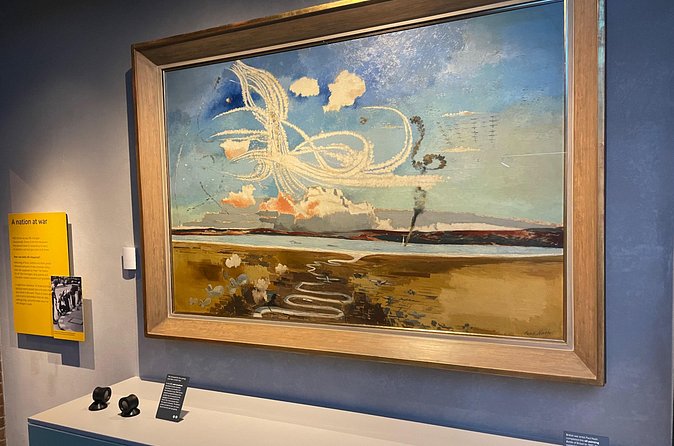
A group size of up to 8 might sound like a minor detail until you’re standing in a museum. Here it helps in three ways.
First, it supports pacing. The guides can keep you moving without dragging your feet, and they can slow down for questions without losing the schedule.
Second, it improves the quality of the answers. Andy’s upfront topic questions are a good example of how the group size enables that quick customization. Sheldon can also tailor attention to the most relevant parts of Churchill’s world rather than repeating the same script at full volume.
Third, it makes the experience feel less like “watch and follow” and more like a guided conversation with structure. In practice, that’s what turns a 3-hour tour into something you remember, rather than something you forget after your next subway stop.
Price check: what $180.30 buys you (and why it’s fair)
At $180.30 per person for about 3 hours, the price needs to be judged against what’s included and what you skip. Here’s the key: admission tickets are included for both stops. That alone removes a common “gotcha,” where you pay for the guide but still have to pay full entry at each site.
You also get guided time in two major attractions. Instead of spending your day hopping between sites with no roadmap, you spend it with someone who selects the most important pieces for the time you have. That selection is not filler—it’s the whole reason your schedule feels doable.
Is it budget travel? Not really. But it is value-oriented. You’re paying for efficient interpretation in a limited timeframe—exactly the kind of experience that pays off in London, where distance, crowds, and decision fatigue can chew up a day fast.
One more practical angle: the tour is often booked well in advance (on average 86 days ahead). That’s a sign of demand, and it’s also a hint that if you’re traveling in a busy season, you’ll want to plan ahead rather than treating this as a last-minute gamble.
Where you meet, where you end, and how to prep
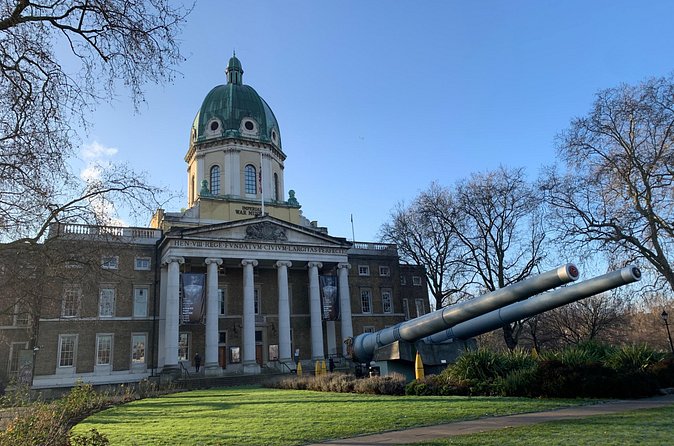
You’ll start at Imperial War Museum, Lambeth Rd, London SE1 6HZ. The tour ends at Churchill War Rooms, King Charles St, London SW1A 2AQ. The good news: it’s described as near public transportation, so you shouldn’t have to treat this like a car-only mission.
Also, you’ll receive a mobile ticket, which makes check-in smoother than paper tickets in a city where you’ll already be juggling maps, phones, and the next stop.
Finally, the tour notes call for a strong physical fitness level. That doesn’t automatically mean it’s miserable, but it does mean you should expect standing and moving through museum spaces at a guided pace. If you have mobility limits, check with the provider about fit before booking.
Tips to get more out of both stops
If you want this tour to click fast, do two simple things.
First, come with a short list of what you care about most. The museum visit works best when the guide can steer your time, and Andy’s approach is built around those topic questions.
Second, treat the War Rooms block as a leadership-and-decisions visit, not an “everything display” visit. Go in ready to absorb who made calls and how the administration worked, including the role of figures like Hastings Ismay.
One small bonus: you’ll be left to browse the souvenir shop at the War Rooms. If you want something specific, pick it up at the end, when you have that buffer.
Who should book this and who might skip it
This tour is a great match if you want a guided, concentrated introduction to Britain’s wartime story and the operational world behind Churchill’s leadership. It’s also a strong fit if you like museums but hate the overwhelm of trying to choose what matters on your own.
It’s less ideal if you want to read everything slowly or spend hours inside the museum galleries. The 3-hour format is a sprint with expert steering, not a leisurely stroll.
And because the tour requires a strong physical fitness level, I’d skip it if your mobility needs make standing and moving difficult for extended periods.
Should you book Imperial War Museum and Churchill War Rooms?
I’d book it if you want the “connect the dots” experience: big-picture war context first, then the tense command-room world right after. The included admissions plus the small-group format make it feel like you’re paying for focus, not just access.
I’d think twice if you’re the kind of traveler who needs long free time in museums to absorb everything at your own pace. In that case, consider doing the sites on your own—or pair a guided tour with additional self-guided time on a separate day.
Either way, if you enjoy well-timed history storytelling with room to ask questions, this is one of the more efficient ways to understand how Britain fought and how leadership tried to manage the pressure.
FAQ
How long is the Imperial War Museum and Churchill War Rooms tour?
It runs about 3 hours in total.
What stops are included?
You visit the Imperial War Museum London first, then the Churchill (Cabinet) War Rooms.
Is admission included?
Yes. Admission tickets are included for both the Imperial War Museum and the Churchill War Rooms.
What is the price per person?
The price is listed as $180.30 per person.
What language is the tour offered in?
The tour is offered in English.
How many people are in the group?
This experience has a maximum of 8 travelers.
Where do I meet the tour?
The start point is Imperial War Museum, Lambeth Rd, London SE1 6HZ, UK.
Where does the tour end?
The tour ends at Churchill War Rooms, King Charles St, London SW1A 2AQ, UK.
Is it near public transportation?
Yes, it’s described as near public transportation.
Is there free cancellation?
Yes. You can cancel up to 24 hours in advance for a full refund.
More Museums in London
- Tower of London and Crown Jewels Exhibition Ticket
★ 4.5 · 6,677 reviews - London: Chelsea Football Club Stadium and Museum Tour
★ 4.8 · 4,576 reviews - Chelsea FC Stadium Tours and Museum
★ 5.0 · 1,908 reviews - London: British Museum Guided Tour
★ 4.3 · 1,182 reviews - Official tickets: Moco Modern & Contemporary Art Museum
★ 4.5 · 1,157 reviews
More Tour Reviews in London
- From London: Harry Potter Warner Bros Studio Tour
★ 4.7 · 26,588 reviews - London: Westminster to Greenwich River Thames Cruise
★ 4.5 · 22,836 reviews - Magical London: Harry Potter Guided Walking Tour
★ 4.7 · 22,044 reviews - London: Madame Tussauds London
★ 4.6 · 20,915 reviews - London: Warner Bros. Studio Harry Potter Tour & Branded Bus
★ 4.7 · 19,194 reviews
Around Westminster, Keep Going
- London: Westminster to Greenwich River Thames Cruise
★ 4.5 · 22,836 reviews - London: Westminster to Tower Bridge River Thames Cruise
★ 4.5 · 6,127 reviews - London: Westminster Abbey, Big Ben & Buckingham Guided Tour
★ 4.8 · 3,240 reviews - Westminster to Greenwich Sightseeing Thames Cruise in London
★ 4.5 · 2,969 reviews - London’s Palaces & Parliament Tour (See Over 20+ London Top Sights)
★ 5.0 · 1,609 reviews
Just reviewed around London





Westminster Tours, compared.
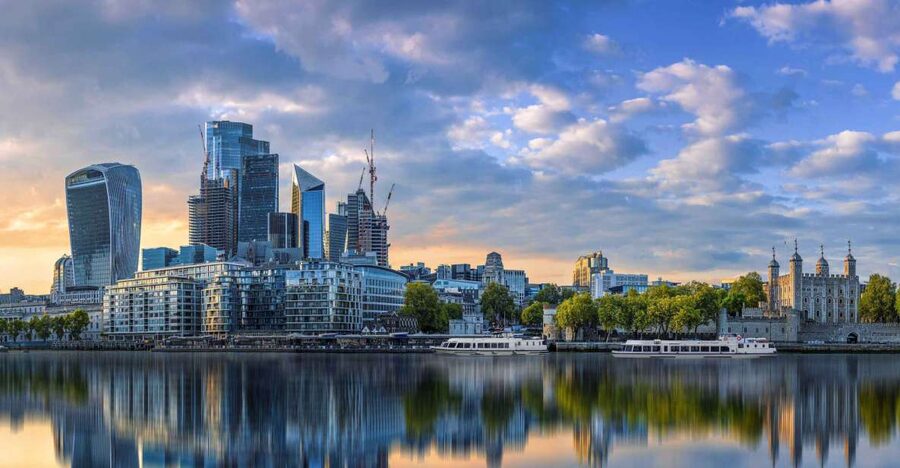 ★ 4.5Westminster to Greenwich River Thames CruiseFrom $2222,836 reviews
 ★ 4.5Westminster to Tower Bridge River Thames CruiseFrom $186,127 reviews
 ★ 4.8Westminster Abbey, Big Ben & Buckingham Guided TourFrom $553,240 reviews
 ★ 4.5Westminster to Greenwich Sightseeing Thames Cruise in LondonFrom $222,969 reviews
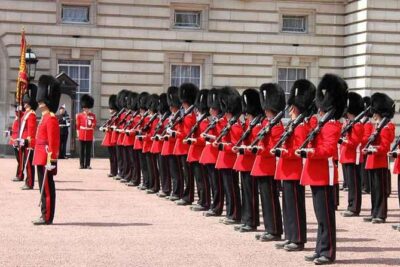 ★ 5.0London’s Palaces & Parliament Tour (See Over 20+ London Top Sights)From $301,609 reviews
 ★ 5.0Westminster Guided Walking Tour with Abbey EntryFrom $1221,282 reviews
 ★ 4.5Walking Tour of London Westminster Abbey, Big Ben, BuckinghamFrom $951,213 reviews
 ★ 5.0Westminster 3 Hour Walking Tour and Visit of Churchill War RoomsFrom $135967 reviews
Browse the lists this tour appears in