
Reviewed · LONDON
Hackney, Shoreditch & Spitalfields: politics and culture
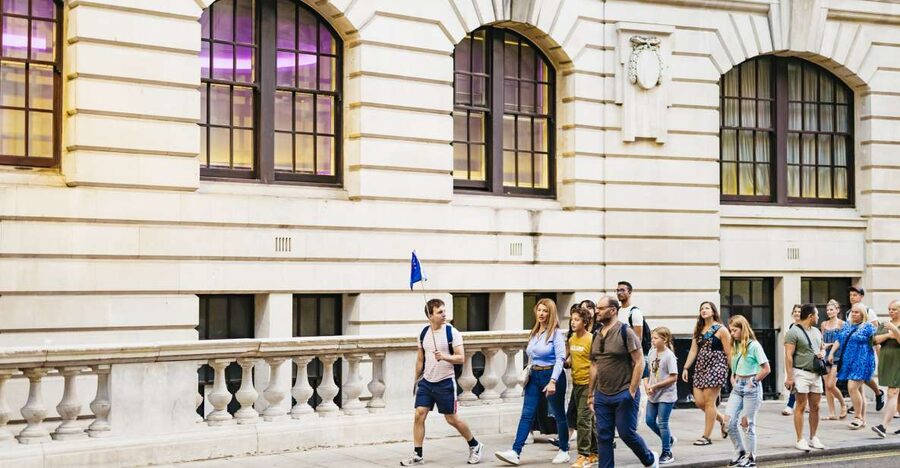
London’s East End works best on foot. This walk strings together Hackney’s politics and street-level culture with great storytelling.
I particularly love the mix of set-piece landmarks and everyday places, like Hackney Town Hall and Broadway Market. You’ll also get real context for why this neighborhood looks and feels the way it does. One possible drawback: it’s a full 2 hours on sidewalks, and the tour isn’t listed as suitable for everyone.
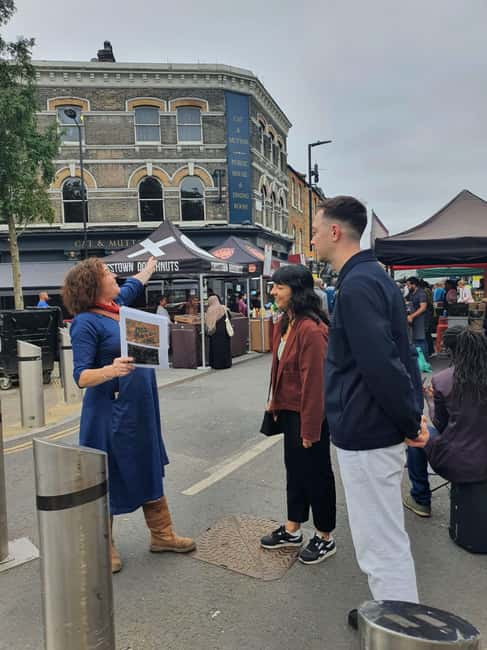
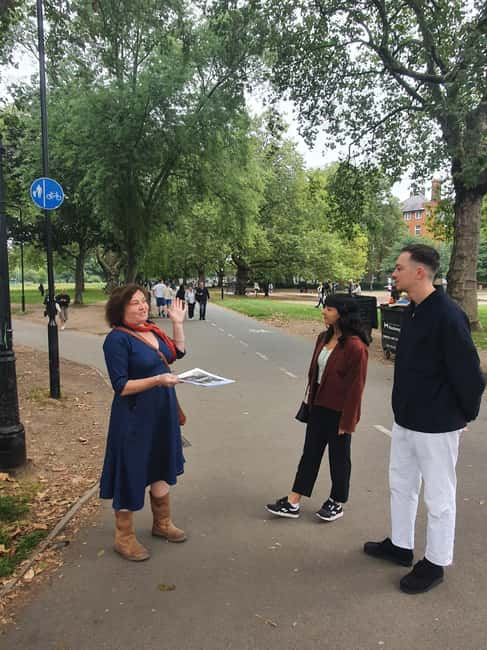
Your guide here is Liza Dodds, and you’ll spot her because she wears a red beret. Her style is smart, friendly, and very good at connecting big changes to what you can see on the street, from community spaces to housing history.
In This Review
- Key highlights you’ll feel on this walk
- Hackney Town Hall sets the tone for East End politics
- London Fields: pasture, squatters, and today’s hangout
- Broadway Market and the stop for pie and mash
- Regent’s Canal slows everything down
- A City Farm right in the middle of the city
- Columbia Road Flower Market: Sunday color and craft shops
- Boundary Estate at Arnold Circus: housing history you can see
- Bethnal Green Road to Brick Lane: cultures, food, and street art
- A final bite near the top of the lane
- Price value: what $32 buys in 2 hours
- Who this walk is for (and who should think twice)
- Should you book this Hackney, Shoreditch & Spitalfields walk?
- FAQ
- Where do I meet for the tour?
- How long is the tour?
- What does it cost?
- Which markets are included, and what days do they run?
- Is the tour wheelchair accessible?
- Are there extra charges during the tour?
Key highlights you’ll feel on this walk
- Hackney Town Hall’s Art Deco 1930s presence and its link to local performance history at the nearby Hackney Empire
- Broadway Market’s Saturday street life, plus the rare East End pie and mash shop stop
- London Fields as a long-time gathering place, from pasture to squatters’ movement to today’s community park
- Regent’s Canal and old gasworks views, then a City Farm with goats, sheep, and chickens
- Columbia Road on Sundays, when flowers and small shops take over the Victorian terraces
- Brick Lane’s layered communities, finishing with a classic salt beef bagel option
Not sure yet? See how a few of London's most-booked trips stack up:
- From London: Harry Potter Warner Bros Studio Tour
★ 4.7 · 26,588 reviews - London: Westminster to Greenwich River Thames Cruise
★ 4.5 · 22,836 reviews - Magical London: Harry Potter Guided Walking Tour
★ 4.7 · 22,044 reviews - London: Madame Tussauds London
★ 4.6 · 20,915 reviews
Hackney Town Hall sets the tone for East End politics
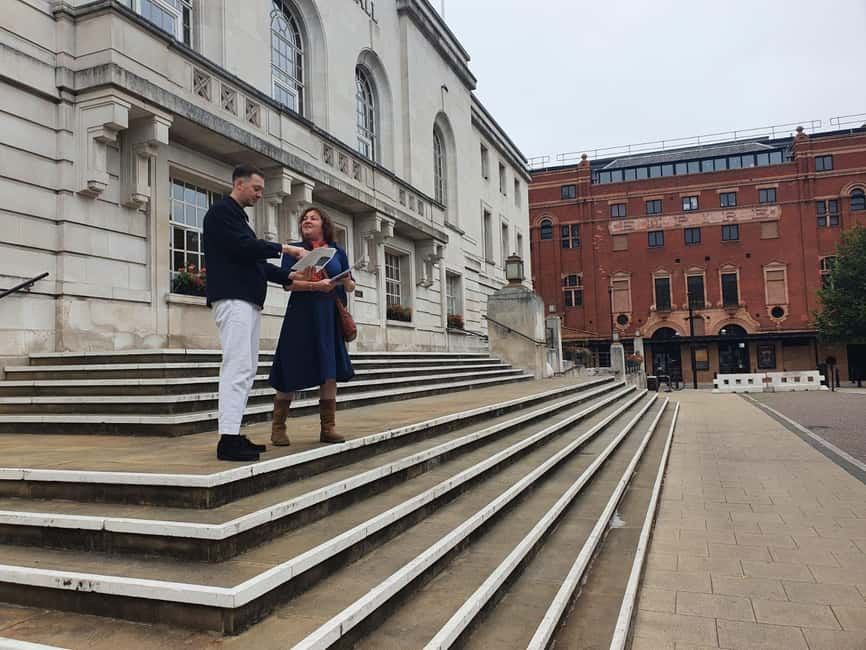
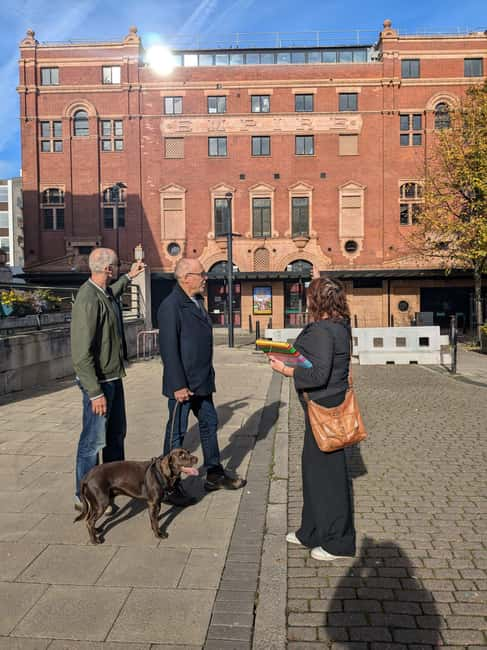
Most walks start with directions. This one starts with a reminder that civic buildings matter. You’ll meet on the steps of Hackney Town Hall, an Art Deco showpiece from the 1930s, and the vibe is instantly more serious than a casual wander.
Right next door, the Hackney Empire also adds a sense of past entertainment and public life. The tour’s commentary links these places to the broader story of working-class London, culture, and the ways communities claim space.
This is one of the few East End experiences where the “why” comes along with the “what.” You’re not only looking at streets. You’re learning how public choices, migrations, and community organizing shaped them.
London Fields: pasture, squatters, and today’s hangout
After meeting at the town hall, you head toward London Fields, a park locals use for a reason. The area has been a gathering spot for centuries, first as pasture for animals on the way to Smithfield, and later as a meeting point during the squatters’ movement.
That sequence is the point. London Fields isn’t just pretty. It’s a timeline written in land use, showing how ordinary people repeatedly turn open space into community space.
Today, it’s a lively park, famous for its weekend markets and community events. The Georgian houses around it help too, because they give you that classic London postcard feel while the tour keeps steering you toward the changing social story underneath.
Broadway Market and the stop for pie and mash
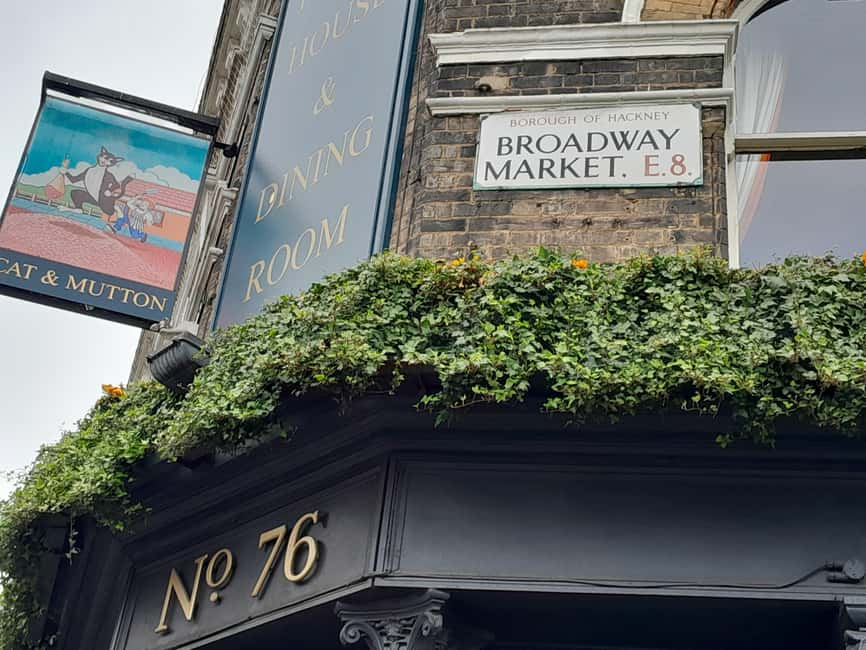
Next up is Broadway Market, one of the East End’s best-known neighborhood streets. It has a market identity that stretches back to Victorian times, and on market days it becomes a full street scene with food stalls, crafts, independent shops, and plenty of people watching.
What I like about this portion is that it’s not only trendy now. You get the sense of history without turning it into a museum. You’ll also pause at a traditional pie and mash shop that’s now used as an optician, and it’s listed—so it’s one of those rare “still-working” East End survivals.
Even if you don’t buy anything, this stop gives you an easy way to understand the neighborhood: old trades adapt, and local life keeps moving forward. If you do want to snack or browse, there are chances to do it along the route, but you won’t be hit with extra charges.

Regent’s Canal slows everything down
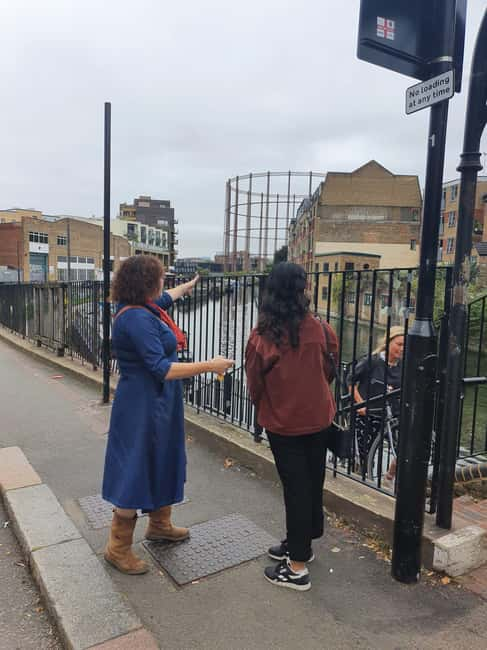
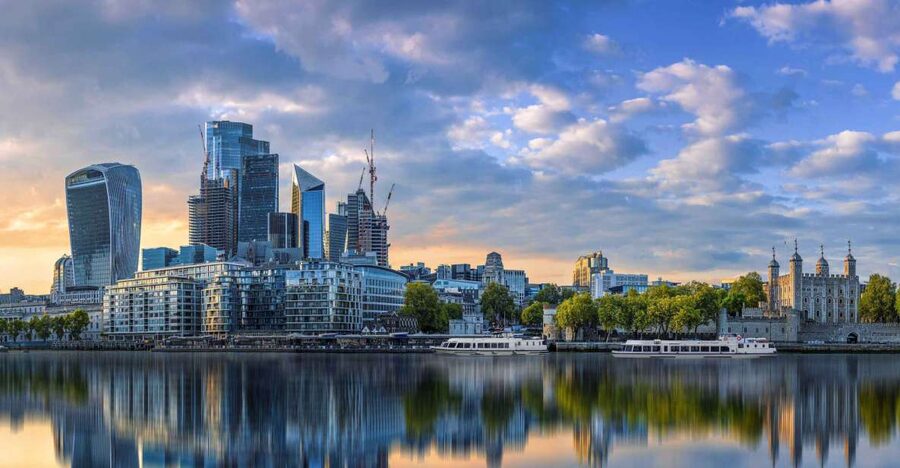
Leaving the market energy behind, the route heads toward the Regent’s Canal. This is where the walk gives you breathing room. Canal-side views can change your pace without you noticing.
You’ll see reflections across the water and old gasworks forming strong silhouettes in the background. It’s visual storytelling—industry, then quiet, then back to community life.
This matters because it balances the rest of the tour. You’re covering markets and famous streets, but you’re also learning that the East End isn’t one mood. It’s industrial, residential, political, and everyday all at once.
A City Farm right in the middle of the city
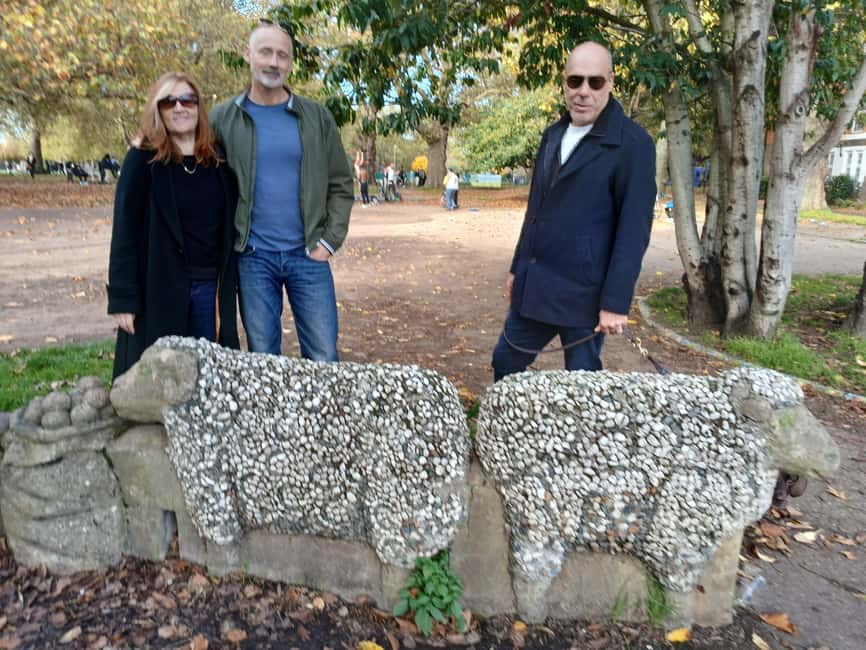
One of the most unexpected moments is when you reach a genuine City Farm. This is where the tour turns charming in the best way: goats, sheep, chickens, and community gardens.
You can smell the hay, hear the clucking, and suddenly it feels like you found a pocket of countryside. It’s also a practical lesson in how London communities create alternative spaces—places where people can learn, meet, and care for animals without leaving the city.
Just opposite, there’s also an older children’s hospital building, with a distinctive façade and period details. That contrast—farm life beside older institutional architecture—helps you see how the East End has housed different kinds of care over time.
Columbia Road Flower Market: Sunday color and craft shops
From there, you walk to Columbia Road, a stretch of Victorian terraces. On Sundays, it becomes a full-on bloom-and-browse street, with buckets overflowing with tulips, roses, houseplants, herbs, and succulents.
I love this part because it’s not only about flowers. It’s the way the market brings together locals and visitors in the same narrow space, with cafés and shops right around you. You get to slow down and look at smaller things: ceramics, prints, shellfish, clothes, jewellery, and sweet treats sold by independent businesses.
And it’s a photographer’s playground, but also just plain fun even if you don’t shoot photos. The terraces give you a sense of rhythm, and the street turns your attention outward—toward faces, shop windows, and what’s actually being sold that day.
If your trip timing lines up, this stop is one of the easiest ways to feel the neighborhood’s creativity without needing museum tickets.
Boundary Estate at Arnold Circus: housing history you can see
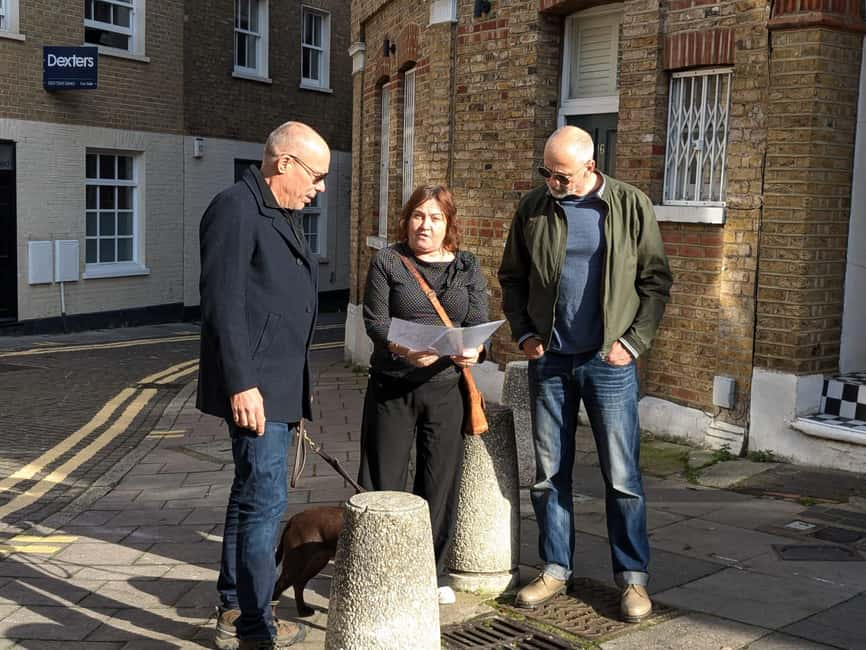
Then comes Boundary Estate, instantly recognizable thanks to its warm red-brick mansion blocks that curve around the central bandstand at Arnold Circus. The whole area feels calmer than you expect for central London.
That “almost village-like” feeling is part of the story. This is the first social housing in Europe built on the old Jago slum, and that fact gives the architecture new meaning. It’s not just pretty brickwork. It’s policy meeting people’s lives.
This section is where the tour’s political angle turns most tangible. You’re looking at design choices and community planning, and you’re learning how the East End has tried—sometimes imperfectly—to replace neglect with belonging.
Bethnal Green Road to Brick Lane: cultures, food, and street art
Your final lead-in reaches Brick Lane, one of the East End’s most famous streets. It’s famous for a reason: the street blends cultures and flavors in a way that still feels everyday, not staged.
As you walk, you’ll see street art, markets, food, fashion, and music overlapping on the same few blocks. The point isn’t to tick boxes. It’s to notice how different communities leave visible traces: language in shops, music in the air, and new businesses taking familiar street patterns.
The tour also connects Brick Lane to earlier waves of change, including Huguenot silk weavers and later Jewish immigrants, and then the present-day Bangladeshi community. That thread matters because it explains why the street keeps reinventing itself while still feeling recognizably “Brick Lane.”
A final bite near the top of the lane
If you want a very practical finale, the tour includes the chance to grab a warm salt beef bagel from a legendary Jewish bakery near the top of the lane. It’s the kind of ending that feels like London: part tradition, part hunger management, and part social ritual.
You don’t have to do it, but if you’ve walked all morning or afternoon and you want one last hit of East End flavor, this stop is easy to justify.
Price value: what $32 buys in 2 hours
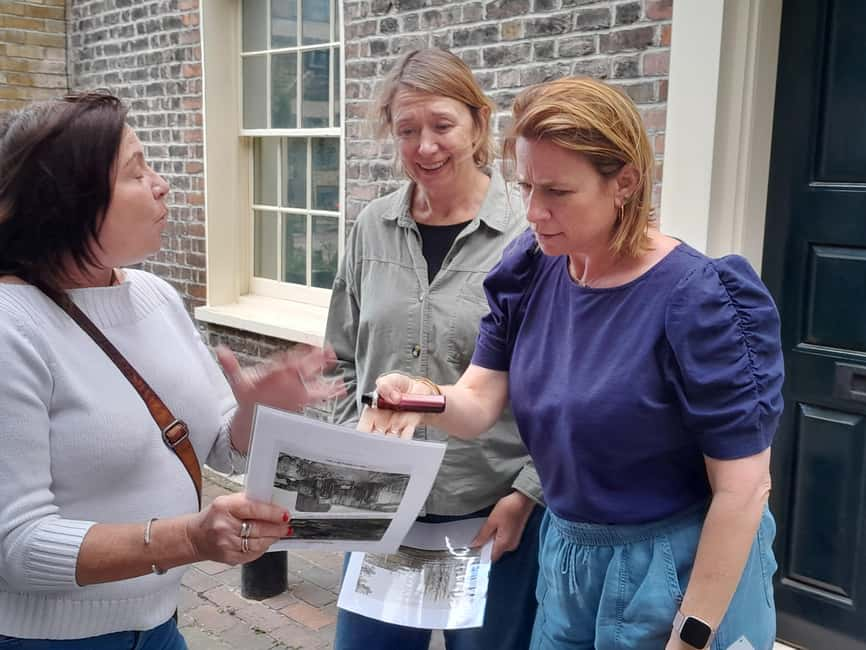
At $32 per person for a 2-hour guided walk, you’re paying for something more than scenery. You’re paying for interpretation—how to read the East End through buildings, markets, and community spaces instead of just taking pretty photos.
Two hours isn’t long, so the value comes from getting a lot of meaning packed into short distances: Town Hall to London Fields, market streets to canal calm, flowers to housing history, and then into Brick Lane’s living street culture.
Also, there are no extra charges built into the walk. You can buy things if you want, but the tour itself stays simple: guided commentary plus a steady route.
Who this walk is for (and who should think twice)
This experience fits best if you like history that’s grounded in what you can actually see: civic architecture, housing design, markets, and community spaces. If you enjoy political context mixed with street life, you’ll likely find this one satisfying.
It may not fit everyone. The tour data says it’s not suitable for visually impaired people, for those with low levels of fitness, for people over 95 years, and for hearing-impaired people. It does list wheelchair accessible, so if you’re deciding based on mobility needs, it’s worth confirming the practical details with the operator.
Should you book this Hackney, Shoreditch & Spitalfields walk?
I’d book it if you want an East End tour that treats neighborhood culture like something shaped by real choices, not just aesthetics. The combination of London Fields, Broadway Market, Regent’s Canal, the City Farm, Columbia Road, Boundary Estate, and Brick Lane gives you a full picture in two hours.
I’d skip it only if you know you need a route with less walking, or you’re relying on specific accommodations not listed for this format. Otherwise, this is a strong value pick for anyone who wants the East End’s political and cultural story, delivered in plain language by Liza Dodds—red beret and all.
FAQ
Where do I meet for the tour?
Meet on the steps of Hackney Town Hall.
How long is the tour?
The tour lasts about 2 hours.
What does it cost?
The price is listed at $32 per person.
Which markets are included, and what days do they run?
Broadway Market is described as a Saturday market. Columbia Road Flower Market is described as coming alive on Sundays.
Is the tour wheelchair accessible?
Yes, the tour is listed as wheelchair accessible.
Are there extra charges during the tour?
There are no extra charges mentioned for the walking tour itself. You can buy items in the markets if you like.
More Tour Reviews in London
- From London: Harry Potter Warner Bros Studio Tour
★ 4.7 · 26,588 reviews - London: Westminster to Greenwich River Thames Cruise
★ 4.5 · 22,836 reviews - Magical London: Harry Potter Guided Walking Tour
★ 4.7 · 22,044 reviews - London: Madame Tussauds London
★ 4.6 · 20,915 reviews - London: Warner Bros. Studio Harry Potter Tour & Branded Bus
★ 4.7 · 19,194 reviews




