
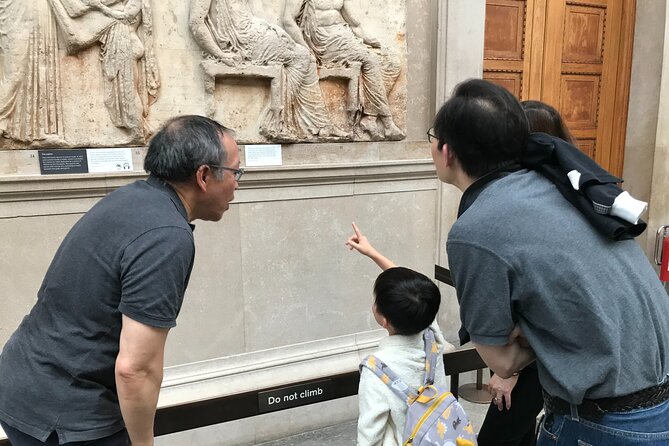
Reviewed · BRITISH MUSEUM TOURS
Explore Biblical Artifacts at the British Museum
A Bible story can feel different with stone and metal. This British Museum tour links Assyrian, Egyptian, Greek, and Roman displays to people and events you read in Scripture. With a small group and a guide who turns artifacts into a timeline, it’s half museum visit, half Bible-study session.
I especially like the way David ties the museum directly to the Bible, not in a vague way. You’ll move through key galleries (including the Parthenon sculptures area) and get Bible connections for Joseph, Moses, Jonah, Ahab, Hezekiah, Jesus, and Paul.
One possible drawback: it’s not built for the post–long-haul slump. If you’re jet-lagged, you may find the pacing and standing time harder than you expected.
In This Review
- Key highlights you should plan around
- Why this British Museum Bible walk feels practical, not preachy
- The route: how you move from Assyria and Egypt to Rome
- Ground floor focus: Assyria, Egypt, and Greek context
- Upstairs focus: Roman galleries and the Bible’s New Testament world
- The “Bible people” connection: who you’ll talk about and why it helps
- The best part: David’s method for tying artifacts to Scripture
- What to expect at each museum stage (and how to make it easier)
- Start: British Museum meeting point and quick setup
- During the Assyrian/Egyptian/Greek section: heavy sights, focused context
- The break and the reset
- Roman galleries: where the New Testament world becomes visible
- Group size, pacing, and why 3–4 hours actually works
- Value check: is $77.50 worth it for a museum tour?
- Practical tips to get the most out of this half-day
- Who should book this tour
- Should you book Explore Biblical Artifacts at the British Museum?
- FAQ
- How long is the British Museum Biblical Artifacts tour?
- Where does the tour start and end?
- What Bible-related topics and people does the tour cover?
- Is museum admission included?
- Does the tour support using a Bible app offline?
- Are folding stools available if I don’t want to stand the whole time?
- What is the cancellation window?
Key highlights you should plan around
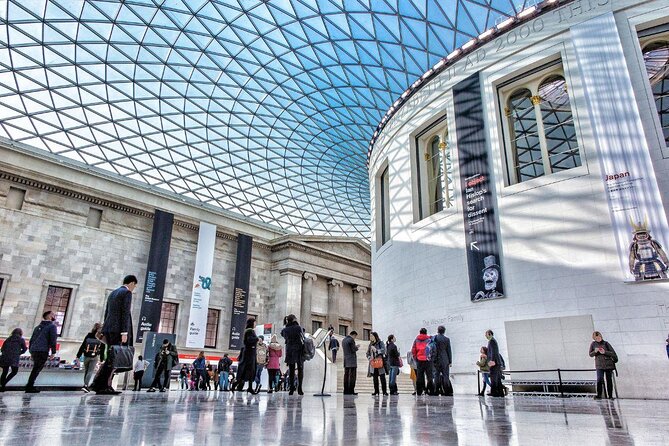
- David guides a Bible timeline using the museum’s own objects as reference points
- 40-ton Assyrian lamassu beasts set a dramatic tone right away
- Roman galleries connect to Jesus and Paul, including objects related to both
- Optional Persia and Babylon stops depending on time and your interests
- Google Doc study notes + Bible verses help you prep and follow along
- Folding stools are available, which matters for a 3–4 hour walk
More among the marbles and mummies
- London: British Museum Guided Tour
★ 4.3 · 1,182 reviews - British Museum London Guided Tour Semi-Private 8ppl Max
★ 5.0 · 984 reviews - London: British Museum Guided Tour with Entrance Tickets
★ 4.9 · 748 reviews - London: Tour of the British Museum
★ 4.1 · 678 reviews
Why this British Museum Bible walk feels practical, not preachy
The British Museum can be overwhelming. Huge halls. Random-looking relics. Plenty of context… if you already know what to look for.
This tour solves that problem with one simple move: it gives you a guided thread through ancient history that matches the Bible’s cast of characters. I like that it doesn’t ask you to memorize dates first. Instead, it uses the museum’s objects as anchors, then works outward into the people and events you already care about.
Price is also easier to justify when admission is free. At $77.50 per person for about 3 to 4 hours, what you’re paying for is the thinking time: a guide who can explain what you’re seeing and tie it to Scripture and historical setting. In a museum this big, that kind of structure is often what turns a good visit into a memorable one.
The route: how you move from Assyria and Egypt to Rome
You start on the ground floor with the galleries that make the biggest first impression. Then you head upstairs to the Roman collection, where the Bible connections shift from Old Testament characters toward the world of Jesus and Paul.
The tour is designed like a storyline with location changes. That matters because the museum layout can throw off your attention. Having a plan means you’re not constantly asking where to go next, or losing the thread after a quick bathroom break.
Ground floor focus: Assyria, Egypt, and Greek context
You begin with the Assyrian, Egyptian, and Greek galleries. This is a smart choice for Bible-focused visitors because these are the civilizations that show up again and again in the biblical narrative—sometimes directly, sometimes as the larger political weather around God’s people.
Expect these kinds of sights:
- 40-ton Assyrian lamassu beasts—serious, imposing guardian figures that instantly communicate imperial power
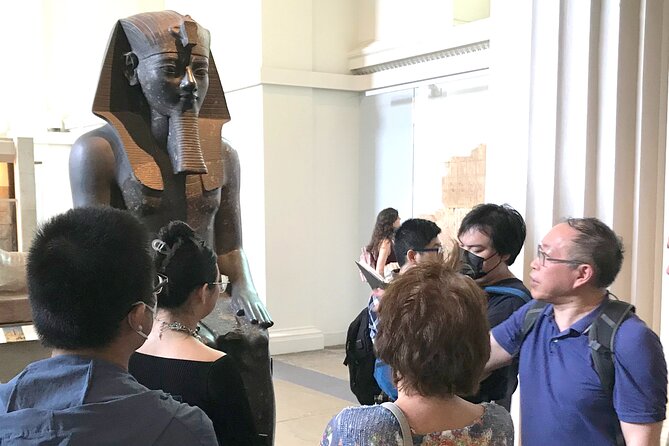
- Statues of famous pharaohs—so Egypt stops being just a name from the background
- Parthenon temple sculptures of Athens—a useful pivot to the Greek world where Paul later travels
Then you take a break, and the story shifts.
Still deciding? A handful more London outings we rated



Upstairs focus: Roman galleries and the Bible’s New Testament world
After the break, you move into the Roman galleries. This is where the tour leans hardest toward the New Testament setting, with Roman emperors and objects that connect to Jesus and Paul.
Time permitting, you may also include optional galleries such as:
- Persia
- Babylon
That matters because it gives you more than one “chapter.” Old Testament history doesn’t just happen in one place—it moves through empires. Adding Persia/Babylon can help the story feel less fragmented.
The “Bible people” connection: who you’ll talk about and why it helps
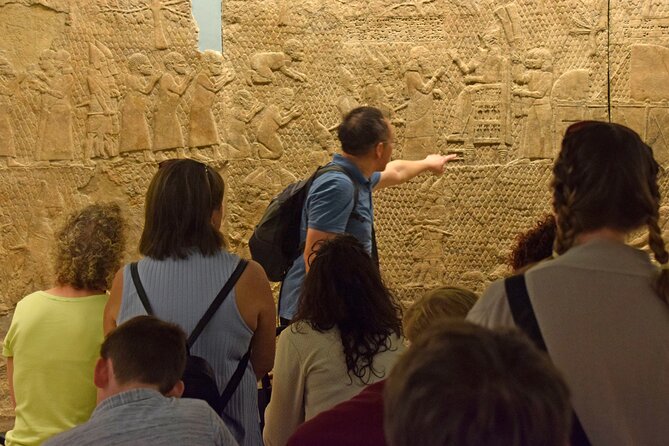
One of the most praised parts of the experience is how the guide connects named biblical figures to what you’re seeing. That can be surprisingly emotional in a museum, because it turns names into real faces, rulers, and objects tied to power.
Here are the Bible figures the tour highlights:
- Egypt: Joseph, Moses
- Assyria: Jonah, Ahab, Hezekiah
- Rome: Jesus; Paul
- Greek: Paul
Why this approach works: when you’re reading the Bible, you often meet people without much “stage scenery.” This tour fills some of that gap by placing biblical events inside the kinds of civilizations and empires your Bible already mentions.
It also helps if you’ve ever felt like Bible geography and politics are too big. Even a few guided anchors—like Assyrian imperial style or Egyptian royal symbolism—can make the bigger narrative easier to hold in your head.
The best part: David’s method for tying artifacts to Scripture
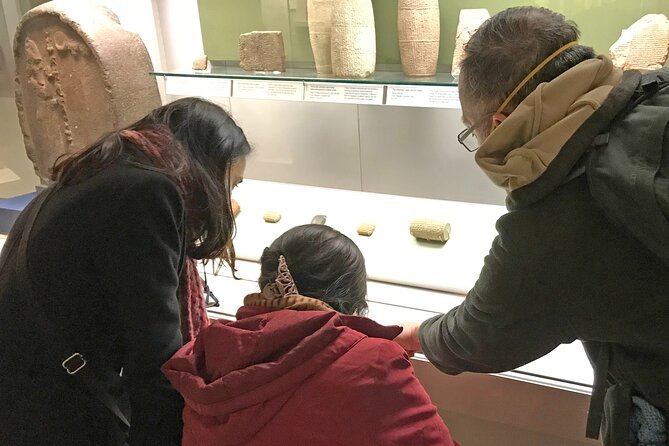
The tour’s value isn’t just that it visits famous rooms. It’s the way David links what you see to what you read.
From the way the tour is described, he focuses on:
- A biblical timeline that keeps you oriented
- Direct Bible verse lookups while you’re walking
- Museum layout knowledge so you’re not wasting time hunting
You’ll also get extra support tools. There’s a Google Doc full of study notes and related Bible verses, which is great because it gives you something to review before you forget details later in the day. It’s the kind of prep that turns scattered facts into a clearer story.
And if you’re bringing a Bible app, the tour specifically suggests using one that works offline, so you can still follow along if you don’t have reliable data. (YouVersion is a good example.)
If you care about accuracy and historical context, this format helps. It keeps the “Bible link” from becoming guesswork or loose association—your guide points the connection and helps you see how the timing and world around the text fit together.
What to expect at each museum stage (and how to make it easier)
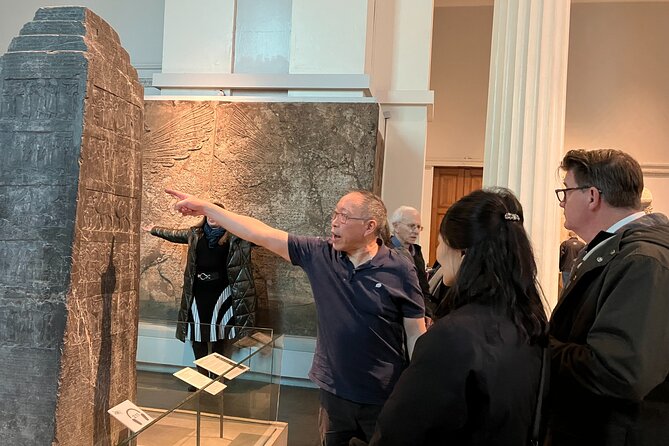
Start: British Museum meeting point and quick setup
You meet at the British Museum on Great Russell Street (Great Russell St, London WC1B 3DG), and the tour ends back near that same point.
Before you start, plan to do a short tech check:
- Review any important messages in the app or email inbox after booking
- Get your Bible app ready for airplane mode use
This is one of those small steps that prevents frustration later. When you’re in a museum, you don’t want to be troubleshooting phones while your guide is building the timeline.
During the Assyrian/Egyptian/Greek section: heavy sights, focused context
This first stretch is where the wow factor hits—especially with the lamassu beasts. Big objects can be intimidating because they’re hard to take in quickly.
David’s approach helps you slow down without dragging. He ties what you’re seeing to what the Bible references, so the museum feels like it has a purpose beyond art and archaeology.
If you’re sensitive to standing time, take advantage of the optional folding stools provided at the museum. Reviews suggest this is something the guide can help you find, and it can turn the experience from tiring to enjoyable.
The break and the reset
A reset matters on a 3–4 hour tour. You’ll get a break after the ground floor segment. Use it to refill water and adjust your plan for the upstairs portion.
If you need a moment to process, this pause helps. The museum continues, but your brain gets a chance to catch up.
Roman galleries: where the New Testament world becomes visible
Upstairs is where the tour shifts tone. You’re looking at Roman power and the political context that surrounds the story of Jesus and Paul.
The guide also looks for objects tied directly to that world. The result is that you’re not only hearing about Rome in general terms—you’re seeing how Roman imagery, rulers, and everyday objects fit the Bible narrative.
If you get the chance to include optional Persia and Babylon galleries, think of it as expanding the “in-between chapters” of Old Testament history. Those empires show up in the Bible’s larger timeline, and having them in the same guided flow can make the sequence feel more connected.
Group size, pacing, and why 3–4 hours actually works
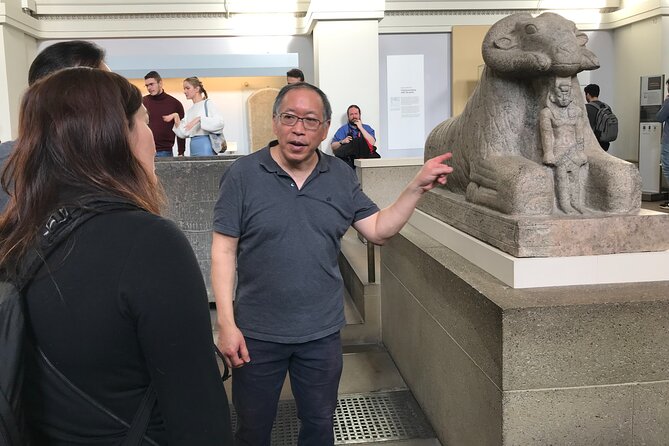
This experience caps at 10 travelers, so it stays interactive. With a group this size, your guide can respond to questions and keep the storytelling tight.
Pacing also seems flexible. One review notes the route may be adjusted if galleries close early. That’s normal museum reality, but a guide who can reroute on the fly is a big deal. It means you’re not stuck in a plan that falls apart at the last minute.
Duration is listed as 3 hours, with many people effectively staying closer to half a day once the guide’s timeline and questions pick up momentum. If you like structured walking tours that still leave room for curiosity, this is a good length.
Value check: is $77.50 worth it for a museum tour?
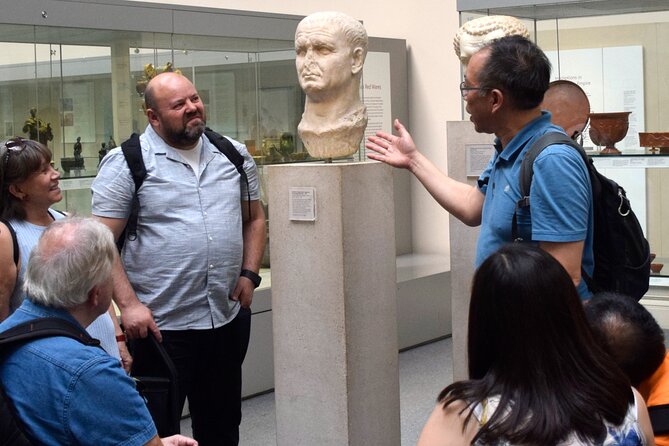
Admission to the museum areas covered is free on the tour itself, so you’re paying for:
- a guide who can explain and connect artifacts to Scripture
- prep materials (study notes and Bible verse connections)
- the added “in museum” support for using a Bible app
In other words, the cost buys you interpretation and direction. At the British Museum, that’s often the hardest part to DIY—especially if you don’t know the galleries well or you want your Bible connections to be more than casual.
Also, the tour offers group discounts (so if you’re traveling with family or friends, it can get even better value). And because the group is small, you get more than just hearing facts—you get a guided narrative thread you can follow.
Practical tips to get the most out of this half-day
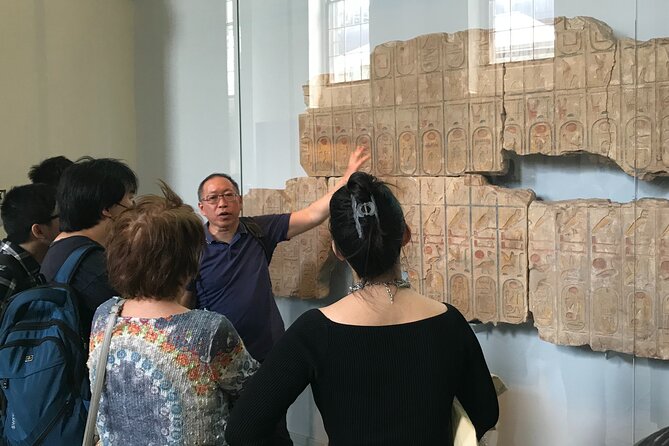
Here’s how you’ll set yourself up for a smoother, more rewarding visit:
- Prep your Bible app offline before you arrive (airplane mode is part of the plan)
- Skim the Google Doc study notes ahead of time if you can—then the tour feels easier to follow
- Bring a bit of flexibility: the tour may move based on timing and gallery access
- If you’re worried about standing, ask about the folding stool option early
And since this is timed for a museum walk, plan the rest of your day accordingly. The tour is meant to feel like a strong “morning/early afternoon anchor,” so you can keep London plans open afterward.
Who should book this tour
This one is a great match if you:
- want your Bible reading connected to real ancient objects
- like historical context, but you don’t want to study it from scratch
- enjoy a guided timeline that keeps you oriented in a big museum
- want a small-group experience (max 10) where questions can fit
It may be less ideal if you:
- are arriving in London after a long flight and feel wiped out
- prefer purely self-directed museum exploring with no organized thread
Should you book Explore Biblical Artifacts at the British Museum?
I’d book it if you want the British Museum to feel personally relevant, not just impressive. The strongest reason is the tour’s focus on connecting Scripture to specific artifacts and named biblical figures, with a guide who builds a timeline you can actually follow.
If your goal is “see a few famous highlights and leave,” you might skip it. But if your goal is “make the Bible’s world feel real through objects,” this is one of the better-value ways to do it in London—especially with free museum admission on the tour and the included study materials.
If you’re unsure, consider this simple test: do you want structure, guidance, and verse connections while you walk? If yes, you’ll likely find this a very satisfying half-day.
FAQ
How long is the British Museum Biblical Artifacts tour?
It’s scheduled for about 3 to 4 hours, roughly a half day.
Where does the tour start and end?
It starts at the British Museum at Great Russell St, London WC1B 3DG, and ends back at the meeting point.
What Bible-related topics and people does the tour cover?
The tour discusses biblical figures tied to Egypt (Joseph, Moses), Assyria (Jonah, Ahab, Hezekiah), Rome (Jesus, Paul), and the Greek world (Paul).
Is museum admission included?
Admission is listed as free for the experience.
Does the tour support using a Bible app offline?
Yes. The tour suggests a Bible app that works in airplane mode (YouVersion is mentioned as a good option).
Are folding stools available if I don’t want to stand the whole time?
Optional folding stools are available at the museum to take along on the tour.
What is the cancellation window?
You can cancel up to 24 hours in advance for a full refund.
More Museums in London
- Tower of London and Crown Jewels Exhibition Ticket
★ 4.5 · 6,677 reviews - London: Chelsea Football Club Stadium and Museum Tour
★ 4.8 · 4,576 reviews - Chelsea FC Stadium Tours and Museum
★ 5.0 · 1,908 reviews - London: British Museum Guided Tour
★ 4.3 · 1,182 reviews - Official tickets: Moco Modern & Contemporary Art Museum
★ 4.5 · 1,157 reviews
More Tour Reviews in London
- From London: Harry Potter Warner Bros Studio Tour
★ 4.7 · 26,588 reviews - London: Westminster to Greenwich River Thames Cruise
★ 4.5 · 22,836 reviews - Magical London: Harry Potter Guided Walking Tour
★ 4.7 · 22,044 reviews - London: Madame Tussauds London
★ 4.6 · 20,915 reviews - London: Warner Bros. Studio Harry Potter Tour & Branded Bus
★ 4.7 · 19,194 reviews
The British Museum, Continued
- London: British Museum Guided Tour
★ 4.3 · 1,182 reviews - British Museum London Guided Tour Semi-Private 8ppl Max
★ 5.0 · 984 reviews - London: British Museum Guided Tour with Entrance Tickets
★ 4.9 · 748 reviews - London: Tour of the British Museum
★ 4.1 · 678 reviews - London: British Museum Audio Tour & Priority Entrance Ticket
★ 4.5 · 631 reviews
Just reviewed around London





British Museum Tours, compared.
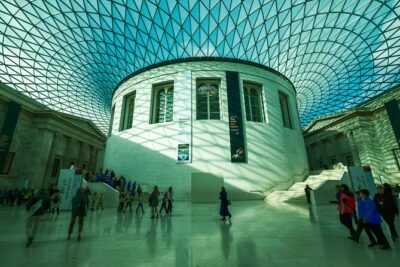 ★ 4.3British Museum Guided TourFrom $231,182 reviews
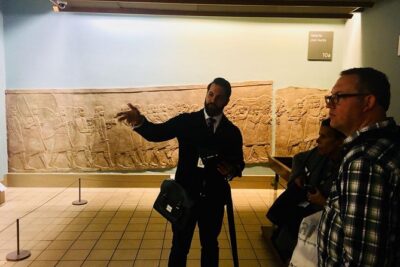 ★ 5.0British Museum London Guided Tour Semi-Private 8ppl MaxFrom $108984 reviews
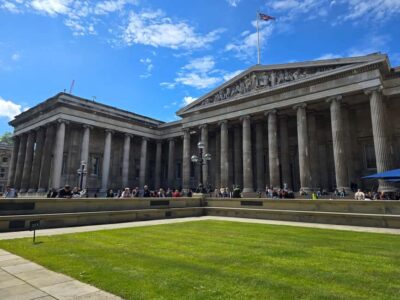 ★ 4.9British Museum Guided Tour with Entrance TicketsFrom $39748 reviews
 ★ 4.1Tour of the British MuseumFrom $14678 reviews
 ★ 4.5British Museum Audio Tour & Priority Entrance TicketFrom $9631 reviews
 ★ 5.0The British Museum London – Exclusive Guided Museum TourFrom $108555 reviews
 ★ 4.2Afternoon Tea at the British MuseumFrom $58511 reviews
 ★ 4.0British Museum Guided TourFrom $18470 reviews
Browse the lists this tour appears in