
Reviewed · CITY TOURS
City & Secrets: Explore London’s Hidden Gems
London is big. This ride makes it make sense.
I like how this guided bike tour packs real context into short stops, from the Thames to the docks and back toward the City. You’re not doing a checklist—you’re learning how London got built, burned, rebuilt, and remade. I also love the small-group feel (up to 12), which helps you move through crowded areas without feeling panicked.
Two things I especially appreciate: first, the bike format means you cover a lot of ground in about four hours, including quick photo time at major landmarks like Tower Bridge. Second, the guide storytelling is practical and local—guides I’ve seen mentioned, like Katie and Stewart, are organized and good at steering you around the city’s trickier spots while sharing the why behind what you see.
The main drawback to plan around: you’ll spend a lot of time looking from the outside or stopping briefly, and snacks and drinks aren’t included. If you’re the type who needs a full lunch stop to stay happy, you may want to eat before you go and bring cash for your own food and water.
In This Review
- Key highlights to watch for
- A 4-hour London bike loop that covers the city’s layers
- From Waterloo along the Thames to Blackfriars: the quick way to get your bearings
- Roupell Street’s Georgian blocks and the real pulse of the neighborhood
- St Paul’s, Bow bells, and the City’s odd traditions
- Markets and architecture: Leadenhall Market, Lloyds, and London Wall
- East End docks and canal history: Cable Street, Shadwell Basin, and Tobacco Dock
- Tower Bridge and the Tower of London: famous sights, fast context
- HMS Belfast, City Hall, and the Great Fire trail
- Shakespeare’s Globe on the street, then Tate Modern’s big building energy
- Price, pace, and what you should expect physically
- Who this tour is for (and who should pick something else)
- Should you book this London bike tour?
- FAQ
- How long is the bike tour?
- Where does the tour start and end?
- What time does the tour start?
- How many people are in the group?
- What is included in the price?
- Are snacks and drinks included?
- What ages can join?
- Does the tour run in bad weather?
Key highlights to watch for
- A short, smart intro to London in one afternoon, even if you only have a day or two in town
- Small group size (max 12) for easier navigation through busy central streets
- Working-class and docklands stories mixed in with iconic sights like St Paul’s and the Tower Bridge area
- Photo-friendly route with quick stops at landmarks and churches, plus time at markets and monuments
- Old London layers you can spot on the ground: Roman walls, medieval City traditions, and Great Fire reminders
Still deciding? A handful more London outings we rated
- City Sightseeing London Hop-On Hop-Off Bus & Bookable Extras
★ 4.4 · 7,374 reviews - City Sightseeing London Hop-On Hop-Off Bus Tour & Bookable Extras
★ 4.0 · 1,224 reviews - London: Go City Explorer Pass® – Tickets for 2-7 Attractions
★ 4.3 · 1,111 reviews - Private Windsor Castle, Stonehenge, The City of Bath Day Tour
★ 5.0 · 468 reviews
A 4-hour London bike loop that covers the city’s layers
This is a midday-friendly way to see London without spending your day underground or glued to slow walking crowds. You start at 189 Hercules Rd, London SE1 7LD, and the tour ends back at the same place. Timing-wise, it runs with a 2:00 pm start and runs about four hours.
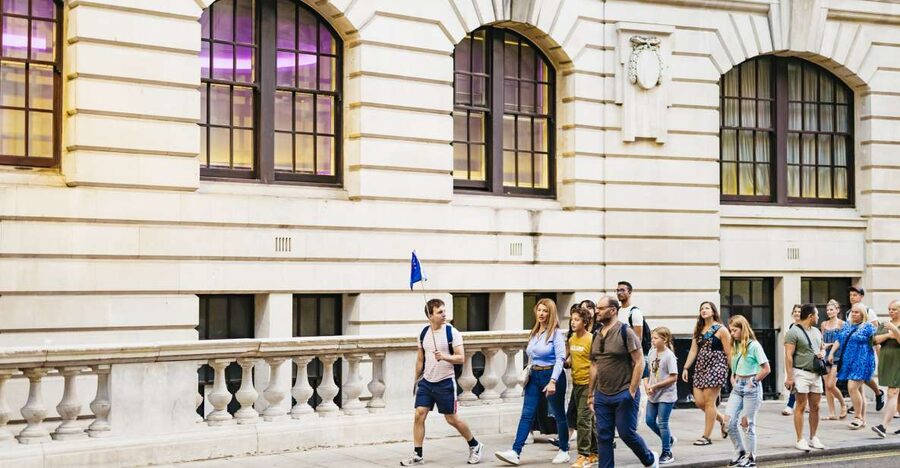
The core idea is simple: you ride a lot, then pause often. That rhythm is why it works so well as an intro. You’ll start on the Thames side, then head into the City of London area, then swing toward the East End docks and canal side, with plenty of short stops along the way. If you’ve ever felt overwhelmed trying to choose what to see first, this helps you get oriented fast.
You’re also not just riding past shiny landmarks. The route is built around the kind of London history most first-time itineraries skip: working-class housing, old docks, City traditions, and the stories behind streets and buildings you’d otherwise walk right by.
From Waterloo along the Thames to Blackfriars: the quick way to get your bearings
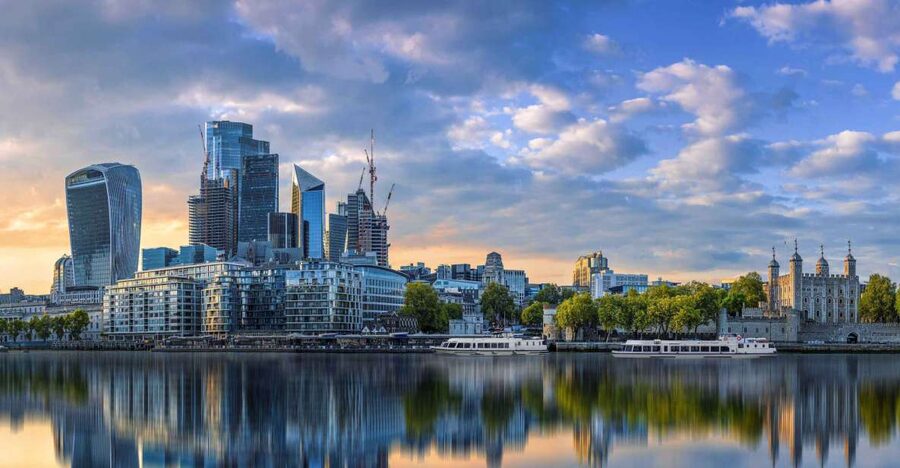
You’ll set out from Waterloo and follow the Thames riverfront with your guide. That initial stretch matters because it gives you an easy mental map: you can start connecting bridges, neighborhoods, and major landmarks before you get into smaller streets.
Next comes Blackfriars Bridge. You get a short stop to learn it was opened in the 1869 era under Queen Victoria, and the bridge name ties back to the Dominican Friars that had a monastery to the north. Even in a five-minute photo break, this kind of detail makes the bridge feel more than a way to cross.
Then you move onward to the Cockpit area, where the stop is tied to monastic roots and later fame. The story here includes Shakespeare buying the gatehouse and living there. It’s the kind of local detail that’s easy to miss if you’re just googling landmarks.
Why this section is valuable: you get a transition from river views to the older, denser City streets. It also sets you up for St Paul’s and the surrounding church-and-tradition stops that follow.
Roupell Street’s Georgian blocks and the real pulse of the neighborhood
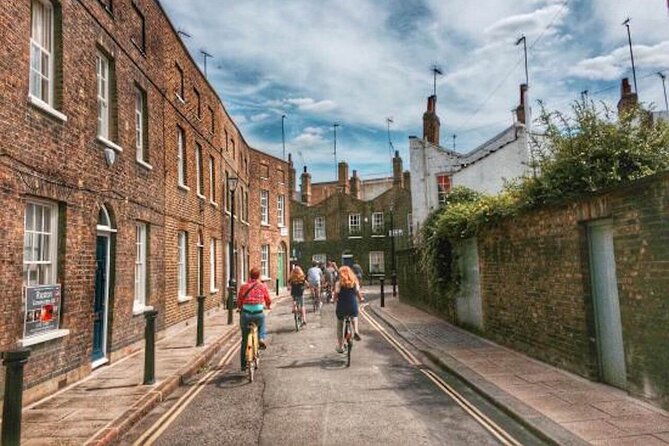
One of the most interesting early stops is Roupell Street, a small pocket of 1820s London. You’ll see Georgian houses built for working-class residents, connected to John Roupel, who reclaimed marshy land and used family names for the street layout.
What I like here is the story doesn’t stop at architecture. You also hear why street names changed due to postmen confusion, plus the neighborhood’s firefighting history—after an 1829 near-disaster, reminders about fire insurance show up right on the houses. The result is a street you can read like a timeline, not just a pretty block.
If you’re into pubs as history lesson locations, this stop is strong. You’ll visit The King’s Arms, a Grade II Victorian pub known for serving 10 real ales including local brews. The place also has a layered past—once tied to an undertaker and a magistrates court—and it now serves Thai cuisine. Even if you don’t stop for food, it’s a satisfying moment of contrast: old London bureaucracy, then everyday modern life.
Practical note: this is a quick stop. If you want a drink, plan for it as an extra, since the tour doesn’t include snacks or drinks.

St Paul’s, Bow bells, and the City’s odd traditions
After the earlier river-to-city shift, the tour moves into the heart of the City of London area with a chain of stops that feel like a guided walking tour, just faster.
You’ll get a short look at St Paul’s Cathedral. The tour ties it to big national moments: Prince Charles and Lady Diana’s wedding, Churchill’s funeral, and the connections of Wellington and Nelson as well. You also hear the key turning point—St Paul’s old structure destroyed in the Great Fire of London in 1666, with Christopher Wren rebuilding it. You don’t get long inside, but the exterior stop is a solid “this is why this building matters” moment.
Next is St Mary Le Bow Church and the famous idea of the Bow bells. The tour explains the traditional claim that if you’re born within the sound of Bow bells, you’re a true Cockney Londoner. It’s the sort of story that sounds like folklore—until you’re standing near the church and realize how deeply it’s built into London identity.
Then comes Guildhall, where you hear about the medieval-era roots of some City of London traditions and how certain customs are said to have stayed the same for centuries. It’s a good reminder that London isn’t just royal palaces and museums; there’s civic history too.
Why this sequence works: it links landmark religion to local identity and then to governance. In a few short photo breaks, you start to see London as a system, not just a set of famous sites.
Markets and architecture: Leadenhall Market, Lloyds, and London Wall
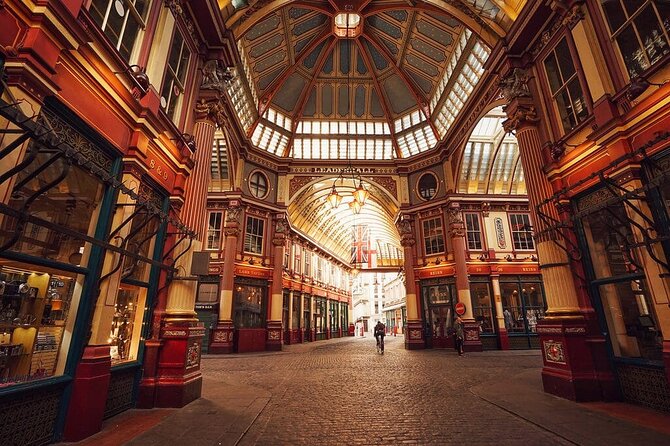
The tour heads to Leadenhall Market, a Victorian market where the guide points out the Roman-layer connection: it’s tied to the Forum and Basilica in Roman times. You’ll also hear the Harry Potter location links—this area is tied to Diagon Alley and the Leaky Cauldron in the films. It’s a short stop, but it’s memorable because it combines real urban history with pop-culture recognition.
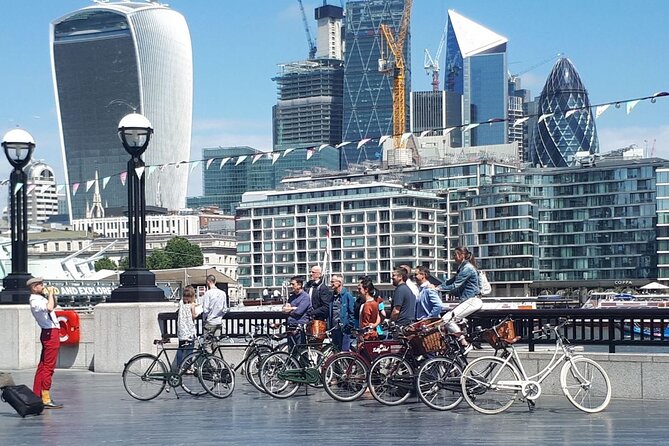
From there, you’ll see Lloyds of London and get architectural contrast around it. The guide highlights the Richard Rogers design for Lloyds and points out nearby shapes people often call the Cheesegrater and the Gherkin. You’ll also hear about St Andrew Undershaft, a church built after the 1666 fire era timeline with details tied to Henry VIII’s reign.
Then you get a stop at London Wall, one of the oldest parts of the city, with the tour referencing the Roman wall built around 200 AD. This is a useful stop for first-timers: it shows you that the city’s “oldest street” energy isn’t abstract. It’s literally in the ground.
Tradeoff here: each of these stops is brief. If you want to linger, you’ll likely want to return later on your own. But as an orientation ride, this section does exactly what it should—connects you to what to look for when you walk away from the route.
East End docks and canal history: Cable Street, Shadwell Basin, and Tobacco Dock
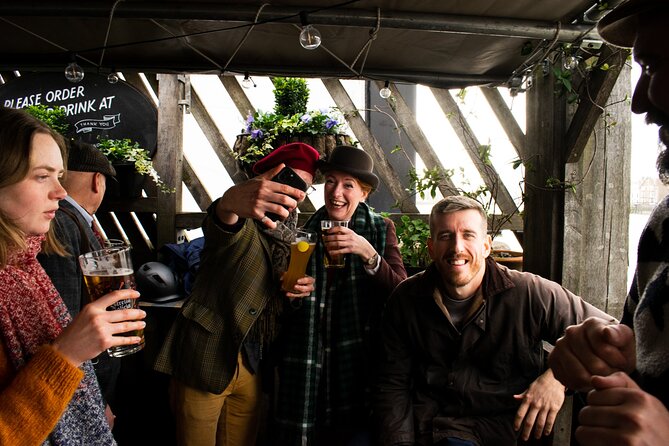
Then the tour turns toward the East End, and the tone shifts. Expect stories of sailors, smugglers, and pirates as the ride moves through dockyard and canal areas. The tour also notes that some of this history can be disturbing, so if you’re sensitive to that kind of content, you’ll want to pace yourself during those story moments.
A key stop is the Cable Street mural, completed in 1983. The guide explains it depicts the battle between fascists and protesters in 1936, in an area that had a strong Jewish community at the time. This isn’t random street art—it’s political memory painted large.
Next is Shadwell Basin, a regenerated dock area. The guide points you toward why it mattered: it was once described as the busiest docks in the world about a century ago, and the modern regeneration began in the 1980s. You get a sense of continuity—then a clear break where the city changed how it used the waterfront.
After that, there’s Tobacco Dock, where you’ll see ornamental canal details and old tobacco warehouses that have been redeveloped since the 1980s. You’re basically riding past London’s former industrial engine—and learning how it got repurposed.
You also stop at St Katharine Docks, described as the last dock built in 1825, and the first to close in the 1960s. The tour also connects the area to a hospital—St Katherine’s, founded in 1147 by Queen Matilda. That combination of “port history” and “medieval welfare history” is exactly why I like this kind of guided ride: it keeps the story from becoming one-note.
Tower Bridge and the Tower of London: famous sights, fast context
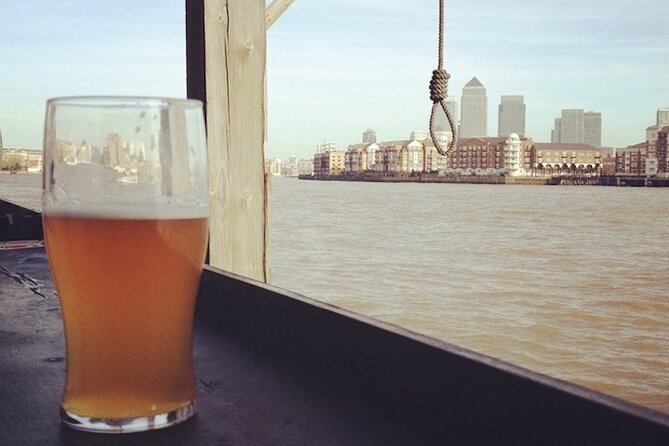
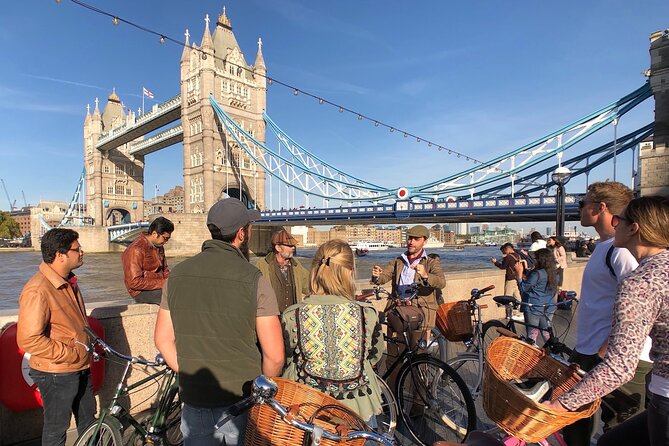
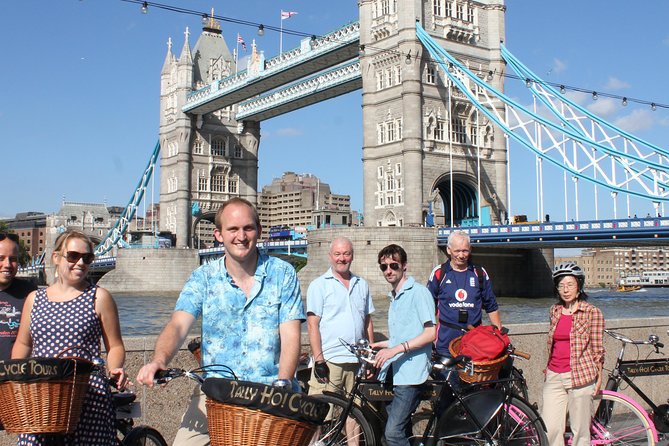
When you arrive at Tower Bridge, the tour gives you a quick, clear explanation of why this bridge is such an icon. It spans the Thames, combines bascule and suspension styles, and was completed in 1894 with design credited to Sir Horace Jones and engineering by Sir John Wolfe Barry. The tour also mentions the neo-Gothic towers and the central walkway.
One great detail to remember for your photos: the bascules are raised around 800 times a year for tall ships. Even if you’re not there on a raising moment, you’ll look at the bridge differently after that.
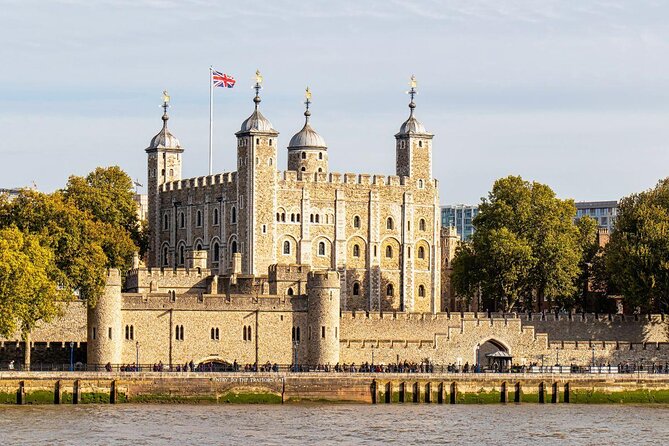
From there, you get to the Tower of London area. The guide frames it as a Norman-era fortress built soon after the 1066 conquest, with later roles as a palace, menagerie, observatory, armor y, and—most famously—state prison and execution site. The tour also references Traitors Gate as a grim entry route and names historical figures associated with executions, including Thomas More, Henry VI, Edward V, William Wallace, and several of Henry VIII’s wives.
If you want the full Crown Jewels experience, keep expectations realistic: the tour doesn’t include admission to things like that. You’ll get the key exterior story and a quick look, then you can decide if you want to add deeper entry on a separate visit.
HMS Belfast, City Hall, and the Great Fire trail
This part of the ride slows down emotionally, in a good way. You’ll see HMS Belfast, described as a WWII cruiser-class destroyer ship, built in the same Belfast shipyard that built the Titanic. The tour covers its WWII convoy role, mentions service in the Korean War, and ties it to D-Day.
It’s also described as a floating museum with interiors connected to The Crown, where spaces doubled as the Royal Yacht Britannia. Again, this is a quick stop, not a long museum visit, but it helps you decide whether this is your kind of history.
Then you’ll catch views near City Hall, described as the former City of London hall designed by Norman Foster.
After that, you get a quieter pause at St Dunstan in the East, a church site that was destroyed in the Great Fire of London and rebuilt by Wren. Right in the middle of central London, it’s a useful moment to reset your brain before the final Great Fire landmark.
And then the tour hits the Monument to the Great Fire of London. The guide explains the height as 202 feet, and a neat detail: the golden urn on top would land at Thomas Farriner’s bakery shop on Pudding Lane, where the fire started on 2 September 1666. It’s one of those facts that makes the whole story click.
Shakespeare’s Globe on the street, then Tate Modern’s big building energy
You’ll cross toward Southwark Bridge, where the guide frames views tied to Shakespeare’s Globe. You’ll learn Globe is a 1997 reconstruction of the original 1599 venue and that it was home to the Lord Chamberlain’s Men, tied to early debuts of major Shakespeare works.
Even though it’s a short look, this stop helps you connect Shakespeare to place, not just to books. You’ll also likely spot why people love walking this area before or after.
Then you finish with a stop by Tate Modern. The tour explains the museum opened in 2000 after turning a 1950s Bankside Power Station into gallery space. You’ll hear about the twisted brick pyramid, a later extension from 2016, and the 10th-floor viewing gallery. The turbine hall is also described as hosting changing monumental commissions, with the building itself being worth visiting even if you’re not a die-hard art person.
As with several stops, entry isn’t included. But the exterior and the architecture context make it a much easier museum decision once you see the building up close.
Price, pace, and what you should expect physically
At $103.35 per person for about four hours, you’re paying for three main things: a hand-built British bicycle, a local guide, and the time it saves you by car-free route planning. Since bikes and guide time are included, this is often better value than piecing together multiple separate walking tours.
The pace is “active but manageable.” You’re told to have moderate physical fitness and to ride with the expectation of city cycling. The riders are 13+, and the group cap is 12, which helps keep the ride controlled and less chaotic.
Also keep the weather reality in mind. The tour says it operates in all weather conditions and you should dress appropriately. It includes a rain poncho if required, and you can choose an optional helmet and even an optional tweed cap if that’s your kind of fun.
One practical planning tip comes from the kinds of comments people make after doing the tour: if you’re riding through a full midday, you’ll feel better with a solid meal first. Since snacks and drinks aren’t included, I’d eat beforehand and decide in advance if you want pub or market stops later for lunch.
Who this tour is for (and who should pick something else)
This is a strong match if you:
- want a fast first-timer orientation to London
- like learning stories connected to streets, not just reading plaque text
- plan to do more walking later and want a map in your head already
It may not be the best fit if you:
- prefer long museum entry time and deep indoor stops
- get stressed by moving through busy areas quickly
- need guaranteed lunch and drinks as part of the schedule
Because the route includes dock history and references to disturbing elements, I also think it suits people who are comfortable with some darker episodes in the past—even if the stops are brief.
Should you book this London bike tour?
Yes—if your goal is to get oriented and you like guides who connect landmarks to real street stories. The small group size, the bike efficiency, and the mix of Thames, City, docklands, and major landmarks make it a high-value “see a lot, learn a lot” plan.
Book it if you can handle short stops and you’ll eat beforehand, since snacks and drinks aren’t included. If you want a museum-heavy day, pair this with targeted indoor time on another day. Otherwise, this is a smart way to spend an afternoon and leave London feeling less confusing.
FAQ
How long is the bike tour?
It runs for about four hours.
Where does the tour start and end?
The meeting point is 189 Hercules Rd, London SE1 7LD, and the tour ends back at the meeting point.
What time does the tour start?
The start time is 2:00 pm.
How many people are in the group?
The tour has a maximum of 12 travelers.
What is included in the price?
You get a hand-built British bicycle, a local guide, and a mobile ticket. You also may receive an optional helmet, an optional tweed cap, and a rain poncho if required.
Are snacks and drinks included?
No. Snacks and drinks are not included.
What ages can join?
Riders must be aged 13 years and over.
Does the tour run in bad weather?
It operates in all weather conditions, and you’re told to dress appropriately. If it’s canceled due to poor weather, you’ll be offered a different date or a full refund.
More City Tours in London
- City Sightseeing London Hop-On Hop-Off Bus & Bookable Extras
★ 4.4 · 7,374 reviews - City Sightseeing London Hop-On Hop-Off Bus Tour & Bookable Extras
★ 4.0 · 1,224 reviews - London: Go City Explorer Pass® – Tickets for 2-7 Attractions
★ 4.3 · 1,111 reviews - Private Windsor Castle, Stonehenge, The City of Bath Day Tour
★ 5.0 · 468 reviews - London: Speedboat Tour Through Heart of the City
★ 5.0 · 387 reviews
More Tour Reviews in London
- From London: Harry Potter Warner Bros Studio Tour
★ 4.7 · 26,588 reviews - London: Westminster to Greenwich River Thames Cruise
★ 4.5 · 22,836 reviews - Magical London: Harry Potter Guided Walking Tour
★ 4.7 · 22,044 reviews - London: Madame Tussauds London
★ 4.6 · 20,915 reviews - London: Warner Bros. Studio Harry Potter Tour & Branded Bus
★ 4.7 · 19,194 reviews
Just reviewed around London





City Tours, compared.
 ★ 4.4City Sightseeing London Hop-On Hop-Off Bus & Bookable ExtrasFrom $337,374 reviews
 ★ 4.0City Sightseeing London Hop-On Hop-Off Bus Tour & Bookable ExtrasFrom $371,224 reviews
 ★ 4.3Go City Explorer Pass® – Tickets for 2-7 AttractionsFrom $721,111 reviews
 ★ 5.0Private Windsor Castle, Stonehenge, The City of Bath Day TourFrom $991468 reviews
 ★ 5.0Speedboat Tour Through Heart of the CityFrom $66387 reviews
 ★ 4.0Upside Down House Westfield White City Entry TicketFrom $10338 reviews
 ★ 4.5Westminster Abbey Priority Access & Guided City TourFrom $73282 reviews
 ★ 5.0Heathrow London Airport Transfer to City centerFrom $94213 reviews